Impact of Ergonomic Design on Comfort and Performance in Educational Environments: A Literature Review
DOI:
https://doi.org/10.53591/artes.v3i7.2262Keywords:
Ergonomic design, Comfort, Performance, Educational environments, Academic ergonomicsAbstract
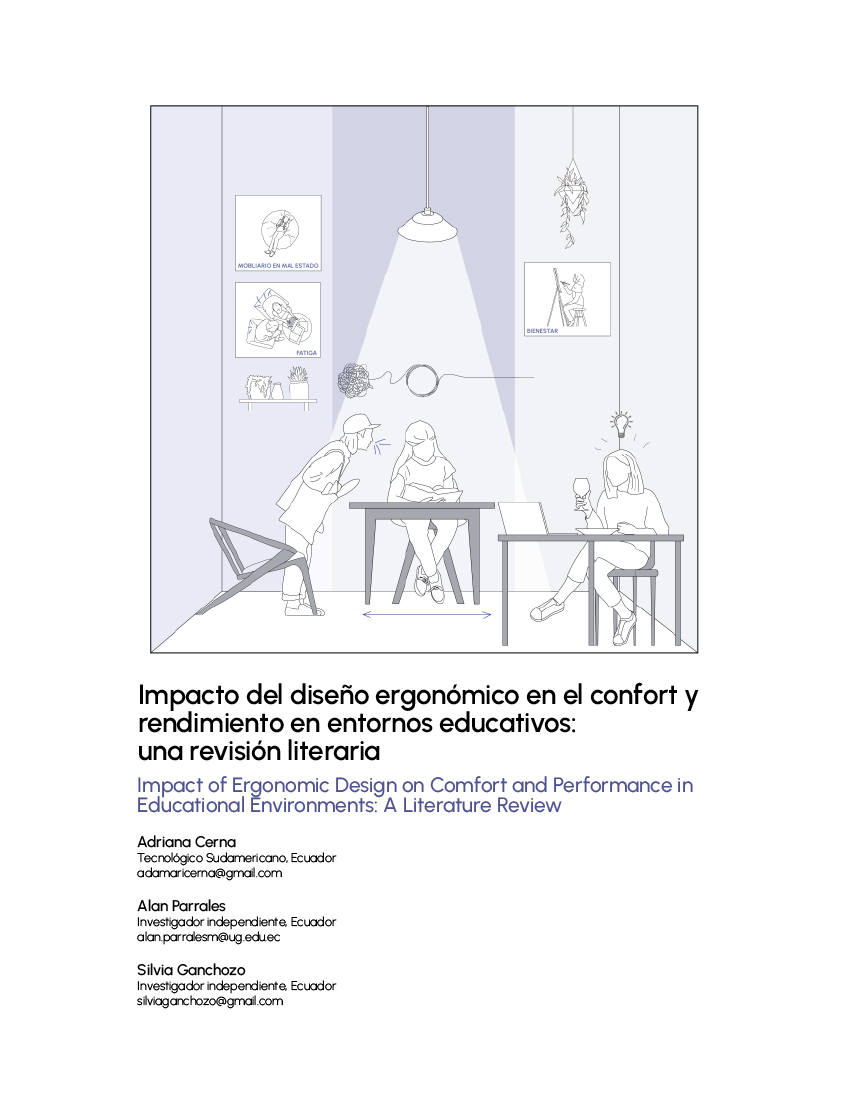
This article explores the relevance of ergonomic design in educational environments and its impact on student comfort and performance. It is based on a review of the literature to analyze how factors such as lighting, acoustics, temperature and furniture influence health, well-being and academic performance.
The study highlights that adequate ergonomic design can mitigate the negative effects of furniture in poor condition and environmental noise, improving concentration and reducing visual fatigue. The importance of maintaining optimal lighting and temperature levels, as well as using adjustable furniture to promote correct posture, is emphasized.
The methodology used was a systematic analysis of academic articles published in the last six years, prioritizing those indexed in recognized databases. The results show that an ergonomic environment not only improves physical comfort, but also enhances academic performance and psychological well-being.
The main objective of the article is to analyze how ergonomic design influences comfort and performance in educational environments, offering recommendations to optimize learning spaces and ensuring healthier and more efficient environments for students.
Downloads
Published
Issue
Section
License
Copyright (c) 2024 Adriana Damariz Cerna Moran, Alan Parrales, Silvia Ganchozo

This work is licensed under a Creative Commons Attribution-NonCommercial-NoDerivatives 4.0 International License.