
Submissions
Submission Preparation Checklist
As part of the submission process, authors are required to check off their submission's compliance with all of the following items. Submissions may be returned to authors that do not adhere to these guidelines.
-
1. Format Compliance: This submission meets all the requirements outlined in the Author Guidelines, and the document has been drafted strictly using the journal's official Article Template.
-
2. Manuscript Anonymization: The submission file is in Microsoft Word format and has been properly anonymized (authors' personal information has been removed from both the body of the text and the file properties/metadata) to ensure a double-blind review.
-
3. Originality: This submission is entirely original, has not been previously published, nor is it before another journal for consideration or peer review.
-
4. Artificial Intelligence (AI) Policy: The author declares that the manuscript strictly complies with the journal's AI Use Policies. If generative AI was used for ideation, translation, data analysis, or style correction, this has been detailed explicitly in the Methodology section. The author accepts that the document will be evaluated and that an AI percentage higher than 40% is grounds for rejection.
-
5. Mandatory Documentation: The Letter of Declaration of Originality and AI Use and the Authors' Information Template, properly completed and signed, are attached to the system as supplementary files.
-
6. Bibliographic Rigor: All bibliographic references have been cross-checked against their in-text citations, ensuring there are no "orphan" citations or fabricated references. The final list is accurate, complete, and strictly adheres to the citation formatting required by the journal.
-
7. Tables and Figures: All tables and figures have been numbered consecutively, labeled correctly, cited within the text, and are legible.
-
8. Copyright and Ethics: Informed consent from participants (if applicable) and legal permission to publish all images, datasets, surveys, and any other third-party material provided with this submission have been obtained.
Research Articles
A document that presents, in detail, the original results of completed research projects. The structure generally used contains four important parts: introduction, methodology, results and discussions, and conclusions. In addition, they are those that address a question about a theoretical or applied disciplinary aspect, usually through a scientific study of the behavior of a phenomenon or situation under certain control conditions.
Bibliographic Review
Document resulting from a research where the results of published or unpublished research on a field of science or technology are analyzed, systematized and integrated, in order to account for the progress and development trends. It is characterized by presenting a careful bibliographic review of at least 30 references.
Copyright Notice
Authors who publish in Revista de la Universidad de Guayaquil are aware of and accept the following conditions:
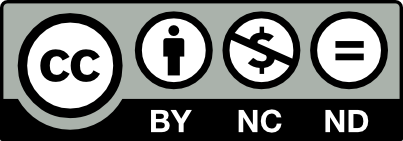
- Authors retain the copy rights (copyright) on the work, and grant Revista Universidad de Guayaquil the right of first publication of the work, under Creative Commons Attribution-NonCommercial-NoDerivatives 4.0 international license that allows third parties to share the work as long as its author and first publication this journal is indicated.
- Authors retain the copyright and grant Revista Universidad de Guayaquil the right to publish the work through the channels it deems appropriate.
- Authors are free to share, copy, distribute, perform and publicly communicate the version of the work published in Revista Universidad de Guayaquil, acknowledging its publication in this journal.
- Authors are authorized to electronically disseminate their work once it is accepted for publication.
The works are under license:
Attribution-NonCommercial-NoDerivatives 4.0 International (CC BY-NC-ND 4.0).
You are free to:
- Share - copy and redistribute the material in any medium or format.
Under the following terms:
- Attribution - You must give proper credit, provide a link to the license, and indicate if changes have been made. You may do so in any reasonable manner, but not in such a way as to suggest that you or your use is endorsed by the licensor.
- NonCommercial - You may not use the material for commercial purposes.
- NoDerivatives - If you remix, transform, or build upon the material, you may not distribute the modified material.
Privacy Statement
The names and email addresses entered in this journal site will be used exclusively for the stated purposes of this journal and will not be made available for any other purpose or to any other party.