INTRODUCTION
Educational inclusion has become one of the guiding principles in the transformation of teaching systems worldwide, by promoting equity and the active participation of all students regardless of their individual conditions. However, in practice, adequately addressing the particular needs of children and adolescents with Autism Spectrum Disorder (ASD) remains a significant challenge for teachers and institutions. This population presents great diversity in their sensory, cognitive, and social development, which demands flexible pedagogical approaches and environments adapted to their needs.
From our experience as researchers involved in inclusive educational projects, we have observed that disciplines such as robotics, despite their formative value, often remain out of reach for students with ASD. The reasons are diverse: lack of accessible materials, limited teacher training in inclusive methodologies, and a scarcity of strategies that take into account individual differences in learning. Nevertheless, recent research has highlighted the potential of robotics as a means to strengthen cognitive and social skills in contexts requiring specific support (Sánchez-Tendero et al., 2019; Corrales Castaño & Rodríguez Torres, 2022; Fundación iSocial, 2024).
In particular, Sánchez-Tendero and collaborators (2019) point out that, when integrated into well-structured educational settings, robotics activities significantly contribute to students’ motivation, provided that they are clearly and pedagogically designed. Similarly, Corrales Castaño and Rodríguez Torres (2022) emphasize the value of social robotics as a tool to promote communication and cooperation—key elements in the learning process of students with ASD. In both cases, guided and predictable environments have been shown to help reduce anxiety and facilitate more active participation.
Fundación iSocial (2024), in turn, has documented how constant and structured interaction with robots can reduce the sensory and emotional overload commonly experienced by students in changing environments. The possibility of interacting with systems that respond consistently provides a sense of security and promotes continuity in academic or therapeutic tasks.
However, despite the documented benefits, the implementation of such strategies remains limited in educational contexts with restricted resources. The high cost of physical robotics kits represents a major barrier to their adoption in many institutions. This has led to the search for more accessible technological solutions, among which Virtual Learning Environments (VLEs) stand out for their ability to simulate robotic experiences through digital tools.
Among these alternatives, Moodle has proven to be a versatile and adaptable platform for inclusive contexts. Its open-source nature and modular structure make it possible to integrate simulators, interactive games, and customized visual resources, facilitating the construction of educational environments that are organized, visually coherent, and emotionally stable. In experiences developed at institutions such as the University of Salamanca, Moodle has been successfully used to present complex content through visual simulations and interactive activities (Amaya Franky, 2021).
At the international level, organizations such as UNESCO (2024) emphasize that technological inclusion goes beyond equipment availability and requires adequate teacher preparation to support the educational process. This demand is particularly urgent in Latin America, where digital and pedagogical gaps still persist. In Ecuador, studies such as those by Daza Loor et al. (2024) highlight the importance of developing effective digital strategies for the participation of students with special educational needs, while Mena Hernández et al. (2024) demonstrate the positive effects of educational technology on learning and social integration.
In this context, various initiatives at the University of Guayaquil have focused on designing inclusive proposals centered on the use of accessible technologies. These experiences underscore the need to develop replicable and sustainable models, especially in vulnerable sectors where students face multiple barriers to accessing scientific and technological content such as robotics.
From this perspective, the present study is part of the outreach project "Robotics course for individuals with autism," developed through an agreement between the University of Guayaquil and the Fundación Sendero Azul. This foundation, located in the city of Guayaquil, provides services to children and adolescents with ASD and faces limitations in infrastructure, materials, and educational resources. In response to this situation, the study aims to evaluate the impact of an inclusive virtual learning environment designed in Moodle as a complement to the in-person robotics teaching process.
The course will be facilitated by students from the Information Technology program, who will guide the in-person sessions, while the Moodle platform will offer interactive materials for reinforcement at home with family support. The hypothesis proposes that the combined use of both modalities, adapted to the characteristics of ASD, will significantly foster the development of cognitive, social, and technical skills among the participants. Likewise, the expected results aim to contribute to the consolidation of an inclusive educational model that can be replicated in similar contexts.
Theoretical Review
Autism Spectrum Disorder (ASD) is a neurobiological condition that primarily affects communication, social interaction, and behavior. Its manifestation varies widely among individuals, which poses differentiated challenges in educational contexts. In our experience with students within this population, we have observed that they benefit particularly from structured environments, with clear routines and visual supports. Characteristics such as cognitive rigidity, sensory sensitivity, or difficulty understanding implicit social norms require precisely designed pedagogical strategies that avoid stimulus overload and promote autonomy.
In this context, the use of technology has become a key tool in adapting teaching to their needs. Information and Communication Technologies (ICTs) allow for personalized content delivery, visually organized information, and active participation through alternative means. These tools not only support academic learning but also social and emotional development, by offering controlled and accessible environments. In particular, virtual learning platforms such as Moodle have proven to be valuable allies, as they enable the creation of predictable and visually friendly educational spaces. The integration of simulators, gamified activities, and multimedia resources facilitates progressive learning and reduces the barriers these students often face.
Among technological strategies, educational robotics has garnered special interest due to its positive impact on the development of social, cognitive, and motor skills in students with ASD. Through interaction with robots that exhibit consistent and predictable behaviors, students are given opportunities to practice routines, explore sequential tasks, and build connections within the safety of a structured environment. This quality facilitates participation and reduces anxiety in the face of new or ambiguous situations. Additionally, the use of robots in playful contexts has proven useful for motivating learning and fostering communication in students who often resist traditional methods.
Studies such as that of Fernández López and Martínez-Figueira (2020) have documented the use of the Bee-Bot robot in activities aimed at improving spatial orientation, attention, and creativity. These experiences align with our observations, where robotics becomes a medium for activating multiple learning processes simultaneously. Similarly, Corrales Castaño and Rodríguez Torres (2022) have highlighted the value of social robotics in facilitating communicative interaction, especially among students with difficulties initiating or sustaining spontaneous dialogues.
However, it is not always possible to implement experiences with physical robots due to their high cost. In institutions with limited resources—such as many in Ecuador—the combination of in-person resources with virtual environments offers a realistic and effective alternative. In the project developed with the Fundación Sendero Azul, for instance, physical robotics kits were made available through external management, but it was the integration of Moodle that enabled broader access to learning. From home, with family support, students were able to continue exploring class content through simulators, games, and visual resources adapted to their needs.
The ability to present content in a gradual and modular fashion on Moodle, along with tools for immediate feedback, allowed for the creation of a flexible and personalized educational environment. This approach, in addition to facilitating monitoring by teachers and families, proved especially beneficial for students with ASD, who require clarity and predictability to stay engaged with tasks.
The learning environment design was not improvised; it was based on widely recognized theoretical principles. From a constructivist perspective—as proposed by Piaget and Vygotsky—knowledge is built through active interaction with the environment. Accordingly, activities were structured to allow students to experiment, manipulate objects, and progress at their own pace. This approach was reinforced by Ausubel’s theory of meaningful learning, which emphasizes the importance of linking new content to prior knowledge, a principle applied through logical sequencing in the presentation of materials.
Gamification, as a motivational strategy, was aligned with the foundations of Applied Behavior Analysis (ABA), using elements such as badges, symbolic rewards, and reinforcement messages to encourage participation. The contributions of the TEACCH model were also considered, emphasizing the value of visual aids and space organization to reduce anxiety. Moodle’s modular structure facilitated this organization through clear menus, sequential activities, and constant feedback.
Furthermore, Self-Determination Theory guided the promotion of student independence, allowing learners to choose certain learning paths and recognize their achievements. Lastly, the principles of Cognitive Load Theory were considered, ensuring that information was presented clearly and without overloading working memory, which was key to facilitating comprehension. The entire design was guided by the ADDIE model, which enabled a systematic process of needs analysis, resource development, and continuous evaluation.
Together, the integration of theory, pedagogical practice, and technology led to the construction of an educational proposal that realistically and effectively addresses the needs of students with ASD. This experience reaffirms the importance of designing accessible and adaptive environments that promote not only technical learning but also well-being and social inclusion.
To meet the needs outlined above, a virtual learning environment based on the Moodle platform was implemented. This tool made it possible to design a structured, visually accessible space tailored to the specific characteristics of the students, facilitating content organization into sequential modules, the use of multimedia resources and gamified activities, and the provision of immediate feedback.
The following section presents a detailed description of the platform used, accompanied by images showing its interface, structure, and main features, with the aim of understanding how the theoretical and pedagogical principles discussed in this framework were integrated to support effective and motivating learning.
MATERIALS AND METHODS
This research was conducted using a mixed-methods approach, combining quantitative and qualitative methods to obtain a comprehensive understanding of the pedagogical and emotional impact of the Moodle virtual environment on students with ASD. Questionnaires and automatic records from the platform were applied, complemented by interviews, participant observation, and content analysis, which allowed for the assessment of both academic performance and the students’ lived experiences.
The study adopted an instrumental case study design and was carried out at the Fundación Sendero Azul, located in Guayaquil. For the development of the inclusive virtual environment in Moodle, the agile SCRUM methodology was employed, structured into five phases: research and empathy, design, technical development, evaluation with feedback, and final implementation with adjustments.
The primary focus of this work was the evaluation phase, during which data were collected through Moodle system logs, surveys administered to teachers and family members, and structured observation sessions. These observations allowed for the analysis of autonomy among Grade 1 and 2 students, as well as sensory and attentional responses in Grade 3 students, who participated with family support during the activities.
The total population consisted of 213 students diagnosed with ASD, distributed across three levels: Grade 1 (high functioning, 180 students), Grade 2 (moderate functioning, 23 students), and Grade 3 (low functioning, 10 students). The sample was intentionally selected and included 9 Grade 1 and 2 students who actively participated in the Moodle environment, 2 Grade 3 students in observed sessions with family support, as well as 3 facilitator teachers and 4 family members who acted as mediators and key informants.
The selection criteria considered cognitive functioning, basic communication skills, autonomy, and informed consent from their legal guardians. In particular, Grade 3 students performed their activities in controlled sessions with direct adult support to ensure the sensory accessibility of the environment.
Various instruments were used for data collection: Moodle’s automatic logs (connection times, grades, frequency of interaction), structured questionnaires for teachers and family members, observation guides for sessions with Grade 3 students, and semi-structured interviews with the facilitator teachers.
The designed activities adhered to principles of cognitive and sensory accessibility, incorporating pictograms, gamification, contrasting colors, clear language, and visual and auditory feedback. The aim was to ensure full participation of all students, especially those with greater difficulties, always with appropriate mediation when necessary.
Finally, quantitative analysis included descriptive statistics such as frequencies and averages, while qualitative data were organized into emerging categories through thematic analysis. This allowed for triangulation of the perceptions of teachers and family members with the observations conducted within the educational environment.
RESULTS AND DISCUSSION
The Virtual Learning Environment (VLE) in Moodle was developed as part of a community outreach project, which originated from an initial proposal by one of the researchers. The technical implementation and platform development were carried out by two students from the Information Technology Engineering program, who worked on it as part of their graduation project. This virtual environment was designed to complement in-person training and enable the educational process to continue from home, always with an inclusive focus tailored to the needs of individuals diagnosed with autism spectrum disorder.
Before presenting the results, it is important to describe in detail the Moodle environment used in the study. This platform is available online at the following link: https://robotea-ug.site/. Below, the main screens that structure the course are presented and their functionalities are explained.
Figure 1 shows the initial interface of the Moodle platform used for the course. On this screen, users enter their credentials to access the content. The interface is simple and clear, facilitating access for both students and teachers.
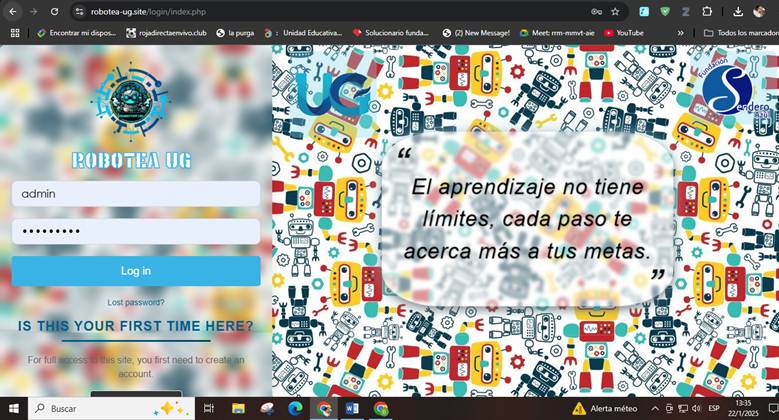
Figure 1. Login screen of the virtual platform. Retrieved from: https://robotea-ug.site/
Figure 2 shows the main dashboard screen that users access after logging in. From here, they can easily navigate through the platform’s main options. The visual organization is designed to ensure quick and intuitive access to the various functionalities.

Figure 2. Platform home dashboard. Retrieved from:https://robotea-ug.site/
Figure 3 presents the sections organized by didactic units, which are divided into modules within the course. Each unit is clearly differentiated, making it easier for students to navigate and select specific content related to robotics adapted for individuals with Autism Spectrum Disorder (ASD).
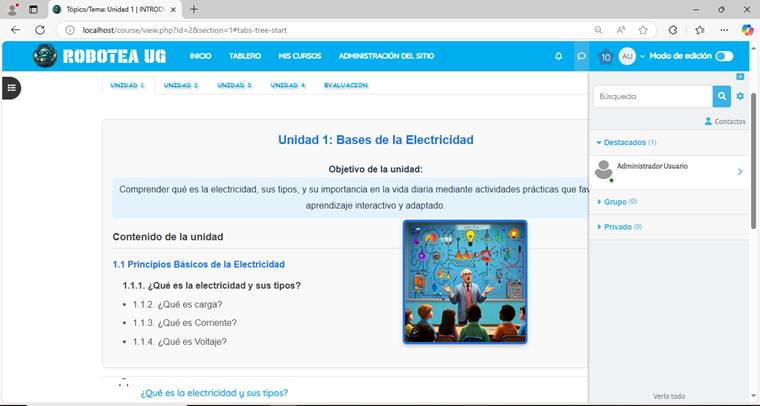
Figure 3. Section of course modules for the robotics course for students with ASD. Retrieved from: https://robotea-ug.site/
Figure 4 shows the presentation of a class topic within the platform. In a clear and organized manner, students have access to materials related to the topic, such as texts, videos, and explanations. The format is consistent across all units, contributing to coherent and accessible navigation, specifically designed to meet the needs of students with ASD.
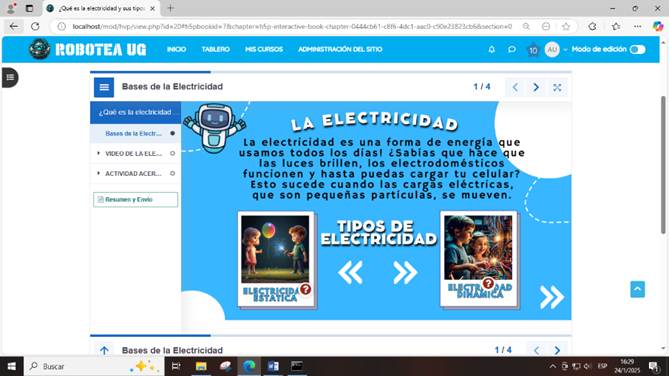
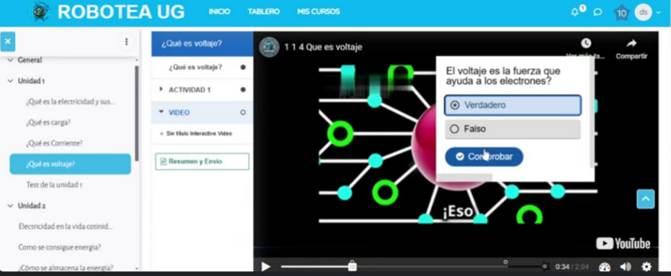
Figure 4. Example of content display for each unit.
Retrieved from: https://robotea-ug.site/
Quantitative Results: Questionnaires and Virtual Environment Records
Performance of Participants Diagnosed with Autism Spectrum Disorder in the Moodle Environment
As part of the community outreach project, students from the Information Technology program at the University of Guayaquil supported in-person educational robotics training for individuals diagnosed with Grade 1 and 2 autism spectrum disorder, served by the Fundación Sendero Azul. In parallel, the research team—supported by two students from the same program—designed and implemented a Virtual Learning Environment (VLE) in Moodle, conceived as a complementary resource to facilitate continued education at home with family support.
Usage records from the nine participants who accessed the VLE were analyzed, taking into account indicators such as participation, comprehension, task completion, and observable motivation. These were compared with data collected during in-person sessions. Although no strict "before and after" comparison was conducted, the results indicate a significant improvement in the learning experience after the digital resource was incorporated, as shown in Table 1.
The data show a notable increase in all evaluated indicators. Active participation rose from 22.2% in face-to-face classes to 83.3% in the virtual platform, suggesting that a well-structured, visual, and accessible environment promotes greater student engagement. Content comprehension also improved, with the percentage of participants achieving a high or complete level doubling. Task completion increased from 44.4% to 88.8%. This progress is particularly significant given that this population responds better to clear routines and predictable environments—characteristics that Moodle offers when properly designed.
Regarding observable motivation, there was a shift from passive or disinterested behaviors to clear signs of enthusiasm, focus, and a desire to continue exploring the content. This confirms the effectiveness of combining in-person strategies with adapted digital resources—not to replace, but to complement the educational process—thus expanding opportunities for personalized learning.
Table 1.
Observed Performance in Face-to-Face Sessions and in the Moodle Virtual Environment (n=9)
|
Learning Indicator |
Before (Face-to-Face) |
After (VLE-Moodle) |
|
Active Participation in Activities |
22.2% |
83.3% |
|
High or Complete Content Comprehension |
33.3% |
66.6% |
|
Completion of Assigned Activities |
44.4% |
88.8% |
|
Observable Expression of Motivation |
Baja |
Alta |
Note. Data obtained from teacher observation (facilitator students), questionnaires, and platform records.
The interactive resources within the VLE were also evaluated by the 9 students with ASD (Grades 1 and 2), with support from their family members. According to Table 2, the videos with integrated questions received the highest rating, with 77.8% of responses falling under the category “Very useful / Useful.” This aligns with Cognitive Load Theory, as such videos allow for pauses that support reflection and enable students to learn at their own pace.
Interactive slides also received a positive evaluation (66.7%), highlighting the importance of combining visual explanations with short activities, thus fostering meaningful learning, as proposed by Ausubel. Visual rewards such as badges and points were highly accepted (77.7%), underlining the importance of gamification as a motivational factor for this population.
Additionally, although interactive activities (simulations and exercises) were considered useful by 55.5% of participants, this figure suggests that there is still room for improvement in aspects such as clarity of instructions and appropriateness in terms of complexity level.
Table 2.
Evaluation of the Use of Interactive Resources in Moodle (n=9)
|
Interactive Resource Evaluated |
Very Useful / Useful |
Neutral |
|
Videos with Integrated Questions |
77.8% |
22.2% |
|
Interactive Slides |
66.7% |
33.3% |
|
Interactive Activities in Moodle (Simulations, Exercises) |
55.5% |
33.3% |
|
Visual Rewards (Badges, Points) |
77.7% |
22.3% |
Nota. Resultados basados en encuestas a los 9 estudiantes con TEA (Grado 1 y 2) con apoyo de los familiares.
Table 3 compares key indicators of motivation and engagement between the in-person modality and the use of the VLE in Moodle. A significant increase is observed in topic comprehension, rising from 22.2% in the face-to-face setting to 55.5% in the virtual environment, confirming the effectiveness of visual and interactive materials specifically designed for this population.
Participation also increased considerably, from 11.1% in the in-person setting to 83.3% in the VLE, reflecting how inclusive and adapted design fosters student engagement. Additionally, interest generated by the activities nearly quadrupled, and the perception of the method's effectiveness for learning improved from 20% to 66.6%.
These results demonstrate that the VLE not only enhanced learning but also boosted motivation and enjoyment during the educational process. It is important to note that the slight differences in topic comprehension percentages between Tables 1 and 3 are due to the use of different instruments: direct observation and self-administered surveys, respectively.
Table 3.
Comparison of Motivation and Engagement in Face-to-Face Classes vs. VLE (n=9)
|
Evaluated Indicator |
Face-to-Face Class |
VLE-Moodle |
|
Topic Comprehension (High or Complete) |
22.2% |
55.5% |
|
Participation / Engagement |
11.1% |
83.3% |
|
Interest Generated by the Class or Activity |
22.2% |
88.9% |
|
Perceived Effectiveness of the Learning Method |
20% efectiva |
66.6% efectiva |
Clarifying Note: Although the indicators for “topic comprehension” in Table 1 and Table 3 show similar percentages (33.3% vs. 22.2% for face-to-face, and 66.6% vs. 55.5% for VLE-Moodle), they originate from different instruments: Table 1 is based on direct observation and teacher records, while Table 3 was constructed from self-administered surveys completed by the students. This methodological difference may explain the variation in percentages.
Perception of Teachers and Family Members Regarding the Moodle Environment
The surveys administered to 3 teachers and 4 mediating family members revealed a high level of satisfaction with the accessible design, the usefulness of the gamified resources, and the ease of navigation within the Moodle environment.
Table 4.
Evaluation of Usability, Motivation, and Accessibility of the Environment (n=7)
|
valuated Item |
Strongly Agree |
Agree |
Neutral |
|
The environment was easy to navigate |
54.5% |
36.4% |
9.1% |
|
The activities motivated the student |
63.6% |
27.3% |
9.1% |
|
The visual rewards increased student engagement |
72.7% |
18.2% |
9.1% |
|
The visual rewards increased student engagement |
45.5% |
36.4% |
18.2% |
Note. Survey administered to teachers and family members. Scale converted to a 3-point format (Strongly Agree / Agree / Neutral) for analytical purposes. Data based on surveys of teachers and family members (n=7).
Most key informants agreed that Moodle proved to be an accessible and motivating environment for students with ASD. Notably, 90.9% considered navigation to be easy or very easy, validating the platform’s visual and structured design.
Regarding motivation, 63.6% reported that the proposed activities successfully captured the students’ interest. In addition, 72.7% identified visual rewards such as badges and points as a crucial element for maintaining engagement—a finding aligned with the principles of Applied Behavior Analysis (ABA) and positive reinforcement.
Finally, 81.9% evaluated the content as understandable, supporting the use of visual materials, clear instructions, and adapted interactive resources. Although 18.2% expressed a neutral stance, no negative responses were recorded, indicating an overall positive acceptance with some areas for potential improvement.
Qualitative Results: Interviews and Observations
Interviews with 3 teachers (facilitator students) made it possible to identify five key aspects related to the experience of students with ASD using the Virtual Learning Environment (VLE):
Progressive autonomy: Students began to complete activities more independently, reducing the need for constant instructions, indicating progress in their self-management skills.
Visual comprehension: Interactive videos and pictograms were the most effective resources, especially for non-verbal students, who showed better understanding and responses to these visual stimuli.
Positive emotional reactions: Joy and spontaneous motivation were observed in students when receiving visual rewards such as certificates and badges, showing the positive impact of gamification.
Increased engagement time: Facilitator students reported that learners maintained attention for longer periods while working in the VLE compared to traditional face-to-face sessions.
Meaningful feedback: Students responded more positively when activities included immediate feedback on their performance, promoting better understanding and adaptive learning.
Mediated Observation of Grade 3 Students with ASD
During the observation of 2 students diagnosed with Grade 3 ASD, the following findings were identified:
Positive non-verbal responses, such as vocalizations and smiles, in reaction to visual rewards.
Sustained attention for up to 8 minutes, exceeding what was observed in face-to-face classes.
Clear preference for activities with low textual load and a high level of visual animations, which supported their comprehension and motivation.
Continued need for navigation assistance, despite the simplified and adapted interface.
A family member highlighted the importance of these stimuli by commenting:
"When the medal appears on the screen, he laughs and looks back at it. That doesn’t happen in regular classes. There’s something here that stimulates him."
DISCUSSION
The results of this research allow us to conclude that the implementation of an inclusive virtual environment based on Moodle had a positive impact on the learning of robotics among students with Autism Spectrum Disorder (ASD), especially those in Grades 1 and 2. This finding aligns with the assertions of Gómez-León (2023), who argues that digital technologies facilitate more meaningful and personalized learning by adapting to the cognitive and communicative characteristics of students with ASD.
A notable improvement was observed in key indicators such as active participation, which increased from 22.2% to 83.3%, comprehension, which rose from 33.3% to 66.6%, and observable motivation after the implementation of the Virtual Learning Environment (VLE). These results confirm the effectiveness of a structured, visual, and sequential environment, reinforcing the claims of Yáñez and Madariaga (2021), who argue that Moodle's modular structure—presenting one task at a time—reduces cognitive overload, a fundamental aspect for students with ASD. In this sense, the study showed how this feature supported sustained task engagement and reduced episodes of inattention.
Moreover, gamification proved to be a key motivational strategy, supporting the theory of Applied Behavior Analysis (ABA) as discussed by Rangel Ortiz and Pinzón (n.d.). The positive evaluation of visual rewards—considered useful or very useful by 77.7% of participants—along with observed emotional reactions such as smiles and enthusiasm, illustrate how positive reinforcement can enhance engagement and participation, even among students with verbal communication challenges.
In contrast to the proposals of Corrales Castaño and Rodríguez Torres (2022), who emphasize the role of tangible social robotics as a mediator in educational interaction, this research suggests that virtual simulations can largely replicate those benefits, though not fully replace the physical experience. The increase in the perceived effectiveness of the method, reported by students from 20% to 66.6%, offers an accessible and relevant alternative for contexts with budget constraints, such as the case of Fundación Sendero Azul.
Visual comprehension, identified by teachers in the qualitative interviews, aligns with the TEACCH model, which emphasizes the importance of visual and predictable structure to facilitate learning in individuals with autism (Arozena et al., 2022). Non-verbal students showed better responses to pictograms and interactive videos, validating the instructional design’s alignment with their sensory processing styles.
Nevertheless, it is worth noting that 18.2% of teachers and family members expressed a neutral position regarding the comprehensibility of the content, signaling areas for improvement, particularly in the clarity of instructions and the design of interactive activities. This nuance underscores the need to accompany the implementation of the VLE with continuous teacher training and iterative adjustments to address the diversity within the autism spectrum.
The scientific contribution of this study lies in demonstrating that an inclusive virtual environment can facilitate the teaching of complex content such as robotics without the need for expensive physical technology. This proposal goes beyond previous experiences focused on tangible robotics (Fernández López & Martínez-Figueira, 2020), by offering a sustainable and adaptable option for institutions with limited resources.
This work highlights the importance of academic management and the role of the teacher-researcher in combining theory, pedagogical observation, and technological design to develop an educational intervention with real impact on the inclusion of neurodivergent students. The experience described here may serve as a replicable model that promotes equitable and accessible technical education, aligned with the educational inclusion principles of UNESCO (2024).
CONCLUSION
The implementation of an inclusive virtual environment designed in Moodle had a favorable and meaningful impact on the robotics learning of students with Autism Spectrum Disorder (ASD) from Fundación Sendero Azul. In line with the proposed hypothesis, the combination of in-person and virtual instruction—adapted to the cognitive particularities and specific needs of this population—promoted significant progress in the development of cognitive, social, and technical skills, enhancing the educational process and helping to overcome learning barriers.
The virtual environment was characterized by a clear, structured instructional design supported by visual aids, proving to be a valuable pedagogical resource to complement face-to-face learning. The application of principles such as task sequencing, the use of predictive visual elements, and gamification as a mechanism for positive reinforcement fostered active participation, comprehension, motivation, and continuity in task completion—essential aspects for addressing the needs of neurodivergent students (Gómez-León, 2023; Yáñez & Madariaga, 2021; Rangel Ortiz & Pinzón, n.d.).
This experience also demonstrated that the teaching of robotics can be significantly enriched through accessible virtual simulations, which complement conventional physical resources and expand the possibilities for offering inclusive, sustainable, and scalable technical education—especially in contexts with budgetary constraints (Corrales Castaño & Rodríguez Torres, 2022). Likewise, the study confirmed that the effectiveness of the virtual environment is closely tied to careful pedagogical design and continuous teacher training. The criticism expressed by some participants regarding the clarity of certain content highlights the importance of implementing ongoing processes of training, feedback, and adjustment to address the diversity within the autism spectrum (Arozena et al., 2022).
From the perspective of the teacher-researcher role, this study reaffirms the importance of integrating pedagogical theory, empirical observation, and educational technologies to develop equitable and adaptive learning environments. The proposed model represents a replicable alternative aligned with the principles of educational inclusion promoted by international organizations such as UNESCO (2024). Thus, it can be concluded that the contextualized combination of in-person and virtual modalities enhances educational inclusion and helps reduce access and participation gaps for students with ASD—provided it is supported by sensitive and coherent pedagogical practices that optimize the learning process.
REFERENCES
Amaya Franky, G. (2021). Los entornos virtuales de simulación de la realidad, espacios vistos como ejes que permiten situar el aprendizaje dentro de un contexto institucionalizado de educación. Revista Usal. https://doi.org/https://revistas.usal.es/index.php/eks/article/download/19149/19240/0
Arozena, I., Huegun-Burgos, A., & Rekalde-Rodriguez, I. (2022). Intervenciones didácticas con robots para alumnado en el espectro del autismo. Una revisión sistemática. Revista Latinoamericana de Tecnología Educativa - RELATEC, 21(2), 27-43. https://doi.org/https://doi.org/10.17398/1695-288X.21.2.27
Corrales Castaño, L., & Rodríguez Torres, J. (2022). La robótica social como herramienta educativa para alumnado TEA. Revista Internacional de Cultura Visual, 12(5), 1–15. https://doi.org/https://doi.org/10.37467/revvisual.v9.3776
Daza Loor, M., Játiva Manobanda, A., Sellan Baque, J., & Vásquez Villacís, M. (2024). Estrategias educativas en la asignatura robótica para la inclusión de estudiantes con necesidades educativas especiales. Polo del conocimiento, 9(10), 688-705. https://doi.org/https://polodelconocimiento.com/ojs/index.php/es/article/view/8139/pdf
Díaz Vera, J., Pulley Cajamarca, J., & Navarrete Llaguno, P. (2025). Herramientas de Inteligencia Artificial en el Apoyo Educativo para Estudiantes con Necesidades Educativas Especiales (NEE) en Diferentes Discapacidades. Revista Universidad de Guayaquil, 139(1), 10–30. https://doi.org/https://doi.org/10.53591/rug.v139i1.1605
Euroamericano - centro de desarrollo infantil. (12 de 7 de 2024). CDI Euroamericano. https://cdieuroamericano.ec/teorias-del-desarrollo-infantil-segun-piaget-vygotsky-y-erikson/?utm_source
Fernández López, & Martínez-Figueira, E. (2020). Una intervención con TEA utilizando robótica. En F. Ruiz-Rey, Q.-T. Natalia, C.-d.-l.-S. Manuel , & H.-H. Pedro, Tecnologías emergentes y estilos de aprendizaje para la enseñanza (págs. 197-208). Junta de Andalucía.
Fundación Isocial. (18 de 3 de 2024). Robots para el tratamiento de niños con TEA. https://isocial.cat/es/robots-para-el-tratamiento-ninos-con-tea/
Gómez-León, M. (2023). Avances en la tecnología para el desarrollo de la competencia social del alumnado con trastornos del espectro autista. Revisión sistemática. Páginas de Educación, 16(2), 156-185 . https://doi.org/10.22235/pe.v16i2.3299
Mena Hernández, E., Vera Moreira, L., & Mora Macías, A. (2024). Integración de la Tecnología Educativa en el Aula de Educación Básica en Ecuador. Ciencia Latina Revista multidisciplinar, 8(2), 150-162. https://doi.org/https://doi.org/10.37811/cl_rcm.v8i2.10389
Organización de las Naciones Unidas para la Educación, la Ciencia y la Cultura. (2024). Informe de seguimiento de la educación en el mundo, 2023: tecnología en la educación: ¿una herramienta en los términos de quién? Organización de las Naciones Unidas para la Educación, la Ciencia y la Cultura: https://doi.org/10.54676/NEDS2300
Rangel Ortiz, J., & Pinzón, C. (s.f.). Robótica pedagógica para la educación de niños con discapacidad. Revista UTP: https://revistas.utp.ac.pa/index.php/el-tecnologico/article/view/255/html
Sanchez Tendero, E., Cózar Gutiérrez, R., & González Calero-Somoza, J. (2019). Robótica en la enseñanza de conocimiento e interacción con el entorno. Una investigación formativa en Educación Infantil. Revista Interuniversitaria de Formación del Profesorado, 33(1), 11-28. https://doi.org/ https://www.redalyc.org/articulo.oa?id=27466169001
Yanez, C., & Madariaga, L. (2021). Uso terapéutico de robótica en niños con Trastorno del Espectro Autista. Revista chilena de pediatría, 92(5). https://doi.org/10.32641/andespediatr.v92i5.2500
CONFLICT OF INTERESTS
The authors declare no conflict of interest.