Security is a key aspect of the development of any society worldwide. It was defined by the 1994 Human Development Report (HDR) as the “absence of fear and the absence of want.” This approach integrates both protection from physical threats and the guarantee of adequate access to essential resources for a dignified life. In this sense, security is conceived as a fundamental right whose deficiency not only affects individuals’ quality of life but also disrupts social and economic dynamics in urban contexts (UNDP, 1994).
This definition has evolved toward more complex approaches that incorporate ontological security, understood as confidence in the continuity of everyday life (Giddens, 1990). At a macro level, the concept of securitization examines how threats are socially and politically constructed in order to legitimize exceptional measures (Buzan et al., 1998). Although originally formulated in national contexts, this approach is useful for understanding, at the local level, discourses surrounding crime and urban insecurity. In this regard, geographic analysis of urban crime reveals that territorial patterns, social relations, and environmental–spatial structures “ operate jointly to shape both crime” and the lived experience of insecurity (Herbert, 1982).
Specifically in urban settings, security is closely linked to territorial planning and crime prevention. The design of the built environment thus assumes a strategic role, as articulated in the notion of defensible space (Newman, 1972). From this perspective, the physical configuration of the city directly influences risk perception, social coexistence, and urban quality of life.
This conceptual framework is particularly relevant for analyzing the Latin American context, where urban violence is associated with structural factors such as institutional weakness, impunity, and the presence of illegal economies—most notably drug trafficking—combined with income inequality and limited access to education and formal employment (Briceño-León, 2007; Moser & McIlwaine, 2004).
Within this regional panorama, the case of Guayaquil manifests these problems with particular intensity. Security in Guayaquil has become a central concern, given its status as Ecuador’s main logistical port (see Fig. 1). This urgency is driven by the alarming increase in violence the city has experienced over the past five years. Evidence of this trend is provided by the Citizen Council for Public Security and Criminal Justice (CCSPJP AC) of Mexico, which reported that Guayaquil rose sharply in the ranking of the world’s most violent cities, moving from 50th place in 2021 to eighth place in 2023. This ranking is based on homicide rates in cities with more than 300,000 inhabitants (CCSPJP AC, 2024). In this sense, intentional homicides constitute the primary indicator for measuring levels of insecurity and violence within a territory (OECO, 2025).
Within the Ecuadorian legal framework, intentional homicide is defined as the act of depriving another person of life with intent. Specifically, Article 26 of the Comprehensive Organic Criminal Code (COIP) establishes that intent exists when “a person, knowing the objective elements of the criminal offense, voluntarily carries out the conduct” (ANE, 2014). This definition reflects the influence of the finalist school of criminal law developed by Hans Welzel, which conceives crime as a human action consciously directed toward an end. From this perspective, intent integrates elements of awareness and will and is defined as “that purposive will of action directed toward the realization of the objective characteristics of an unlawful act” (Welzel, 1956).
However, a purely legal analysis is insufficient. Homicide is a multifaceted phenomenon that reflects the social, economic, and cultural tensions of a society (Zimring & Hawkins, 1997).
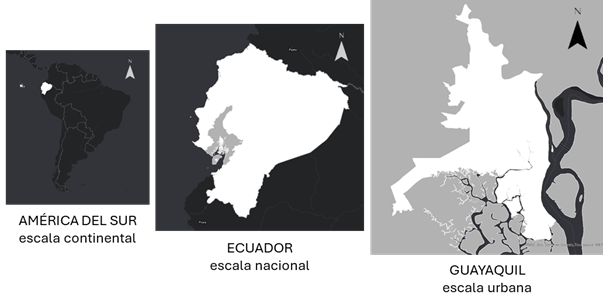
Figure 1. Location of Guayaquil,
Source: Authors’ own elaboration
Homicidal violence in Guayaquil is directly related to illicit drug trafficking, a phenomenon that further aggravates security conditions in the city, particularly in highly vulnerable areas (Cabezas et al., 2024; Flores, 2017). At the territorial level, the southern and northeastern districts of the city have been identified as the most affected by violence, requiring special attention in the allocation of resources and the implementation of effective security policies (Bravo, 2024; López, 2023). In particular, southern Guayaquil has become one of the areas most heavily impacted by intentional homicides (Calderón, 2023). In 2018, this zone accounted for 6% of all intentional homicides nationwide in Ecuador, with a total of 140 cases (Bravo, 2024). This rise in criminality not only demonstrates a public security crisis but also highlights the deep social and economic inequalities that disproportionately affect the city’s peripheral areas.
In Guayaquil, accelerated urbanization has produced peripheral zones characterized by informal settlements and pronounced socioeconomic inequality. Within these contexts of social vulnerability, the convergence of exclusion, lack of employment opportunities, limited investment in public services, and high levels of poverty creates fertile ground for criminal activity (Balladares-Valencia & Valencia-Balladares, 2022; Flores, 2017). This situation can be explained through social disorganization theory, which links a community’s inability to self-regulate with increased delinquency (Durkheim, 1893). The resulting phenomenon is the concentration of homicides in these areas—a pattern associated with how economic gaps exacerbate social conflicts and promote dynamics of violence (Bravo, 2024).
The pronounced socioeconomic hierarchy in cities such as Guayaquil (see Fig. 2) generates an exclusionary urban dynamic. While higher-income groups enjoy better infrastructure, greater connectivity, and access to higher-quality services, lower-income groups face deficits in basic services, weaker integration into the city, and daily life marked by insecurity. This segregation underpins the principles social ecology theory of crime (Shaw & McKay, 1942), which argues that areas with high poverty and residential mobility exhibit higher crime rates due to social disorganization. In Guayaquil, this is reflected in fragile community cohesion and the proliferation of criminal groups in marginalized areas.
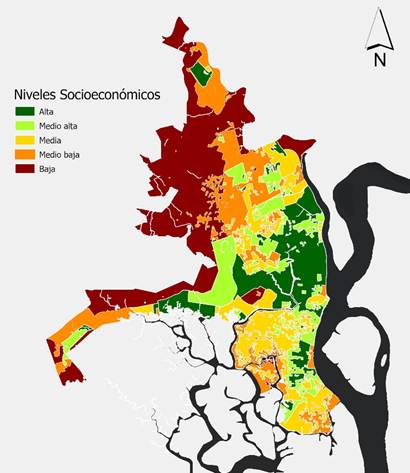
Figure 2. Socioeconomic Levels of Guayaquil
Authors’ own elaboration based on (dvargas-ec, 2024)
The analysis of intentional homicides in Guayaquil requires a deep understanding of the social and economic dynamics that shape the city. This study draws on three key theoretical frameworks: Anomie Theory, Social Exclusion Theory, and approaches from “ Critical Geography and the Production of Space” (see Fig. 3). These perspectives allow for an exploration of how socioeconomic inequalities, marginalization, and spatial configuration contribute to the generation of urban violence. Each of these theories provides an analytical framework for understanding the specific context of Guayaquil, where violence is not only a symptom of social breakdown but also an expression of the structural tensions present in the urban environment.
Structural Theories in the Study of Violence and Crime
Anomie Theory
Originally proposed by Émile Durkheim and later developed by Robert K. Merton, this theory explains how the lack of social integration and the conflict between cultural goals and the available means to achieve them generate deviant behavior ncluding violent acts. In the urban context, frustrated expectations of social mobility may contribute to increased homicide rates. Merton identified five possible adaptations to anomic conditions: conformity, innovation, ritualism, retreatism, and rebellion. In the case of urban violence, “innovation” is particularly relevant, as individuals who are unable to achieve socially valued goals through legitimate means may resort to illegal activities, such as organized crime. Agnew later expanded this framework through General Strain Theory, which incorporates not only frustration related to economic goals but also the loss of status and exposure to violent environments (Merton, 1968; Agnew, 1992).
Social Exclusion Theory
This theory argues that economic and social inequalities marginalize certain groups by limiting their access to resources and opportunities. Such exclusion not only affects the quality of life but also fosters criminal behavior as a means of resistance or survival. Castel further developed this concept by distinguishing between social exclusion and vulnerability. While exclusion implies a complete rupture from social and economic networks, vulnerability refers to a state of precariousness that may lead to exclusion if no intervention occurs. In urban contexts, social exclusion manifests in the formation of ghettos and marginalized areas, where violence becomes a form of identity affirmation and symbolic resistance (Silver, 1994; Castel, 1995; Wacquant, 2008).
Critical Geography and the Production of Space Approach
Henri Lefebvre and David Harvey argue that urban space is a social construction shaped by power relations and inequality. Within this framework, homicides are not merely isolated events but part of a broader phenomenon in which spatial dynamics—such as urban segregation—reinforce inequalities and social tensions. Lefebvre, in The Production of Space, contends that space is not simply a container of social activities but a product of social and economic relations. From this perspective, urban violence can be understood as a consequence of struggles over spatial control in contexts of inequality. Soja, in turn, introduces the concept of spatial justice, emphasizing the need to redistribute resources and opportunities equitably across urban space in order to reduce social tensions (Harvey, 1973; Lefebvre, 1974; Soja, 1989).
Taken together, these theories provide a solid foundation for analyzing homicides in Guayaquil, highlighting how socioeconomic inequality, social exclusion, and spatial dynamics are deeply interconnected with urban violence. This theoretical framework enables a comprehensive interpretation of the complex relationships between social and territorial factors within the city.
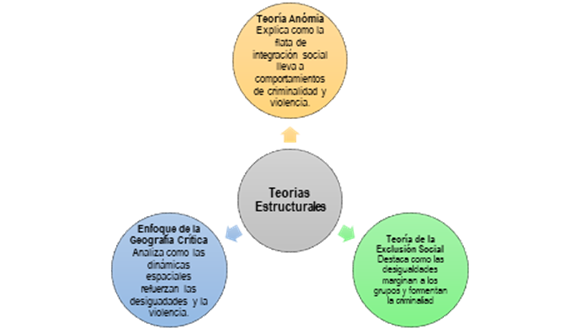
Figure 3. Summary of Key Structural Theories
Authors’ own elaboration.
In the case of Guayaquil, this type of violent crime has been addressed primarily in undergraduate and master’s theses (Bravo, 2024; Calderón, 2023; Flores, 2017; López, 2023; Porras, 2023), while scientific articles published in indexed journals remain scarce (Balladares-Valencia & Valencia-Balladares, 2022; Calderón, 2021; Cabezas et al., 2024). In general, these works analyze violence either as an overall phenomenon or focus specifically on homicides, adopting theoretical or descriptive perspectives (Balladares-Valencia & Valencia-Balladares, 2022; Calderón, 2023; Flores, 2017). Moreover, most of these studies rely on data prior to 2023 (Balladares-Valencia & Valencia-Balladares, 2022; Calderón, 2021), which limits an examination of the most recent urban violence crisis.
Other studies have focused on specific zones or dimensions of the city (Calderón, 2021, 2023; Bravo, 2024; Flores, 2017). More recent research has incorporated spatial analysis tools to examine the distribution of intentional homicides (Bravo, 2024), while others maintain a descriptive approach (Porras, 2023; Cabezas et al., 2024) or are oriented toward security management (López, 2023). However, none of these studies has examined in depth the relationship between socioeconomic levels and the territorial concentration of homicides—an aspect that constitutes the main contribution of the present study.
In this regard, the present research analyzes the spatial distribution of homicides in Guayaquil during 2023 and its relationship with the city’s socioeconomic levels. The central hypothesis posits that homicides tend to concentrate in areas with higher levels of economic and social inequality, thereby highlighting the influence of structural factors on the distribution of urban violence.
MATERIALS AND METHODS
This study employed Geographic Information System (GIS) tools to analyze the spatial distribution of homicides in Guayaquil during 2023 and their relationship with the city’s socioeconomic levels. Homicide data were obtained from official sources of the Ministry of Telecommunications and the Information Society (MTSI). The Kernel Density análisis was applied , using search radii of 2 and 3 kilometers, to identify areas with high concentrations of homicides. In addition, Space–Time Cubes and Emerging Hot Spot Analysis were used to examine the temporal and territorial evolution of violence, revealing the persistence or intensification of homicides in specific areas.
To assess the existence of non-random spatial patterns, the Global Moran’s I Index was calculated. The dataset included georeferenced intentional homicides and sociodemographic characteristics of the territory. This methodological approach was complemented by a theoretical framework based on Anomie Theory, Social Exclusion Theory, and contributions from Critical Geography, which allow violence to be analyzed as the outcome of social, economic, and urban tensions.
RESULTS AND DISCUSSION
Results
The main findings of the spatial analysis of intentional homicides in Guayaquil during 2023 are presented below. The results provide an overview of this crime by quantifying its magnitude and basic characteristics, as well as an integrated geospatial analysis combined with socioeconomic factors that reveals patterns of distribution and territorial concentration of the phenomenon.
Homicide Landscape in Guayaquil
The deterioration of security in Guayaquil is evidenced by the marked increased in intentional homicides (see Fig. 4), which rose by 884.3% between 2014 and 2023, a period during which a total of 6,296 intentional homicides were recorded (MTSI, 2024). This alarming escalation of violence prompted the central government to implement various strategies aimed at curbing this type of crime; however, these measures have failed to significantly contain criminal activity (CIDOB, 2021; Primicias, 2023).
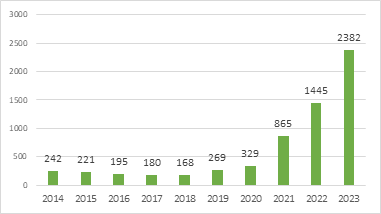
Figure 4. Intentional Homicides in Guayaquil, 2014–2023
Authors’ own elaboration based on MTSI (2024).
The year 2023 was particularly critical, in terms of public security with a total of 2,382 intentional homicides recorded in an urban population of 2,650,288 inhabitants (INEC, 2022). This corresponds to a homicide rate of 89.87 per 100,000 inhabitants, far exceeding the threshold of 10 homicides per 100,000 inhabitants, a level considered epidemic according to the United Nations Development Programme (UNDP, 2013).
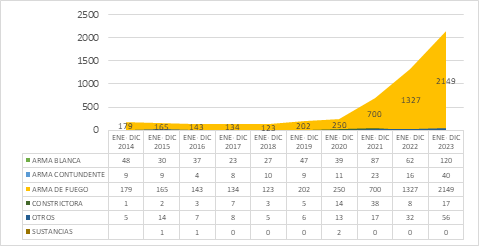
Figure 5. Intentional Homicides by Type of Weapon, 2014–2023 (January–December)
Authors’ own elaboration based on MTSI (2024).
There is a clear predominance of firearm use in the commission of intentional homicides (see Fig. 5). In 2023, a total of 2,149 homicides were perpetrated using firearms, followed by 120 homicides committed with bladed weapons, and 56 cases involving weapons not identified by the National Service of Legal Medicine and Forensic Sciences. Finally, homicides committed with blunt weapons (40 cases) and constricting methods (17 cases) were also recorded.
Regarding intentional homicides by age group (see Fig. 6), the most affected population comprises victims aged 25 to 30 years, representing 21.23% of the total homicides during the study period. This group is followed by victims aged 20 to 25 years (19.95%), 30 to 35 years (16.31%), and 35 to 40 years (11.25%). It is also noteworthy that homicides were recorded among children, adolescents, and young people aged 15 to 20 years, accounting for 10.47% of the total.
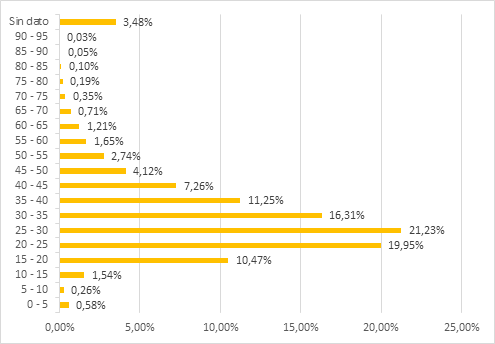
Figure 6. Intentional Homicides by Age Group, 2023
Authors’ own elaboration based on MTSI (2024).
Overall, Guayaquil is facing a severe security crisis, with homicide – related violence reaching epidemic levels and predominantly affecting the young adult population. The persistence of this phenomenon suggests the insufficiency of the strategies implemented to date, underscoring the need for a comprehensive approach that addresses the structural causes urban criminality.
Concentration of Homicides
Kernel Density Analysis made it possible to measure the intensity and concentration of homicides across different areas of Guayaquil, using search radii of 2 and 3 kilometers. The results reveal that homicides tend to concentrate in areas characterized by lower-middle and low socioeconomic levels, with a particularly high incidence in the northern and southern sectors of the city. In southern Guayaquil, the concentration is notably higher, reflecting significantly elevated intensity values. These areas are predominantly characterized by socioeconomic levels ranging from low and lower-middle class to middle class (see Fig. 7).
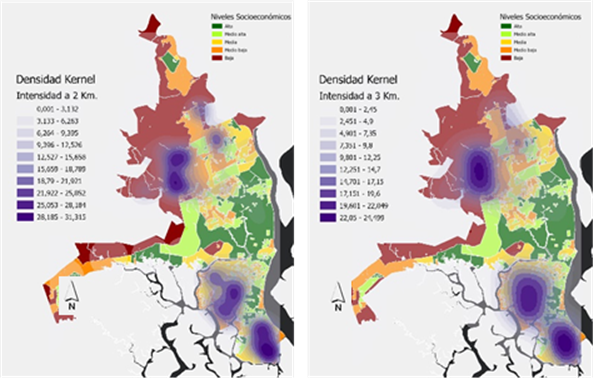
Figure 7. Kernel Density of Intentional Homicides, Guayaquil 2023
Authors’ own elaboration.
Comparison of Periods
A comparison was conducted of the percentage changes in homicides between the two semesters of 2023: January to June (Semester I) and July to December (Semester II). The results indicate that intentional homicides increased by more than 5% during the second semester, concentrating primarily in the southern and central areas of the city—zones characterized by lower-middle, upper-middle, and high socioeconomic levels.
By contrast, the northern and western sectors show a decrease in homicides exceeding 10%, particularly in areas predominantly inhabited by lower-middle, middle, and upper-middle classes (see Fig. 8).
.
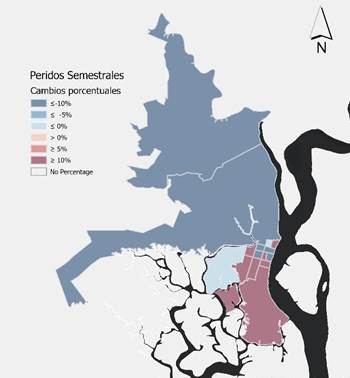
Figure 8. Percentage Changes in Homicides Between January–June and July–December 2023
Authors’ own elaboration.
Hot Spots
Hot spot analysis indicates that homicides affect all socioeconomic levels of the city; however, the impact is greater in low, lower-middle, and middle socioeconomic groups particularly in the northern and southern sectors of Guayaquil. In contrast, upper-middle and high socioeconomic strata show a lower incidence of homicides, mainly concentrated in the central areas of the city (see Fig. 9).
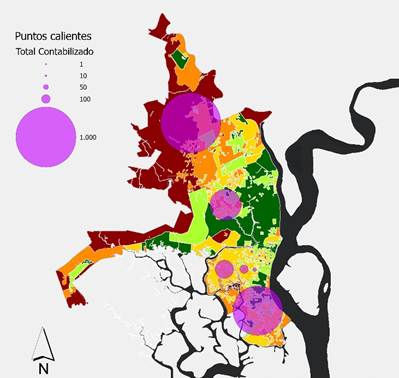
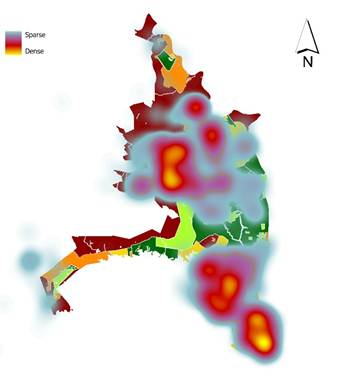
Figure 9. Identification of Homicide Hot Spots, 2023
Authors’ own elaboration.
Space–Time Cubes
Space–time cube uses Emerging Hot Spot Analysis, identified concentration patterns in specific areas. Persistent hot spots were observed in the northern and southern sectors of the city, along with consecutive hot spots and an intensifying hot spot in the south. These areas correspond primarily to middle and lower-middle socioeconomic zones, suggesting a potential association with socioeconomic factors such as poverty and organized criminal activity.
Additionally, sporadic cold spots were identified in the central area of the city, where upper-middle and high socioeconomic levels predominate and homicide incidence is lower. This analysis highlights the importance of examining spatio-temporal distributions to identify critical patterns and to design evidence-based security strategies (see Fig. 10).
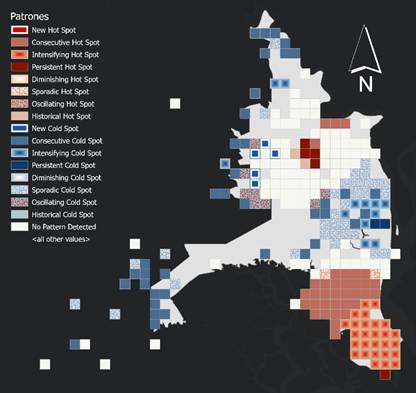
Figure 10. Space–Time Hotspots and Patterns of Homicides, 2023
Authors’ own elaboration.
Spatial Autocorrelation
The Global Moran’s I Index (Moran’s I = 0.304079; z-score = 2.557428; p-value = 0.010545) revealed a positive and statistically significant spatial autocorrelation (p < 0.05) in the distribution of homicides in Guayaquil, indicating that homicides tend to cluster spatially. This suggests that areas with high homicide rates are located near one another, while areas with low rates also form clusters. The statistical significance (z-score > 1.96) confirms that this pattern is non-random and may be associated with underlying social, economic, or geographic factors.
These results underscore the need to implement targeted security strategies and public policies focused on areas with the highest concentration of homicides in order to achieve more effective interventions (see Fig. 11). The findings confirm the existence of significant homicide clusters, providing a solid basis for the identification of critical areas.
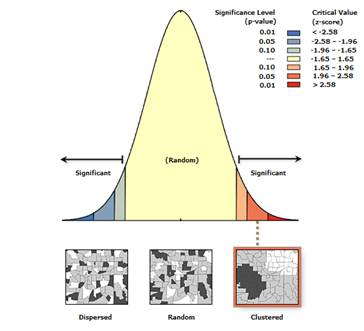
Figure 11. Global Moran’s I Index: Spatial Correlation of Homicides in Guayaquil
Authors’ own elaboration.
Discussion
The results obtained confirm the central hypothesis of this study, which posits that homicides tend to concentrate in areas with higher levels of economic and social inequality, mainly in the southern sectors and parts of the northern of the city, where lower and lower-middle socioeconomic groups predominate.
The positive spatial autocorrelation observed through Moran’s I, together with density and cluster analyses, demonstrates that violence is not randomly distributed but instead follows structural patterns linked to socioeconomic and territorial conditions. This finding is consistent with social exclusion theory (Silver, 1994; Castel, 1995; Wacquant, 2008), which argues that economic marginalization and limited access to resources and opportunities generate vulnerable environments in which violence may emerge as a form of resistance or survival. The spatial analysis of homicides in Guayaquil during 2023 provides important evidence confirming the interconnection between urban violence, socioeconomic inequality, and spatial configuration. These results not only complement existing theoretical perspectives but also pose new challenges for understanding and addressing this phenomenon.
Likewise, the spatial patterns identified reinforce the postulates of critical geography and the theory of the production of space (Lefebvre, 1974; Harvey, 1973; Soja, 1989) by showing that urban violence is a direct consequence of the unequal production of space. Unplanned urban expansion, residential segregation, and precarious conditions in peripheral neighborhoods create favorable conditions for criminal activity and territorial control by illegal groups. In this context, violence reflects not only social tensions but also disputes over the use and appropriation of urban territory.
Kernel Density Analysis and space–time cube techniques revealed clear patterns: while the southern part of the city emerges as a zone of high homicide intensity, the northern sector shows a significant decrease. These results are consistent with the principles of critical geography, which conceptualize violence not as an isolated phenomenon but as a direct outcome of spatial production and segregation (Lefebvre, 1974; Harvey, 1973). In this case, unplanned urban expansion, combined with weak community cohesion in marginalized areas, creates fertile ground for criminality and territorial control by criminal groups (Soja, 1989).
Finally, the persistence of homicide hotspots is consistent with the explanations provided by social disorganization theory (Shaw & McKay, 1942) and anomie theory (Durkheim, 1893; Merton, 1968; Agnew, 1992). Community fragmentation and the lack of social cohesion facilitate the persistence of criminal activity continuity of crime, while frustrated expectations of social mobility and the absence of legitimate means drive deviant behavior. Taken together, the results show that homicidal violence in Guayaquil is the product of the interaction between socioeconomic inequality, social exclusion, and spatial segregation, underscoring the need for comprehensive public policies aimed at reducing structural gaps and promoting greater social and territorial justice.
CONCLUSION
The study confirms a significant relationship between homicides in Guayaquil and socioeconomic inequality, as evidenced by the concentration of cases in southern sectors and parts of the northern areas of the city., which are characterized by socioeconomic poverty, social exclusion, and urban segregation. These patterns support the postulates of social exclusion theory, anomie theory, and critical geography, suggesting that urban violence is not an isolated phenomenon but rather an expression of structural tensions derived from the unequal production of space and the inequitable distribution of resources.
The persistence of violence hotspots and their positive spatial correlation reveal consolidated criminal dynamics and limited institutional capacity to intervene effectively in the most affected territories. These findings highlight the need for integrated public policies that combine citizen security, urban planning, and social inclusion, promoting spatial justice as a guiding principle for reducing the structural gaps that sustain violence.
Although the analysis focused exclusively on homicides and a single annual period—thereby acknowledging an important limitation—the findings provide a solid foundation for future multi-year and multivariate research that incorporates other types of crime and social factors. Such approaches will allow for a deeper understanding of the complexity of urban violence and will strengthen the formulation of evidence-based prevention strategies.
REFERENCES
Agnew, R. (1992). Foundation for a General Strain Theory of Crime and Delinquency. Criminology, 30(1), 47–87.
ANE. (2014). Comprehensive Organic Criminal Code [COIP]. National Assembly of Ecuador (ANE). Official Gazette Supplement No. 180 of February 10, 2014. Latest amendment published in Official Gazette Supplement No. 392 of February 17, 2021.
Balladares-Valencia, & Valencia-Balladares. (2022). Escalation of violence, motivation, and characterization in Guayaquil. Alternativas, 23(1), 39–46.
Bravo, M. (2024). Spatio-Temporal Modeling for the Prediction of Homicides: Case Study of Guayaquil [Undergraduate thesis, ESPOL]. http://www.dspace.espol.edu.ec/handle/123456789/60868
Briceño-León, R. (2007). Urban violence in Latin America: A sociological model. Revista Mexicana de Sociología, 69(3), 435–467.
Buzan, B., Wæver, O., & de Wilde, J. (1998). Security: A New Framework for Analysis. Lynne Rienner Publishers.
Cabezas, G. P., Rodríguez, M. S., Sierra, J. I., & Flórez, M. H. (2024). Incidence of social and economic factors on crime in Guayaquil, Ecuador. Revista Logos Ciencia & Tecnología, 16(2), 10–23.
Calderón, L. (2021). Violence in the Southern District of Guayaquil in 2020: Analysis based on the intentional homicide indicator. Innovación & Saber, 2(2), 6–14.
Calderón, L. (2023). Increase in homicidal violence in the Southern District of the Canton of Guayaquil, period 2019–2022 [Master’s thesis, Universidad Andina Simón Bolívar]. http://hdl.handle.net/10644/9485
Castel, R. (1995). The Metamorphoses of the Social Question: A Chronicle of Wage Labor. Fayard.
CCSPJP AC. (2024). Methodology of the 2023 Ranking of the 50 Most Violent Cities in the World. Retrieved January 16, 2025, from https://geoenlace.net/seguridadjusticiaypaz/archivo/7a7399_f4484d750a.pdf
CIDOB. (2021). State of Emergency in Ecuador: Internal Security Crisis and Regional Threat. Retrieved March 3, 2025, from https://www.cidob.org/publicaciones/estado-de-excepcion-en-ecuador-crisis-de-seguridad-interna-y-amenaza-regional
Durkheim, É. (2013). The Division of Labor in Society (Original work published 1893). Losada.
dvargas-ec. (2024). GIS SBP GUAYAQUIL: Socioeconomic Levels Layer [GIS layer]. ArcGIS Online. Retrieved March 3, 2025, from https://www.arcgis.com/home/item.html?id=94d82c3b0c0b41a28f2eceb8c3c27c5b
Flores, P. (2017). Impact of micro-trafficking on homicides in the Portete District of the city of Guayaquil, 2013–2014 [Master’s thesis, IAEN University]. http://repositorio.iaen.edu.ec/handle/24000/5213
Giddens, A. (1990). The Consequences of Modernity. Stanford University Press.
Harvey, D. (1973). Social Justice and the City. Edward Arnold.
Herbert, D. T. (1982). The Geography of Urban Crime. Longman.
INEC. (2022). Ecuador Census. National Institute of Statistics and Census (INEC). Retrieved March 3, 2025, from https://www.censoecuador.gob.ec/
Lefebvre, H. (1974). The Production of Space. Éditions Anthropos.
López, R. (2023). Security management and citizen participation in southern Guayaquil, 2023 [Master’s thesis, Universidad César Vallejo]. https://hdl.handle.net/20.500.12692/129403
Merton, R. K. (1968). Social Theory and Social Structure. Free Press.
Moser, C., & McIlwaine, C. (2004). Encounters with Violence in Latin America: Urban Poor Perceptions from Colombia and Guatemala. Routledge.
MTSI. (2024). Intentional Homicides – Open Data Ecuador. Ministry of Telecommunications and the Information Society (MTSI). Open Data Catalog. Retrieved January 16, 2025, from https://datosabiertos.gob.ec/dataset/homicidios-intencionales/resource/36b055c8-e10c-4e57-ba25-3046ca5ef15d
Newman, O. (1972). Defensible Space: Crime Prevention Through Urban Design. Macmillan.
OECO. (2025). Semiannual Bulletin on Intentional Homicides in Ecuador: Statistical Analysis, First Semester of 2025 (Bulletin No. 4). Ecuadorian Observatory of Organized Crime (OECO) – Pan American Development Foundation (PADF). https://oeco.padf.org/wp-content/uploads/2025/08/Boletin-semestral-de-homicidios-Primer-semestre-de-2025_compressed.pdf
PNUD. (1994). Human Development Report 1994. United Nations Development Programme.
PNUD. (2013). Regional Human Development Report 2013–2014: Citizen Security with a Human Face. Diagnosis and Proposals for Latin America. United Nations Development Programme. https://www.undp.org/latin-america/publications/human-development-report-latin-america-2013-2014-0
Porras, J. (2023). Power disputes among criminal gangs and the increase in violence and crime in the city of Guayaquil during 2023 [Master’s thesis, Universidad Uniandes]. https://dspace.uniandes.edu.ec/handle/123456789/17021
Primicias. (2023). How the new state of emergency will be applied in Guayaquil. Retrieved March 3, 2025, from https://www.primicias.ec/noticias/politica/aplicacion-nuevo-estado-excepcion-guayaquil/
Shaw, C. R., & McKay, H. D. (1942). Juvenile Delinquency and Urban Areas. University of Chicago Press.
Silver, H. (1994). Social exclusion and social solidarity: Three paradigms. International Labour Review, 133(5–6), 531–578.
Soja, E. W. (1989). Postmodern Geographies: The Reassertion of Space in Critical Social Theory. Verso.
Wacquant, L. (2008). Urban Outcasts: A Comparative Sociology of Advanced Marginality. Polity Press.
Welzel, H. (1956). Criminal Law: General Part (C. Fontán Balestra, Trans.). Roque Depalma Editor. Retrieved March 3, 2025, from https://img.lpderecho.pe/wp-content/uploads/2021/09/Descarga-en-PDF-Derecho-Penal-Parte-General-de-Hans-Welzel-LP.pdf
Zimring, F. E., & Hawkins, G. (1997). Crime Is Not the Problem: Lethal Violence in America. Oxford University Press.
CONFLICTS OF INTEREST
The authors declare no conflicts of interest.