INTRODUCTION
Emotional dependency (ED) and social skills have gained relevance in contemporary research due to their significant impact on mental health and interpersonal relationships. ED, characterized by an intense desire for affection and validation, manifests in multiple consequences for individuals’ physical and psychological well-being. Global research has begun to link ED with violence in romantic relationships, highlighting that individuals tend to experience a decline in the development of their social skills and difficulties in emotional regulation (Sabina, 2021).
ED is more prevalent among women and adolescents who have experienced abuse by their partners (Chafla & Lara, 2021). The United Nations (UN, 2015; as cited in Sabina, 2021) reports that about 33% of women worldwide have experienced physical or sexual violence. In this context, Aiquipa (2015) found a significant correlation between partner violence and emotional dependency, revealing that 96% of women who experienced violence showed high levels of emotional dependency compared to those who had not.
The characteristics of ED, observed in romantic relationships beginning in adolescence, include a constant need for the partner's presence, difficulty ending toxic relationships, and problems setting boundaries (Ramírez, 2019). These characteristics are reflected in data from the National Institute of Statistics and Censuses (INEC, 2019), which indicates that in Ecuador, 64.9% of women experience partner violence, with 40.8% being psychological and 25.0% physical. The main source of this violence lies in the power disparity between men and women. Thus, the connection between ED and gender-based violence is noted in numerous studies, suggesting that although ED does not always lead to violence, many Ecuadorian women who have suffered violence also show signs of emotional dependency (Sandoval, 2021).
On the other hand, the development of social skills in adolescents is essential for adapting to their environment and forming healthy relationships. Adolescents who appropriately develop these skills are better equipped to communicate effectively, resolve conflicts constructively, and establish positive bonds with peers, friends, family, and authority figures (Andrade et al., 2020). Likewise, Sacaca and Pilco (2022) found that 35.9% of adolescents in Caya, Peru, exhibited low social skills. Meanwhile, Romero (2023) reported that women who were victims of violence in Caraz, Peru, had lower levels of social skills (43.6%) compared to non-victims (34.7%).
Emotional Dependency
Emotional dependency is characterized by an intense and disproportionate desire for affection, which leads to the adoption of unhealthy behavioral patterns, often associated with violence in romantic relationships (Yupanqui, 2022). This state of extreme dependency not only generates a constant need for validation and attention from the partner but may also lead to possessive behaviors, fear of abandonment, difficulty establishing healthy boundaries, and strong emotional attachment to the relationship, even when it is harmful.
The consequences of ED can be severe. According to Díaz and Morales (2021), emotional dependency can lead to a life focused exclusively on the partner, increasing the risk of suffering physical and mental abuse. Psychologically, there is a deterioration of self-esteem, emergence of fear of loneliness, and social isolation. In terms of mental health, ED is associated with disorders such as anxiety, depression, stress, and the loss of autonomy and personal identity. Moreover, it may hinder decision-making and create a repetitive cycle of breakups and reconciliations (Díaz & Morales, 2021).
Social Skills
According to Beck (2011), social skills are defined as the ability to interact effectively in various situations, encompassing competencies such as verbal and non-verbal communication, relationship-building, empathy, conflict resolution, and appropriate emotional expression. These skills allow individuals to express their feelings, opinions, and desires appropriately, facilitating social adaptation and emotional well-being.
The development of social skills begins in early life stages and is influenced by factors such as the family environment, education, peer relationships, culture, and emotional education (Córdova et al., 2022). These factors interact over time, shaping an individual's social capacity, while assertive communication—based on values like respect and honesty—is essential for establishing healthy interpersonal relationships.
Adolescence and Romantic Relationships
During adolescence, initial romantic relationships often evolve from existing friendships and play a crucial role in emotional development by offering attachment, support, care, and the satisfaction of emotional and, at times, sexual needs. However, these relationships are not without risks. Several studies have indicated that adolescents frequently engage in a clumsy form of courtship known as 'dirty dating,' which, although perceived as a sign of interest, can include rough behaviors that are accepted and normalized within this age group (Gómez & Viejo, 2020).
This courtship pattern, although part of adolescent dynamics, poses a significant risk by encouraging violent behaviors in future relationships. Thus, some studies have shown that a considerable number of adolescents are involved in violent dynamics in their first romantic relationships, negatively affecting their well-being and forming a pattern of aggressive relationships known as 'dating violence' (Gómez & Viejo, 2020).
In this context, an alternative hypothesis was proposed suggesting the existence of a correlation between emotional dependency and social skills in adolescents. The relevance of this study lies in understanding the relationship between these variables during adolescence, addressing the theoretical gap that exists on this topic at the local level. This understanding is crucial for providing reliable information to families, psychologists, and educational institutions, in order to prevent and reduce problems associated with emotional dependency and to promote the development of healthy social skills.
The general objective of the study was to determine the relationship between emotional dependency and social skills in adolescents aged 14 to 16 from an educational institution. Finally, the specific objectives were to identify the level of emotional dependency and the level of social skills in adolescents, as well as to establish the differences in emotional dependency according to the gender of the participants.
METHODOLOGY
This research adopted a quantitative approach, as it measures social phenomena and establishes relationships between variables (Bernal, 2010). A non-experimental design was used, also known as 'explanatory or causal research,' which aims to verify hypotheses, contrast scientific laws, and analyze the interactions between the studied variables. The study was cross-sectional because data collection was conducted at a single time and place. According to Hernández and Mendoza (2018), this type of study aims to describe variables, assess situations, and analyze the relationship between specific variables at a given moment. Finally, the study had a descriptive-correlational scope, focusing on examining the relationship between emotional dependency and social skills among the participating adolescents. According to Guillen et al. (2020), this type of study describes the properties and characteristics of phenomena through data analysis, where two or more variables are related, and these relationships may be directly proportional (positive) or inversely proportional (negative).
The study was conducted at the Brethren Educational Unit in the city of Quito, with a finite population of 215 students aged between 14 and 16. According to Bernal (2010), such a population is characterized by knowing the total number of individuals it comprises. To determine the sample size, the statistical equation for population proportions was used, considering a 5% margin of error and a 95% confidence level. With these parameters, a sample of 142 participants was obtained. The formula used for sample calculation was:
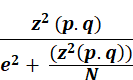
n = Sample size
z = Desired confidence level
p = Proportion of the population with the desired characteristic (success)
q = Proportion of the population without the desired characteristic (failure)
e = Acceptable margin of error
N = Population size
To distribute the sample, stratified probability sampling was employed, which according to Hernández et al. (2014), consists of dividing the population into groups or strata and selecting a sample from each. In this case, the population was stratified by the participants' gender. The appropriate formula was applied to calculate the sample size for each stratum to reduce variance within each stratum's sample mean. As Hernández et al. (2014) point out, when a specific number of sample elements is available (n = Σ nh), the variance of the sample mean can be minimized if the sample size in each stratum is proportional to the standard deviation of that group. This is expressed as:

Where the sample (n) equals the sum of the sample elements (nh). This implies that it is possible to reduce the size of (n) and the variance if subsamples proportional to the standard deviation of each stratum are created, which is expressed as: fh = nh/Nh = ksh. Where (nh) and (Nh) represent the sample size and population of each stratum, respectively, and (sh) is the standard deviation within a stratum. Consequently, it follows that: ksh = nh/Nh. Therefore, to determine the sample size of each stratum, the subpopulation size is multiplied by this constant fraction, resulting in: (Nh)(fh) = nh. In this way, the appropriate sample size for each gender-stratified stratum was obtained.
Likewise, inclusion, exclusion, and elimination criteria were considered for selecting the study population.
Inclusion Criteria
· Adolescents who signed the informed assent, demonstrating their willingness to participate in the research.
· Adolescents whose parents or legal guardians signed the informed consent for participation, allowing them to be included in the study.
· Adolescents aged 14 to 16 who have or have had a romantic relationship, since this research addressed the variable of emotional dependency in romantic contexts.
Exclusion Criteria
· Adolescents who have never had a romantic relationship, as relevant information for the variable of emotional dependency could not be obtained.
· Adolescents from the educational institution who had intellectual or hearing disabilities, as the instruments were not adapted for this population.
Elimination Criteria
· Adolescents who met the inclusion criteria but did not complete any phase of the research, especially the application of any psychological scale, since incomplete data could not be used for analysis.
To measure the variable "emotional dependency," the Couples Emotional Dependency Scale for Adolescents (EDEA) was used. This instrument is designed for youth aged 12 to 18 and evaluates various aspects of emotional dependency in romantic relationships. In the psychometric analysis of the instrument, Aiken’s V coefficient was used to assess content validity, eliminating items with a coefficient lower than 0.80, which reduced the total number of items from 83 to 78. The binomial test yielded a value lower than 0.05, indicating agreement among the judges and supporting the content validity of the instrument. Confirmatory factor analysis showed that the six dimensions of the instrument explained 39.7% of the total variability, thus validating the construct evaluated. The instrument’s internal reliability was confirmed with Cronbach’s alpha levels ranging from 0.759 to 0.960, demonstrating acceptable reliability indices across all assessed areas (Vidal, 2019).
The variable "social skills" was assessed using Goldstein’s Social Skills Assessment Scale, which covers various aspects such as basic social skills, advanced social skills, skills related to emotional understanding, alternatives to aggression, stress management skills, and organizational skills, applicable to individuals aged 12 and older. The psychometric analysis of the Social Skills Checklist revealed significant internal correlations (p< .05, .01, and .001) among the items, with no need to remove any, supporting the instrument's validity. Furthermore, all subscales showed a highly significant positive correlation (p < .001) with the total social skills score, confirming their contribution to the comprehensive assessment of these skills. Regarding reliability, a test-retest analysis using Pearson’s Product-Moment correlation coefficient showed a significant correlation (r = 0.6137, t = 3.011, p < .01) with a four-month interval between tests. Cronbach’s Alpha for internal consistency was 0.9244, indicating high precision and stability of the scale. These results demonstrate the instrument’s reliability and validity for evaluating social skills (Tomás, 1995).
Finally, a sociodemographic survey was administered to collect basic data such as age and gender, which are essential to achieving the study’s objectives. The survey was validated through expert judgment from the Faculty of Psychological Sciences at the Central University of Ecuador. Experts were selected based on their professional background in child and clinical psychology with substantial experience in the subject, ensuring the instrument's rigor and relevance.
For data analysis, Microsoft Excel 2013 (version 15.0) was used to systematize the information collected through sociodemographic surveys and psychological instruments. Measures of central tendency such as arithmetic mean and mode were calculated to support subsequent analysis. Additionally, IBM SPSS version 26 statistical software was used to determine correlations between variables and evaluate the correlation level in accordance with the research objectives. The results were presented in frequency tables for the survey data and cross-tabulations for the variable correlations.
Regarding the variables of emotional dependency and social skills, the previously mentioned tests were administered after confirming their feasibility with the selected population. Subsequently, a normality test of the variables was conducted, followed by the use of a linear regression model with Pearson’s correlation coefficient (r). A correlation analysis between both variables was then performed using IBM SPSS version 26. The scores of one variable were contrasted with those of the other within the same group of participants. The direction of the correlation (positive or negative) was established through the sign, while the magnitude was determined by the numerical value (Hernández & Mendoza, 2018).
It is important to note that the instruments used in this research are not specifically validated in Ecuador. However, they were developed in Latin American countries with similar contexts and are available in Spanish, which facilitates their understanding and application in the Ecuadorian context. Finally, the study lasted approximately 10 months from the formulation of the problem to the completion of the article writing, ensuring a rigorous and systematic process in each phase of the research.
RESULTS
To better understand the sample composition by age, the age distribution of participants was analyzed. Table 1 shows this distribution, revealing that the mode is 14 years, with 70 adolescents, representing 49% of the total sample. This high prevalence is attributed to the fact that most participants were in the tenth year of Basic General Education (B.G.E.), explaining the significant proportion of 14-year-olds in the study.
Table 1
Ages of Adolescent Participants
|
Number of Adolescents |
|
Frequency |
|
|
14 15 16 |
70 57 15 |
|
49%* 40% 11% |
|
Total |
142 |
|
100% |
Note: Own elaboration.
Table 2 shows the gender distribution of adolescents. Most participants identified as female, with a total of 70 individuals, accounting for 49% of the sample. However, the difference with the male gender was minimal, with only two more female participants. Other genders had very little or no presence in the sample.
Table 2
Gender of Adolescent Participants
|
Gender |
Number of Adolescents |
Frequency |
|
Male |
68 |
48% |
|
Female |
70 |
49%* |
|
Bigender |
1 |
1% |
|
Intergender |
0 |
0% |
|
Gender Fluid |
2 |
1% |
|
Agender |
1 |
1% |
|
Other |
0 |
0% |
|
Total |
142 |
100% |
Nota: Elaboración propia.
Regarding the general objective, Table 3 presents the analysis of the correlation between emotional dependency and social skills using Pearson’s correlation coefficient. A correlation coefficient of 0.109 and a bilateral significance value of 0.199 were found. Since this significance value is greater than 0.05, it is concluded that there is no statistically significant relationship between emotional dependency and social skills in the studied sample.
Table 3
Correlation between Emotional Dependency and Social Skills
|
|
Total Social Skills |
|
|
Total Emotional Dependency |
Pearson Correlation |
,109 |
|
Sig. (2-tailed) |
,199 |
|
|
N |
142 |
|
Note: Own elaboration.
Table 4 addresses the first specific objective, which consisted of identifying the level of emotional dependency in adolescents. The data indicate that the majority of students fall into an average level of emotional dependency, representing 40.1% of the sample.
Table 4
Level of Emotional Dependency in Adolescents Aged 14 to 16
|
|
Frequency |
Percentage |
|
|
Level |
Very |
27 |
19,0% |
|
Low |
32 |
22,5% |
|
|
Average |
57 |
40,1%* |
|
|
High |
17 |
12,0% |
|
|
Very High |
9 |
6,3% |
|
|
Total |
142 |
100,0% |
|
Note: Own elaboration.
Table 5 presents the second objective of the study, revealing that the most frequent level of social skills among participating adolescents corresponds to a good level, with a percentage of 55.6%.
Table 5
Level of Social Skills in Adolescents Aged 14 to 16
|
|
Frequency |
Percentage |
|
|
Level |
Excellent Level |
12 |
8,5% |
|
Good Level |
79 |
55,6%* |
|
|
Normal Level |
51 |
35,9% |
|
|
Total |
142 |
100,0% |
|
Note: Own elaboration.
Finally, the third specific objective is addressed in Table 6, which analyzes the difference in emotional dependency levels according to the participants’ gender. The results show that there is no significant disparity between emotional dependency levels and gender. Most adolescents fall into the average level, with 20% of the male sample and 18% of the female sample in this category.
Table 6
Difference in Emotional Dependency by Gender among Adolescents Aged 14 to 16
|
|
LEVEL OF EMOTIONAL DEPENDENCY |
|
||||||||||
|
|
Very Low |
% |
Low |
% |
Average |
% |
Hight |
% |
Very Hight |
% |
Total |
|
|
GENDER |
Male |
16 |
11% |
14 |
9% |
29 |
20%* |
5 |
4% |
4 |
3% |
68 |
|
Female |
11 |
8% |
18 |
12% |
26 |
18% |
11 |
8% |
4 |
3% |
70 |
|
|
Bigender |
0 |
0% |
0 |
0% |
1 |
1% |
0 |
0% |
0 |
0% |
1 |
|
|
Gender fluid |
0 |
0% |
0 |
0% |
0 |
0% |
1 |
1% |
1 |
1% |
2 |
|
|
Agender |
0 |
0% |
0 |
0% |
1 |
1% |
0 |
0% |
0 |
0% |
1 |
|
|
Total |
27 |
19% |
32 |
21% |
57 |
40% |
17 |
13% |
9 |
7% |
142 |
|
Note: Own elaboration.
DISCUSSION
In Ecuador, there is a theoretical gap regarding the variables addressed in this study; therefore, the results cannot be contrasted with other national research. However, literature from neighboring countries was found. Analyzing the results of this study, a Pearson correlation coefficient of 0.109 and a bilateral significance level of 0.199 were observed. These values indicate no statistically significant relationship between emotional dependency and social skills among the participating adolescents. This finding contrasts with the research of Calla and Uyuquipa (2015), who identified a significant inverse correlation between social skills and emotional dependency, indicating that a lack of social skills tends to be associated with high levels of emotional dependency, where an increase in one variable leads to a decrease in the other.
Similarly, a study conducted by García (2024) in Tarapoto, Peru, with third-grade students found a very high inverse relationship between social skills and emotional dependency, reporting a correlation coefficient of -0.888 and a significance level of 0.000. This suggests that higher social skills correspond to lower emotional dependency. In addition, Sabina (2021) in Arequipa, Peru, found a significant inverse relationship between emotional dependency and social skills in young people and adults who were victims of intimate partner violence, with a Spearman's rho correlation coefficient of -0.605, indicating that high levels of emotional dependency are associated with a reduction in social skills.
Regarding the levels of emotional dependency and social skills, this study’s data reveal that 40.1% of adolescents exhibit an average level of emotional dependency, while 55.6% show a good level of social skills. In contrast, San Miguel (2023) found that 67% of their sample presented a moderate level of emotional dependency, and similarly, 67% were at a medium level of social skills. García (2024) reported a moderate level of social skills in 45% of their sample, 31% had an adequate level, and 23% believed their social skills were inadequate. Regarding emotional dependency, 45% of students had a moderate level, 35% had an adequate level, and only 20% presented a normal or adequate level of emotional dependency. This differs from the present study, where only 12% showed a high level of emotional dependency and 6.3% a very high level, while 35.9% were at a normal level of social skills and most were at a good level (55.6%).
Similarly, no significant difference was found between emotional dependency levels and participants’ gender, with 20% of males and 18% of females showing average levels. Conversely, Espil’s (2016) study on emotional dependency in teachers revealed that 50% of men exhibited low or normal levels, compared to 34.8% of women who displayed high emotional dependency. This highlights the lack of significant gender variation in our study, as opposed to Espil’s findings, which indicate that males tend to have lower emotional dependency levels than females.
In summary, when comparing the findings of this study with previous research, a general trend of significant negative relationship between emotional dependency and social skills emerges—except in this particular study. This discrepancy might be explained by differences in the studied population, as most prior studies focused on adults, while this one examined adolescents. Literature suggests that emotional dependency tends to be more pronounced in adulthood, whereas adolescents may have more opportunities to develop social skills due to their greater exposure to interpersonal relationships within educational settings, extracurricular activities, family, and more.
CONCLUSIONS
The results of this study did not show a significant relationship between emotional dependency and social skills in the participating adolescents. This suggests that the interaction between these variables may be influenced by additional factors not considered in this research, such as family environment, socioeconomic context, or the participants’ personal experiences. Variations in the sample in terms of age, gender, or other demographic aspects may have also influenced the absence of a significant correlation.
Regarding emotional dependency, most adolescents presented average levels, which could reflect the influence of specific contextual factors such as family environment, education system, and social interactions. These elements play a key role in the development of emotional dependency during adolescence.
With respect to social skills, most adolescents showed a good level, suggesting they have developed effective social competencies due to positive experiences and support received in their family, school, and social environments. This reinforces the idea that the development of social skills is closely linked to the quality of the environment in which adolescents live.
Lastly, no significant differences were found in emotional dependency levels according to gender. Most participants were at an average level, indicating that emotional dependency may manifest similarly across genders in this specific group. This finding may be related to common factors in the participants’ environment, such as school or family context, which influence adolescents uniformly regardless of gender.
In conclusion, the findings of this study call for reconsideration of the interaction between emotional dependency and social skills during adolescence and suggest incorporating broader contextual and demographic variables in future research. They also underscore the importance of family and social environments in developing emotional and social competencies at this stage of life.
BIBLIOGRAPHIC REFERENCES
Aiquipa, J. (2015). Dependencia emocional en mujeres víctimas de violencia de pareja. Revista de Psicología, 33(2), 412-437. https://doi.org/10.18800/psico.201502.007
Andrade, J., Mendoza, M., Zapata, K., & Sierra, L. (2020). Relación entre conflictos de la adolescencia y habilidades sociales en adolescentes de una Institución Educativa de Risaralda. Pensamiento Americano, 13(25), 52-61. https://doi.org/10.21803/pensam.13.25.385
Beck, J. (2011). Cognitive Behavior Therapy (Segunda ed.). The Guilford Press. https://img3.reoveme.com/m/be38edbbfc79330a.pdf
Bernal, C. (2010). Metodología de la Investigación. Pearson Educación. http://librodigital.sangregorio.edu.ec/librosusgp/B0061.pdf
Calla, D., & Uyuquipa, J. (2015). Habilidades sociales y dependencia emocional en los estudiantes del quinto año de la Institución Educativa Secundaria Industrial Perú Birf de la ciudad de Juliaca, 2014. https://repositorio.upeu.edu.pe/bitstream/handle/20.500.12840/402/Denis_Justo_Tesis_bachiller_2015.pdf?sequence=1&isAllowed=y
Chafla, N., & Lara, J. (2021). Dependencia emocional y violencia en mujeres atendidas en la Fundación Nosotras con Equidad, de Riobamba. Revista Médica Electrónica, 43(5), 1328-1344. http://scielo.sld.cu/pdf/rme/v43n5/1684-1824-rme-43-05-1328.pdf
Córdova, J., Hidrobo, J., Morejón, G., Coral, D., Calvopiña, E., Jaramillo, K., . . . Amaya, D. (2022). Factores conexos al desarrollo de habilidades Sociales en estudiantes de bachillerato. Ciencia Latina, 6(5), 4561-6580. https://doi.org/10.37811/cl_rcm.v6i5.3417
Díaz, D., & Morales, A. (2021). Dependencia emocional en las relaciones violentas de pareja. http://repositorio.puce.edu.ec/bitstream/handle/22000/18944/TESIS%20COMPLETA%20D%c3%adaz%20y%20Morales.pdf?sequence=1&isAllowed=y
Espil, J. (2016). Dependencia emocional según género en docentes casados de colegios privados de la provincia de Chepén. https://repositorio.upao.edu.pe/bitstream/handle/20.500.12759/1837/RE_DERECHO_DEPENDENCIA.EMOCIONAL.SEGÚN.GÉNERO.DOCENTES.CASADOS_TESIS.pdf?sequence=1&isAllowed=y
García, D. (2024). Las habilidades sociales y su relación con la dependencia emocional de los estudiantes del 3er. grado de una institución educativa, Tarapoto, 2024. Universidad César Vallejo: https://hdl.handle.net/20.500.12692/154239
Gómez, L., & Viejo, C. (2020). Mitos del Amor Romántico y Calidad en las Relaciones Sentimentales Adolescentes. Revista Iberoamericana de Psicología: Ciencia y Tecnología, 13(1), 150-161. https://doi.org/10.33881/2027-1786.rip.13114
Guillen, O., Sánchez, M., & Begazo, L. (2020). Pasos para elaboración una tesis de tipo correlacional (Primera ed.). Biblioteca Nacional de Perú. https://cliic.org/2020/Taller-Normas-APA-2020/libro-elaborar-tesis-tipo-correlacional-octubre-19_c.pdf
Hernández, R., & Mendoza, C. (2018). Metodología de la investigación. Las rutas cuantitativa, cualitativa y mixta. McGraw Hill. http://www.biblioteca.cij.gob.mx/Archivos/Materiales_de_consulta/Drogas_de_Abuso/Articulos/SampieriLasRutas.pdf
Hernández, R., Fernández, C., & Baptista, P. (2014). Metodología de la Investigación. México: McGraw Hill.
Instituto Nacional de Estadísticas y Censos. (2019). Encuesta Nacional sobre Relaciones Familiares y Violencia de Género contra las Mujeres (ENVIGMU). Instituto Nacional de Estadísticas y Censos: https://www.ecuadorencifras.gob.ec/documentos/web-inec/Estadisticas_Sociales/Violencia_de_genero_2019/Boletin_Tecnico_ENVIGMU.pdf
Ramírez, C. (2019). Bienestar psicológico y dependencia emocional en adolescentes de secundaria de dos instituciones educativas de Cercado de Lima, 2019. Universidad César Vallejo: https://repositorio.ucv.edu.pe/bitstream/handle/20.500.12692/36770/Ramirez_RCS.pdf?sequence=1&isAllowed=y
Romero, H. (2023). Habilidades sociales, resiliencia y dependencia emocional en mujeres víctimas y no víctimas de violencia de pareja del distrito de Caraz. Journal of neuroscience and public health, 3(1), 341-366. https://doi.org/10.46363/jnph.v3i1.5
Sabina, W. (2021). Dependencia emocional y habilidades sociales en jóvenes y adultos víctimas de violencia de pareja de la provincia de Arequipa, 2021. Universidad César Vallejo: https://hdl.handle.net/20.500.12692/87192
Sacaca, L., & Pilco, R. (2022). Habilidades sociales en estudiantes de educación secundaria. Revista Estudios Psicológicos, 2(4), 109-120. https://doi.org/10.35622/j.rep.2022.04.009
San Miguel, D. (2023). Dependencia emocional y habilidades sociales en estudiantes en una Universidad Privada de Lima Metropolitana. https://repositorio.urp.edu.pe/bitstream/handle/20.500.14138/6439/T030_74692913_T%20%20%20SAN%20MIGUEL%20CARHUAS%20DERECK%20ERICK%20LUIS.pdf?sequence=1&isAllowed=y
Sandoval, J. (2021). Habilidades Sociales y Dependencia Emocional en Estudiantes de una Facultad de una Universidad de Ambato - Ecuador. Universidad Peruana Cayetano Heredia: https://repositorio.upch.edu.pe/bitstream/handle/20.500.12866/9071/Habilidades_SandovalVillalba_Juan.pdf?sequence=1&isAllowed=y
Tomás, A. (1995). Escala de Evaluación de Habilidades Sociales. Biblioteca de Psicometría: https://www.academia.edu/37172809/ESCALA_DE_EVALUACION_DE_HABILIDADESSOCIALES_BIBLIOTECA_DE_PSICOMETRIA
Vidal, M. (2019). Construcción de una Escala de Dependencia Emocional para Adolescentes de Colegios Estatales de Lima Sur. Universidad Autónoma del Perú: https://repositorio.autonoma.edu.pe/bitstream/handle/20.500.13067/668/VIDAL%20ANARDO%2c%20MELANIE.pdf?sequence=1&isAllowed=y
Yupanqui, M. (2022). Dependencia emocional y violencia en pareja: una revisión de la literatura en el periodo 2017 y 2021. Revista Ecuatoriana de Psicología, 5(12), 117-128. https://doi.org/10.33996/repsi.v5i12.76
CONFLICTOS DE INTERESES
Los autores no refieren conflictos de intereses