El efecto de la esterilización en el comportamiento canino: Percepciones y realidades en Guayaquil, Ecuador
Barra lateral del artículo
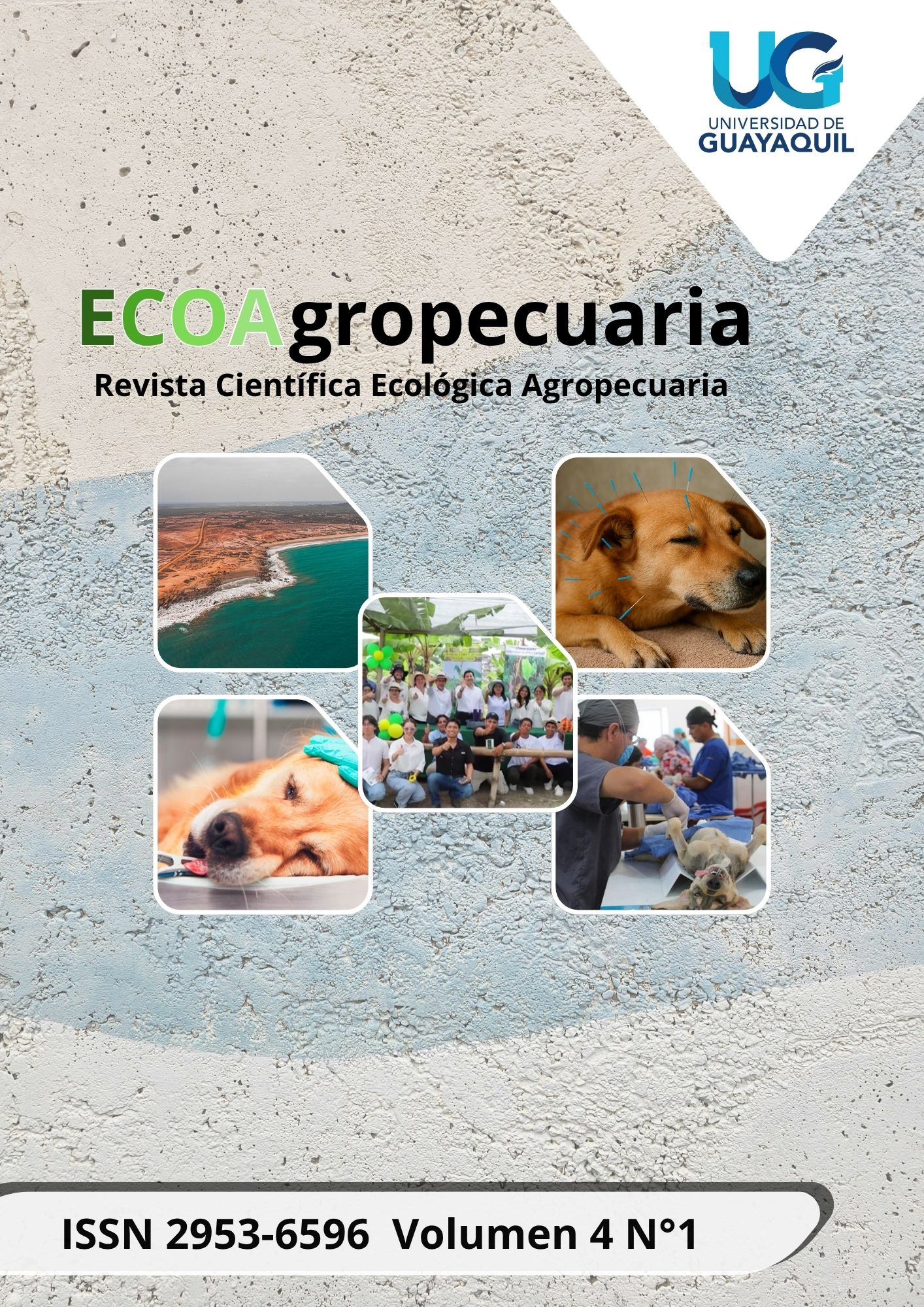
Contenido principal del artículo
Resumen
La esterilización es una práctica clave en la medicina veterinaria, utilizada para el control poblacional, para el bienestar animal y en muchos casos es usada para resolver problemas de comportamiento como la agresividad. Este estudio analiza el impacto en aspectos físicos, psicológicos y principalmente en el comportamiento. El enfoque metodológico incluyó una revisión bibliográfica y la recopilación de percepciones de tutores mediante encuestas, con un cuestionario bien estructurado con escalas de Likert cuya validación se realizó mediante el Coeficiente Alfa de Cronbach el cual dio un resultado de 0,87. Los resultados indicaron que el 51,46% de los tutores perciben un impacto positivo en la salud y bienestar de sus mascotas y un 34,65% destaca mejoras en el comportamiento después de la esterilización. Este trabajo concluye que la esterilización, aplicada responsablemente, es una estrategia integral para mejorar la calidad de vida de los perros y favorecer la convivencia con sus tutores.
Referencias
1. Araújo, F. D. S., Cunha, D. L. L., Franco, E. de S., Moreira, M. B. P., Romeiro, E. T., & Costa, A. C. M. de S. F. da. (2023). The implications of early and late castration in dogs: literature review. Concilium, 23(12), 260–277. https://doi.org/10.53660/clm-1491-23h26
2. Carvalho, M. R., Gomes, M. J., Lara, A., Diniz, G., Mateus, E., De Paula, N., Chediek, P., & Acqua3, D. ". (2021). Benefícios da Esterilização Cirúrgica de Cães na Incidência de Tumor Venéreo Transmissível (TVT).
3. Hart, L. A., & Hart, B. L. (2021). An Ancient Practice but a New Paradigm: Personal Choice for the Age to Spay or Neuter a Dog. Frontiers in Veterinary Science, 8. https://doi.org/10.3389/fvets.2021.603257
4. Kriese, M., Kuźniewska, E., Gugołek, A., & Strychalski, J. (2022). Reasons for and Behavioral Consequences of Male Dog Castration—A Questionnaire Study in Poland. Animals, 12(15). https://doi.org/10.3390/ani12151883
5. Palestrini, C., Mazzola, S. M., Caione, B., Groppetti, D., Pecile, A. M., Minero, M., & Cannas, S. (2021). Influence of Gonadectomy on Canine Behavior. Animals, 11(2), 553. https://doi.org/10.3390/ani11020553
6. Starling, M., Fawcett, A., Wilson, B., Serpell, J., & McGreevy, P. (2019). Behavioural risks in female dogs with minimal lifetime exposure to gonadal hormones. PLOS ONE, 14(12), e0223709. https://doi.org/10.1371/journal.pone.0223709
7.Stephens, D., & Schenke, K. (2023). “Obedient, but cheeky” Guardian Expectations of Canine Behavior and Companionship.
Downloads
Detalles del artículo
Sección

Esta obra está bajo una licencia internacional Creative Commons Atribución-NoComercial-SinDerivadas 4.0.
Los nombres y las direcciones de correo electrónico introducidos en esta revista se usarán exclusivamente para los fines establecidos en ella y no se proporcionarán a terceros o para su uso con otros fines.