Gustavo Vacaa, Ignacio Isa-Vargasa, Andrea Castañedaa, Naomi Becerraa, Matt Abada
aUniversidad Estatal de Milagro, Ecuador
Corresponding author:iisav@unemi.edu.ec
Vol. 05, Issue 01 (2026): January-June
ISSN-e 2953-6634
ISSN Print: 3073-1526
Submitted: January 12, 2026
Revised: January 12, 2026
Accepted: January 12, 2026
Vaca, G., et al. (2026). Biotechnological Applications of Graphene Derivatives: Bibliometric Evaluation and Emerging Trends. EASI: Engineering and Applied Sciences in Industry, 5(1), 1-15. https://doi.org/10.53591/easi.V3i2.2980
A bibliometric analysis was conducted to examine the use of graphene and its derivatives in biotechnology, identifying a marked trend towards their use in biosensors and tissue engineering. A total of 3,151 documents indexed in Scopus (2010–2024) were collected and analyzed using Bibliometrix and VOSviewer, evaluating indicators of production, citation, international collaboration, and thematic evolution. The results reveal an annual growth rate of 30.98%, with China, South Korea, and Iran as the leading contributors. In the field of biosensors, graphene and its derivatives (GO and rGO) have been combined with nanometals, polymers and 3D architectures to develop sensitive and selective devices for use in clinical diagnostics, environmental monitoring and food safety. In tissue engineering, their integration with biomaterials such as chitosan, collagen, or hydroxyapatite has improved mechanical and bioactive properties, promoting bone, cardiac, and neural regeneration. Thematic maps confirm that these two areas account for the greatest development and reveal trends towards multifunctional hybrid materials, portable technologies, non-invasive diagnostics, and 3D bioprinting. Despite significant advances, challenges remain in relation to standardizing graphene synthesis processes, clinical validation, and increasing production. These findings consolidate graphene derivatives as key materials in the development of cutting-edge biotechnological solutions.
Keywords: Biosensor engineering, electrochemical sensor design, nanomaterials engineering, biomedical engineering applications.
Se realizó un análisis bibliométrico para evaluar el uso del grafeno y sus derivados en biotecnología, con énfasis en biosensores e ingeniería de tejidos. Se analizaron un total de 3.151 documentos indexados en Scopus (2010–2024) mediante Bibliometrix y VOSviewer para evaluar la producción científica, las citas, la colaboración internacional y la evolución temática. Los resultados mostraron una tasa de crecimiento anual del 30,98%, con China, Corea del Sur e Irán liderando la producción científica. En el campo de los biosensores, los derivados del grafeno (GO y rGO) se han integrado con nanometales, polímeros y arquitecturas tridimensionales para desarrollar dispositivos sensibles destinados al diagnóstico clínico, el monitoreo ambiental y la seguridad alimentaria. En la ingeniería de tejidos, su combinación con biomateriales como quitosano, colágeno e hidroxiapatita ha mejorado las propiedades mecánicas y bioactivas, favoreciendo la regeneración ósea, cardíaca y neuronal. Entre las tendencias emergentes destacan los materiales híbridos multifuncionales, las tecnologías portátiles, los diagnósticos no invasivos y la bioimpresión 3D.
Palabras clave: Ingeniería de biosensores; diseño de sensores electroquímicos; ingeniería de nanomateriales; aplicaciones de ingeniería biomédica.
In recent decades, research into carbon-based materials has received significant attention, with graphene being the most extensively studied nanomaterial in this category (Othman et al., 2024). Since its isolation in 2004 by Andre Geim and Konstantin Novoselov, it has been the subject of numerous studies in various fields, including biotechnology (Shi et al., 2015). Graphene is a twodimensional layer of carbon atoms arranged in a hexagonal lattice. It is recognised for its high electrical conductivity, charge mobility and excellent mechanical properties (Perrozzi et al., 2014). Its sp²-hybridised carbon–carbon bonds generate delocalised π-electron clouds, which are responsible for its unique electronic behaviour (Takai et al., 2020). These characteristics enable graphene and its derivatives, such as graphene oxide (GO) and reduced graphene oxide (rGO), to be used in a variety of biotechnological applications. GO contains oxygenated functional groups (hydroxyls, epoxides, and carboxyls), which modify its electronic, structural, and chemical properties. This gives it high dispersibility in water and dielectric behaviour. In contrast, rGO is produced through chemical, thermal, or electrochemical processes that partially or completely remove these groups, partially restoring the conjugated structure and recovering properties such as conductivity and charge mobility (Perrozzi et al., 2014). GO has been used in optical biosensors to detect cancer-associated exosomes, showing promise for rapid diagnostics and real-time, multiplexed recognition on clinical platforms (Yasamineh et al., 2024). Conversely, rGO forms thin, irregular sheets that can generate conductive films on substrates. The electrical resistance of these films changes upon binding with biomarkers, making rGO useful in resistive sensors without the need for additional functionalisation (Konthoujam et al., 2024; Saeidi Tabar et al., 2024).
Scientific interest in graphene in the field of biotechnology has grown exponentially. To analyze this evolution, we need bibliometric tools that allow us to evaluate the initial boom and consolidation of research, identify clusters and thematic trends, characterize international collaboration networks, and measure academic impact through production, citation, and co-authorship indicators (Chai et al., 2022; Klincewicz, 2016; Litvinova et al., 2025; Yang et al., 2019). In addition, bibliometrics facilitates the study of technological evolution, patent analysis, and the identification of areas of application, as well as the detection of future challenges and opportunities. In this context, the objective of this study is to characterize the scientific landscape of graphene applications in biotechnology by analyzing academic output indexed in international databases, with the aim of identifying patterns of publication, collaboration, impact, and thematic focus.
A bibliometric analysis was conducted to characterise scientific research on the application of graphene to biotechnology between 2010 and 2024. Data were obtained from the Scopus database, which was selected for its multidisciplinary coverage, quality of indexing, and data export functionalities. The search was conducted on 29 July 2024 using the following strategy in the title, abstract, and keyword fields:
TITLE-ABS-KEY ( ( "graphene oxide" OR "reduced graphene oxide" ) AND ( "biotechnology" OR "bioengineering" OR "nanobiotechnology" OR "biosensor" OR "biomaterials" ) ) AND PUBYEAR > 2009 AND PUBYEAR < 2025 AND ( DOCTYPE(ar) OR DOCTYPE(re) ) AND ( LIMIT-TO ( SUBJAREA,"BIOC" ) OR LIMIT-TO ( SUBJAREA,"MATE" ) OR LIMIT-TO ( SUBJAREA,"ENGI" ) OR LIMIT-TO ( SUBJAREA,"MEDI" ) OR LIMIT-TO ( SUBJAREA,"PHAR" ) )
In addition, the search was limited to two document types: original articles (ar) and reviews (re). Thematic filters were applied to restrict the results to five areas of knowledge: Biochemistry, Genetics and Molecular Biology (BIOC), Materials Science (MATE), Engineering (ENGI), Medicine (MEDI), and Pharmacology, Toxicology and Pharmaceutics (PHAR). Subsequently, the records were exported in CSV format, including all fields available in Scopus: citation information (authorship, title, year, document type, number of citations, DOI, open access), institutional affiliations, identifiers, author keywords, indexed keywords, abstracts, funding, and cited references.
To ensure the quality, consistency, and reproducibility of the analysis, a cleaning process of the bibliographic corpus was carried out. For this purpose, a Python script was developed to remove duplicate records based on title and DOI, as well as to eliminate those lacking essential information such as title, digital identifier, or keywords. In addition, structural cleaning was applied to remove HTML tags and other residual characters, and column names were standardized according to the nomenclature required by the Bibliometrix package (e.g., AU, TI, PY, DE, ID). As a result of this process, two separate files were generated: a clean CSV file compatible with VOSviewer and another specifically formatted for use in Bibliometrix/Biblioshiny.
Data processing was carried out using the Bibliometrix package in the R programming environment (version 4.5.0), employing its graphical interface, Biblioshiny, for generating descriptive metrics, exploring the corpus, and visualizing results. Complementarily, VOSviewer (version 1.6.20) was used to construct scientific network maps and graphically represent relationships among authors, documents, sources, and key terms. Additionally, a bar chart was manually created in R, outside the Biblioshiny environment, to represent the distribution of documents.
Before the data cleaning process, the bibliographic search conducted in Scopus yielded a total of 3,905 documents related to the application of graphene in biotechnology. A total of 754 records were excluded because they were duplicates or lacked essential information, such as title, digital identifier (DOI), or keywords. After filtering, the final corpus consisted of 3,151 documents published between 2010 and 2024, distributed across 502 sources. Of this total, 2,546 corresponded to original articles and 605 to reviews, with an annual growth rate of 30.98%. Each document received an average of 54.45 citations, with a mean age of 5.69 years. A total of 190,003 cited references, 7,299 author keywords, and 21,563 indexed terms were recorded. The dataset involved 9,975 authors, with an average of 5.93 co-authors per publication and 25.67% international collaboration. Only 38 documents were single-authored (see Table 1).
Table 1. Bibliometric overview of graphene oxide in biotechnology (2010–2024)
| Category |
Value |
|---|---|
| Period Analyzed |
2010–2024 |
| Total Documents |
3151 |
| Original Articles |
2546 |
| Reviews |
605 |
| Sources (journals, books, etc.) |
502 |
| Annual growth rate (%) |
30,98 |
| Average document age |
5,69 years |
| Average citations per document |
54,45 |
| References cited |
190003 |
| Author's keywords (DE) |
7299 |
| Keywords Plus (ID) |
21563 |
| Authors |
9975 |
| Authors of individual documents |
38 |
| Co-authors per document |
5,93 |
| International collaboration (%) |
25,67 |
Source: own elaboration, (2025)
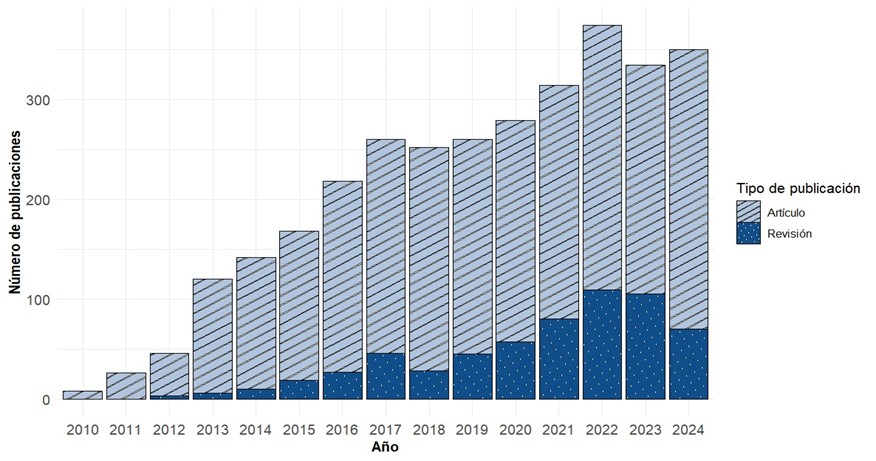
Figure 1 shows the annual evolution of scientific publications, distinguishing between original articles and review articles. From 2015 onward, there is a noticeable growth in scientific production, especially in original articles. The years 2022 and 2024 recorded the highest number of articles, exceeding 300 documents per year. In addition, an increase in reviews is observed in 2022 and 2023 compared to previous years and 2024. Figure 1. Annual distribution of scientific production on graphene applied to biotechnology between 2010 and 2024, differentiated by publication type: articles and reviews.
Figure 2 shows the leading authors ranked according to their scientific productivity. The analysis indicates a high concentration of publications among researchers such as ZHANG Y, LI Y, WANG Y, WANG X, WANG J, LI J, LIU X, ZHANG H, LIU Y, and CHEN J, who recorded 96, 86, 84, 83, 82, 58, 58, 58, 57, and 52 documents, respectively. This suggests the existence of research nuclei linked to institutional networks mainly in Asian countries.
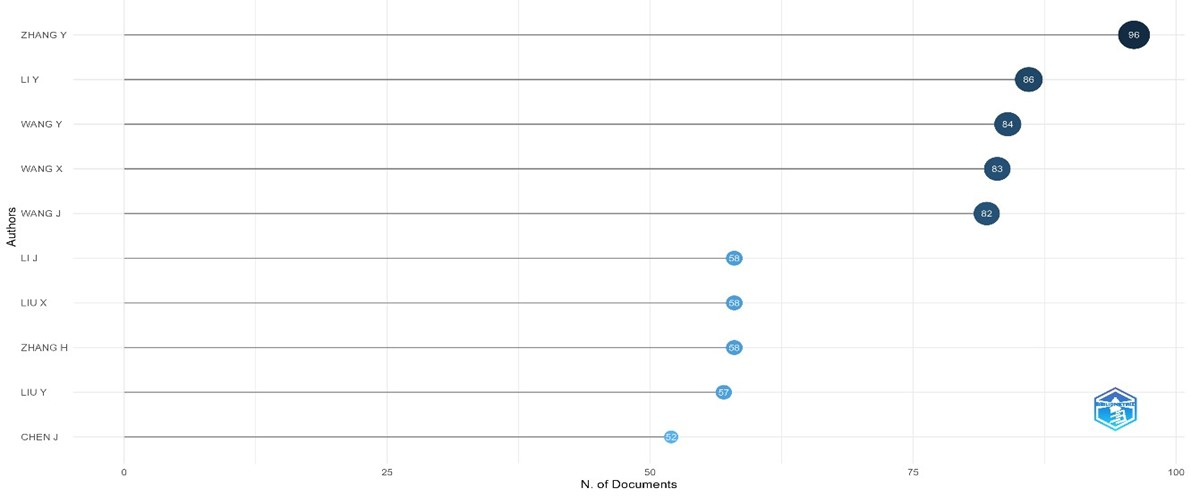
Figure 3 shows the temporal evolution of publications by the 10 most productive authors. The size of the circles represents the number of articles published per year, while the intensity of the blue color indicates the average annual citations received (TC per Year). ZHANG Y has maintained constant production since 2010, with an increase in publications and citations in 2016 and 2019. LI Y, in turn, began his activity in 2011, with growth reaching its peak in 2020 and 2022, both in productivity and impact. WANG Y started publishing in 2011, showing high participation in 2018 and 2022.
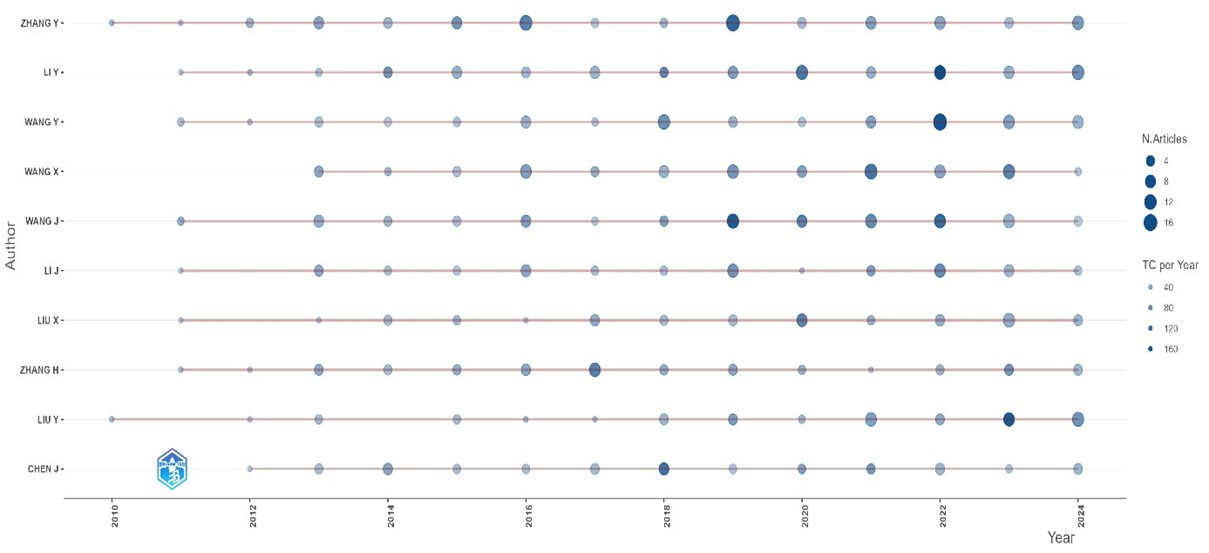
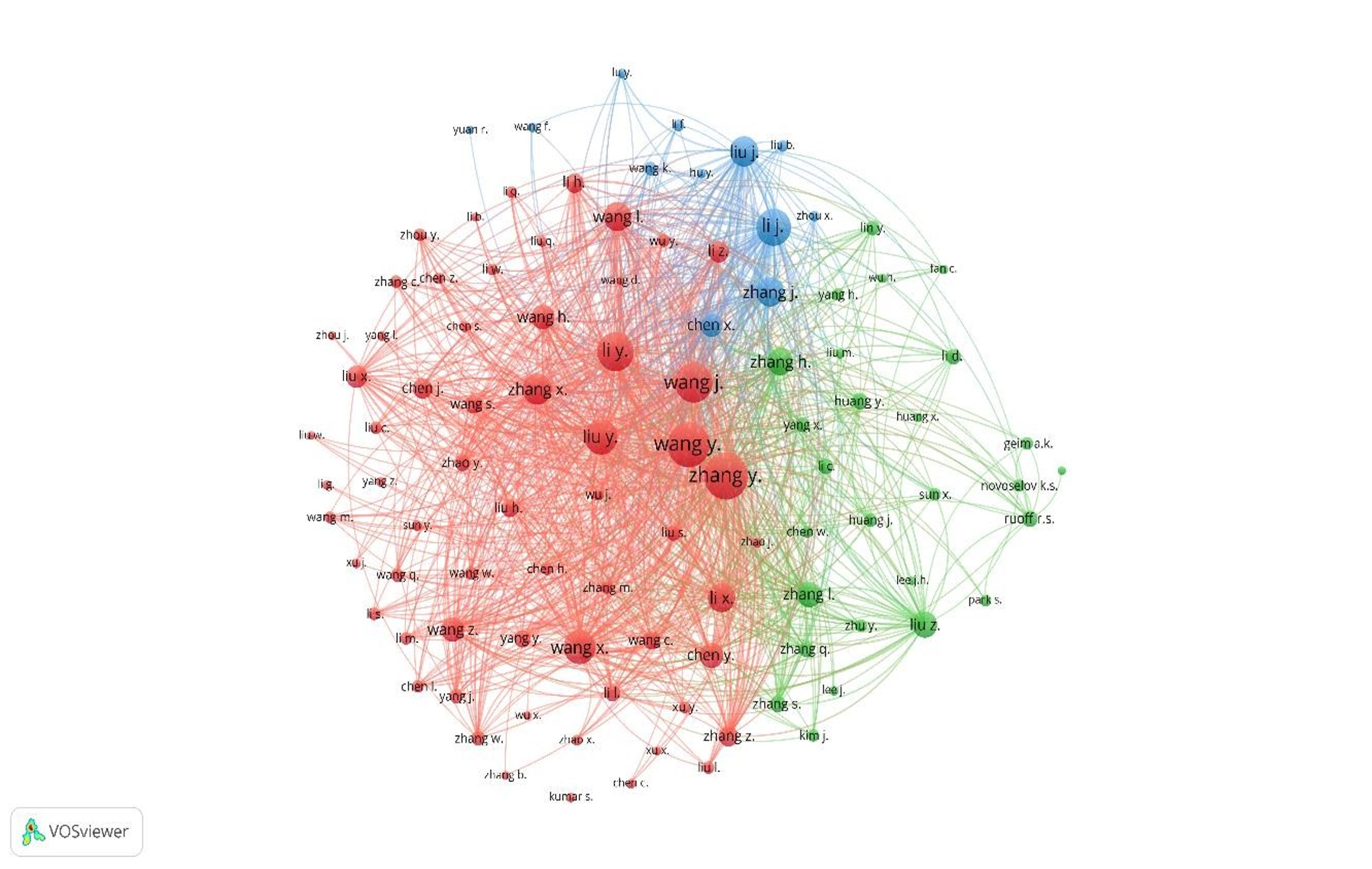
Figure 4 presents a co-citation map of authors cited at least 600 times. In the graph, each node represents an author, with its size determined by the frequency of citations. The connections between nodes indicate co-citation, that is, how many times two authors have been cited together in the same documents, revealing thematic or methodological affinity between their contributions. The analysis allowed the identification of three main clusters: the red cluster, which groups authors such as Wang Y, Zhang Y, Wang J, and Li Y; the green cluster, which includes Zhang L and Zhang H, as well as highly influential researchers such as A.K. Geim and K.S. Novoselov (Nobel Prize in Physics 2010 for their contributions to graphene) and R.S. Ruoff, a reference in the synthesis and characterization of two-dimensional materials; and the blue cluster, which is notable for the presence of Zhang J and Li J.
Most Influential Articles Table 2 presents the most cited articles, ordered according to total citations, average citations per year, and normalized citation. The most cited study corresponds to Yue K. (2015), published in Biomaterials, with a total of 2,356 citations, an annual average of 214.18, and a normalized citation of 26.8. This is followed by the articles of Liu J. (2013) and Rasool K. (2016), published in Acta Biomaterialia and ACS Nano, with 1,221 and 1,182 citations, respectively. The rest of the most influential works were published in high–impact factor journals such as Nanomedicine, Advanced Materials, and Advanced Drug Delivery Reviews.
Table 2. Most cited articles on graphene in biotechnology (2010–2024)
| Author and Year |
Journal |
Total Citations |
Citations per Year |
Normalized Citation |
|---|---|---|---|---|
| YUE K, 2015 |
Biomaterials |
2356 |
214.18 |
26.81 |
| LIU J, 2013 |
Acta Biomater |
1221 |
93.92 |
9.73 |
| RASOOL K, 2016 |
ACS Nano |
1182 |
118.20 |
14.19 |
| FENG L, 2011 |
Nanomedicine |
700 |
46.67 |
2.89 |
| RUIZ ON, 2011 |
ACS Nano |
656 |
43.73 |
2.71 |
| BITOUNIS D, 2013 |
Adv Mater |
635 |
48.85 |
5.06 |
| SHIN SR, 2016 |
Adv Drug Deliv Rev |
615 |
61.50 |
7.38 |
| SHAH N, 2013 |
Carbohydr Polym |
612 |
47.08 |
4.88 |
| BHARADWAZ A, 2020 |
Mater Sci Eng C |
603 |
100.50 |
10.76 |
| SALAS EC, 2010 |
ACS Nano |
561 |
35.06 |
1.98 |
Source: own elaboration, (2025)
Table 3 shows the main scientific journals that have published the highest number of articles. Biosensors and Bioelectronics ranks first with 429 publications, followed by Sensors and Actuators B: Chemical (137 documents) and Biosensors (133). Also noteworthy are journals in applied materials and biomedicine such as ACS Applied Materials and Interfaces (116), International Journal of Biological Macromolecules (101), and Materials Science and Engineering C (65).
Table 3. Main journals publishing on graphene in biotechnology
| N.º |
Journal |
Published documents |
|---|---|---|
| 1 |
Biosensors and Bioelectronics |
429 |
| 2 |
Sensors and Actuators, B: Chemical |
137 |
| 3 |
Biosensors |
133 |
| 4 |
ACS Applied Materials and Interfaces |
116 |
| 5 |
Analytica Chimica Acta |
103 |
| 6 |
International Journal of Biological Macromolecules |
101 |
| 7 |
Materials Science and Engineering C |
65 |
| 8 |
Colloids and Surfaces B: Biointerfaces |
57 |
| 9 |
International Journal of Molecular Sciences |
56 |
| 10 |
International Journal of Nanomedicine |
46 |
Source: own elaboration, (2025)
Figure 5 shows a co-citation map among the most cited scientific journals. Like the author cocitation map, each node represents a journal, and its size is proportional to the total number of times it has been cited. The lines connecting the nodes indicate how many times two journals have been cited together in the same documents, suggesting thematic or methodological affinities. Three main clusters can be distinguished. The green cluster groups journals with an analytical focus, such as Biosensors and Bioelectronics, Analytical Chemistry, Talanta, Analytica Chimica Acta, and Electrochimica Acta. The red cluster is composed of journals focused on nanotechnology, materials science, and biomaterials, such as ACS Nano, Biomaterials, Advanced Materials, ACS Applied Materials & Interfaces, Carbon, and Nanoscale. Finally, the blue cluster includes high–impact general chemistry publications such as Journal of the American Chemical Society, Chemical Communications, and ChemComm.
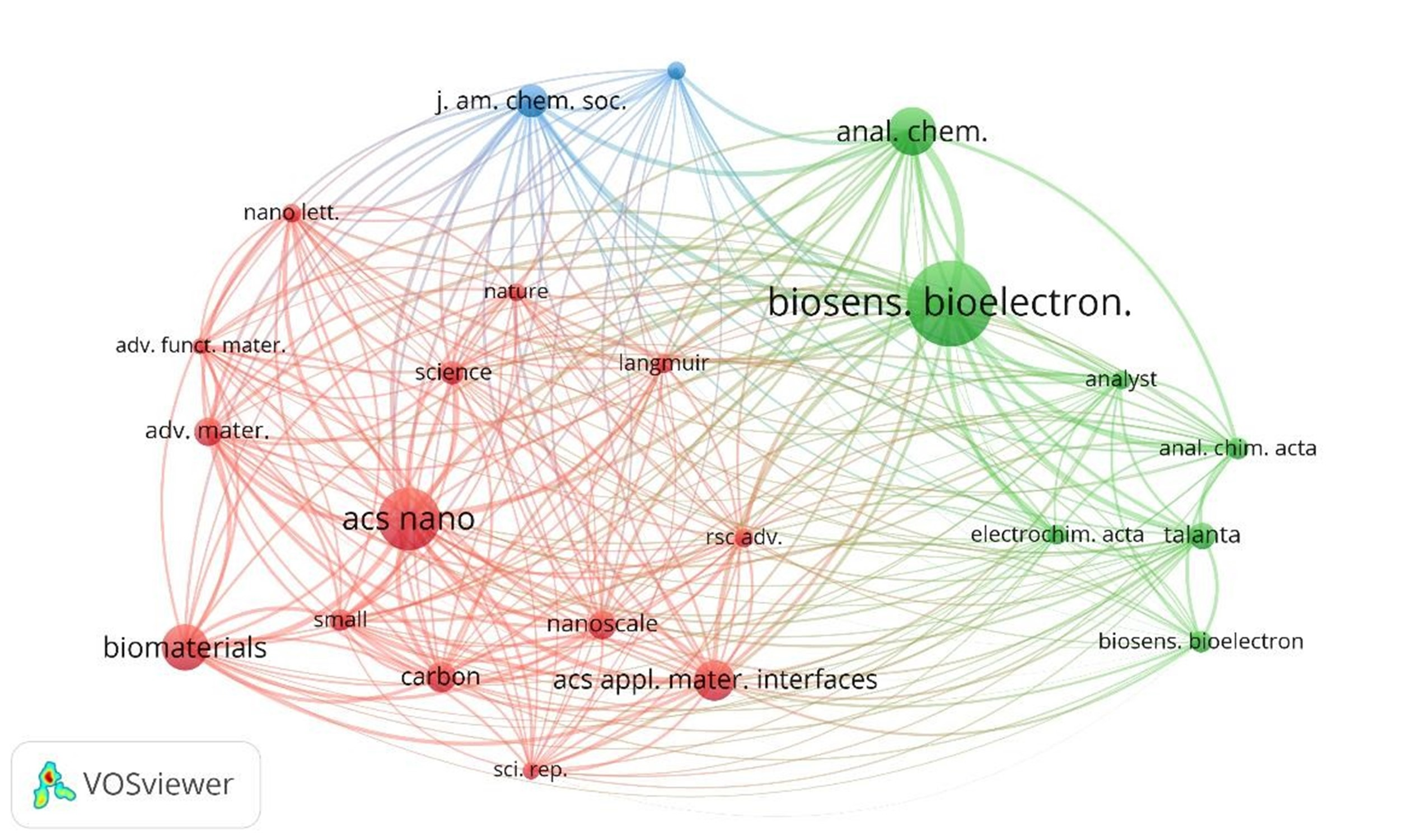
Table 4 presents the main institutional affiliations. Jilin University leads the ranking with 56 publications, followed by Seoul National University (49), Sichuan University (48), University of Tehran (46), and Islamic Azad University (43). Other relevant institutions include Tabriz University of Medical Sciences (43), Huazhong University of Science and Technology (41), Nanyang Technological University (39), National Yunlin University of Science and Technology (39), and University of Malaya (37). This distribution reflects scientific productivity in Asian universities, particularly from China, Iran, South Korea, Malaysia, Taiwan, and Singapore.
Table 4. Top institutions in graphene–biotechnology research
| N.º |
Institutional Affiliation |
Published Articles |
|---|---|---|
| 1 |
Jilin University |
56 |
| 2 |
Seoul National University |
49 |
| 3 |
Sichuan University |
48 |
| 4 |
University of Tehran |
46 |
| 5 |
Islamic Azad University |
43 |
| 6 |
Tabriz University of Medical Sciences |
43 |
| 7 |
Huazhong University of Science and Technology |
41 |
| 8 |
Nanyang Technological University |
39 |
| 9 |
National Yunlin University of Science and Technology |
39 |
| 10 |
University of Malaysia |
37 |
Source: own elaboration, (2025)
Figure 6 presents the international scientific collaboration map among countries with at least 15 publications and 1,000 citations. Each node represents a country, and its size is proportional to the number of publications. The lines connecting the nodes indicate co-authorship relationships, that is, publications shared between researchers from different countries. China stands out as the central and most prominent node in the network, followed by India, Iran, and the United States.
In addition, the map incorporates color-coding based on the average year of publication, allowing the temporal evolution of collaborations to be observed. Purple tones indicate countries that began their contributions early (around 2019), while warmer tones, such as green and yellow, represent more recent participation (2020–2021). Countries such as Saudi Arabia, Egypt, and Pakistan show recent growth in production and scientific collaboration.
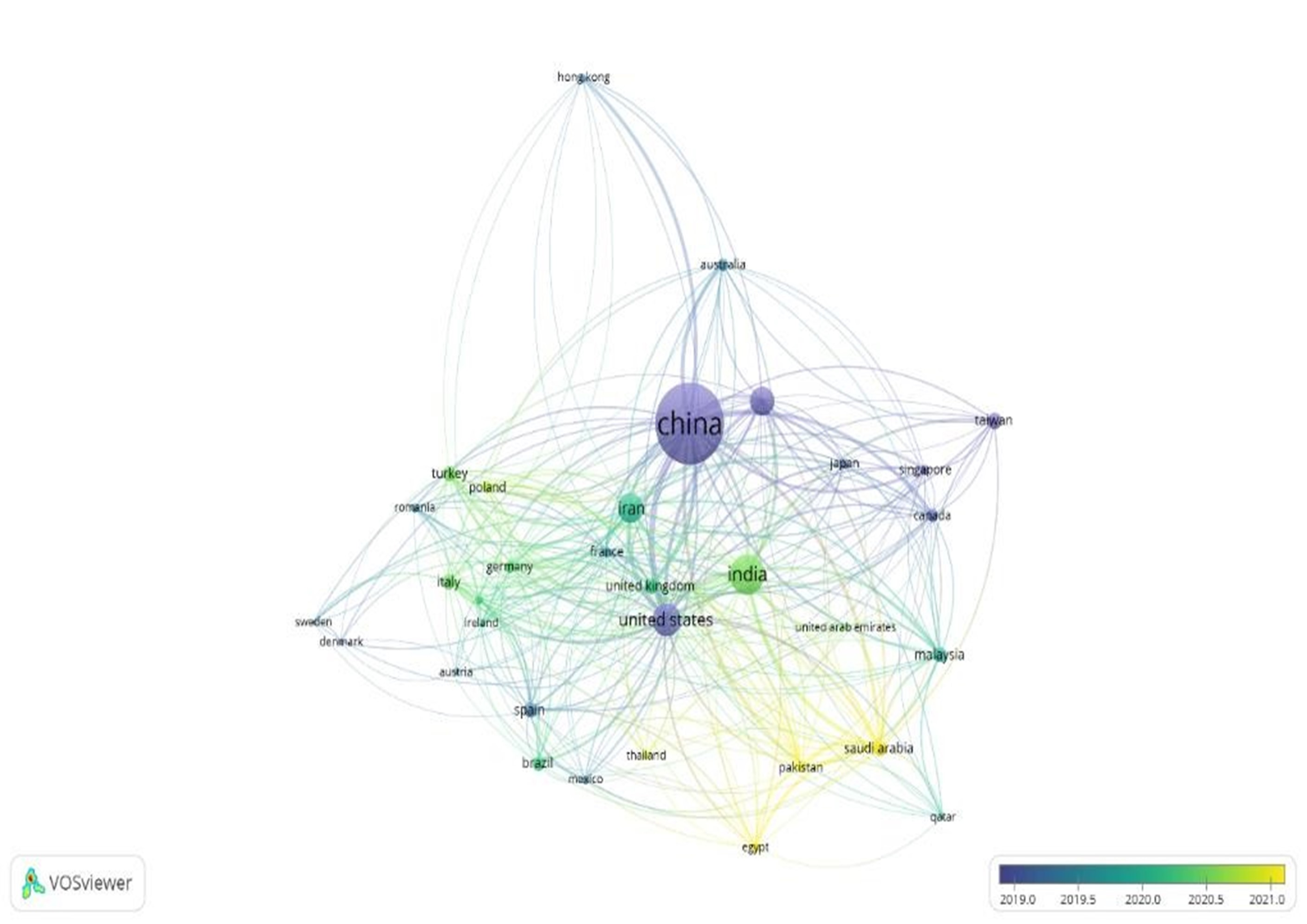
Figure 7 shows a keyword co-occurrence map grouped by thematic clusters. Each term represents a keyword extracted from the articles, and its proximity to other terms indicates a higher frequency of joint appearance. The colors distinguish different clusters, that is, groups of terms that share a common theme within the field of study. At the center of the map is the term “graphene oxide”, serving as the axis of research. The red cluster is related to biomedical and tissue engineering applications, including terms such as “biomaterials”, “tissue engineering”, “cytotoxicity”, “biocompatibility”, and “drug delivery”. The blue cluster focuses on detection applications, especially “biosensors”, “electrochemical detection”, “gold nanoparticles”, and “dopamine”. The green cluster, in turn, groups concepts linked to nanotechnology and molecular diagnostics, such as “aptamer”, “quantum dots”, “fluorescence”, and “cancer”.
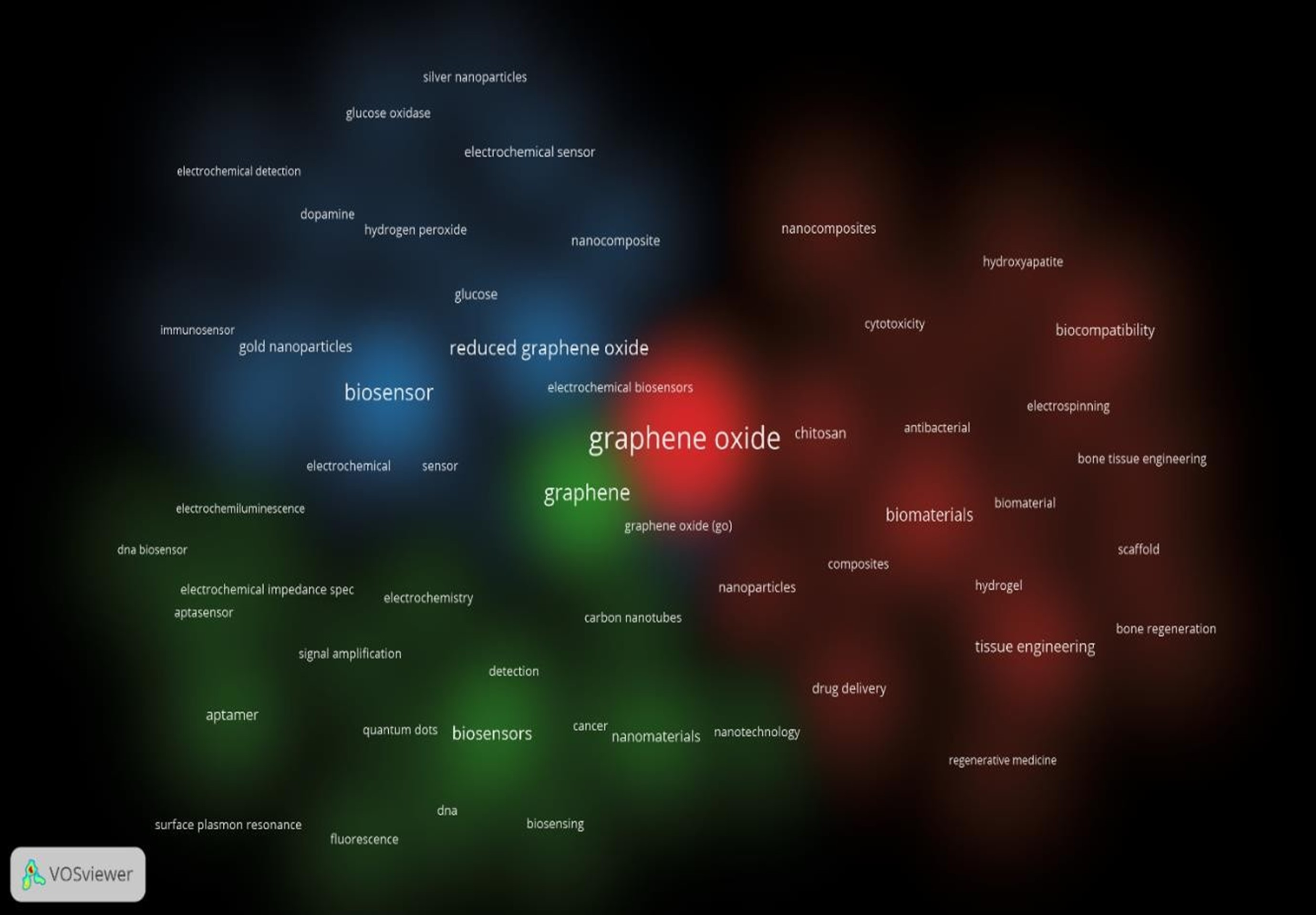
Figure 8 presents the temporal visualization of key terms (trend topics). Each term is represented by a bubble, whose size is proportional to its frequency of occurrence, and the horizontal position indicates the period in which it was most used. In the early years of the analyzed period (2010– 2015), concepts such as in-situ, UV-Vis spectroscopy, potential applications, and detection limits predominate, indicating an initial focus on the physicochemical characterization and general potential applications of graphene and its derivatives. From 2016 onward, the terminology diversifies, with keywords such as graphene oxide, gold nanoparticles, electrochemical biosensors, biocompatibility, and drug delivery standing out, marking a shift toward applications with more defined biotechnological and biomedical implications. In the most recent years (2021–2024), terms linked to more specific and complex applications emerge, such as sweat, viscoelasticity, tissue regeneration, drug therapy, and electrochemical biosensors, reflecting an interest in the design of functional materials for personalized medicine, tissue engineering, and portable devices for non-invasive diagnostics.
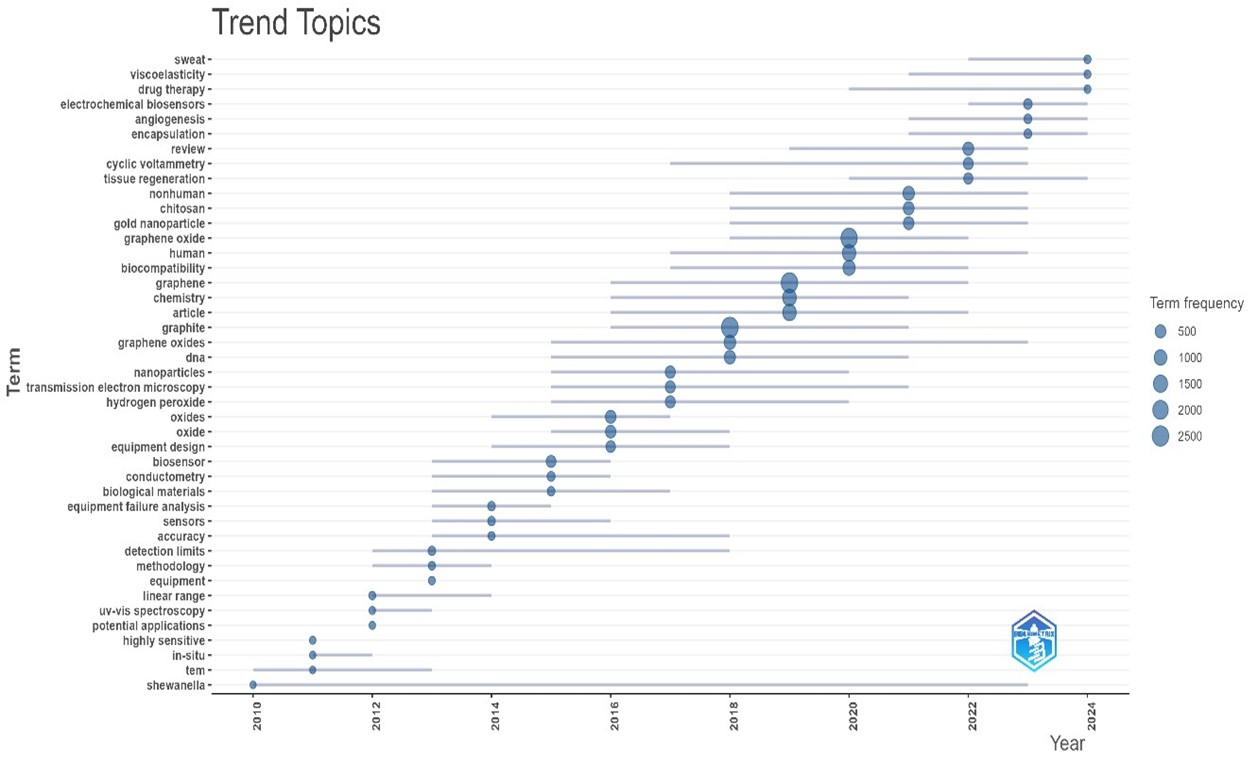
Figure 9 presents the thematic map resulting from the analysis of graphene derivatives applied to biotechnology, where research lines are distributed according to their centrality and density. In the motor themes quadrant, biosensor, graphene, and nanomaterials are identified, evidencing their high relevance and development within the field. Niche themes, such as reduced graphene oxide, electrochemical biosensor, and gold nanoparticles, show high density and specialization, indicating well-established areas with a specific technical focus. In turn, the basic themes include graphene oxide, biomaterials, and tissue engineering, which have high centrality but lower density, constituting conceptual and technological foundations that support other research lines. Finally, in the declining or emerging themes quadrant, nanoparticles, nanotechnology, and fluorescence resonance energy transfer are located, characterized by low density and centrality, suggesting either less recent attention or a reorientation toward new research perspectives.
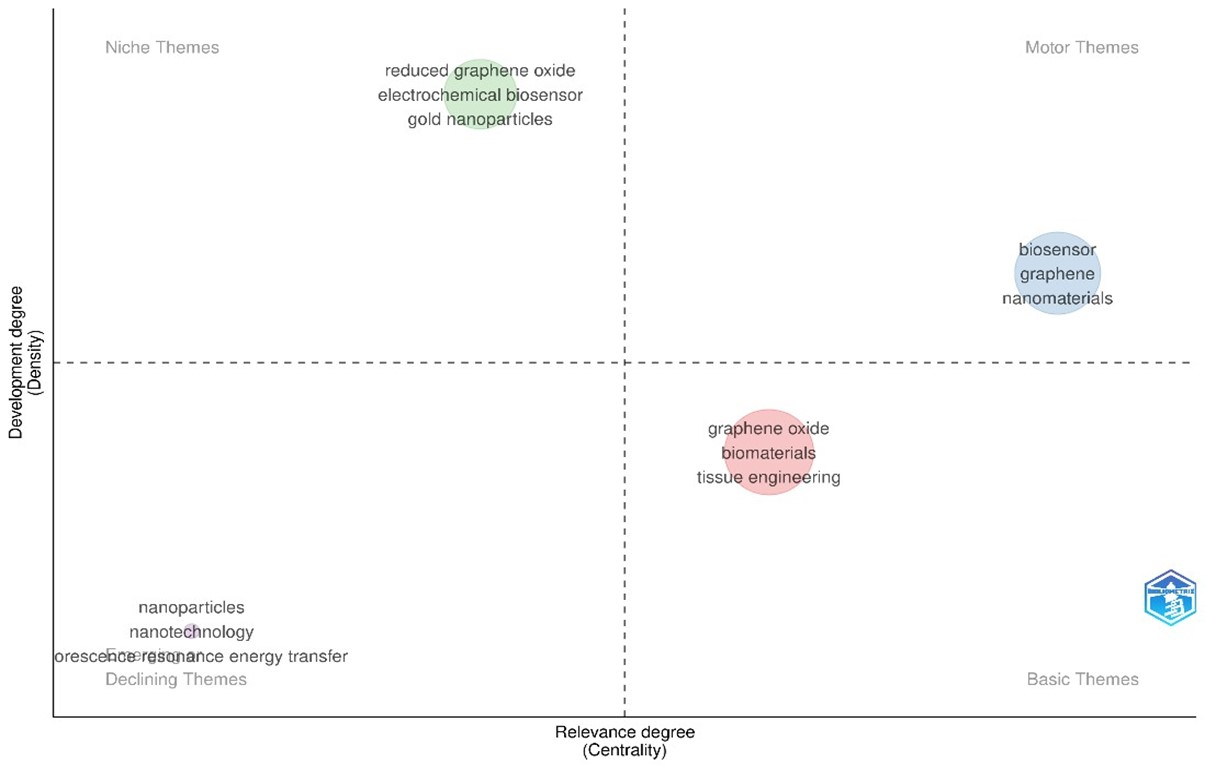
Table 2 shows that the most cited articles are concentrated in two main areas: biosensors and tissue engineering. In the latter field, the work of Yue et al. (2015) on GelMA hydrogels, and their optimization through the incorporation of carbon nanomaterials such as GO and CNT, has set a benchmark in improving the mechanical and conductive properties of scaffolds, especially for myocardial and muscle applications. Complementarily, Liu et al. (2013) and Feng & Liu (2011) provided comprehensive reviews on the biomedical applications of graphene, including advances in controlled drug delivery and challenges in biocompatibility, providing the conceptual framework that supports the diversification of topics detected in the thematic map. In biosensors, Biosensors and Bioelectronics leads as the main publication source, concentrating developments that combine GO/rGO with nanometals and polymers to enhance device sensitivity, selectivity, and portability. Examples such as Teymourian et al. (2013), Mani et al. (2013), and Xuan et al. (2018) demonstrate how the integration of rGO with MWCNT or metal alloys has enabled the detection of clinical (H₂O₂, glucose) and environmental analytes with high precision. These findings align with the red cluster of “biosensors” identified in the keyword co-occurrence analysis.
For its part, Sensors and Actuators, B: Chemical concentrates developments aimed at portable and point-of-care devices with a strong emphasis on electrochemical transduction and signal amplification strategies. T. Liu et al. (2011) demonstrated an acetylcholinesterase biosensor based on rGO/AuNPs/CPBA with detection limits of 0.05–0.5 ppb and a response time of "10 s, combining conductivity (rGO) and catalysis (AuNPs). In the field of non-invasive diagnostics, Shin Low et al. (2020) integrated a disposable rGO-Au electrode with a smartphone to detect miRNA 21 in saliva (range 1×10⁻⁴–1×10⁻¹² M, recoveries 96.2–107.2%), while Zhao et al. (2021) applied a “supersandwich” architecture on a graphene-modified gold electrode for SARS-CoV-2 (RdRp gene) detection, achieving a LOD of 3.5 aM and Bluetooth operation. Taken together, these works reinforce the field’s shift toward portable technologies and non-invasive diagnostics, in line with the blue cluster of “biosensors-electrochemical detection-gold nanoparticles” and with the temporal trends observed in the trend topics.At the institutional level, universities such as Jilin (Song et al., 2013; Zhu et al., 2017) and Seoul (Ryoo et al., 2013; Park et al., 2014) stand out as key nodes in the production of graphene-based innovations, ranging from functional membranes with tunable ion transport to multiplexed biosensors and high-sensitivity field-effect transistors (FETs). This geographical concentration of research reflects Asian leadership in the motor theme clusters identified in the bibliometric analysis.
Graphene derivative–based biosensors have emerged as one of the most promising platforms in biotechnology due to the combination of unique structural, electrical, and chemical properties of this nanomaterial (Peña-Bahamonde et al., 2018; Shin et al., 2016). Thanks to its large surface area, excellent conductivity, and ability to be functionalized with chemical groups, graphene and its derivatives can effectively immobilize biomolecules such as antibodies, DNA, and enzymes. This promotes electron transfer and improves detection sensitivity and selectivity. Graphene and its derivatives, such as GO and rGO, have demonstrated exceptional performance in various modes of transduction, from electrochemical sensors to fluorescent platforms, due to their properties and high efficiency as signal quenchers. This makes them important materials for the development of nextgeneration biosensors in clinical diagnostics, environmental monitoring, and food safety. These findings correspond with the identification of “biosensors” as a key topic in the thematic map and their frequent appearance in trending topics, confirming that research into detection platforms is the most dynamic area of graphene biotechnology.
A significant percentage of research focuses on the early diagnosis of diseases, particularly cancer. In this context, Saeed et al. (2017) developed a DNA biosensor based on GO modified with gold nanoparticles for the early detection of breast cancer biomarkers, achieving high sensitivity through electrochemical signal amplification. Similarly, Azimzadeh et al. (2016) used an electrochemical nanobiosensor containing GO and gold nanorods to quantify microRNA-155, which is important for early cancer detection. They achieved detection limits in the femtomolar range. Myung et al. (2011), in turn, proposed a three-dimensional field-effect transistor (FET) sensor based on nanoparticles encapsulated in rGO for the selective detection of HER2 and epidermal growth factor receptor (EGFR) proteins. This sensor achieved detection limits of 1 pM and 100 pM, respectively, even in the presence of interferents such as bovine serum albumin. The variety of strategies employed to create portable biosensors from nanocomposites containing graphene derivatives highlights the prevailing trend in research towards faster, non-invasive clinical diagnostics.
Another group of studies focuses on monitoring clinically relevant metabolites such as glucose. In this field, for example, Baek et al. (2020) designed an electrochemical biosensor comprising GO nanofibres decorated with gold nanoparticles and copper flowers for glucose detection. This biosensor exhibited high stability and a low detection limit. Similarly, Unnikrishnan et al. (2012) developed a graphene–glucose oxidase biocomposite that demonstrated a significantly improved electrochemical response compared to conventional electrodes. Similarly, Cao et al. (2020) incorporated functionalised rGO into a 3D paper-based microfluidic biosensor to achieve portability and low cost, positioning it for use in point-of-care applications. Overall, the focus on low-cost, easy-to-operate devices is consistent with the growth of the blue cluster identified in the cooccurrence analysis, which is associated with 'electrochemical detection' and 'portable devices'.
In the field of food and environmental safety, Cui et al. (2018) developed a biosensor based on chitosan–TiO₂–graphene nanocomposites for detecting organophosphate pesticides. This biosensor offers high storage stability and resistance to adverse conditions. Similarly, Choi et al. (2010) presented high-performance, flexible biosensors that can be adapted to different surfaces and are applicable to environmental monitoring, through the self-assembly of graphene nanohybrids. Such developments expand the scope of graphene beyond medical diagnostics, connecting with research areas in food safety and environmental control. Although these areas are less central, they show growth potential among emerging topics.
The recents trends indicate a shift toward the integration of portable technologies. Su et al. (2020) developed a portable and non-invasive biosensor that utilizes wireless power transmission for the detection of acetone in breath. This innovation has significant implications for the early diagnosis of prediabetes, highlighting the potential of graphene in portable devices and continuous diagnostic systems.
Graphene and its derivatives have demonstrated their viability as a novel category of nanomaterials, exhibiting considerable promise in the domain of regenerative medicine, particularly in the context of tissue engineering. Their capacity to interact with biomolecules, including DNA, enzymes, proteins, and peptides, has been demonstrated to promote cellular stimulation and the formation of functional matrices. This has led to their utilization in the development of bioactive scaffolds (Shin et al., 2016). These materials have demonstrated promising applications in the regeneration of bone and neural tissues. In these cases, the structure and functionalization of the materials enhance cell adhesion, proliferation, and differentiation. This, in turn, facilitates the integration of the material into the host tissue.
The integration of graphene derivatives into polymeric matrices has been demonstrated to enhance the mechanical, bioactive, and osteogenic properties of scaffolds. A representative example can be seen in the work of Díez-Pascual and Díez-Vicente (2016), who developed poly (propylene fumarate) and graphene oxide nanocomposites, achieving a notable improvement in tensile strength, bioactivity, and cell compatibility, which promoted osteoblastic proliferation. In a similar vein, Yu et al. (2017) developed a ternary self-assembled hydrogel composed of GO, hydroxyapatite, and chitosan, resulting in a highly porous microstructure (84.37%) and mechanical stability that promoted the viability and osteoblastic differentiation of mesenchymal stem cells. Concurrently, Prakash et al. (2020) incorporated GO, hydroxyapatite, and gold nanoparticles into chitosan films, thereby obtaining a material with superior antibacterial and osteoinductive properties. Concurrently, Saravanan et al. (2017) developed 3D chitosan–gelatin scaffolds reinforced with GO, demonstrating enhanced apatite nucleation capacity, augmented alkaline phosphatase activity, and expedited bone regeneration in animal models. In a related study, Tian et al. (2014) fabricated poly(ε-caprolactone) nanofibers with GO, thereby enhancing the material's hydrophobicity, strength, and bioactivity. This modification also resulted in increased adhesion and proliferation of osteoblastic cells. These technical advances elucidate the strong association between "graphene oxide" and bone engineering in the co-occurrence analysis of Figure 8, suggesting that GO functionalization is a recurrent strategy in skeletal regeneration.
With respect to soft tissues, which include applications in cardiac and neural tissue, graphene has also demonstrated a significant impact. In the context of cardiac tissue, Mousavi et al. (2021) developed injectable hydrogels composed of oxidized alginate and myocardial extracellular matrix, enhanced with (GO). These hydrogels were designed to optimize electromechanical properties and biocompatibility, thereby promoting the viability and alignment of cardiomyocytes. Additionally, the study demonstrated the potential for functional repair of damaged cardiac tissue. In the field of neural engineering, Valencia et al. (2018) developed collagen–GO composites that exhibited a combination of electrical conductivity, structural support, and biocompatibility. These composites promoted the growth and differentiation of neural cells, as well as axonal guidance. The integration of these approaches underscores the potential of graphene to facilitate the regeneration of tissues with distinct electrical requirements, such as cardiac and neural tissue, where conductivity and cellular integration are pivotal for functional recovery. A review of the extant literature reveals that the integration of graphene derivatives into scaffolds for tissue engineering provides substantial improvements in terms of mechanical properties, bioactivity, and the ability to modulate cellular behavior. In addition, the combination of GO with traditional biomaterials (e.g., chitosan, collagen, gelatin, polycaprolactone, and polypropylene) and bioactive elements (e.g., hydroxyapatite) has been demonstrated to be effective.
The bibliometric analysis confirms that graphene derivatives have established themselves as strategic materials in biotechnology, with a clear prominence in biosensors and tissue engineering. In the domain of biosensors, these materials exhibit advantageous electrical properties, an expansive active surface area, and the capacity for functionalization, which have collectively propelled the development of ultrasensitive and selective detection platforms for clinical biomarkers, metabolites, and contaminants. However, the transition of these technologies toward clinically validated devices remains limited by the absence of standardized processes and the lack of long-term studies under real conditions. In the domain of tissue engineering, the integration of GO and rGO within polymeric matrices and bioactive composites has been shown to enhance the mechanical, bioactive, and conductive properties of scaffolds, thereby promoting the regeneration of bone, cardiac, and neural tissues. The emergent trends identified indicate the development of multifunctional hybrid materials combined with three-dimensional bioprinting, portable devices, and controlled biomolecule delivery systems. To ensure the optimal functionality of these innovations, it is imperative to establish long-term biocompatibility, implement reproducible manufacturing protocols, and foster interdisciplinary collaboration to facilitate their transition from the laboratory to clinical and industrial applications.
Azimzadeh, M., Rahaie, M., Nasirizadeh, N., Ashtari, K., & Naderi-Manesh, H. (2016). An electrochemical nanobiosensor for plasma miRNA-155 based on graphene oxide and gold nanorods for early detection of breast cancer. Biosensors and Bioelectronics, 77, 99–106. https://doi.org/10.1016/j.bios.2015.09.020
Baek, S. H., Roh, J., Park, C. Y., Kim, M. W., Shi, R., Kailasa, S. K., & Park, T. J. (2020). Cu-nanoflower decorated gold nanoparticles–graphene oxide nanofiber as an electrochemical biosensor for glucose detection. Materials Science and Engineering: C, 107, 110273. https://doi.org/10.1016/j.msec.2019.110273
Cao, L., Han, G. C., Xiao, H., Chen, Z., & Fang, C. (2020). A novel 3D paper-based microfluidic electrochemical glucose biosensor based on rGO-TEPA/PB sensitive film. Analytica Chimica Acta, 1096, 34–43. https://doi.org/10.1016/j.aca.2019.10.049
Chai, B., Zhang, W., Liu, Y., Zhu, S., Gu, Z., & Zhang, H. (2023). Progress in research and application of graphene aerogel: A bibliometric analysis. Materials, 16(1), 272. https://doi.org/10.3390/ma16010272
Choi, B. G., Park, H., Park, T. J., Yang, M. H., Kim, J. S., Jang, S. Y., Heo, N. S., Lee, S. Y., Kong, J., & Hong, W. H. (2010). Solution chemistry of self-assembled graphene nanohybrids for high-performance flexible biosensors. ACS Nano, 4(5), 2910–2918. https://doi.org/10.1021/nn100145x
Cui, H. F., Wu, W. W., Li, M. M., Song, X., Lv, Y., & Zhang, T. T. (2018). A highly stable acetylcholinesterase biosensor based on chitosan–TiO₂–graphene nanocomposites for detection of organophosphate pesticides. Biosensors and Bioelectronics, 99, 223–229. https://doi.org/10.1016/j.bios.2017.07.068
Díez-Pascual, A. M., & Díez-Vicente, A. L. (2016). Poly(propylene fumarate)/polyethylene glycol-modified graphene oxide nanocomposites for tissue engineering. ACS Applied Materials & Interfaces, 8(28), 17902–17914. https://doi.org/10.1021/acsami.6b05635
Feng, L., & Liu, Z. (2011). Graphene in biomedicine: Opportunities and challenges. Nanomedicine, 6(2), 317–324. https://doi.org/10.2217/nnm.10.158
Klincewicz, K. (2016). The emergent dynamics of a technological research topic: The case of graphene. Scientometrics, 106(1), 319–345. https://doi.org/10.1007/s11192-015-1780-6
Konthoujam, B., Bhandari, N., Kamal, M. P., Srinivas, P. N., Thati, B., Bondugula, P., Reddy, P., Antaratan, R. C., Kadayinti, N., Shukla, S., & Ghosh, R. (2024). Reduced graphene oxide-based ultrasensitive resistive sensor for detection of CA125. Biosensors and Bioelectronics: X, 20, 100530. https://doi.org/10.1016/j.biosx.2024.100530
Litvinova, O., Mickael, M. E., Gerger, G., Yeung, A. W. K., Fatimi, A., Haick, H., Atanasov, A. G., & Willschke, H. (2025). Patent and bibliometric analysis of the scientific landscape of graphene-based biosensors and their prospects in digital medicine. World Patent Information, 82, 102376. https://doi.org/10.1016/j.wpi.2025.102376
Liu, J., Cui, L., & Losic, D. (2013). Graphene and graphene oxide as new nanocarriers for drug delivery applications. Acta Biomaterialia, 9(12), 9243–9257. https://doi.org/10.1016/j.actbio.2013.08.016
Liu, T., Su, H., Qu, X., Ju, P., Cui, L., & Ai, S. (2011). Acetylcholinesterase biosensor based on reduced graphene oxide–gold nanocomposites for pesticide detection. Sensors and Actuators B: Chemical, 160(1), 1255–1261. https://doi.org/10.1016/j.snb.2011.09.059
Mani, V., Devadas, B., & Chen, S.-M. (2013). Direct electrochemistry of glucose oxidase at reduced graphene oxide–carbon nanotube hybrid electrodes. Biosensors and Bioelectronics, 41(1), 309–315. https://doi.org/10.1016/j.bios.2012.08.045
Myung, S., Solanki, A., Kim, C., Park, J., Kim, K. S., & Lee, K. B. (2011). Graphene-encapsulated nanoparticle-based biosensor for selective detection of cancer biomarkers. Advanced Materials, 23(19), 2221–2225. https://doi.org/10.1002/adma.201100014
Othman, F. E. C., Nordin, N. A. H. M., Ismail, N., Zakria, H. S., Junoh, H., & Aziz, M. H. A. (2024). A review on sustainable graphene production from rice husks: Strategies and key considerations. Chemical Engineering Journal, 497, 154408. https://doi.org/10.1016/j.cej.2024.154408
Park, J. W., Lee, C., & Jang, J. (2015). High-performance field-effect transistor-type glucose biosensor based on nanohybrids of carboxylated polypyrrole nanotube-wrapped graphene sheet transducer. Sensors and Actuators B: Chemical, 208, 532–537. https://doi.org/10.1016/j.snb.2014.11.085
Peña-Bahamonde, J., Nguyen, H. N., Fanourakis, S. K., & Rodrigues, D. F. (2018). Recent advances in graphene-based biosensor technology with applications in life sciences. Journal of Nanobiotechnology, 16(1), 1–17. https://doi.org/10.1186/s12951-018-0400-z
Perrozzi, F., Prezioso, S., & Ottaviano, L. (2014). Graphene oxide: From fundamentals to applications. Journal of Physics: Condensed Matter, 27(1), 013002. https://doi.org/10.1088/0953-8984/27/1/013002
Ryoo, S., Lee, J., Yeo, J., Na, H., Kim, Y., Jang, H., Lee, J. H., Han, S. W., Lee, Y., Kim, V. N., & Min, D. (2013). Quantitative and multiplexed microRNA sensing in living cells based on peptide nucleic acid and nano graphene oxide. ACS Nano, 7(7), 5882–5891. https://doi.org/10.1021/nn401183s
Saeed, A. A., Sánchez, J. L. A., O’Sullivan, C. K., & Abbas, M. N. (2017). DNA biosensors based on gold nanoparticles-modified graphene oxide for detection of breast cancer biomarkers. Bioelectrochemistry, 118, 91–99. https://doi.org/10.1016/j.bioelechem.2017.07.002
Saeidi Tabar, F., Pourmadadi, M., Yazdian, F., Rashedi, H., Rahdar, A., Fathi-Karkan, S., & Romanholo Ferreira, L. F. (2024). Ultrasensitive aptamer-based electrochemical nanobiosensor for prostate cancer diagnosis using reduced graphene oxide/graphitic carbon nitride decorated with gold nanoparticles. European Journal of Medicinal Chemistry Reports, 12, 100192. https://doi.org/10.1016/j.ejmcr.2024.100192
Saravanan, S., Chawla, A., Vairamani, M., Sastry, T. P., Subramanian, K. S., & Selvamurugan, N. (2017). Scaffolds containing chitosan, gelatin and graphene oxide for bone tissue regeneration in vitro and in vivo. International Journal of Biological Macromolecules, 104, 1975–1985. https://doi.org/10.1016/j.ijbiomac.2017.01.034
Shin, S. R., Li, Y. C., Jang, H. L., Khoshakhlagh, P., Akbari, M., Nasajpour, A., Zhang, Y. S., Tamayol, A., & Khademhosseini, A. (2016). Graphene-based materials for tissue engineering. Advanced Drug Delivery Reviews, 105, 255–274. https://doi.org/10.1016/j.addr.2016.03.007
Shin Low, S., Pan, Y., Ji, D., Li, Y., Lu, Y., He, Y., Chen, Q., & Liu, Q. (2020). Smartphone-based portable electrochemical biosensing system for detection of circulating microRNA-21 in saliva. Sensors and Actuators B: Chemical, 308, 127718. https://doi.org/10.1016/j.snb.2020.127718
Song, J., Xu, L., Zhou, C., Xing, R., Dai, Q., Liu, D., & Song, H. (2013). Synthesis of graphene oxide-based CuO nanoparticle composite electrode for enhanced nonenzymatic glucose detection. ACS Applied Materials & Interfaces, 5(24), 12928–12934. https://doi.org/10.1021/am403508f
Su, Y., Yang, T., Zhao, X., Cai, Z., Chen, G., Yao, M., Chen, K., Bick, M., Wang, J., Li, S., Xie, G., Tai, H., Du, X., Jiang, Y., & Chen, J. (2020). A wireless energy transmission-enabled wearable acetone biosensor for non-invasive prediabetes diagnosis. Nano Energy, 74, 104941. https://doi.org/10.1016/j.nanoen.2020.104941
Takai, K., Tsujimura, S., Kang, F., & Inagaki, M. (2020). Graphene: Preparations, properties, applications, and prospects. In Graphene (pp. 1–37). Elsevier. https://doi.org/10.1016/B978-0-12-819576-5.00001-3
Teymourian, H., Salimi, A., & Khezrian, S. (2013). Fe₃O₄ magnetic nanoparticles/reduced graphene oxide nanosheets as electrochemical sensing platforms. Biosensors and Bioelectronics, 49, 1–8. https://doi.org/10.1016/j.bios.2013.04.034
Tian, H. C., Liu, J. Q., Wei, D. X., Kang, X. Y., Zhang, C., Du, J. C., Yang, B., Chen, X., Zhu, H. Y., NuLi, Y. N., & Yang, C. S. (2014). Graphene oxide-doped conducting polymer nanocomposite film for electrode–tissue interface. Biomaterials, 35(7), 2120–2129. https://doi.org/10.1016/j.biomaterials.2013.11.058
Unnikrishnan, B., Palanisamy, S., & Chen, S. M. (2013). A simple electrochemical approach to fabricate a glucose biosensor based on graphene–glucose oxidase biocomposite. Biosensors and Bioelectronics, 39(1), 70–75. https://doi.org/10.1016/j.bios.2012.06.045
Valencia, C., Valencia, C. H., Zuluaga, F., Valencia, M. E., Mina, J. H., & Grande-Tovar, C. D. (2018). Synthesis and application of chitosan–graphene oxide scaffolds by freeze-drying for tissue regeneration. Molecules, 23(10), 2651. https://doi.org/10.3390/molecules23102651
Xuan, X., Yoon, H. S., & Park, J. Y. (2018). A wearable electrochemical glucose sensor based on micro-patterned reduced graphene oxide nanocomposite electrodes. Biosensors and Bioelectronics, 109, 75–82. https://doi.org/10.1016/j.bios.2018.02.054
Yang, X., Liu, X., & Song, J. (2019). Technology competition in graphene biomedical technology: A patent analysis. Applied Sciences, 9(13), 2613. https://doi.org/10.3390/app9132613
Yasamineh, S., Nikben, N., Ahmed, M. H., Kareem, R. A., Al-Aridhy, A. K., & Hooshiar, M. H. (2024). Increasing sensitivity and accuracy in exosome detection using optical nanobiosensors. Cancer Cell International, 24(1), 1–44. https://doi.org/10.1186/s12935-024-03379-1
Yu, P., Bao, R. Y., Shi, X. J., Yang, W., & Yang, M. B. (2017). Self-assembled hydroxyapatite/graphene oxide/chitosan composite hydrogel for bone tissue engineering. Carbohydrate Polymers, 155, 507–515. https://doi.org/10.1016/j.carbpol.2016.09.001
Yue, K., Trujillo-de Santiago, G., Alvarez, M. M., Tamayol, A., Annabi, N., & Khademhosseini, A. (2015). Synthesis, properties, and biomedical applications of gelatin methacryloyl hydrogels. Biomaterials, 73, 254–271. https://doi.org/10.1016/j.biomaterials.2015.08.045
Zhao, H., Liu, F., Xie, W., Zhou, T.-C., OuYang, J., Jin, L., Li, H., Zhao, C.-Y., Zhang, L., Wei, J., Zhang, Y.-P., & Li, C.-P. (2021). Ultrasensitive supersandwich-type electrochemical sensor for SARS-CoV-2 detection using a smartphone. Sensors and Actuators B: Chemical, 327, 128899. https://doi.org/10.1016/j.snb.2020.128899
Zhu, X., Zhou, Y., Hao, J., Bao, B., Bian, X., Jiang, X., Pang, J., Zhang, H., Jiang, Z., & Jiang, L. (2017). Charge-density-tunable three/two-dimensional polymer/graphene oxide nanoporous membrane for ion transport. ACS Nano, 11(11), 10816–10824. https://doi.org/10.1021/acsnano.7b03576