Javier Jiméneza, Leonardo Banguera a, Cinthia Garciaa, Ángel Arcosa
aFaculty of Industrial Engineering, Universidad de Guayaquil. Guayaquil 090112, Ecuador.
Corresponding author: javier.jimenezp@ug.edu.ec
Vol. 04, Issue 02 (2025): July
ISSN-e 2953-6634
ISSN Print: 3073-1526
Submitted: September 6, 2025
Revised: September 16, 2025
Accepted: September 16, 2025
Jimenez J. et al. (2025). The Role of Consumers in Container Recycling in the Purified Water Industry. EASI: Engineering and Applied Sciences in Industry, 4(2), 18-24. https://doi.org/10.53591/easi.v4i2.2620
The sustainable management of plastic packaging in the purified water industry represents a significant environmental challenge, especially in Ecuador, where recycling infrastructure is insufficient and environmental education is limited. This study aims to analyze the behavior of millennial consumers in Guayaquil regarding plastic packaging recycling, identifying barriers and opportunities to strengthen their participation in the process. A mixed methodology was used, combining a review of scientific literature with structured surveys targeting millennials between 18 and 55 years of age to analyze their habits and perceptions regarding plastic packaging recycling. Survey results reveal that 65% of respondents regularly consume water in plastic containers, while 40% identify the lack of infrastructure as a significant barrier to recycling, and 60% are unaware of proper recycling practices. These findings underscore the need to develop comprehensive strategies that foster environmental education, optimize recycling infrastructure, and promote effective economic incentives, strengthen the circular economy and ensure the adoption of long-term sustainable practices in the purified water industry.
Keywords: Circular Economy, Plastics Recycling, Millennials and Sustainability
Growing global concern about the environmental impact of plastic waste in the purified water industry, one of the main generators of single-use plastic packaging, poses significant challenges for the adoption of sustainable practices that reduce its negative impact on the environment (Arijeniwa et al. 2024; Dey et al. 2020; Liu, Nguyen, and Ishimura 2021; Macheca et al. 2024). In Ecuador, the plastic packaging industry is positioned as one of the main generators of single-use packaging. This problem highlights the need for innovative and effective solutions to activate the circular economy, to seek to extend the life cycle through reduction strategies and reuse of materials (Korhonen, Honkasalo, and Seppälä 2017).
However, the effectiveness of these practices depends significantly on consumer participation, as consumers play an important role in the circular economy of plastics to facilitate the adoption of sustainable practices (Ali et al. 2021; Gonella et al. 2024; Kolade et al. 2022). In this context, it is essential to understand the consumption patterns of purified water in plastic containers among millennials in Guayaquil, as well as the factors that influence their willingness to recycle within this demographic. It is crucial to analyze perceptions of the sustainability of the plastic packaging industry, given that this generation represents a key segment of responsible consumption and recycling practices.
Throughout this article, the role of consumers in packaging recycling in the purified water industry will be analyzed, highlighting the opportunities and challenges associated with raising public awareness, and the economic incentives that can be generated in the public and private business spheres with the aim of transforming the waste landscape in the country, moving towards a more equitable and sustainable model.
This research used a methodology based on a review of scientific literature to analyze the role of consumers in the purified water industry. To this end, exhaustive searches were conducted in scientific repositories such as Google Scholar, Scopus, and Latindex, as well as publications indexed in open-access journals and scientific articles relevant to the topic.
Publications were selected based on relevance, timeliness, and academic rigor, prioritizing those less than five years old to ensure the validity of the data and approaches addressed. Some older references were also included due to their relevance to the theoretical foundation of the study.
The sources consulted included studies on the circular economy, recycling incentives, and consumer behavior in waste management in different contexts. In particular, authors such as (Lakhan 2024; Numata 2009; Zhou et al. 2019), who highlight the impact of economic incentives on recycling rates, and (Dufranc et al. 2024), who emphasize the importance of education in raising awareness about recycling based on reports from international organizations such as the United Nations Industrial Development Organization, which address recycling policies and trends in Latin America.
To complement the theoretical analysis, surveys were conducted among Millennial consumers to understand their habits and perceptions regarding container recycling in the purified water industry. A structured questionnaire was designed to address Millennial consumption patterns, recycling disposition, and perceptions.
The sample consisted of young people aged 18 to 55 living in urban areas, who represent a key segment in the adoption of sustainable practices and consumption of plastic packaging. This selection reflects the relevance of this age group in consumption and recycling trends, allowing for the collection of representative information.
In this context, the research analyzes the synergy between citizen education and industry best practices in environmental protection. These elements are essential for consumer participation, an aspect that forms the central focus of the study´s discussion and conclusions.
The purified water industry has experienced exponential growth in recent decades, driven by consumer demand for healthy lifestyles. However, this remarkable development has also generated significant environmental challenges, particularly due to the accumulation of plastic waste derived from packaging used in the distribution of certain products by industry. This increases the amount of plastic waste that represents a critical issue for global environmental sustainability.
According to (Dufranc et al. 2024), consumer education plays a fundamental role in raising awareness about packaging separation and cleaning, enabling them to participate in the recycling process. This challenge is exacerbated in contexts where recycling infrastructure is limited or nonexistent, making it difficult for consumers to participate in these practices.
In this context, it is crucial to improve the accessibility and efficiency of recycling facilities, in addition to promoting awareness campaigns that highlight the individual and collective benefits of recycling in society to mitigate environmental pollution and thus reduce the consumption of plastic waste, where the true protagonists are consumers, industry and government. The authors, (Lakhan 2024; Numata 2009; Zhou et al. 2019) point out that: "economic incentives and the introduction of deposit and return systems are effective tools to increase the recycling rate" which represents a fundamental edge in the process, to achieve a sustainable model.
Therefore, (Khatami et al. 2022) highlights that consumer habits directly influence the generation of plastic waste and, therefore, this is the success of recycling strategies. This argument emphasizes the need to educate and raise awareness among consumers to ensure that packaging reaches recycling systems in adequate condition.
For example, (Marks, Miller, and Vassanadumrongdee 2023) identified that the lack of information on the correct handling of plastic packaging limits recycling in most marginal and rural urban sectors due to the lack of education and awareness to strengthen the circular economy.
In Ecuador, the transition toward a circular economy focused on the management of single-use plastics has gained relevance due to growing concern about the environmental impacts of this waste. Recent studies highlight that the country faces crucial challenges related to the proper disposal and management of these materials, especially in urban and rural areas where recycling infrastructure is insufficient. Furthermore, a lack of consumer awareness about sustainable practices hinders the implementation of effective strategies to close the plastics lifecycle (Portilla-Jiménez 2022).
For (Aragundi et al. 2023) point out in their research that Ecuador must develop indicators that measure circularity in the production and consumption of plastics, while (Portilla-Jiménez 2022) analyzes the importance of the regulatory framework to promote an effective transition towards a sustainable model in the sector. For their part, (Valarezo Ulloa and Ruiz Virgen 2022) emphasizes the essential to mitigate the negative impacts of the indiscriminate use of plastics and achieve an inclusive circular economy.
In this context, this research adopts a quantitative and descriptive approach, aiming to understand the consumption patterns of purified water in plastic containers among millennials in the city of Guayaquil, a key demographic group between 18 and 55 years of age. The sample was predominantly composed of women, who accounted for 70% of the trend, highlighting this gender as an important influence on sustainable consumption. In terms of age distribution, 48% of respondents were between 26 and 33 years old, 27% between 18 and 25 years old, and 25% were over 34 years old, a population segment with high potential in the transition toward sustainable circular economy models.
To achieve the stated objectives, a quantitative methodology based on structured surveys was used to comprehensively analyze perceptions, attitudes, and behaviors related to the consumption of purified water and the recycling of plastic containers. This methodology enabled the collection of preliminary information on behavioral patterns, and the barriers consumers face when recycling, providing a representative view of the phenomenon studied.
A probability sampling by zones was applied, specifically in the Kennedy and Urdesa neighborhoods, residential areas that, according to data from the National Institute of Statistics and Censuses (INEC), concentrate a high proportion of the millennial population in the city of Guayaquil. To determine the sample size, the finite population sampling formula was applied, resulting in 384 surveys conducted among individuals from the target population. This ensured a 5% margin of error and a 95% confidence level.
Furthermore, the importance of focusing research on Millennials lies in their influential role, both in terms of consumption and the adoption of sustainable practices. As (Nguyen 2024) points out, the shift toward circular economy models must begin with younger generations, who possess the knowledge and the will to influence current systems. Millennials represent a key group in driving a more responsible consumption.
With the data collected through the surveys, the study proceeded to analyze the results, yielding several key findings detailed below:
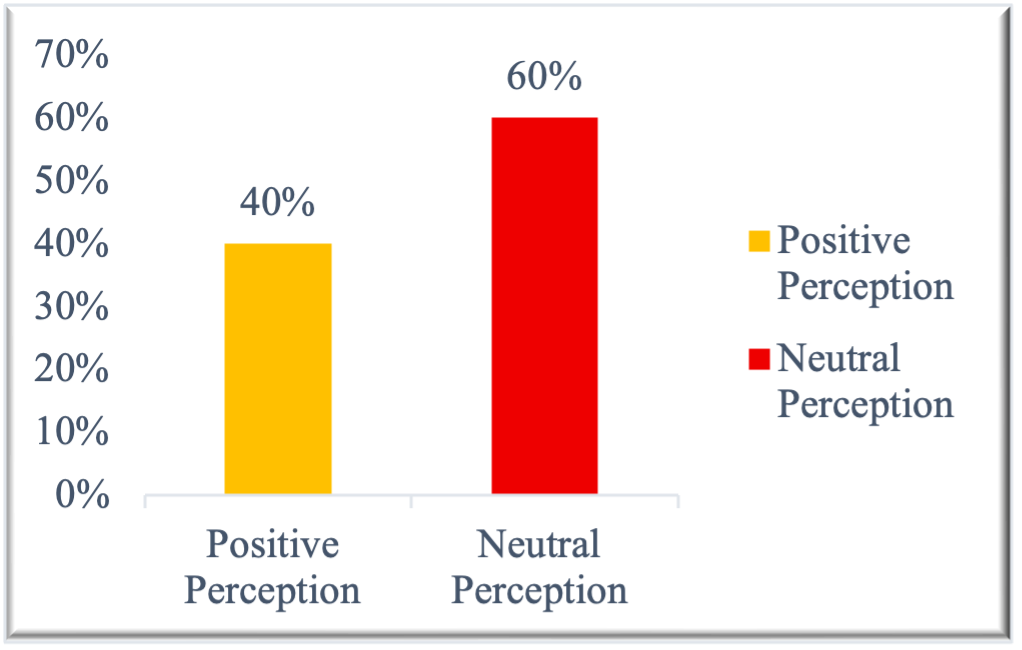
One of the most relevant findings from the survey analysis indicates that 65% of respondents regularly consume purified water in plastic containers (Fig. 1). This suggests a strong dependence on these products, possibly linked to the perception that packaged water represents a healthier and more modern lifestyle.
On the other hand, respondents identified factors that influence recycling. According to the survey, 40% cited a lack of infrastructure as the main barrier, while 60% highlighted a lack of knowledge about proper recycling practices due to interconnected problems: the lack of robust infrastructure and a lack of environmental education, as shown in Figure 2.
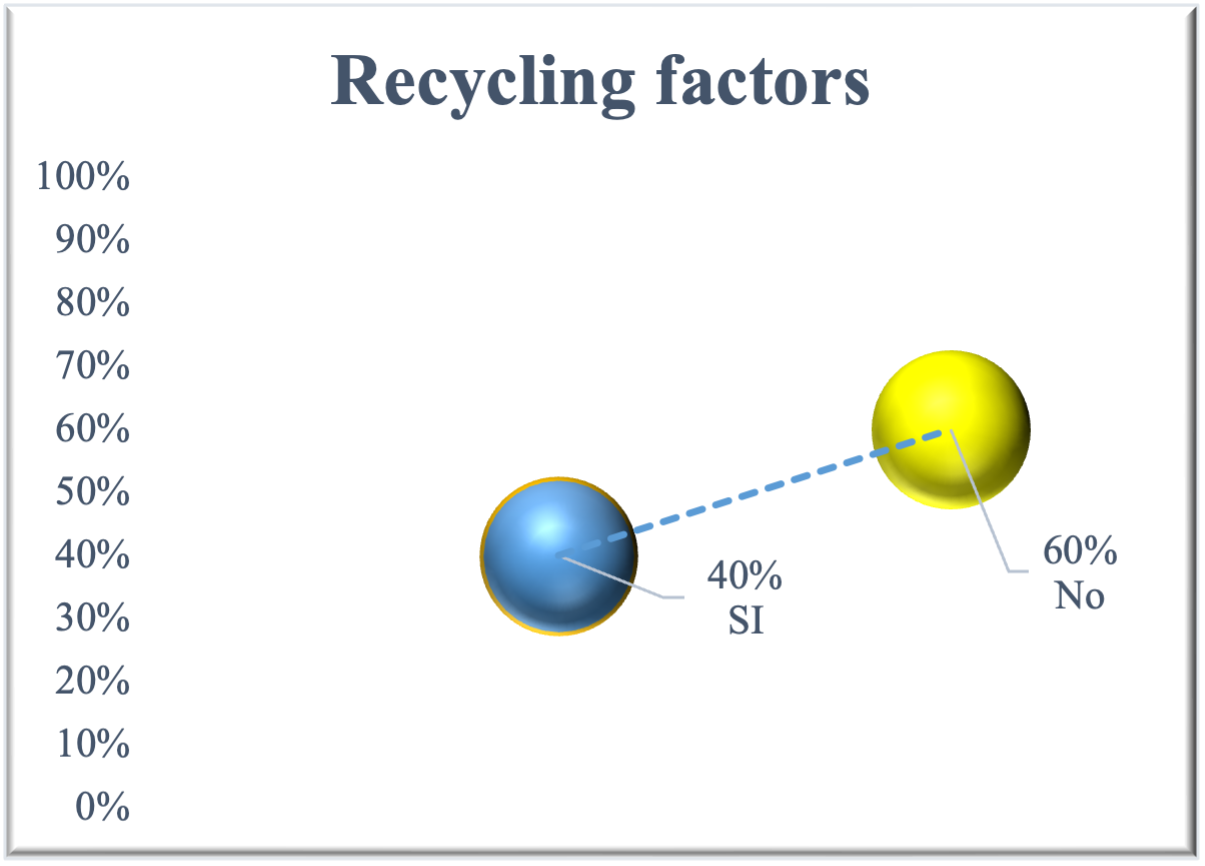
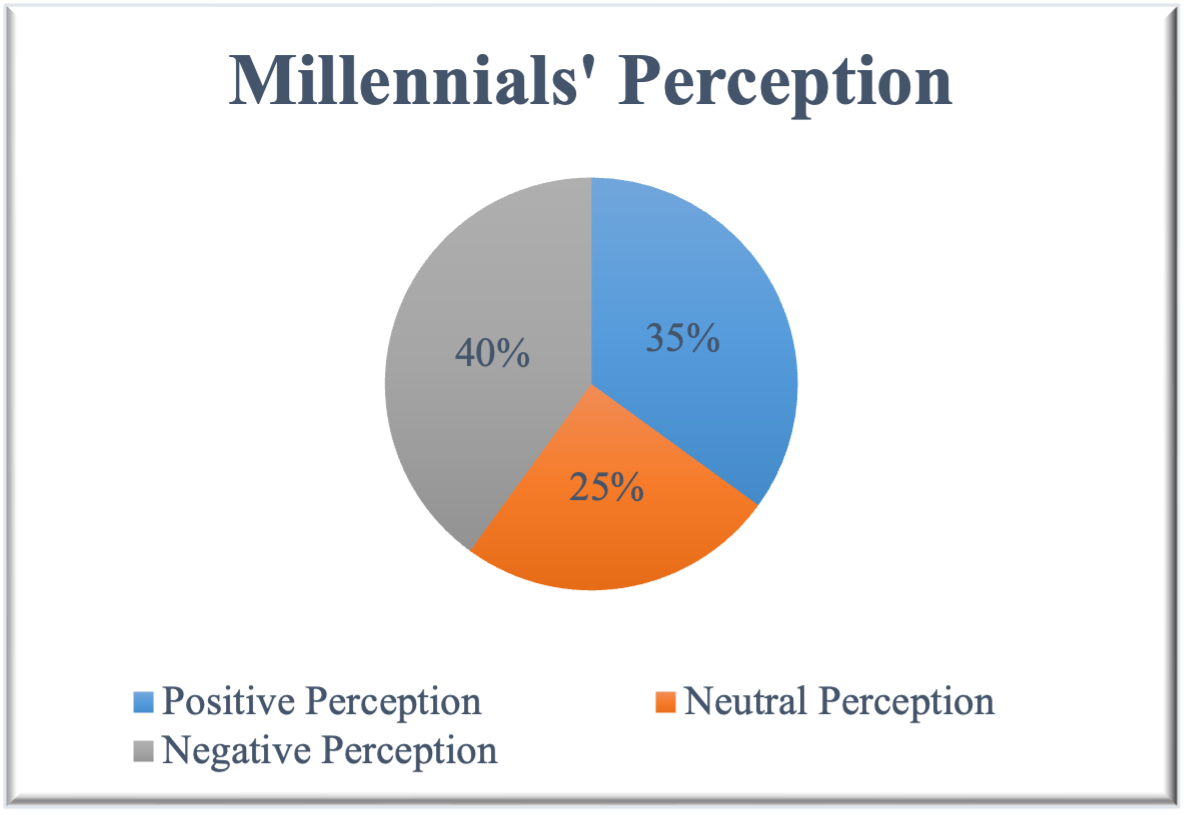
Figure 3 shows Millennials' perceptions of sustainability in the plastic packaging industry. The following results are presented:
The results obtained regarding the incentives considered most effective for encouraging plastic packaging recycling are distributed as follows:
These results are attributed to the fact that the population considers financial benefits to be more tangible advantages that directly connect with personal interests, see Figure 4.
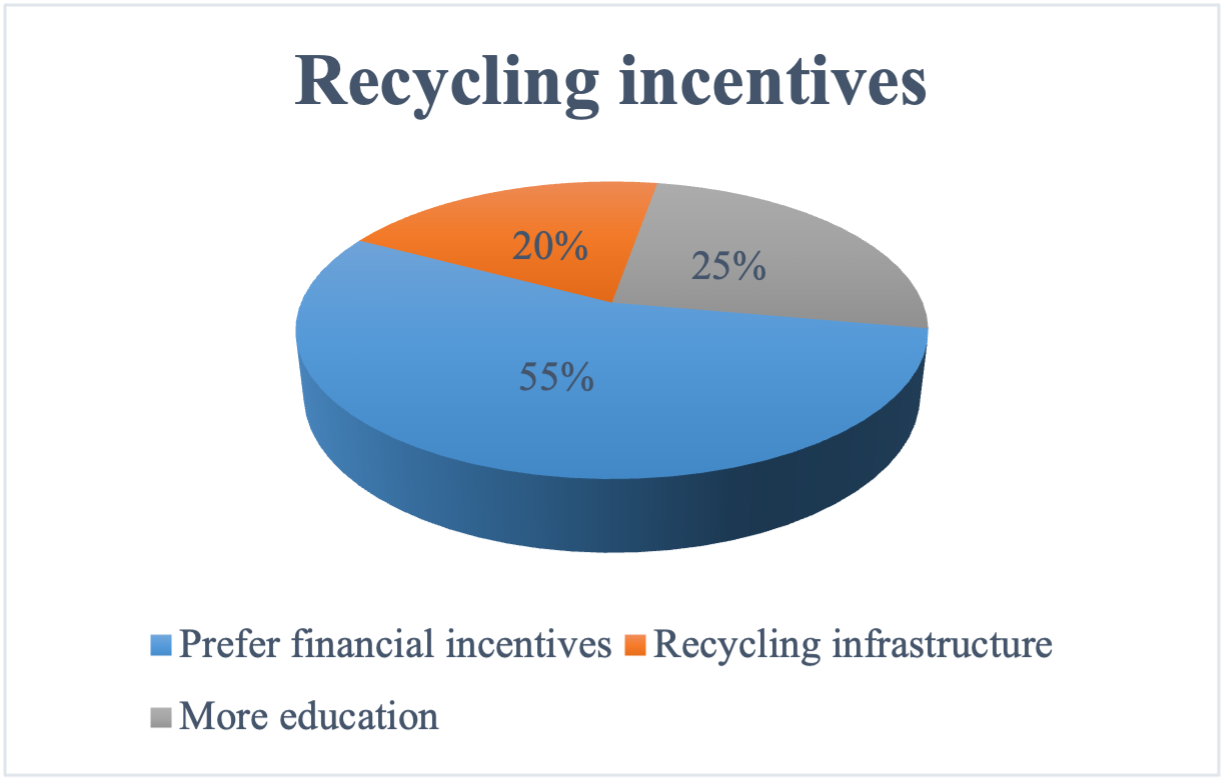
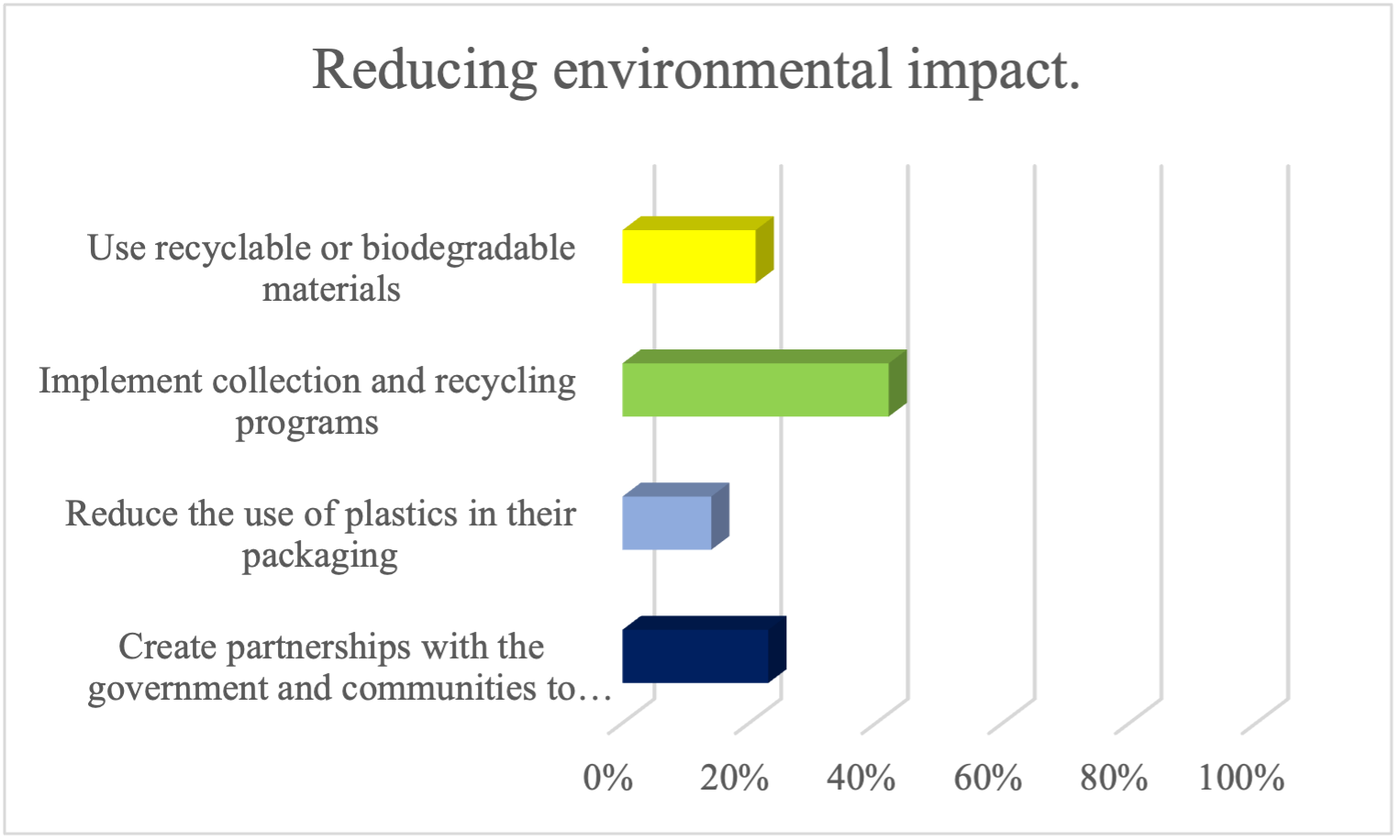
Figure 5 shows that 42% of respondents prioritize the implementation of collection and recycling incentives programs followed by 23% who support the implementation of partnerships with the government and communities to promote recycling. Likewise, 21% support the use of recyclable or biodegradable materials, while only 14% suggest reducing the use of plastics.
The research results highlight the fundamental role of consumers in recycling plastic packaging but also demonstrate the need for close collaboration with industry, consumers, and public policy.
The authors declared no potential conflicts of interest within this research, authorship, and/or publication of this article.
This study has demonstrated the fundamental role of consumers in recycling plastic packaging within the purified water industry. The findings reflect a high dependence on plastic packaging, motivated by its practicality and association with a healthy lifestyle.
However, significant barriers have been identified that limit the adoption of sustainable practices, including insufficient recycling infrastructure and a lack of consumer awareness of proper procedures. These limitations highlight the need to involve citizen participation in plastic waste management.
Based on the findings of this study and in alignment with the proposals presented at the III International Conference of Applied Industrial Engineering, the following public policy proposals and practical interventions are put forward to strengthening the recycling system in the purified water industry. The actions should be promoted by both the central government and decentralized autonomous governments (GADs), with the aim of advancing toward a sustainable circular economy model:
Ali, Syed Mithun, Sayem Ahmed, Humaira Nafisa Ahmed, Aliza Sharmin, and Rafat Rahman. 2021. “Reducing Plastic Pollutants through Catalyzing Consumer Roles: A Novel Application of Fuzzy Total Interpretive Structural Modeling.” Journal of Cleaner Production 335:130327. doi:10.1016/j.jclepro.2021.130327.
Aragundi, Jenner Alexander Gamboa, Leidy Jessenia Salinas Herrera, Flor Yelena Vega Jaramillo, and Virgilio Eduardo Salcedo Muñoz. 2023. “Modelo de Economía Circular En Ecuador: Análisis Descriptivo.” Pacha Revista de Estudios Contemporáneos Del Sur Global 4(10):e230175. doi:10.46652/pacha.v4i10.175.
Arijeniwa, Victoria Foluke, Adenike A. Akinsemolu, Deborah C. Chukwugozie, Ulakom Genesis Onawo, Chidinma Ezinne Ochulor, Uju M. Nwauzoma, Dinah Awino Kawino, and Helen Onyeaka. 2024. “Closing the Loop: A Framework for Tackling Single-Use Plastic Waste in the Food and Beverage Industry through Circular Economy- a Review.” Journal of Environmental Management 359:120816. doi:10.1016/j.jenvman.2024.120816.
Dey, Ayan, Chanda Vilas Dhumal, Priyanka Sengupta, Arushi Kumar, Nilay Kanti Pramanik, and Tanweer Alam. 2020. “Challenges and Possible Solutions to Mitigate the Problems of Single-Use Plastics Used for Packaging Food Items: A Review.” Journal of Food Science and Technology 58(9):3251–69. doi:10.1007/s13197-020-04885-6.
Dufranc, Ileana María Rosa Greca, Eva María García Terceño, Radu Bogdan Toma, Raquel Sanz Camarero, Almudena Alonso Centeno, Jesús Ángel Meneses Villagrá, and Alicia Martínez González. 2024. Mucho Más Que Envases.
Gonella, Jéssica Dos Santos Leite, Moacir Godinho Filho, Gilberto Miller Devós Ganga, Hengky Latan, and Charbel Jose Chiappetta Jabbour. 2024. “A Behavioral Perspective on Circular Economy Awareness: The Moderating Role of Social Influence and Psychological Barriers.” Journal of Cleaner Production 441:141062. doi:10.1016/j.jclepro.2024.141062.
Khatami, Fahimeh, Šárka Vilamová, Enrico Cagno, Paola De Bernardi, Alessandra Neri, and Valter Cantino. 2022. “Efficiency of Consumer Behaviour and Digital Ecosystem in the Generation of the Plastic Waste toward the Circular Economy.” Journal of Environmental Management 325:116555. doi:10.1016/j.jenvman.2022.116555.
Kolade, Oluwaseun, Victor Odumuyiwa, Soroush Abolfathi, Patrick Schröder, Kutoma Wakunuma, Ifeoluwa Akanmu, Timothy Whitehead, Bosun Tijani, and Muyiwa Oyinlola. 2022. “Technology Acceptance and Readiness of Stakeholders for Transitioning to a Circular Plastic Economy in Africa.” Technological Forecasting and Social Change 183:121954. doi:10.1016/j.techfore.2022.121954.
Korhonen, Jouni, Antero Honkasalo, and Jyri Seppälä. 2017. “Circular Economy: The Concept and Its Limitations.” Ecological Economics 143:37–46. doi:10.1016/j.ecolecon.2017.06.041.
Lakhan, Calvin. 2024. “Evaluating the Effectiveness, Costs, and Challenges of Deposit Return Systems for Beverage Containers: A Meta-Analysis.” Elsevier. doi:10.2139/ssrn.4946147.
Liu, Chen, Trung Thang Nguyen, and Yujiro Ishimura. 2021. “Current Situation and Key Challenges on the Use of Single-Use Plastic in Hanoi.” Waste Management 121:422–31. doi:10.1016/j.wasman.2020.12.033.
Macheca, Afonso D., Bridget Mutuma, José L. Adalima, Emmanuel Midheme, Luís H. M. Lúcas, Valentine K. Ochanda, and Sabelo Dalton Mhlanga. 2024. “Perspectives on Plastic Waste Management: Challenges and Possible Solutions to Ensure Its Sustainable Use.” Recycling 9(5):77. doi:10.3390/recycling9050077.
Marks, Danny, Michelle Ann Miller, and Sujitra Vassanadumrongdee. 2023. “Closing the Loop or Widening the Gap? The Unequal Politics of Thailand’s Circular Economy in Addressing Marine Plastic Pollution.” Journal of Cleaner Production 391:136218. doi:10.1016/j.jclepro.2023.136218.
Nguyen, Hong Thi Thu. 2024. “Predicting the Determinants of Generation Z’s Readiness to Adopt Circular Economy for Plastics in Vietnam.” Circular Economy and Sustainability. doi:10.1007/s43615-024-00429-8.
Numata, Daisuke. 2009. “Economic Analysis of Deposit–Refund Systems with Measures for Mitigating Negative Impacts on Suppliers.” Resources Conservation and Recycling 53(4):199–207. doi:10.1016/j.resconrec.2008.11.008.
Portilla-Jiménez, Jenny Gabriela. 2022. “Análisis Del Marco Normativo de Economía Circular En Ecuador Orientado al Sector de Los Plásticos.” FIGEMPA Investigación y Desarrollo 13(1):38–47. doi:10.29166/revfig.v13i1.3364.
Valarezo Ulloa, María José, and Lazaro Ruiz Virgen. 2022. “El Reciclaje de Plásticos, Un Reto Para Lograr Una Economía Circular.” CEDAMAZ 12(2):203–9. doi:10.54753/cedamaz.v12i2.1265.
Zhou, Guangli, Yifan Gu, Yufeng Wu, Yu Gong, Xianzhong Mu, Honggui Han, and Tao Chang. 2019. “A Systematic Review of the Deposit-Refund System for Beverage Packaging: Operating Mode, Key Parameter and Development Trend.” Journal of Cleaner Production 251:119660. doi:10.1016/j.jclepro.2019.119660.