Matías Renato Castro Castilloa, Jaime Xavier Nieto-Cardenasa, Paúl Illescas-Cárdenasa, Pilar Roxana Naspud Uruchimaa
aAcademic Unit of Engineering, Industry, and Construction, Universidad Católica de Cuenca. Cuenca, Ecuador, 010101.
Corresponding author: jxnietoc@ucacue.edu.ec
Vol. 04, Issue 01 (2025): July
ISSN-e 2953-6634
ISSN Print: 3073-1526
Submitted: June 17, 2025
Revised: June 26, 2025
Accepted: July 12, 2025
Castro Castillo, M. R., Nieto-Cárdenas, J. X., Illescas-Cárdenas, P., & Naspud Uruchima, P. R. (2025). Desempeño mecánico de morteros reforzados con fibras de acero. EASI: Ingeniería Y Ciencias Aplicadas En La Industria, 4(1), 42–51. https://doi.org/10.53591/easi.v4i1.2410
Articles in journal repositories are freely open in digital form. Authors can reproduce and distribute the work on any non-commercial site and grant the journal the right of first publication with the work simultaneously licensed under a CC BY-NC-ND 4.0.
Erratum
Article: Mechanical performance of mortars reinforced with steel fibers.
Context Authors: Matías Renato Castro Castillo, Jaime Xavier Nieto-Cardenas, Paúl Illescas-Cárdenas, Pilar Roxana Naspud Uruchima
Volume: 4(1), pp. 42–51
Due to an unintentional error, the author has requested a correction to the Acknowledgments section.
Raquel Vera.
Editora
This article focuses on the evaluation of the resistance of mortars to indirect tension and compression, simple and reinforced, with different percentages of steel fiber. The aim is to find resistant and economical solutions to reinforce informal housing, through the use of plaster that improves the general characteristics of a masonry. Masonry constructed in an informal or artisanal manner has a high degree of structural vulnerability. First, the indirect tensile strength and displacements supported by simple and reinforced mortars are compared, where it is observed that reinforced mortars offer greater strength and deformation capacity as a function of the percentage of fiber. Then, the compressive strength is compared, where the reinforced mortars also show adequate results. In terms of economics, the reinforced mortar presents disadvantages due to the cost of the fibers; in the percentages studied in this article (10, 15, 20 and 25%), the use of reinforced mortars for informal housing is not so attractive; it is recommended to develop similar investigations with different percentages of fiber.
Keywords: Reinforced mortar, steel fiber, strength-deformation curve, compression test, informal housing.
Este artículo se centra en la evaluación de la resistencia a la tracción y compresión indirectas de morteros, simples y reforzados, con diferentes porcentajes de fibra de acero. El objetivo es encontrar soluciones resistentes y económicas para reforzar viviendas informales, mediante el uso de revoque que mejore las características generales de la mampostería. La mampostería construida de manera informal o artesanal presenta un alto grado de vulnerabilidad estructural. En primer lugar, se compara la resistencia a la tracción indirecta y los desplazamientos soportados por morteros simples y reforzados, donde se observa que los morteros reforzados ofrecen mayor resistencia y capacidad de deformación en función del porcentaje de fibra. Posteriormente, se compara la resistencia a la compresión, donde los morteros reforzados también muestran resultados adecuados. En términos económicos, el mortero reforzado presenta desventajas debido al costo de las fibras; en los porcentajes estudiados en este artículo (10, 15, 20 y 25%), el uso de morteros reforzados para viviendas informales no resulta tan atractivo; se recomienda desarrollar investigaciones similares con diferentes porcentajes de fibra.
Palabras claves: Mortero reforzado, fibra de acero, curva derza-desplazamiento, ensayo de compresión, vivienda informal.
Construction is a widespread activity globally. In Latin America, approximately 50% of construction is carried out informally, without the supervision of a qualified professional (El Comercio / IG-EPN, 2011). One of the main characteristics of this type of practice is the limited adherence to building codes and minimum construction standards (Vergara-Perucich et al., 2022). These structures often exhibit significant deficiencies, especially in the face of seismic events or extreme weather conditions (Samaniego, 2020). One potential solution involves reinforcing existing masonry to effectively increase the strength, durability, and stability of such structures, thereby ensuring the safety of occupants (Gonzalez, 2015).
A key component of non-structural masonry is mortar, which consists of a mixture of cement, fine aggregate, water, and additives. Due to its versatility, mortar is commonly used for block bonding, coating, and plastering walls (Quirós, 2018). In an effort to improve the physical and mechanical properties of this material, researchers have explored the incorporation of fibers and additives into mortar mixes. Among the different types of fibers, steel fibers stand out due to their excellent mechanical properties (Aguirre, 2021).
The use of fibers in masonry mortars has been documented since the 20th century. Graham introduced them to enhance strength and durability, and in 1920, Griffith published the first scientific study on the use of steel fibers in mortars (Bustos García, 2018). Steel fibers act as reinforcement within the cementitious matrix, improving tensile and flexural performance and thereby reducing cracks and fissures under load (Marcalíková et al., 2019). These fibers are known to increase both load-bearing capacity and durability, making them an optimal option for constructions with low initial strength (Nam, J.W.; Kim, S.M.; Park, S.H.; Han, 2018).
Recent studies on non-structural masonry reinforced with metallic fibers have shown promising results. For instance, Dawood & Ramli (2010), Guo et al. (2024), and Nian et al. (2024) investigated improvements in impact resistance and crack control in cementitious materials through the incorporation of steel fibers at various scales. He (2023) characterized the uniaxial tensile behavior of high-performance concrete enhanced with nano-concrete fibers. Another example is the reported increase in stiffness—2.4 times higher than mortars reinforced with welded wire mesh and 3.8 times higher than unreinforced walls. Furthermore, mortars reinforced with steel fibers exhibited a 67% increase in strength compared to unreinforced ones, and a 6.5% improvement over mortars reinforced only with welded mesh (Nieto-Cárdenas et al., 2023).
Other studies, such as those by Hidayat et al. (2021) and Li et al. (2011), analyzed variations in compressive and flexural behavior in fiber-reinforced mortars. At early ages, fibers also help control cracking during the hardening process, as demonstrated by Kang et al. (2024). Similarly, Nian et al. (2024) examined the influence of fibers in asphalt mixtures. Shen et al. (2022) and collaborators developed a mathematical model to predict crack formation in beams reinforced with steel fibers and BFRP bars. In addition, Pan & Ma (2017) and Younis et al. (2021) analyzed the impact resistance of concrete with metallic fibers. In the context of fatigue performance in high-strength concrete beams, Zhang et al. (2025) observed superior behavior in elements reinforced with steel fibers.
In general, whether in concrete, asphalt, or mortar (Carrillo et al., 2020; Hidayat et al., 2021b; Li et al., 2011b; Shi et al., 2021), the incorporation of fibers demonstrates considerable potential to enhance mechanical properties. This makes fiber reinforcement a viable solution for structurally improving informal housing.
This study presents two comparative analyses: first, it examines the mechanical properties (force–displacement behavior) of plain mortar and mortar reinforced with metallic fiber (DRAMIX 3D) at four different fiber contents by weight of cement: 10%, 15%, 20%, and 25% in indirect tension, and 10%, 15%, and 20% in compression. Second, it compares the strength and cost between plain mortar and fiber-reinforced mortars. The objective is to determine the optimal steel fiber content for application in the plastering of informal housing, where walls typically lack protective coatings. This reinforcement aims to prevent masonry block detachment during seismic events, thereby improving the structural integrity of dwellings and the safety of their occupants.
In summary, the use of steel fibers in masonry mortar—particularly for informal housing—offers an accessible solution for enhancing structural strength, reducing cracking, and increasing durability. This contributes to improved safety for residents in the face of seismic and other adverse events.
The experimental study involved testing a commonly used mortar with a sand-to-cement ratio of 3:1. This mortar was evaluated both in its plain state and with steel fiber reinforcement at 10%, 15%, 20%, and 25% by weight of cement in the mix.
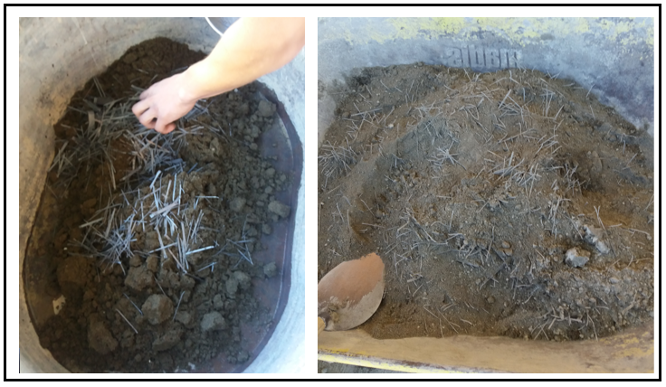
The preparation process, applicable standards, and theoretical foundations are outlined as follows:
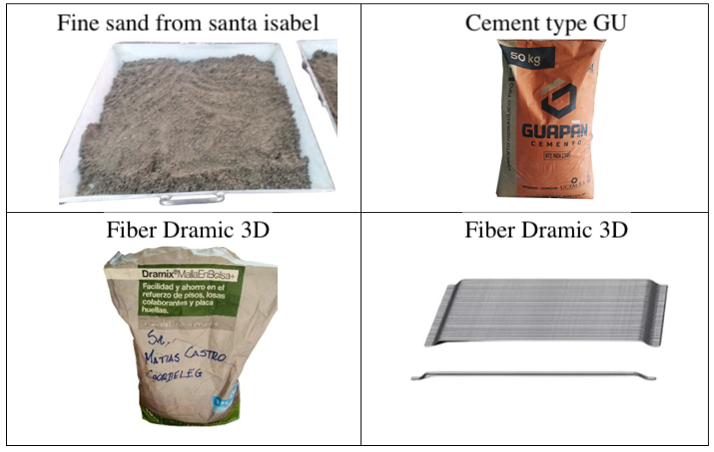
The materials and equipment used in this research are listed below:
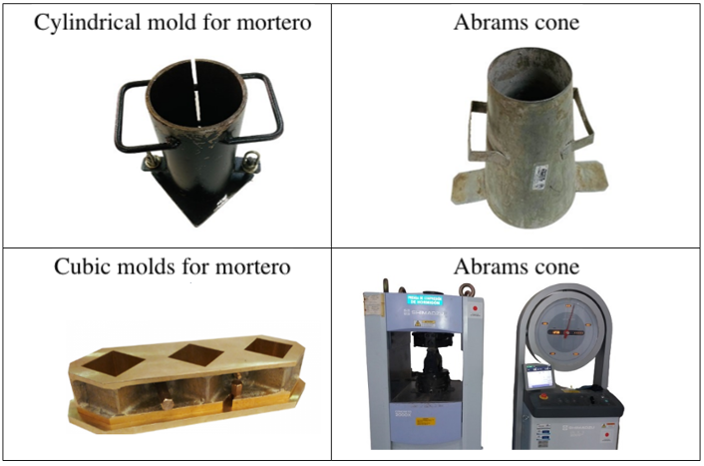
Table 1. Designation and Coding of the Specimens.
| Code | Description |
|---|---|
| TI.MS | Cylindrical specimen of plain mortar |
| TI.M-10 | Cylindrical specimen of mortar with 10% fiber |
| TI.M-15 | Cylindrical specimen of mortar with 15% fiber |
| TI.M-20 | Cylindrical specimen of mortar with 20% fiber |
| TI.M-25 | Cylindrical specimen of mortar with 25% fiber |
| MS | Cubic specimen of plain mortar |
| M-10 | Cubic specimen of mortar with 10% fiber |
| M-15 | Cubic specimen of mortar with 15% fiber |
| M-20 | Cubic specimen of mortar with 20% fiber |
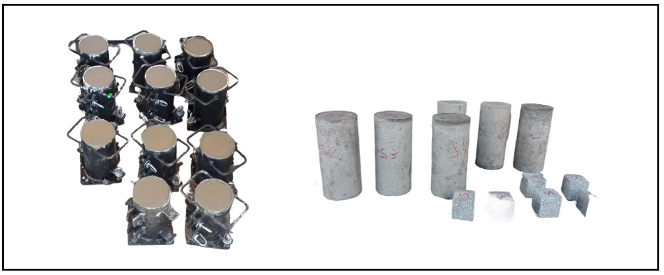
The results of the experimental investigation are presented as follows:
The fineness modulus of the sand was determined to be 2.79, which complies with the ASTM C136 standard [12], falling within the acceptable range of 2.30 to 3.10.
The density of the cement, obtained using the Le Chatelier flask in accordance with ASTM C188 [14], was 2.81 g/cm³.
The relative density of the sand was found to be 2.30, calculated using the pycnometer method in accordance with ASTM C128 [13].
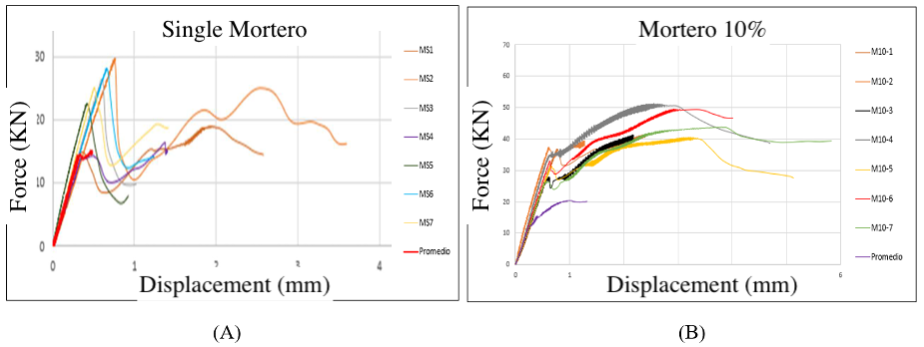
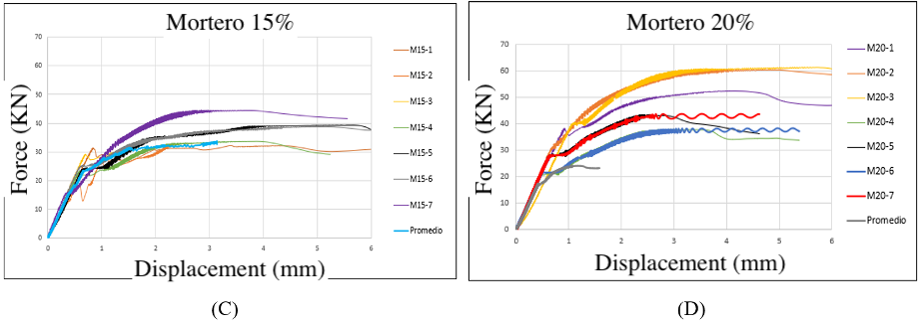
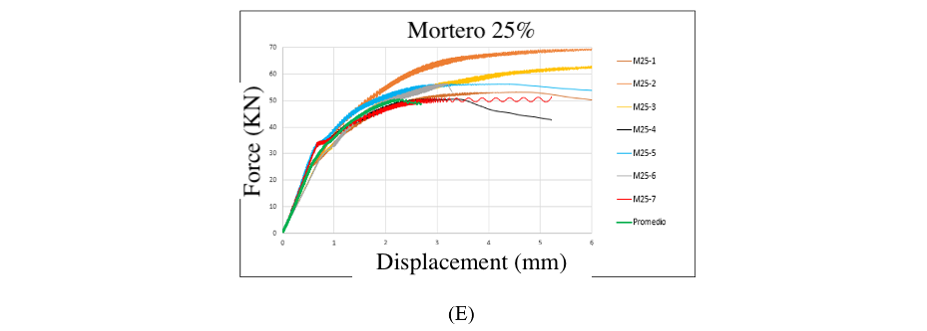
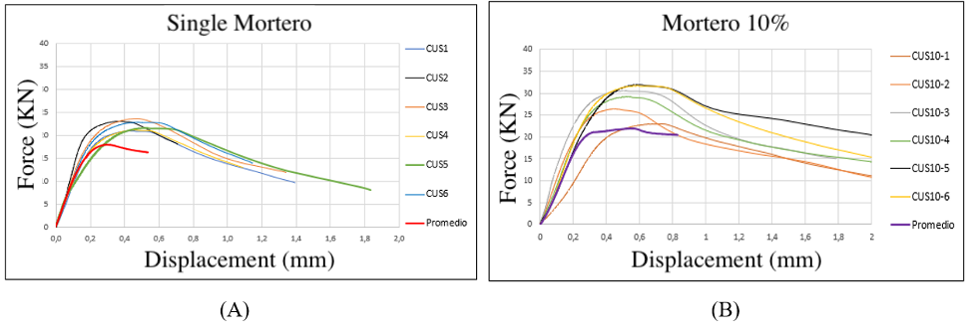
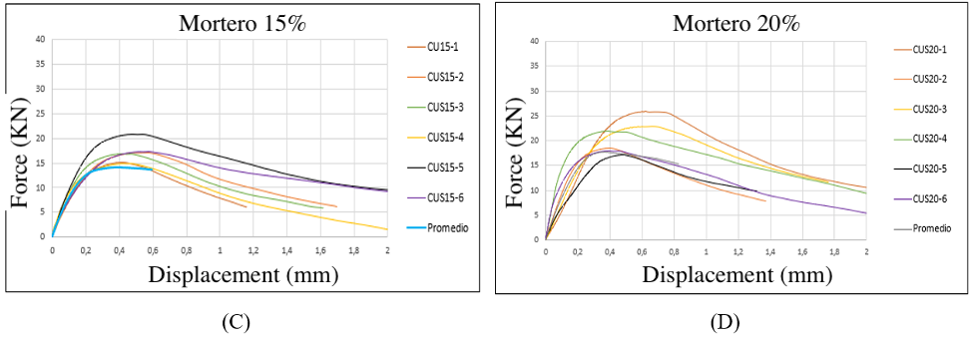
The force–deformation curves and compressive strength results presented in the following graphs illustrate the mechanical response of the specimens after testing using a hydraulic press, through indirect tensile and compressive strength tests.
Indirect tensile strength results of mortars:
The graphs in Figure 5 show the results of the indirect tensile tests (force–displacement curves) for cylindrical specimens of each mortar mix design.
The graphs in Figure 6 present the results of the compression tests (force–displacement curves) for cubic specimens of each mortar mix.
Figure 7A displays the summary curves for each fiber dosage under indirect tensile testing using cylindrical molds, along with the area under each curve; the corresponding data are shown in the legend. Similarly, Figure 7B presents the summary curves and areas under the curve for the compression tests conducted on mortar cubes.
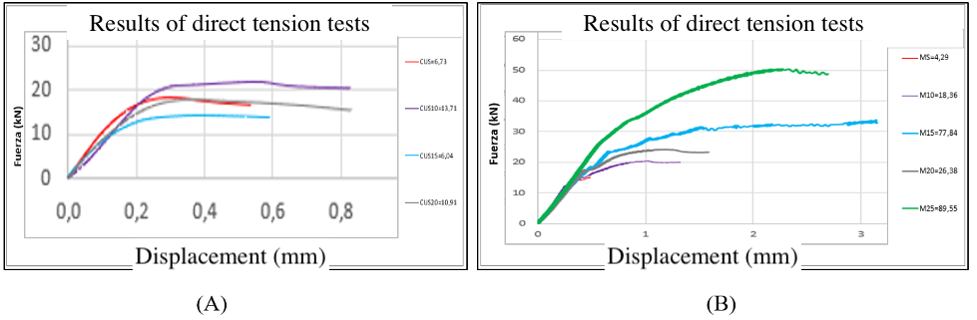
After analyzing the compression and indirect tensile test curves for the different mortar types, the following observations can be made:
Table 2. Summary Table of Strength–Cost Comparison.
| Mortar | Compressive Strength (MPa) | Indirect Tensile Strength (kN) | Cost per m³ (USD) |
|---|---|---|---|
| Simple | 7,20 | 15,01 | 110,90 |
| 10% fiber | 8,70 | 20.46 | 335,54 |
| 15%fiber | 5,60 | 43,55 | 447,86 |
| 20% fiber | 7,00 | 24,11 | 560,18 |
| 25% fiber | N/A | 50,36 | 672 |
The difference in cost per cubic meter of mortar is mainly attributed to the amount of fiber used, as the unit price of steel fibers is relatively high and they are currently not easily available in the local market.
This research demonstrates the increase in mortar strength resulting from the inclusion of steel fibers in the mix. The key findings from the results are summarized below:
The authors recommend further research to develop a future line of knowledge, particularly exploring the application of fiber-reinforced mortars in compression-loaded masonry prisms, to better understand their potential contribution to masonry wall performance.
The authors express their sincere gratitude to the family of Engineer Matías Castro, who kindly provided valuable information that made it possible to complete this work. Engineer Castro sadly passed away a few weeks after finishing his degree project. The authors declare that they received financial support for the research in this paper. The project, code PIC5P23-33: “Estudio sismorresistente de viviendas de interés social analizando el rango inelástico de los elementos de lámina delgada” was funded through an official call for proposals by the Jefatura de Investigación of the Universidad Católica de Cuenca.
Aguirre, J. (2021). Las fibras de vidrio, acero y polipropileno en forma de hilachas, aplicadas como fibras de refuerzo en la elaboración de morteros de cemento.
ASTM C128. (2023). Standard Test Method for Relative Density (Specific Gravity) and Absorption of Fine Aggregate (Vols. CO128-22).
ASTM C188-17. (2023). Standard Test Method for Density of Hydraulic Cement (Vols. CO188-17).
ASTM International. (2015). Standard Test Method for Sieve Analysis of Fine and Coarse Aggregates.
ASTM International. (2023). Standard Test Method for Density of Hydraulic Cement.
Bustos García, A. (2018). Morteros con propiedades mejoradas de ductilidad por adición de fibras de vidrio, carbono y basalto. 1–324.
Carrillo, J., Pincheira, J., & Flores, L. E. (2020). Quasi-static cyclic tests of confined masonry walls retrofitted with mortar overlays reinforced with either welded-wire mesh or steel fibers. Journal of Building Engineering, 27(October 2019), 10. https://doi.org/10.1016/j.jobe.2019.100975
Dawood, E. T., & Ramli, M. (2010). Flowable high-strength system as repair material. Structural Concrete, 11(4), 199–209. https://doi.org/10.1680/stco.2010.11.4.199
El Comercio / IG-EPN. (2011). La informalidad en la construcción es el mayor riesgo en un terremoto. Instituto Geofísico – Escuela Politécnica Nacional. https://www.igepn.edu.ec/servicios/noticias/381-la-informalidad-en-la-construcción-es-el-mayor-riesgo-en-un-terremoto
Gonzalez, G. (2015). Estudio de durabilidad de paredes de mamposteria reforzadas con mortero y fibras naturales y artificiales.
Guapán, U. C. N. (UCEM) – P. (n.d.). Ficha Técnica Cemento Hidráulico Guapán Tipo GU.
Guo, Y., Liu, X., Wang, X., Ye, Q., Xiang, K., & Wang, R. (2024). Multiscale Hybrid Steel Fiber Enhances the Impact Resistance and Crack Resistance of Cement-based Materials. Cailiao Daobao Materials Reports, 38(2). https://doi.org/10.11896/cldb.22030271
He, Y. (2023). Characterisation of unidirectional tensile failure performance of steel fibre nano high strength concrete. International Journal of Microstructure and Materials Properties, 16(6), 533–544. https://doi.org/10.1504/IJMMP.2023.134769
Hidayat, B. A., Sabdono, P., Indriyantho, B. R., & Hung, C.-C. (2021a). Compressive and flexural behavior of fiber-reinforced mortar: An experimental study. Aip Conference Proceedings, 2447. https://doi.org/10.1063/5.0072700
International, A. (2015). Standard Test Method for Sieve Analysis of Fine and Coarse Aggregates.
International, A. (2016). Standard Test Method for Splitting Tensile Strength of Cylindrical Concrete Specimens.
International, A. (2023). Standard Test Method for Relative Density (Specific Gravity) and Absorption of Fine Aggregate.
Kang, J., Shen, D., Shao, H., Huang, Q., & Liu, X. (2024). Experimental Study on Early-Age Cracking Behavior of Hooked-End Steel Fiber-Reinforced Concrete under Different Curing Temperatures. Journal of Materials in Civil Engineering, 36(10). https://doi.org/10.1061/JMCEE7.MTENG-17246
Li, C., Liu, J., Liu, J., Lv, J., & Yang, Z. (2011b). Quantitative evaluation and mechanism of crack resistance of steel fiber reinforced mortar. Kuei Suan Jen Hsueh Pao Journal of the Chinese Ceramic Society, 39(3), 531–536.
Marcalíková, Z., Procházka, L., Pešata, M., Boháčová, J., & Čajka, R. (2019). Comparison of material properties of steel fiber reinforced concrete with two types of steel fiber. IOP Conference Series: Materials Science and Engineering, 549(1). https://doi.org/10.1088/1757-899X/549/1/012039
Nam, J.W.; Kim, S.M.; Park, S.H.; Han, S. H. (2018). Performance of oxygen/argon plasma-treated steel fibres in cementitious composites. Construction and Building Materials, 189, 169–176. https://doi.org/10.1016/j.conbuildmat.2018.08.198
Nian, T., Wang, M., Li, P., Song, J., Ge, J., & Guo, R. (2024). Enhancing low-temperature crack resistance: A method for establishing meso-models and evaluating steel fiber-reinforced hot recycled asphalt mixtures. Construction and Building Materials, 438. https://doi.org/10.1016/j.conbuildmat.2024.137026
Nieto-Cárdenas, X., Takeuchi, C., Carrillo, J., & Cobos, C. (2023). Performance of non-structural masonry retrofitted with welded wire mesh and steel fibers under axial compression load. AIP Conference Proceedings, 2928(1). https://doi.org/10.1063/5.0170782
Pan, H., & Ma, Y. (2017). Impact Resistance of Steel Fiber Reinforced Concrete and Its Mechanism of Crack Resistance and Toughening. Jianzhu Cailiao Xuebao Journal of Building Materials, 20(6), 956–961. https://doi.org/10.3969/j.issn.1007-9629.2017.06.021
Quirós, L. (2018). Estudio del comportamiento mecánico del mortero reforzado con fibra de coco y modificado con óxido de hierro (Vol. 3, Issue 2). Universidad Pontificia Bolivariana.
Samaniego, V. (2020). En la construcción en Ecuador, la informalidad mata. Universidad Del Azuay. https://www.uazuay.edu.ec/noticias/en-la-construccion-en-ecuador-la-informalidad-mata
Sánchez, D. (2000). Tecnología del concreto y del mortero: Vol. Cuarta.
Shen, W., Chen, S., & Zhang, J. (2022). Calculation of Cracks in Partially Steel Fiber Reinforced Concrete Beams with BFRP Bars. Advances in Materials Science and Engineering, 2022. https://doi.org/10.1155/2022/9158379
Shi, K., Zhang, M., Zhang, T., Li, P., Zhu, J., & Li, L. (2021). Seismic performance of steel fiber reinforced high–strength concrete beam–column joints. Materials, 14(12). https://doi.org/10.3390/ma14123235
Vergara-Perucich, F., Fuster-Farfán, X., Rojas Rubio, I., Hidalgo Dattwyller, R., Rincón Quiroz, S., Álvarez, J. C., Alvarado Peterson, V., Meseguer Ruiz, O., & Lizana Vásquez, F. (2022). Vivienda informal y las organizaciones territoriales en América Latina. Revista de Geografía Norte Grande, 14(81), 5–14. https://doi.org/10.4067/s0718-34022022000100005
Younis, K. H., Jirjees, F. F., Yaba, H. K., & Maruf, S. M. (2021). Experimental study on impact resistance of concrete containing steel fibers. In Key Engineering Materials: Vol. 872 KEM. https://doi.org/10.4028/www.scientific.net/KEM.872.1
Zhang, M., Zhang, S., & Jing, J. (2025). Effect of steel fiber content on fatigue performance of high-strength concrete beams. Scientific Reports, 15(1). https://doi.org/10.1038/s41598-025-96217-x