Ricardo Vega Grandaa, David Cabezas Garcíab, Fabian Rosales Pintadob, Jannette Granda Martínezc, Azucena Ortega Pindoc
aFaculty of Humanities and Education Sciences, UMECIT University, Panama, and Full Professor at the University of Guayaquil, Ecuador.
bFaculty of Chemical Engineering, Production Engineering Program, University of Guayaquil, Ecuador.
cFaculty of Philosophy, University of Guayaquil, Ecuador.
Corresponding author: david.cabezasg@ug.edu.ec
Vol. 04, Issue 01 (2025): July
ISSN-e 2953-6634
ISSN Print: 3073-1526
Submitted: January 21, 2025
Revised: May 30, 2025
Accepted: June 23, 2025
Vega Granda, R., Cabezas García, D., Rosales Pintado , F., Granda Martínez, J., & Ortega Pindo, A. (2025). Case study on the impact of digital tools in a chocolate company : . EASI: Ingeniería Y Ciencias Aplicadas En La Industria, 4(1), 23–30. https://doi.org/10.53591/easi.v4i1.2062
Articles in journal repositories are freely open in digital form. Authors can reproduce and distribute the work on any non-commercial site and grant the journal the right of first publication with the work simultaneously licensed under a CC BY-NC-ND 4.0.
This study analyzes the impact of digital tools on production processes in a chocolate industry company in Ecuador, within the broader context of Industry 4.0. Through a qualitative and descriptive approach, semi-structured interviews were conducted with ten employees working in production and administration. The objective was to explore the perceived benefits, challenges, and operational changes associated with the integration of digital technologies. The research followed a non-experimental, inductive design, and used Atlas.ti for thematic coding and qualitative analysis. The results reveal that digital tools have significantly transformed core areas such as production, distribution, and marketing. The most used technologies include management software, machinery sensors, CRM systems, and social media platforms. Participants highlighted improvements in efficiency, error reduction, and resource optimization, as well as challenges related to staff training and technological adaptation. This study contributes empirical evidence on how digitalization unfolds in small and medium-sized enterprises in emerging economies. It also offers insights into the design of inclusive innovation strategies and context-specific policies to support digital transformation, particularly in the food sector.
Keywords: digital tools, digitalization, production, industry, digital transformation.
Este estudio analiza el impacto de las herramientas digitales en los procesos de producción de una empresa del sector chocolatero en Ecuador, en el contexto de la Industria 4.0. A través de un enfoque cualitativo y descriptivo, se realizaron entrevistas semiestructuradas a diez trabajadoras vinculadas a las áreas de producción y administración. El objetivo fue explorar los beneficios percibidos, los desafíos enfrentados y los cambios operativos asociados con la integración de tecnologías digitales. La investigación se desarrolló bajo un diseño no experimental e inductivo, y empleó el software Atlas.ti para el análisis cualitativo mediante codificación temática. Los resultados revelan que las herramientas digitales han transformado significativamente áreas clave como producción, distribución y marketing. Las tecnologías más utilizadas incluyen software de gestión, sensores de maquinaria, sistemas CRM y plataformas de redes sociales. Las participantes destacaron mejoras en la eficiencia, la reducción de errores y la optimización de recursos, así como desafíos relacionados con la capacitación del personal y la adaptación tecnológica. Este estudio aporta evidencia empírica sobre cómo se desarrolla la digitalización en pequeñas y medianas empresas de economías emergentes. Asimismo, ofrece insumos relevantes para el diseño de estrategias de innovación inclusiva y políticas públicas adaptadas al contexto del sector alimentario.
Palabras claves: herramientas digitales, digitalización, producción, industria, transformación digital.
Digitalization in production processes has become a global phenomenon, driving efficiency and sustainability in both small and large industries. With the advancement of digital tools such as automation, the Internet of Things (IoT), big data, and artificial intelligence, production areas are undergoing significant transformations. This context represents a pivotal moment for Ecuadorian companies, which operate in a highly competitive environment where anticipating change can offer a strategic advantage.
However, this transformation also brings important challenges, such as adapting to new technologies, training personnel, and ensuring digital security particularly in terms of cybersecurity. Globalization and the rise of emerging technologies have enabled industries to modernize their processes, improve operational efficiency, and meet international standards. In Ecuador, the industrial sector has made progress in integrating smart devices and specialized software. Tools such as IoT sensors and ERP systems have supported the automation of operations, providing competitive advantages. Nevertheless, this adoption has also revealed disparities, especially between large corporations and small and medium-sized local enterprises (Zambrano et al., 2025). These innovations not only reshape production strategies but also significantly influence business sustainability. This article combines real-world cases and current trends to explore how digital tools are transforming Ecuador’s industrial landscape (Kumar et al., 2020). Beyond offering abundant information, digital technologies create opportunities to reduce structural gaps in both social and productive contexts (Qureshi et al., 2025). Within this framework, it is essential to examine their application in the national productive environment.
Therefore, this study aims to analyze the impact of digital tools in an Ecuadorian chocolate company, considering their effect on productivity, monitoring, and operational efficiency. The large-scale manufacturing of goods requires complex, precise mechanisms whose maintenance can become costly if not properly managed. Predictive maintenance can reduce required time by up to 50% and decrease operational costs by nearly 10%. For this reason, remote monitoring of these systems is essential; it is even possible to create a digital twin of a machine that displays real-time performance data related to key parameters and manufacturing processes, thus enhancing overall efficiency (Jamwal et al., 2025; Kavre et al., 2025).
Independent Variable: At the global level, companies must balance investment in digital technologies with maintaining operational stability and competitiveness. In Ecuador, digitalization in production processes is progressing gradually, with several companies in the industrial and agricultural sectors beginning to integrate digital tools such as management software and remote monitoring systems. According to a study by the Chamber of Industries and Production of Ecuador, only 25% of companies have adopted some level of digitalization in their production systems (Prensa.ec, 2024). This low adoption rate reflects the current stage of digital transformation in the country, influenced by factors such as limited training and the high cost of implementing advanced technologies. Nonetheless, evidence suggests that when companies invest in adequate training and apply a phased strategy, the transition toward digitalization becomes more viable and sustainable.
Dependent variable: The main barriers to adopting digital tools are the lack of staff training and resistance to change. These limitations directly affect the ability of companies to modernize their processes. However, those that have implemented continuous training programs and embraced digital innovation report notable improvements in productivity and competitiveness. In the chocolate industry, for example, the use of real-time monitoring systems has enhanced machine performance and enabled the early detection of faults. These advancements, supported by a trained workforce, have been key to the effective integration of digital tools and the optimization of operations across multiple departments.
The design of this research is non-experimental and inductive. General data were collected to describe the perceived benefits and challenges associated with digitalization processes. According to Alshaher et al. (2025), scientific research is a systematic process because it follows an organized and chronological sequence of activities that must be rigorously respected, avoiding omissions that could affect the study's outcomes.
This is a qualitative and descriptive study, focusing on the perceptions and experiences of workers in a chocolate industry company in Ecuador. The investigation used semi-structured interviews with selected employees to understand their individual perspectives regarding the use of digital tools in daily activities such as production, sales, or administration. The descriptive level of the research allows for a detailed account of how digital tools have been adopted and how they have transformed operational processes into different areas of the company.
An inductive method was applied to analyze the influence of digital tools in different departments. This approach is grounded in employees’ observations and hands-on experiences with technologies during their daily routines. The inductive method enables the identification of patterns, operational impacts, and contextual barriers related to digital transformation, facilitating the generation of broader insights from specific experiences (Jamwal et al., 2025).
While digital transformation in production systems has received extensive attention globally, there is still limited empirical evidence focused on small and medium-sized enterprises (SMEs) in Ecuador, particularly in the food and chocolate sectors. This study addresses that gap by offering a contextualized exploration of how digital tools are integrated and perceived within a real operational setting. Its main contribution lies in providing practical insights that support inclusive innovation strategies and guide the formulation of targeted training and investment policies aligned with real-world operational needs (Silva et al., 2024; Vega et al., 2025).
The study used a purposive sample of ten employees from both administrative and production departments of the company. These individuals were selected based on their direct involvement with digital tools in their daily work, allowing for the collection of diverse perspectives across key functional areas. Inclusion criteria involved employees with practical experience in the application of digital technologies, while exclusion criteria omitted those who did not engage with digital processes or had not received sufficient training. Although the sample size is small, it aligns with the qualitative research approach, which emphasizes analytical depth over statistical generalization (Kavre et al., 2025).
Semi-structured interviews were used to gather general information from employees. These included both open and closed-ended questions focused on the use, benefits, and limitations of the digital tools implemented. Interviews, as a specific form of knowledge-producing dialogue, allowed for in-depth interaction between interviewer and interviewee. The responses were subsequently processed using qualitative data analysis software, allowing thematic coding through keywords and specific categories (Kee et al., 2025).
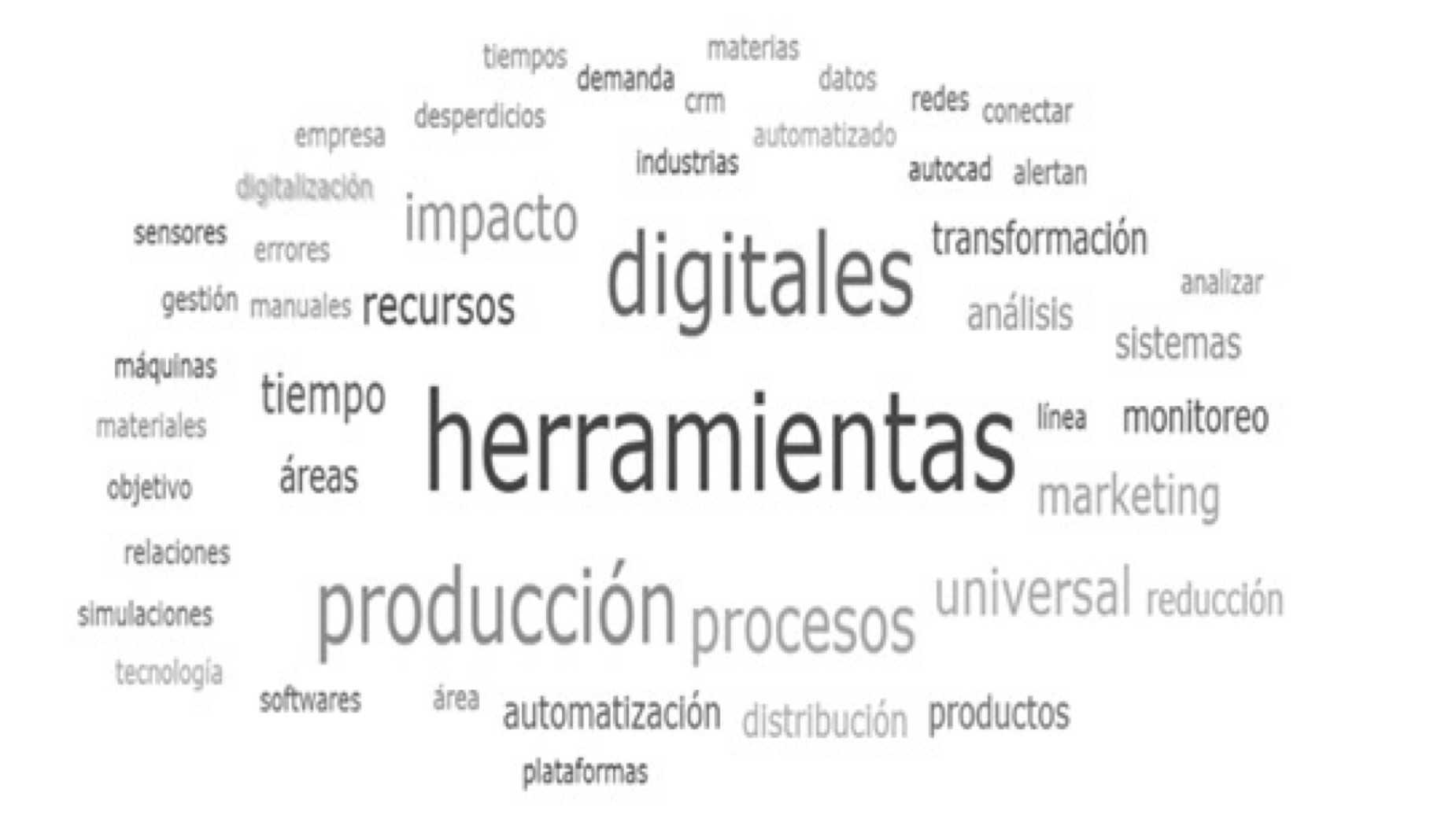
To perform the interpretation of data or results, a statistical software called Atlas was used. This indicates or codes the information provided, in our example, a short interview, which indicates that it will be a qualitative interpretation as it will have results such as opinions, knowledge, and experience, as illustrated in Figure 1.
Additionally, Table 1 presents the semi-structured interview guide used in the study, which served as the basis for data collection. The questions were designed to explore the participants’ perceptions of the implementation and effects of digital tools in different areas of the company. The interview guide was previously validated through expert judgment, involving five professionals with expertise in industrial production, digital transformation, and educational research. These experts evaluated the clarity, relevance, and coherence of the questions, ensuring the instrument’s adequacy for the study’s objectives.
Table 1. Interview guide on the impact of digital tools.
| Topic | Interview Question | Justification |
|---|---|---|
| Perception of digital transformation | How would you describe the digital transformation the company has experienced in recent years? | To explore the participant's general awareness and understanding of technological changes in the company. |
| Types of digital tools | What types of digital tools are currently used in the company’s main processes? | To identify the specific technologies implemented and their application areas. |
| Areas of greatest impact | In which areas do you believe the digital impact has been most significant: production, distribution, marketing, or other? | To determine which operational areas have been most affected by digitalization. |
| Process efficiency | Have digital tools improved the efficiency of production processes? Could you provide an example? | To assess perceived improvements in productivity or workflow. |
| Resource optimization and waste reduction | How have digital tools contributed to reducing waste or improving resource management? | To understand the role of digitalization in sustainability and operational control. |
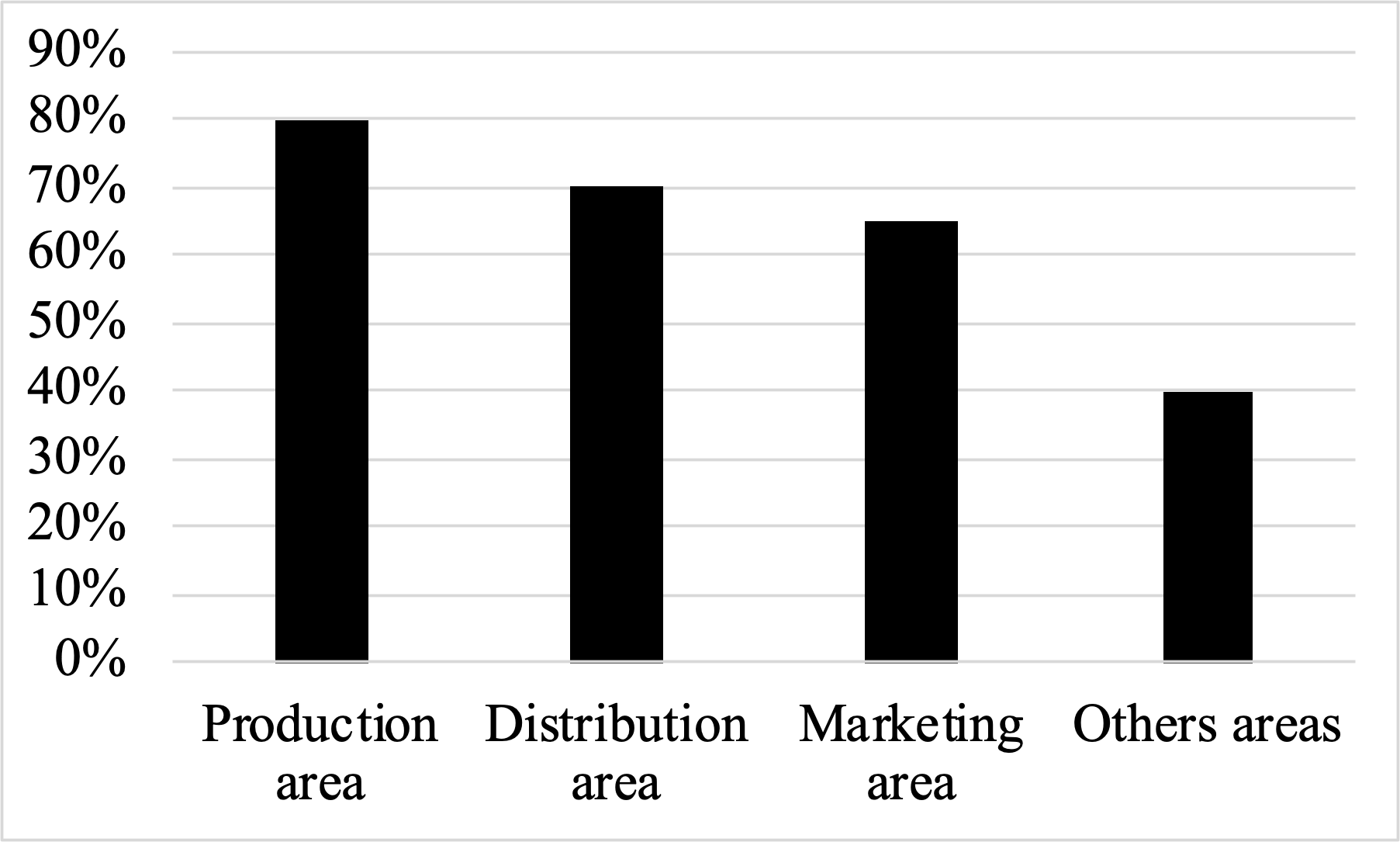
The analysis of the interviews conducted with ten employees from the chocolate industry company revealed varying levels of impact resulting from the implementation of digital tools across different operational areas. These results are summarized in Figure 2, which illustrates the perceived digital impact by area according to the participants. The production area registered the highest level of impact, with 80%, as several employees emphasized the automation of production lines, which has contributed to reducing operational errors and processing times. In the distribution area (70%), participants highlighted the use of digital monitoring and tracking systems that have improved logistics and coordination. The marketing area, with a 65% impact, benefited from the integration of CRM platforms and social media tools, facilitating better customer engagement and targeted promotional strategies.
Participants from the administrative area noted improvements in communication and coordination with national and international clients through digital tools. Finally, other areas such as procurement and support services were also influenced by digital transformation, albeit to a lesser degree (40%), indicating partial integration and opportunities for further technological development.
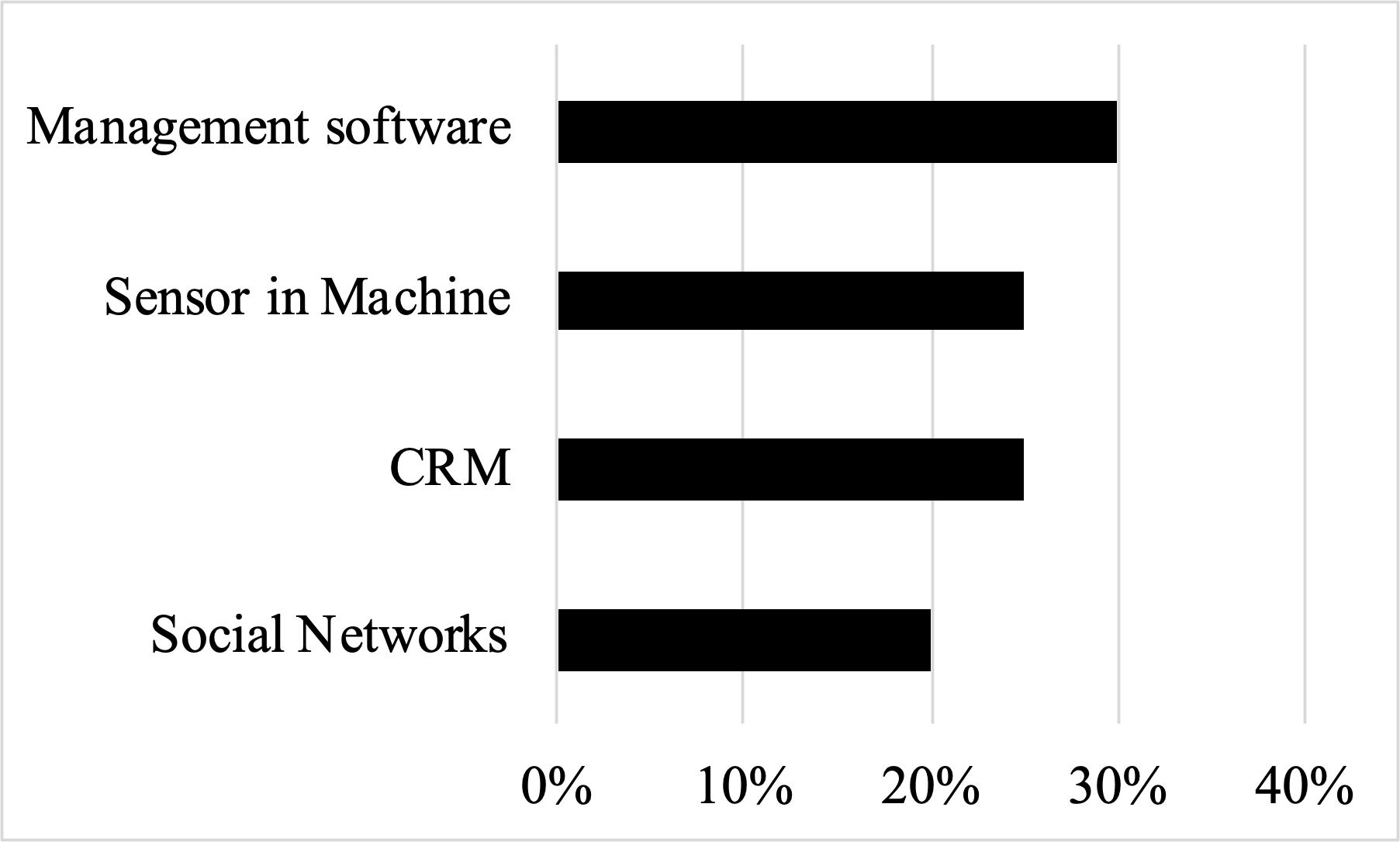
An analysis was conducted based on the responses provided by the workers regarding the use of digital tools across different functions in the company. The results were organized into categories and quantified based on the frequency and perceived relevance of each tool. As illustrated in Figure 3, the most used tool corresponds to management software, with a reported use of 30%, followed by machinery sensors and CRM systems, both with 25%. Finally, social media platforms represent 20% of the digital tools mentioned. These findings highlight the emphasis placed on automation, process control, and customer relationship management in the company's digitalization efforts. The identified tools reflect the operational priorities of the organization and the degree to which digital transformation has been integrated into everyday tasks.
The workers agreed that digital tools helped reduce time and avoid consuming unnecessary inputs for production. Despite the advantages of digital tools, there are also disadvantages or challenges, such as the need to train staff and new workers who have or use digital tools in their daily tasks, thus achieving better adaptability and meeting the demands of the national and international market.
The transition to digital tools observed in the analyzed chocolate company reflects a broader global trend in the adoption of Industry 4.0 technologies, particularly within production and administrative areas. This trend reinforces the growing recognition among small and medium-sized enterprises (SMEs) of the value of digitalization in enhancing operational efficiency. The findings of this study (Figures 2 and 3) demonstrate that digital transformation has had a notable impact on core areas such as production (80%) and distribution (70%), with the most used technologies being management software, sensors, and CRM systems. These tools have helped reduce human error, improve decision-making, and strengthen customer relationship management. These results align with Kumar et al. (2020), who emphasize that the application of Industry 4.0 technologies improves sustainable organizational performance. However, the success of digital integration depends not only on technological infrastructure but also on an organization’s ability to adapt and provide adequate staff training. In this regard, Rojas-Berrio et al. (2022) point out that SMEs in emerging economies face critical barriers such as resistance to change, limited managerial experience, and insufficient institutional support of which were evident in the company studied. These structural limitations can delay or hinder the effective implementation of digital solutions.
Similarly, this company’s experience aligns with findings from Vega et al. (2025) and Chooset and Sukhabot (2025), who stress the importance of digital maturity and entrepreneurial competencies in sustaining digital transformation. In this context, staff training and proactive innovation strategies are key enablers; without them, digital initiatives may fall short of their intended impact. It is also worth noting that although digital transformation is typically perceived as a strategic advantage, Thuy et al. (2023) caution that it can become a barrier to business growth in SMEs especially export-oriented ones when the pace of technological change surpasses an organization's absorptive capacity. While the company studied does not currently operate in international markets, the internal challenges identified such as limited training and uneven tool adoption across departments highlight similar vulnerabilities. Therefore, the evidence supports the view that digitalization is not merely a technical shift but also a human and organizational one. This perspective is echoed by Qureshi et al. (2025), who argue that successful Lean 4.0 adoption requires structured planning, staff engagement, and continuous improvement practices. The case also resonates with Jamwal et al. (2025), who suggest that SMEs need a structured decision-making framework to overcome sustainability challenges during digital transformation processes.
In summary, the company’s efforts to implement and scale digital tools reflect a microcosm of broader regional dynamics, where SMEs are gradually moving toward data-driven, efficiency-oriented models. However, for this shift to be sustainable, it must be supported by robust training programs, institutional backing, and clear alignment with organizational goals.
The implementation of digital tools in the studied chocolate company reveals a clear shift from traditional, manual processes toward a more integrated and data-driven operational model aligned with the principles of Industry 4.0. This transition has not only modernized production lines using technologies such as sensors and monitoring systems, but also strengthened organizational functions like distribution, administration, and marketing, as evidenced using CRM platforms and social media tools. The findings show that the production area has benefited most from automation, particularly through the reduction of errors and processing time. In turn, this has translated into improved efficiency, resource optimization, and cost reduction, particularly by minimizing the unnecessary use of raw materials consistent with what has been reported in regional studies on the digital transformation of the food sector (Stubrin, 2022; Larrea & Alvarado, 2024).
Moreover, the case demonstrates that digitalization is not exclusively a technological shift, but also a human and organizational process. The success of these tools is closely tied to the capacity of personnel to adapt and use them effectively, a factor emphasized by both interviewees and reinforced using semi-structured instruments validated by expert judgment. Continuous training and targeted investment in digital competencies are thus not optional, but strategic enablers of sustainability and competitiveness, especially for SMEs operating in emerging economies. In this context, the study contributes by offering empirical insights into how digital tools are adopted at a micro-organizational level, providing a relevant reference for public policies, institutional programs, and future research. It also highlights the need for context-specific digital strategies that account not only for technological readiness, but also for human capital and organizational culture.
Alshaher, A., Alkhaled, H. R., & H. H., M. M. (2025). The impact of adoption of digital innovation dimensions on sustainable organizational performance. VINE Journal of Information and Knowledge Management Systems. https://doi.org/10.1108/VJIKMS-03-2022-0096
Chooset, N., & Sukhabot, S. (2025). Developing entrepreneurial marketing dimensions for small and medium enterprises in digital transformation. Cogent Business and Management. https://doi.org/10.1080/23311975.2025.2480748
Jamwal, A., Palit, N., Kumari, S., Agrawal, R., & Sharma, M. S. (2025). A decision framework for SMEs to address sustainability challenges in digital transformation. Annals of Operations Research. https://doi.org/10.1007/s10479-025-06560-5
Kavre, M. S., Sunnapwar, V. K., & Gardas, B. B. (2025). Strategic digitization for sustainable growth of Indian MSMEs: An empirical study. International Journal of Organizational Analysis. https://doi.org/10.1108/IJOA-06-2024-4597
Kee, D. M. H., Cordova, M., & Khin, S. (2025). The key enablers of SMEs readiness in Industry 4.0 adoption: Empirical evidence from Malaysia. International Journal of Emerging Markets. https://doi.org/10.1108/IJOEM-08-2021-1291
Kumar, R., Singh, R. K., & Dwivedi, Y. K. (2020). Application of industry 4.0 technologies in SMEs for sustainable organizational performance. Journal of Cleaner Production. https://doi.org/10.1016/j.jclepro.2020.124063
Qureshi, K. M., Mewada, B. G., Yadav, A., Almakayeel, S. Y., & Al-Qahtani, S. (2025). Analysing Lean 4.0 adoption factors towards manufacturing sustainability using interpretive structural modeling. Scientific Reports. https://doi.org/10.1038/s41598-025-01076-1
Rojas-Berrio, S., Rincon-Novoa, J., Sánchez-Monroy, A. C., & Medina-Vera, D. (2022). Factors influencing 4.0 technology adoption in manufacturing SMEs in an emerging country. Journal of Small Business Strategy. https://doi.org/10.53703/001c.36648
Silva, S. H. B., Silva, M. S., Andrade, A., & Gomes, I. (2024). Digital transformation and performance of Brazilian SMEs: Evidence from the COVID-19 context. Revista de Administração de Empresas. https://doi.org/10.1590/S0034-759020240204
Thuy, C., Dat, L. V., Dong, D. P., Linh, V. T., & Hoa, T. T. (2023). Is digital transformation a barrier to export performance? The case of Vietnamese small businesses. Cogent Business and Management. https://doi.org/10.1080/23311975.2023.2211218
Vega, G. S., Pérez, B. S., & Guzmán, L. M. (2025). Examining the role of digital maturity in the digital transformation of MSMEs in Latin America. Journal of Innovation & Knowledge. https://doi.org/10.1016/j.jik.2024.100403
Zambrano, J., López, P., Rodríguez, F., Guerrero, C., & González, Á. M. (2025). Adoption of digital platforms in Ecuadorian agrifood SMEs: A multi-case approach. Latin American Journal of Digital Transformation. https://doi.org/10.18235/latamdt.v3i1.230