Victoria Veraa, Raquel Vera-Ortega(b, c), Gloria Vanegas Zabalad
aFaculty of Social Sciences and Humanities, Escuela Superior Politécnica del Litoral, Guayaquil, Ecuador.
bPostgraduate Unit, Universidad Católica Santiago de Guayaquil, Guayaquil, Ecuador.
cFaculty of Industrial Engineering, Universidad de Guayaquil, Guayaquil, Ecuador.
dSchool of Engineering, Pontificia Universidad Católica del Ecuador, Ambato, Ecuador.
Corresponding author: vicelver@espol.edu.ec
Vol. 04, Issue 01 (2025): July
ISSN-e 2953-6634
ISSN Print: 3073-1526
Submitted: December 4, 2024
Revised: March 19, 2025
Accepted: May 5, 2025
Vera, V., et al (2025). Flexibilization of Annual Operational Planning in Crisis Contexts: A Conceptual Model Proposal for Ecuadorian SMEs. EASI: Engineering and Applied Sciences in Industry, 4(1), 1–10. https://doi.org/10.53591/easi.v4i1.1905
Articles in journal repositories are freely open in digital form. Authors can reproduce and distribute the work on any non-commercial site and grant the journal the right of first publication with the work simultaneously licensed under a CC BY-NC-ND 4.0.
The Annual Operational Planning (POA) is a key tool for organizational management; however, its rigidity limits its effectiveness in crisis contexts characterized by high uncertainty. This article analyzes strategies to make POA more flexible and to strengthen the adaptive capacity of small and medium-sized enterprises (SMEs) in Ecuador. Through a systematic literature review and the analysis of best practices, six key strategies are identified: dynamic strategic diagnosis, prioritization of critical objectives, scenario-based planning, adaptive key performance indicators (KPIs), resource optimization, and adaptive organizational culture. As a result, a conceptual model is proposed, integrating these strategies in a structured and progressive way, tailored to the operational realities of SMEs in the country. Although the proposal is based on theoretical evidence, the absence of empirical validation is recognized as a limitation; therefore, pilot applications in different productive sectors are recommended. The model aims to serve as a practical tool to guide operational planning in complex and volatile environments.
Keywords: Annual Operational Planning, Adaptive strategies, Business crisis, SMEs in Ecuador, Organizational flexibility
La Planificación Operativa Anual (POA) constituye una herramienta clave para la gestión organizacional; sin embargo, su rigidez limita su efectividad en contextos de crisis caracterizados por alta incertidumbre. Este artículo analiza estrategias para flexibilizar la POA y fortalecer la capacidad de adaptación de las pequeñas y medianas empresas (PYMES) ecuatorianas. A través de una revisión sistemática de literatura y el análisis de buenas prácticas, se identifican seis estrategias clave: diagnóstico estratégico dinámico, priorización de objetivos críticos, planificación basada en escenarios, indicadores clave de desempeño (KPIs) adaptativos, optimización de recursos y cultura organizacional adaptativa. Como resultado, se propone un modelo conceptual que integra estas estrategias de forma estructurada y progresiva, adaptado a las realidades operativas de las PYMES del país. Aunque la propuesta se fundamenta en evidencia teórica, se reconoce como limitación la ausencia de validación empírica, por lo que se recomienda su aplicación piloto en distintos sectores productivos. El modelo busca convertirse en una herramienta práctica para orientar la planificación operativa en entornos complejos y volátiles.
Palabras claves: Planificación Operativa Anual, Estrategias adaptativas, Crisis empresarial, Pymes en Ecuador, Flexibilidad organizacional.
Annual operational planning (AOP) is a fundamental tool for organizations to establish clear goals, allocate resources efficiently, and design strategies that allow them to achieve their objectives. However, in a global scenario characterized by recurring crises, such as the COVID-19 pandemic, financial instability, and geopolitical conflicts, the traditional annual planning model has proven inadequate (J. e. a. Madariaga, 2020). These critical situations, combined with phenomena such as climate change and the accelerated process of digitalization, have generated environments marked by high uncertainty. In such contexts, rigid AOP approaches quickly lose their validity, requiring organizations to be more adaptable in their planning strategies.
In Latin America, this problem is exacerbated by the region's unique economic and political vulnerabilities, which significantly affect organizations' ability to plan and react effectively to crises (N. M. Quiñones Huayna, 2023). Factors such as a high dependence on exports, frequent changes in government policies, and fluctuations in labor and financial markets pose unique challenges for businesses and institutions (J. Marchini, 2024). Many organizations lack the resources and adequate structure to implement agile planning, resulting in strategies that fail to effectively address the complexities of the environment.
In Ecuador, this situation is exacerbated by local specificities, such as dependence on primary sectors, a dollarized economy, and the impact of public debt. Ecuadorian companies, especially small and medium-sized enterprises (SMEs), often adopt rigid planning approaches that limit their ability to respond quickly to unexpected events, such as economic or political crises (Mendieta-Bejana & Mendoza-Saltos, 2024). This lack of flexibility affects both the financial stability and sustainable development of these organizations, hampering their ability to adapt in a dynamic and challenging environment.
In this context, this article aims to identify strategies aimed at making Annual Operational Planning (AOP) more flexible in crisis contexts, by presenting a proposal for a conceptual model adapted to the conditions of Ecuadorian SMEs, which contributes to strengthening their adaptability and organizational sustainability.
In recent years, Ecuador has faced a series of economic and social challenges that have profoundly impacted its business environment, influencing how organizations manage their Annual Operating Planning (AOP). Factors such as oil price fluctuations, dollarization, external debt, and a heavy dependence on primary sectors have increased the country's economic vulnerability. These conditions, exacerbated by global crises such as the COVID-19 pandemic and domestic political uncertainties, have limited companies' ability to develop long-term planning, as the volatile environment directly affects their financial and operational stability (Useche-Aguirre, 2021). In particular, small and medium-sized enterprises (SMEs) face greater difficulties due to a lack of financial and technological resources, as well as a limited organizational infrastructure that prevents them from adapting quickly to uncertain environments, unlike large companies that, with greater flexibility, can adjust their strategic plans (Rodríguez, 2024) (Palas Villagómez and V. E. Salcedo-Muñoz, 2022).
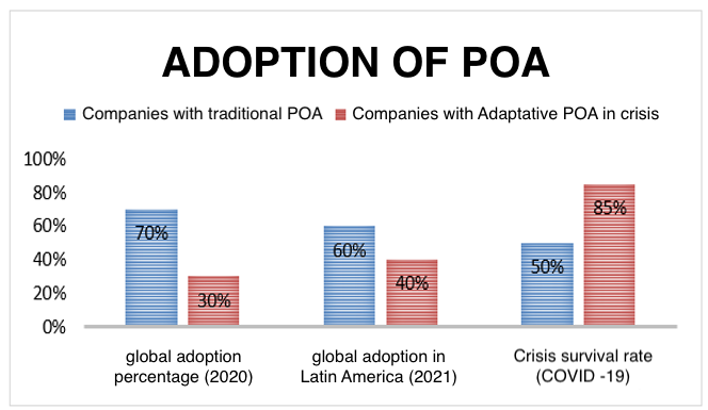
The literature review shows that organizations that implement flexible and adaptive approaches in their AOPs achieve significant benefits by responding more effectively to crises and uncertainties. Data shows that in 2020, 70% of companies globally used a traditional AOP approach, while only 30% employed adaptive strategies, as shown in Figure 1. By 2021, this trend improved slightly, with 40% of companies adopting flexible models. During the COVID-19 pandemic, companies that implemented adaptive AOPs achieved a survival rate of 85%, compared to 50% for those with traditional approaches, demonstrating that flexible planning enables a faster and more effective response to external changes.
Annual Operational Planning (AOP) is the process by which an organization establishes annual objectives and defines the strategies, resources, and activities necessary to achieve them (Murillo R, 2024). In stable environments, this process is characterized by its predictable structure. However, in crisis situations, AOP must be transformed into a flexible and adaptive mechanism that allows for rapid adjustments without compromising organizational objectives. Authors such as (Mohamad, et al., 2013) emphasize the need to organize crisis management systems in institutions, including annual operational planning, to improve preparedness for unpredictable events. It advocates the creation of executive manuals and instructions tailored to the unique characteristics of each organization as an effective response to crises, while (Juan. A., et al, 2020) suggest that annual operational planning should be adapted to crisis situations by developing integrated planning tools, utilizing simulation to estimate needs, and allowing for real-time modifications based on updated data to manage resources effectively during crises. Finally, (Faghih, Ah., et al, 2016) emphasize that comprehensive preparedness plans, including annual operational planning, are essential for organizations to respond effectively to crises, minimizing delays and confusion while improving decision-making and overall response effectiveness during disasters.
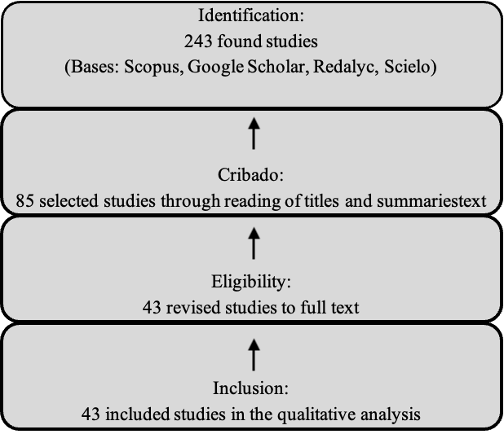
This study adopts a qualitative integrative review approach, aimed at identifying effective strategies to make Annual Operating Planning (AOP) more flexible in crisis contexts, with an emphasis on the Ecuadorian environment (Villa Andrade et al., 2024). A systematic literature review was used as a research method, aligned with the guidelines of the PRISMA (Preferred Reporting Items for Systematic Reviews and Meta-Analyses) model adapted to management and administration studies, which are composed of the following phases:
Phases of the review
Definition of the research question:¿What strategies allow for making the POA more flexible in contexts of high uncertainty, especially in Ecuadorian SMEs?
Search for sources
Inclusion and exclusion criteria
Inclusion
Exclusion
Selection process
An initial 243 studies were identified, of which 85 met the inclusion criteria after reviewing titles and abstracts (see Figure 2).
Finally, 43 documents were selected for detailed analysis, including scientific articles, case studies, technical reports, and guides from international organizations (such as the World Bank, 2024, and ECLAC, 2016).
Synthesis and analysis
Thematic coding was used to classify the strategies found into common categories (diagnosis, scenarios, KPIs, etc.).
Traditional and adaptive approaches were compared, and their applicability in the Ecuadorian context was examined.
The information was organized into comparative matrices, and recurring patterns, barriers, and recommendations were derived.
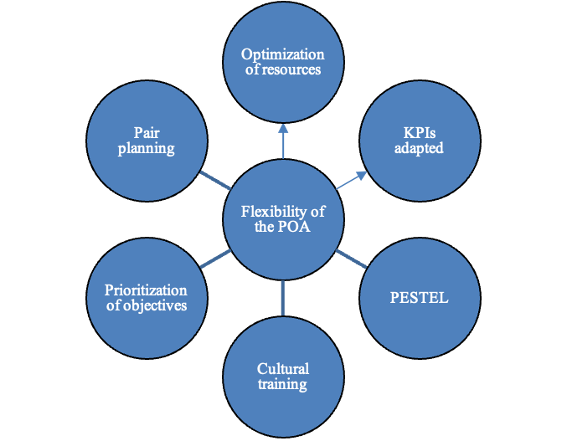
The analysis of literature and best practices identified a set of key strategies for making the AOP more flexible, aimed at strengthening organizations' adaptive capacity in uncertain scenarios. These strategies, particularly applicable to the Ecuadorian context, include specific tools, approaches, and actions to improve organizational resilience.
Environmental diagnosis and analysis are essential for making data-driven strategic decisions. According to Voronkova (2021) and Parrales et al. (2024), this process includes:
These strategies allow organizations to anticipate changes and respond effectively in a dynamic environment.
In crisis contexts, prioritizing critical objectives is essential for the survival and stability of businesses. Waruwu et al. (2024) highlight the importance of focusing resources on strategic areas, such as:
This approach ensures resource optimization and business resilience in the face of significant challenges.
Scenario-based planning is a key strategy for managing uncertainty and ensuring flexibility in decision-making. According to Gogol et al. (2019), this methodology allows plans to be designed considering three perspectives:
This approach ensures that organizations can adapt to different future contexts, maximizing their responsiveness to changes in the environment.
The implementation of adaptive key performance indicators (KPIs) is essential for flexible and effective management. According to Setiawan et al. (2020) and Angeli (2022), these indicators allow monitoring and evaluation to be tailored to the context, ensuring better decisions. Some of the key KPIs include:
By integrating adaptive KPIs, organizations achieve a clear and accurate view of their performance, facilitating a proactive response to changing environmental dynamics.
Resource optimization is essential to ensure efficiency and sustainability, especially in contexts of uncertainty. According to Jidras (2023), companies can implement specific strategies to improve their financial and operational management, such as:
These actions allow for maximizing the use of available resources, strengthening the capacity to respond to financial and operational challenges.
Training and cultural transformation are pillars for an organization prepared for uncertainty. According to Muddassar Sarfraz (2024), it is essential:
These strategies ensure that both staff and the organization are aligned to meet dynamic challenges with greater effectiveness and confidence (see Figure 3).
As can be seen, the research reinforces the importance of transforming Annual Operating Planning (AOP) into a flexible and adaptive mechanism, especially in contexts characterized by high uncertainty, such as Ecuador's. While traditional approaches have worked in stable scenarios, their rigidity renders them obsolete in the face of unexpected crises. In contrast, the adaptive strategies analyzed here demonstrate a greater capacity to minimize risks and optimize resources.
However, their effective applicability in Ecuador depends on several key factors. The use of tools such as PESTEL analysis or adaptive KPIs requires trained personnel and systematized internal processes, which represents a significant barrier in many Ecuadorian SMEs, where informal structures predominate. In this regard, it is suggested to adopt simplified and progressive versions of these tools, as also pointed out by Tuğberk and Akbalik (2019). Furthermore, scenario-based planning, although theoretically robust, requires analytical skills that are often not developed in the management teams of small companies. Therefore, it is advisable to promote alliances with universities or training centers to develop adapted technical capabilities, as proposed by Espen et al. (2022).
The viability of each strategy, therefore, cannot be evaluated in the abstract, but must be analyzed based on the company's size, its productive sector, and its level of organizational maturity. From this perspective, the added value of this study lies in offering an adaptable conceptual model focused on the Ecuadorian context, which can be applied by public institutions, chambers of commerce, or business consultants. This approach is consistent with the proposals of Harald (2022), who argues that contextual operational flexibility is fundamental to sustainability.
As a result, a conceptual model is presented for the flexibility of Annual Operational Planning (AOP) in Ecuadorian SMEs, structured around six pillars: environmental diagnosis, strategic prioritization, scenario planning, adaptive KPIs, resource optimization, and adaptive organizational culture. This framework can constitute a solid foundation for future applied research or case studies. However, the lack of empirical validation represents a recognized limitation. Consequently, field studies are recommended as a future line of research to measure the real effectiveness of these strategies in different productive sectors, as suggested by Mussó (2023) and Villagra & Pandolfi (2023).
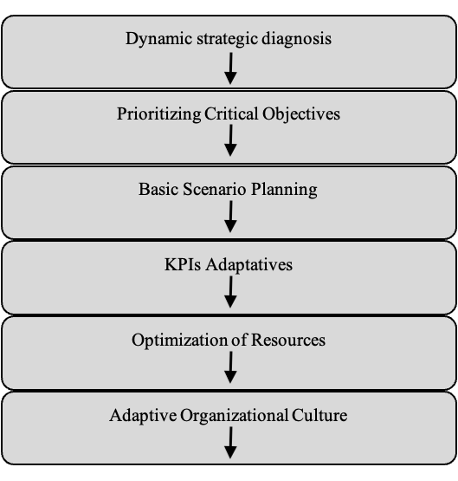
Figure 4 represents the conceptual model designed to guide Ecuadorian SMEs in adopting a more flexible and resilient Annual Operating Plan (AOP). This model is structured sequentially, beginning with the dynamic strategic assessment, a phase that allows for an understanding of both the organization's internal and external environment. Through tools such as PESTEL and SWOT analysis, companies can identify risks, opportunities, and critical factors that influence their performance, which is especially relevant in a volatile economic environment such as Ecuador's. Based on this, the prioritization of critical objectives is developed, a stage in which the most relevant objectives for operational sustainability are prioritized, such as cash flow protection, the continuity of key activities, or the loyalty of strategic customers. This prioritization enables a more efficient allocation of available resources. This is followed by the implementation of scenario-based planning, a tool that allows companies to anticipate possible changes in the environment by formulating alternative plans based on optimistic, intermediate, or pessimistic scenarios. This methodology strengthens the company's ability to react and reduces vulnerability to unexpected events.
Based on these definitions, adaptive KPIs are integrated—key performance indicators that are adaptable to the environment—that allow for real-time monitoring of progress, detecting deviations, and redirecting actions as needed. This feedback is essential for making informed and timely decisions. The next component, resource optimization, seeks to maximize operational efficiency through actions such as expense classification, process automation, and contract renegotiation. In contexts where resources are scarce, as is often the case in Ecuadorian SMEs, this stage is crucial to ensuring continuity. Finally, the model is consolidated with the development of an adaptive organizational culture, which acts as a cross-cutting axis of the process. It involves promoting flexible leadership, strengthening staff competencies, and fostering an open mindset toward change. Without this cultural foundation, the previous strategies run the risk of being unsustainable over time. Overall, this model offers a progressive, practical, and contextualized roadmap for implementing a flexible AOP that addresses the current challenges facing SMEs in Ecuador.
This research has demonstrated that, in contexts marked by high uncertainty, such as Ecuador's, the flexibility of Annual Operating Planning (AOP) is a key strategy for improving the resilience and sustainability of small and medium-sized enterprises. Based on a systematic review and critical analysis of relevant literature, six fundamental strategies were identified and organized into an adaptable and progressive conceptual model. This model, designed specifically for Ecuadorian SMEs, integrates components such as dynamic strategic diagnosis, prioritization of critical objectives, scenario planning, the use of adaptive KPIs, resource optimization, and the strengthening of a flexible organizational culture. Its structure allows for its stepwise and contextualized application, based on the capabilities and conditions of each organization.
However, a recognized limitation of the study is the lack of empirical validation of the proposed model. Although its construction is based on theoretical evidence and documented good practices, it has not yet been applied in real-life companies in Ecuador. Therefore, future studies are recommended to validate this model through field research, case studies, and pilot applications in various productive sectors in the country. Implementing these strategies under real-life conditions will not only allow for evaluating their effectiveness, but also provide feedback and strengthen the model, providing concrete evidence that facilitates its adoption as a practical tool for the flexible operational management of Ecuadorian SMEs.
We would like to express our gratitude to the journal Engineering and Applied Sciences in Industry (EASI) for providing us with the opportunity to share the results of this research. We especially thank the editorial team and the anonymous reviewers, whose valuable comments and suggestions contributed to significantly improving the quality of this article.
We also recognize the journal's efforts and commitment to disseminating relevant research, which strengthens academic and professional exchange in our region. Its dedication to promoting scientific knowledge is a significant incentive for those of us working on key issues for organizational and economic development.
Thank you for your support in this publication process, which motivates us to continue contributing new proposals to future research projects.
The authors of the article entitled "POA in Times of Crisis: How to Adapt Your Annual Planning to an Uncertain Environment" declare that they have no conflicts of interest that could have influenced the conduct of the research, the writing of the manuscript, or its publication in the journal Engineering and Applied Sciences in Industry (EASI).
We also confirm that there are no financial, commercial, or personal relationships that could be perceived as influencing the results or interpretations presented in this work.
We also confirm that the publication of this article in no way affects the interests of third parties and that all content presented is original and supported by reputable and verifiable sources.
A., V., Voronkova. (2021). 7. Theoretical foundations of strategic diagnostics of the organization. Èkonomika i upravlenie: problemy, rešeniâ, doi: 10.36871/ek.up.p.r.2022.08.01.001
Alina, Jidras. (2023). 4. Cost classification by economic elements: operating characteristics and optimisation guidelines. doi: 10.53486/issc2023.40
Andrea Villagra, Daniel Pandolfi. (2023). Una Propuesta para la Transformación Digital en las PYMES. Revita, Vol. 1 Núm. 1, doi: https://doi.org/10.22305/revita-unpa.v1.n1.979
Banco Mundial. (2024). Ecuador: Crecimiento resiliente para un futuro mejor. https://documents1.worldbank.org/curated/en/099050924131536292/pdf/P17797312cbabc01b189011ce0839cba821.pdf
Espen, Flo, Bødal., Sigurd, Hofsmo, Jakobsen., Oddbjørn, Gjerde. (2022). 1. Probabilistic operational planning using dynamic programming with time-domain simulations. Electric Power Systems Research, doi: 10.1016/j.epsr.2022.108379
Eliyunus, Waruwu., Delipiter, Lase., Imroatus, Solikhah., Selfiana, Selfiana., Harmono, Harmono. (2024). 1. Strategic Leadership in Times of Crisis: A Comparative Study of Successful Organizational Responses. doi: 10.59613/global.v2i2.79
Faghih, A., Ebrahimi, M., & Abbasi, M. (2016). Management of Strategic and Operational Plans in Rescue Organizations to Maintain Preparedness against Disasters. Iranian Red Crescent Medical Journal. doi:10.5812/IRCMJ.4725
Franco, Angeli, (2022). 3. The role of Key Performance Indicators as a performance management tool in implementing corporate strategies: A critical review of the literature. Financial reporting, doi: 10.3280/fr2022-001004
Harald, Berger. (2022). 6. Corporate flexibility in a time of crisis. Journal of Financial Economics, doi:10.1016/j.jfineco.2022.03.003
Juan, A., Marin-Garcia, J. P., García-Sabater, Á., Ruiz, J., Maheut, J., & García-Sabater, J. J. (2020). Operations Management at the Service of Health Care Management: Example of a Proposal for Action Research to Plan and Schedule Health Resources in Scenarios Derived from the COVID-19 Outbreak. Journal of Industrial Engineering and Management. doi:10.3926/JIEM.3190
Madariaga, J. et al. (2020). COVID-19: Estrategias de adaptación en la economía de plataformas. Inter-American Development Bank. https://publications.iadb.org/es/covid-19-estrategias-de-adaptacion-en-la-economia-de-plataformas
Marchini, J. (2024). América Latina ante un escenario con crecientes incógnitas. Observatorio de Financiamiento para el Desarrollo, (7), 17-24.
https://revistasdivulgacion.uce.edu.ec/index.php/OBSERVATORIO/article/view/529/541
Mendieta-Bejana, V. A., & Mendoza-Saltos, M. F. (2024). Gestión de crisis y resiliencia empresarial: estrategias para afrontar entornos de incertidumbre. MQRInvestigar, 8(3), 979–1000. https://doi.org/10.56048/MQR20225.8.3.2024.979-1000
Mohamad, M., Ojaghi, S., Rezayi, M., & Khorasani, E. (2013). The impact of implementing operational crisis management plan in educational hospitals. Iranian Red Crescent Medical Journal. doi:10.5812/IRCMJ.4725
Muddassar Sarfraz, (2024). 4. Organizational Culture - Cultural Change and Technology. doi:10.5772/intechopen.111316
Murillo Valverde, R. (2024). El Plan Estratégico de Desarrollo Institucional y el Plan Operativo Anual como instrumentos de gestión en las Instituciones de Educación Superior: el caso del Liceo Cristiano. Revista InveCom, 4(2). https://doi.org/10.5281/zenodo.10632863
Mussó Luis Carlos, (2023). La Innovación y la Tecnología como factores competitivos: retos y perspectivas. https://www.uteg.edu.ec/wp-content/uploads/2024/08/INNOVACION-LIBRO-QUEZADA.pdf
Neira Burneo, S. (2016). Inclusión financiera de las pymes en el Ecuador. Comisión Económica para América Latina y el Caribe (CEPAL). https://www.cepal.org/es/publicaciones/40726-inclusion-financiera-pymes-ecuador
Palas Villagómez, M. F., & Salcedo-Muñoz, V. E. (2022). Emprendimiento en tiempo de crisis: una evaluación al impacto del COVID en las PYMES de la Provincia de El Oro, Ecuador. Dilemas contemporáneos: educación, política y valores, 9.
Parrales Poveda, M. L., Arteaga Velepucha, G. S., Villón Yagual, A. A., & Fienco Parrales , J. V. (2024). MODELOS CLÁSICOS EN EL DESARROLLO DE LA PLANIFICACIÓN ESTRATÉGICA. Revista Científica Arbitrada Multidisciplinaria De Ciencias Contables, Auditoría Y Tributación: CORPORATUM 360 - ISSN: 2737-6443., 7(13), 145–163. https://doi.org/10.56124/corporatum-360.v7i13.008
Quiñones Huayna, N. M. (2023). Marco analítico para las capacidades dinámicas en una organización pública. Reforma y Democracia, (87), 121-149. https://doi.org/10.69733/clad.ryd.n87.a6
Rodríguez, C. V. C. (2021). Universidad del Azuay. Recuperado el 16 de noviembre de 2024, de http://dspace.uazuay.edu.ec/handle/datos/10713
Tetiana, Gogol., Valentin, Nekhai., Vadym, Kolotok. (2019). 4. Strategic And Tactical Planning In The Management Of Financial And Economic Security Of Enterprises: Financial Component. doi: 10.2991/SMTESM-19.2019.52
Tuğberk, Çitilci., Murat, Akbalik. (2019). 1. The Importance of PESTEL Analysis for Environmental Scanning Process. doi: 10.4018/978-1-7998-2559-3.CH016
Useche-Aguirre, C. A., Prieto-Ballesteros, M. C., & Bonilla-Rodríguez, M. J. (2021). Retos y desafíos del emprendimiento ecuatoriano, trascendiendo a la pospandemia. RETOS. Revista de Ciencias de la Administración y Economía, 11(22), 271-286. https://www.redalyc.org/journal/5045/504568573005/504568573005.pdf
Villa Andrade, L. C., Constante Armas, J. J., Chaluisa Chaluisa, S. F., & Guerrero Velástegui, C. A. (2024). Planificación estratégica y estilos de gestión de crisis en las organizaciones empresariales: una revisión de la literatura. Tesla Revista Científica, 4(1), e334. https://doi.org/10.55204/trc.v4i1.e334