Mary Figueroa Guijarro a, Luisa Ramos Suáreza, Andrés Palma Martínezb, Angel Plaza Vargasc
aUniversidad Casa Grande, Ecuador
bUniversidad Católica de Santiago de Guayaquil, Ecuador
cUniversidad de Guayaquil, Ecuador
Corresponding author: angel.plaza@ug.edu.ec
Vol. 04, Issue 03 (2025): July-December
ISSN-e 2953-6634
ISSN Print: 3073-1526
Submitted: January 01, 2026
Revised: January 03, 2026
Accepted: January 04, 2026
Figueroa Guijarro, M., et al. (2025) Challenges and Opportunities of Artisanal Female Entrepreneurship in Guayaquil, Ecuador and Its Sustainable Impact. EASI: Engineering and Applied Sciences in Industry, 4(3), 54-63. https://doi.org/10.53591/easi.V3i2.2951
The objective of this study was to identify the main challenges and opportunities of women’s artisanal entrepreneurship in the city of Guayaquil and to analyze their relationship with economic, social, and environmental sustainability. The research followed a quantitative approach, using a descriptive–correlational, cross-sectional design. The sample consisted of 93 women artisans from the Guayaquil Handicraft Market, selected through non-probabilistic sampling. Data were collected using a previously validated structured questionnaire. The results allowed the identification of key opportunities, including higher educational attainment, participation in associations, and business formalization processes, all of which are positively related to improved income perceptions and the strengthening of family and community ties. In contrast, the main challenges are concentrated in the environmental dimension, as evidenced by limited recycling practices and inadequate waste management. Overall, the findings indicate a moderate level of sustainability among the analyzed ventures. In conclusion, although women’s artisanal entrepreneurship represents a significant cultural and economic contribution to the city, there is a clear need to strengthen public policies and training programs that enhance existing opportunities and address the identified challenges, particularly in the environmental domain.
Keywords: Female entrepreneurship, Artisanal sector, Sustainability, Challenges and opportunities.
Artisanal female entrepreneurship has been consolidated as a pillar of socioeconomic development in Latin America, while also contributing to cultural preservation and the strengthening of sustainable practices. Its importance lies not only in the capacity to generate income and opportunities, but also in its role in the transmission of knowledge and the reinforcement of community cohesion (OIT,2023; Molina, 2018). Nevertheless, despite this potential, craftswomen face precarious conditions that limit the expansion of their businesses and restrict their social and environmental impact (PNUD, 2024). The specialized literature indicates that the main challenges are related to restricted access to financing, the lack of training, and the persistence of discriminatory biases that hinder competitiveness (CEPAL, 2019). Furthermore, a significant proportion of women start their activities out of necessity rather than opportunity, which affects strategic planning and reduces the possibilities of incorporating innovative or sustainable practices (Delgado et al., 2020). These factors shape a fragile business ecosystem, where remaining in the market becomes more of a challenge than a guarantee.
In Ecuador, these limitations are clear. Research conducted in the provinces of Guayas and Los Ríos reveals that women-led ventures display low levels of digitalization, limited adoption of sustainable strategies, and a predominance of traditional production methods; however, they also demonstrate a marked entrepreneurial spirit that sustains their continuity (Barzola, 2024). In the specific case of Guayaquil, more than 50% of women work in the informal sector, a situation that increases their financial vulnerability and hinders access to social security and adequate financing mechanisms (INEC, 2022). Although craftswomen contribute significantly to cultural and environmental preservation, they face problems of market visibility, low levels of formalization, and weak connections with institutional support networks (Vilela & Vilena, 2022). Despite this outlook, highly relevant opportunities can also be identified. Digitalization represents a pathway to overcome geographic limitations through e-commerce, which can translate into higher income, greater visibility, and enhanced competitiveness in specialized markets (World Trade Organization, 2022; Correa González et al., 2025). At the same time, sustainable tourism has emerged as an expanding sector that values authenticity and responsible artisanal production (Sánchez-Rodríguez, & Anzola-Morales, 2021). These factors, combined with the growing global demand for goods with low environmental impact and high cultural value, reinforce the role of women artisans as agents of change and promoters of more equitable and sustainable practices within their communities (World Bank, 2020; UNDP, 2022). Within this framework, the present study aims to identify the challenges and opportunities of female entrepreneurs in the artisanal sector in Guayaquil, Ecuador, considering their influence on sustainability indicators.
Artisanal female entrepreneurship has been consolidated in Latin America as a practice that combines income generation with cultural and environmental preservation. Its value lies in the fact that it not only strengthens household economies but also contributes to social cohesion and the safeguarding of traditional knowledge (Valencia, 2018; Paspuel Hurtado et al., 2025). However, the literature warns that these contributions are often limited by the lack of business planning and by structural barriers that hinder their sustainability (Araque et al., 2023). In the case of Ecuador, studies confirm this dual reality. (Altamirano et al., 2024) highlight that education, family support, and access to financing act as factors that foster the continuity of entrepreneurial initiatives. Nevertheless, obstacles related to informality and gender stereotypes persist, restricting their long-term consolidation. Complementarily, Ordoñez et al (2024) emphasize that women’s participation in sectors such as handicrafts contributes to the strengthening of the social and cultural fabric, showing that these businesses play a role that transcends the economic dimension and becomes embedded in community development processes.
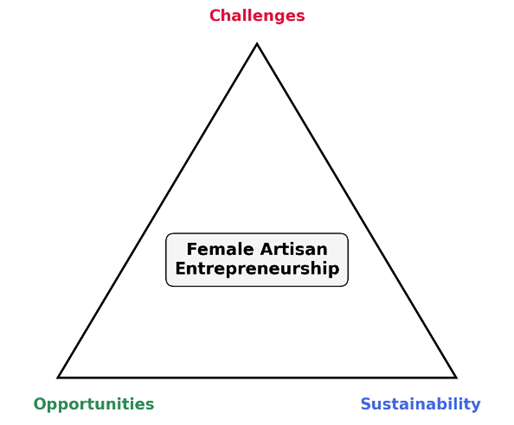
The main challenges identified in the literature focus on the lack of access to credit, limited digitalization, informality, and difficulties in entering broader markets (Hincapié, 2023). These conditions are exacerbated by the overload of family responsibilities, which restricts women’s time to participate in training or in institutional support networks (World Trade Organization, 2020). Despite this, studies also reveal a range of opportunities. Digitalization has opened marketing channels that make it possible to overcome geographic barriers and access international markets, while sustainable tourism has emerged as a space that values authentic and responsible products (Espeso-Molinero, 2019; Vera Ortega, R., & Yong Amaya, L., 2025). In addition, training programs and inclusive financing schemes aim to strengthen craftswomen’s capacities and increase the competitiveness of their businesses. This dynamic relationship between challenges and opportunities can be observed schematically in Figure 1, which illustrates how both factors interact to influence the sustainability of artisanal female enterprises.
Understanding how challenges and opportunities influence the performance of entrepreneurial initiatives requires not only qualitative analysis but also tools that allow their outcomes to be measured objectively. In this regard, sustainability indicators have been consolidated as a key reference framework for evaluating their comprehensive impact (Jaén et al., 2023). PROSEUS (2021) proposes a classification in three dimensions: economic, social, and environmental, which has been complemented by studies suggesting the need to assess not only regulatory compliance but also the creation of shared value and collective well-being (Navarrete-Zambrano et al., 2025). In Ecuador, this perspective is reinforced by research highlighting the importance of factors such as innovation, access to credit, and training in sustainability for assessing business performance (Marín-Niño, 2024). Added to this is evidence showing that indicators linked to wage equity and corporate social responsibility contribute to strengthening reputation and facilitating access to financing (De los Santos & Fernández, 2020). Under this approach, the case of Guayaquil is especially relevant, as women artisans face the same structural barriers documented in the literature but also benefit from opportunities associated with their cultural heritage and an expanding market that can support sustainable business models.
This study was conducted using a quantitative, descriptive, and cross-sectional approach, aimed at identifying the challenges and opportunities of female artisanal entrepreneurship in Guayaquil and its impact on business sustainability. The information was obtained through the application of a structured questionnaire, designed based on prior references in the literature on female entrepreneurship and its dimensions of analysis (United Nations, 2018; Aiken, 1980). The instrument included sociodemographic variables, business characteristics, barriers and opportunities, and economic, social, and environmental impact.
The questionnaire underwent a validation process. In the first phase, content validity was applied through a panel of eight experts in entrepreneurship and sustainability, who evaluated the clarity, relevance, and representativeness of the items. For this purpose, Aiken’s V (Lawshe, 1975) and the Content Validity Index (CVI) (Polit & Beck, 2006) were calculated. In the second phase, internal reliability was verified according to the nature of the variables. For ordinal variables, Cronbach’s Alpha (Cronbach, 1951) was used, yielding values between 0.82 and 0.88, which demonstrated solid internal consistency. Likewise, an exploratory factor analysis (EFA) was performed, followed by a confirmatory factor analysis (CFA), with fit criteria based on the guidelines of Hu & Bentler (2009), producing adequate indices: CFI = 0.92, TLI = 0.90, RMSEA = 0.07, and SRMR = 0.06, confirming the construct validity of the instrument. In the case of dichotomous variables, the KR-20 coefficient (Kuder & Richardson, 1937) was applied, yielding values ranging from 0.76 to 0.81, which evidenced adequate reliability for this type of items. For nominal variables, frequency descriptive analyses were performed, and, in the case of open-ended responses, Cohen’s Kappa coefficient (Cohen, 1960) was calculated, reaching a value of 0.79, which indicated adequate inter-rater agreement. Additionally, the use of reference texts such as Anastasi & Urbina (1997) supported the methodological approach for psychological and educational testing. Finally, discrete quantitative variables, such as the number of dependents or workers, were validated through criterion analysis and temporal stability tests (test–retest), following the recommendations of Silva & Filho (2024). A correlation of r = 0.82 was obtained between the two measurements, confirming the stability of the results.
The study population corresponded to female entrepreneurs from the artisanal sector of the city of Guayaquil. The sample consisted of 93 women from the Guayaquil Artisanal Market, one of the two artisanal markets in the city. The selection of this site was due to the institutional acceptance of the questionnaire’s application; therefore, a non-probabilistic convenience sampling method was used, based on the accessibility and willingness of the participants. Fieldwork was carried out in person during April 2025, with the collaboration of previously trained surveyors. Before responding to the questionnaire, each participant was informed about the study’s objectives, and the confidentiality and anonymity of the information provided were guaranteed. In this way, the methodology employed ensured a validated and reliable instrument to scientifically analyze the challenges and opportunities of female artisanal entrepreneurship in Guayaquil and its relationship with sustainability.
Regarding data analysis, descriptive statistics (frequencies and percentages) were applied to characterize the sociodemographic profile of the participants and to identify the main challenges and opportunities (Gathaiya & Ntale, 2015). Subsequently, bivariate association tests (Chi-square and Cramer’s V) were used to explore the relationship between business characteristics and sustainability variables (Cleophas & Zwinderman, 2016). In this analysis, data cross-tabulations were established between educational level, social security affiliation, and legal business formalization, since the literature recognizes these factors as determinants of the sustainability of women’s artisanal enterprises according to the study by Vilela in 2022 and the study by Marín-Niño in 2024. Likewise, and in line with the study's objective, the sustainability analysis was framed within three dimensions widely recognized in the literature: economic, social, and environmental, according to the PROSEUS manual published in 2019. Based on these dimensions, a synthetic sustainability index was constructed using variables such as profit reinvestment, family role, and environmental practices. This index allowed group comparisons through non-parametric tests (Mann-Whitney and Kruskal-Wallis), to examine significant differences according to educational level, formalization, and other sociodemographic characteristics. In this way, the methodology not only identified the challenges and opportunities of women’s artisanal entrepreneurship but also analyzed their impact on business sustainability.
TThe sample consisted of 93 female artisanal entrepreneurs from the Guayaquil Artisan Market, of whom more than half were under 25 years of age (51.6%), followed by the group aged 25 to 34 years (24.7%). Regarding educational attainment, completed secondary education predominated (68.8%), while only 9.7% had reached university-level studies. In terms of marital status, 54.8% were single, and 44.1% reported being heads of households. Most participants identified as Indigenous (90.3%), underscoring the strong cultural ties of this sector (see Table 1).
Table 1. Sociodemographic Profile of the Sample (n = 93)
| Variable |
Category |
Frequency |
% |
|---|---|---|---|
| Age |
Under 25 years |
48 |
51.6 |
| |
25 – 34 |
23 |
24.7 |
| |
35 – 44 |
15 |
16.1 |
| |
45 - 54 |
5 |
5.4 |
| |
55 years or older |
2 |
2.2 |
| Education |
Completed secondary |
64 |
68.8 |
| |
Incomplete secondary |
10 |
10.8 |
| |
Non formal education |
10 |
10.7 |
| |
Technical/university |
9 |
9.7 |
| Marital status |
Single |
51 |
54.8 |
| |
Married |
25 |
26.9 |
| |
Other (divorced, widowed, free union) |
17 |
18.3 |
| Ethnicity |
Indigenous |
84 |
90.3 |
| |
Mestizas |
9 |
9.7 |
Source: own elaboration, (2025)
Among the main challenges, difficulty in selling was identified (76.3%), followed by unfair competition (61.3%), domestic workload (28%), and lack of capital (12.9%) (see Table 2).
Table 2. Main Challenges Reported by Female Artisanal Entrepreneurs
| Challenge |
Frequency |
% |
|---|---|---|
| Difficulty in selling |
71 |
76.3 |
| Unfair competition |
57 |
61.3 |
| Domestic workload |
26 |
28.0 |
| Lack of capital |
12 |
12.9 |
| Limited administrative knowledge |
12 |
12.9 |
Source: own elaboration, (2025)
Regarding opportunities, family and friends’ support stood out (62.4%), along with the presence of frequent customers (37.6%) and participation in fairs (29%). In addition, profit reinvestment (92.5%) and the strengthening of the family role (95.7%) were highlighted (see Table 3).
Table 3. Main Opportunities Reported by Female Artisanal Entrepreneurs
| Opportunity |
Frequency |
% |
|---|---|---|
| Strengthened family role |
89 |
95.7 |
| Profit reinvestment |
86 |
92.5 |
| Family and friends ‘support |
58 |
62.4 |
| Frequent customers |
35 |
37.6 |
| Participation in fairs |
27 |
29.0 |
Source: own elaboration, (2025)
The association analysis showed that educational level was related to the legal formalization of the business (χ² = 19.3; df = 12; p = 0.05; Cramer’s V = 0.32). Although most entrepreneurs had completed secondary education (68.8%), this level together with technical and university education displayed a greater tendency toward legal registration compared to those with only primary education or no schooling. Similarly, affiliation with the Ecuadorian Social Security Institute (IESS) was associated with the perception of economic improvement (χ² = 12.6; df = 6; p = 0.048; Cramer’s V = 0.28). Affiliated entrepreneurs more frequently reported an increase in their income, confirming the importance of social security for financial sustainability (see Table 4).
Table 4. Associations Between Business Characteristics and Economic Sustainability
| Cross tabulation |
Chi2 |
df |
p-value |
Cramer´s V |
|---|---|---|---|---|
| Education x legal registration |
19.3 |
12 |
0.050 |
0.32 |
| Social security (IESS) x economic improvement |
12.3 |
6 |
0.048 |
0.28 |
Source: own elaboration, (2025)
A total of 95.7% of entrepreneurs acknowledged that their business had strengthened their family or community role, while 62.4% reported receiving support from relatives or friends. In contrast, participation in associations was more limited: only 20.4% participated actively, and 33.3% stated that they were not aware of any. The association analysis showed that participation in associations was linked to the strengthening of the family role (χ² = 8.2; df = 3; p = 0.041; Cramer’s V = 0.29). Although most respondents already perceived a positive impact in their immediate environment, this result suggests that collective engagement amplifies social capital and community cohesion (see Table 5).
Table 5. Association Between Associations and Family Role
| Cross tabulation |
Chi2 |
df |
p-value |
Cramer´s V |
|---|---|---|---|---|
| Association participation x family role |
8.2 |
3 |
0.041 |
0.29 |
Source: own elaboration, (2025)
The environmental dimension was the weakest. A total of 87.1% of the entrepreneurs reported not using recycled materials, and 91.4% disposed of their waste with regular household trash. Only 8.7% stated that they reused or separated materials. The cross-tabulation between educational level and recycling practices did not show a statistically significant association (χ² = 4.7; df = 4; p = 0.32). This indicates that the adoption of environmental practices does not directly depend on academic training but rather reflects the absence of an ecological culture and institutional incentives (see Table 6).
Table 6. Education and Recycling Practices
| Cross tabulation |
Chi2 |
df |
p-value |
Cramer´s V |
|---|---|---|---|---|
| Education x recycling |
4.7 |
4 |
0.320 |
0.12 |
Source: own elaboration, (2025)
The integrated sustainability index (economic, social, and environmental) showed an overall average of 65 points on a scale from 0 to 100. The social dimension (75) was the strongest, followed by the economic dimension (70), while the environmental dimension (35) was the most lagging. When comparing by formalization, formalized businesses reached an average of 70 points, versus 58 points for non-formalized ones a statistically significant difference (Mann–Whitney U = 743; p = 0.021). Similarly, the Kruskal Wallis test showed significant differences according to educational level (H = 6.21; df = 2; p = 0.045), confirming that entrepreneurs with medium and higher education exhibited higher levels of sustainability (see Tables 7 and 8).
Table 7. Sustainability Index by Dimension
| Dimension |
Mean |
Std. Dev. |
Min |
Max |
|---|---|---|---|---|
| Economic |
70.1 |
12.4 |
40 |
95 |
| Social |
75.3 |
14.1 |
33 |
100 |
| Environmental |
35.6 |
18.2 |
0 |
85 |
| Total |
65.0 |
11.7 |
32 |
92 |
Source: own elaboration, (2025)
Table 8. Nonparametric Tests for Differences in Sustainability Index
| Test |
Statistic |
p-value |
Number of groups |
|---|---|---|---|
| Man – whiney (formalization) |
743.0 |
0.021 |
2 |
| Kruskal – wallis (education) |
6.21 |
0.045 |
3 |
Source: own elaboration, (2025)
The findings of this study reveal the complex interaction between challenges and opportunities that shaped the sustainability of women’s artisanal entrepreneurship in Guayaquil. In line with previous research in Latin America, limited access to financing and informality stand out as central barriers that directly affect the possibility of formalizing businesses and achieving financial stability (Saavedra & León, 2024; Vera Ortega et al., 2024). Likewise, the results confirm that educational level and social security affiliation are determining factors of economic sustainability, as reflected in the significant associations found. These results are consistent with the arguments of Hübel (2023), who maintain that institutional inclusion and human capital are fundamental to strengthening women-led microenterprises.
From a social perspective, the study highlights the central role of family and community networks in sustaining entrepreneurial ventures. Almost all participants acknowledged that their businesses strengthen their role within the family and community, an effect that is amplified when they succeed in joining collective or guild organizations. This is consistent with what has been noted by Payne and Hayes (2021) and Núñez and Riveiro (2023), who emphasize that women’s artisanal work transcends the economic realm and becomes a driver of social cohesion and cultural continuity. Similarly, it aligns with the findings of Dewi (2024), who identified that collective organization increases women’s bargaining power and visibility in local markets. Nevertheless, the evidence from this study shows that formal participation in associations remains limited, underscoring the need to strengthen institutional mechanisms and public policies that promote greater integration of artisans into cooperative structures.
On the environmental level, the results show that this dimension constitutes the weakest part of sustainability. The absence of recycling practices and the limited ecological awareness indicate that environmental sustainability has not yet been incorporated as a strategic priority in artisanal entrepreneurship. This finding coincides with González (2019), who points out that environmental practices in Ecuadorian microenterprises remain largely symbolic and scarcely transformative. Similarly, studies such as Ramos and Duque (2020) demonstrate that, without specific training and incentives, small businesses rarely integrate environmental responsibility into their productive models. Consequently, this study reinforces the urgency of public policies and training programs that strengthen environmental awareness in the artisanal sector.
Despite its contributions, the research presents certain limitations that must be acknowledged. First, the use of non-probabilistic convenience sampling, limited to the Guayaquil Handicraft Market, restricts the generalization of results to all women artisanal entrepreneurs in Ecuador. Second, the cross-sectional design prevents the establishment of causal relationships or the analysis of sustainability dynamics over time. Third, the reliance on self-reported data may introduce biases related to social desirability or participants’ recall. Future research should expand the sample to different regions and types of artisanal entrepreneurship, as well as consider longitudinal designs that allow the observation of sustainability’s evolution. Furthermore, the incorporation of mixed-methods approaches would enrich the understanding of artisans’ experiences and how they confront structural barriers while taking advantage of available opportunities.
Regarding the hyperparameters used for AI training, it is concluded that the learning rate is the most influential parameter in the accuracy of the facial emotion recognition model. Increasing the learning rate makes a significant difference in average accuracy, making it much more effective for this model, without significantly affecting the bias. Increasing the number of epochs improves average accuracy significantly; the bias remains almost constant, indicating that the model is becoming more accurate without increasing the results. Increasing the batch size slightly increases average accuracy, although the bias also increases slightly. This type of emotion has a significant effect on accuracy, with sadness associated with considerably lower performance, and neutral associated with the highest performance. Regarding the model's performance in identifying each emotion, the highest average accuracy is for Neutral (around 74.3%) and the lowest for Sadness (50.9%). The accuracy deviation is similar in all cases, suggesting that the model has the same variability in its predictions, but is more often correct with certain emotions. Therefore, there is a future need to design specific approaches for emotions with lower recognition rates. The factorial design and applied statistical analysis clearly identify the individual and combined influence of the hyperparameter values used in the training processes, providing a solid basis for decision-making when selecting supervised learning models for emotion recognition. Overall, the proposed factorial characterization is a useful tool to guide novice developers in the proper configuration of artificial intelligence models.
We thank Casa Grande University for providing us with their support by supplying surveyors and research hours.
The authors of this article declare that they have no conflict of interest.
Aiken, L. R. (1980). Content validity and reliability of single items or questionnaires. Educational and Psychological Measurement, 40, 955–959. https://doi.org/10.1177/001316448004000419
Altamirano Aguirre, M. L., Salazar Romero, A. D. C., & Riofrío Lara, A. E. (2024). Factores determinantes del emprendimiento femenino en Ecuador: Una perspectiva individual y del entorno. European Public & Social Innovation Review, 9, 1–21. https://doi.org/10.31637/epsir-2024-1037
Anastasi, A., & Urbina, S. (1997). Psychological testing (7th ed.). Prentice Hall/Pearson Education. https://psycnet.apa.org/record/1998-07223-000
Araque Geney, E. A., & Álvarez Contreras, D. E. (2023). Gestión estratégica de los emprendimientos femeninos del sector artesanal, priorizado en la ruta competitiva del departamento de Sucre. Revista CEA, 9(21), e2467. https://doi.org/10.22430/24223182.2467
Barzola Jiménez, M. (2024). Emprendimiento de mujeres en Guayas y Los Ríos - Ecuador: innovación, financiamiento y sostenibilidad. Revista Ciencias Sociales, UTEQ. https://revistas.uteq.edu.ec/index.php/csye/article/download/780/937?inline=1
Cleophas, T. J., & Zwinderman, A. H. (2016). Pruebas no paramétricas para tres o más muestras (Friedman y Kruskal-Wallis). Statistics Applied to Clinical Trials (pp. 193–197). Springer. https://doi.org/10.1007/978-3-319-27104-0_34
Cohen, J. (1960). A coefficient of agreement for nominal scales. Educational and Psychological Measurement, 20(1), 37–46. https://doi.org/10.1177/001316446002000104
Comisión Económica para América Latina y el Caribe. (2019). La autonomía de las mujeres en escenarios económicos cambiantes (LC/CRM.14/3). CEPAL. https://americalatinagenera.org/wp-content/uploads/2019/12/S1900723_es.pdf
Correa González, CA, Muñoz Benítez, HA, Muñoz Montiel, EG, Yong Amaya, LE, y Vera-Ortega, R. (2025). Adopción de Inteligencia Artificial en la Gestión del Talento Humano en PyMEs de Economías Emergentes: Evidencia de Ecuador. Journal of Technology Management and Innovation , 20 (4), 88–100. Recuperado de https://www.jotmi.org/index.php/GT/article/view/4904
Cronbach, L. J. (1951). Coefficient alpha and the internal structure of tests. Psychometrika, 16(3), 297–334. https://doi.org/10.1007/BF02310555
De los Santos, D., & Fernández, M. (2020). Encuesta de Mujeres Empresarias EME. OIT; ONU Mujeres; Unión Europea. https://ciedur.org.uy/site/wp-content/uploads/2021/06/ENCUESTA-DE-MUJERES.pdf
Delgado Estrada, S. M., Carrasco Reyes, R. I., Chabusa Vargas, J. L., & Mackay Castro, C. R. (2020). Emprendimiento femenino por necesidad en Ecuador. Revista Venezolana de Gerencia, 25(91), 1221–1233. https://doi.org/10.37960/rvg.v25i91.33192
Dewi, L. (2024). El papel del apoyo familiar en los esfuerzos empresariales. https://doi.org/10.21203/rs.3.rs-4003999/v1
Espeso-Molinero, P. (2019). Tendencias del turismo cultural. PASOS. Revista de Turismo y Patrimonio Cultural, 17(Esp.6), 1101–1114. https://doi.org/10.25145/j.pasos.2019.17.076
Gathaiya, C. W., & Ntale, J. F. (2015). El nexo entre las características emprendedoras y el rendimiento empresarial en Kenia: un análisis empírico de propietarios y gerentes de jardines de infancia en Nairobi. http://ijecm.co.uk/wp-content/uploads/2015/05/358.pdf
González Ordóñez, A. I. (2019). Gestión ambiental y competitividad de las PYMES del sector comercio en el cantón Machala. Revista Espacios, 40(27), Art. 12. https://www.revistaespacios.com/a19v40n27/19402712.html
Hincapié Mesa, F. A., Montoya Morales, A. J., & Duque Hurtado, P. (2023). Emprendimiento femenino en América Latina: una aproximación teórica. Económicas CUC, 44(2), 191–234. https://doi.org/10.17981/econcuc.44.2.2023.Org.3
Hu, L. T., & Bentler, P. M. (2009). Cutoff criteria for fit indexes in covariance structure analysis: Conventional criteria versus new alternatives. Structural Equation Modeling, 6(1), 1–55. https://doi.org/10.1080/10705519909540118
Hübel (Anghel), Ș.-R., Stan, M.-I., & Tasente, T. (2023). Los niveles educativos como catalizador del desarrollo socioeconómico. Technium Sustainability. https://doi.org/10.47577/sustainability.v4i.10233
Instituto Nacional de Estadísticas y Censos. (2022). Boletín técnico anual: empleo en Ecuador, enero-diciembre 2021. https://www.ecuadorencifras.gob.ec/documentos/web-inec/EMPLEO/2021/Anual-2021/Bolet%C3%ADn%20t%C3%A9cnico%20anual%20enero-diciembre%202021.pdf
Jaén, M. P. F., Miranda, F. A. M., Véliz, D. C. M., Nata, A. V. Y., Marcos, L. A. J., & Choez, D. A. M. (2023). Emprendimiento femenino: desafíos y oportunidades para las empresarias. South Florida Journal of Development, 4(9), 3630–3647. https://doi.org/10.46932/sfjdv4n9-021
Kuder, G. F., & Richardson, M. W. (1937). The theory of the estimation of test reliability. Psychometrika, 2(3), 151–160. https://doi.org/10.1007/BF02288391
Lawshe, C. H. (1975). A quantitative approach to content validity. Personnel Psychology, 28(4), 563–575. https://doi.org/10.1111/j.1744-6570.1975.tb01393.x
Marín-Niño, C. (2024). Indicadores de sostenibilidad y su impacto financiero y social en empresas ecuatorianas: revisión teórica. 593 Digital Publisher CEIT, 9(6–1), 5–20. https://doi.org/10.33386/593dp.2024.6-1.2965
Molina Neira, B. A. (2018). La incorporación de la cultura y el patrimonio en el desarrollo sostenible: desafíos y posibilidades. Revista Humanidades, 8(1). https://doi.org/10.15517/h.v8i1.31465
Navarrete-Zambrano, C. M., Boné Andrade, M. F., & Arboleda-Salazar, C. S. (2025). Innovación y emprendimiento en Ecuador como factores clave para el desarrollo económico sostenible. Journal of Economic and Social Science Research, 5(2), 177–188. https://doi.org/10.55813/gaea/jessr/v5/n2/196
Núñez, E. S., & Riveiro, M. (2023). Relación entre el comercio de artesanías y el sector turístico en Imbabura-Ecuador. Revista Espacios, 43(09), Art. 12. https://doi.org/10.48082/espacios-a23v44n09p12
Ordóñez Gavilanes, M. E., Useche Aguirre, M. C., Rodríguez Pillaga, R. T., & Ruiz Alvarado, P. I. (2022). Emprendimiento femenino en el desarrollo local en Ecuador. Revista Venezolana de Gerencia, 27(7), 73–87. https://doi.org/10.52080/rvgluz.27.7.6
Organización Internacional del Trabajo. (2023). Statistics on the informal economy (Resolución I, Conferencia Internacional de Estadísticos del Trabajo, Ginebra, 11-20 de octubre de 2023). OIT. https://www.ilo.org/sites/default/files/wcmsp5/groups/public/@dgreports/@stat/documents/normativeinstrument/wcms_901516.pdf
Paspuel Hurtado, J., Vera-Ortega, R., Plaza, A. M., & Ovalle Correa, B. H. (2025). Global gender inequality in industry: A systematic review with neutrosophic analysis. Neutrosophic Sets and Systems, 81(1). https://digitalrepository.unm.edu/nss_journal/vol81/iss1/6
Payne, G. T., & Hayes, N. (2021). Capital social, emprendimiento y empresas familiares. Handbook of Research on Family Business (pp. 331–344). Palgrave Macmillan. https://doi.org/10.1007/978-3-030-66846-4_24
Polit, D. F., & Beck, C. T. (2006). The content validity index: Are you sure you know what’s being reported? Critique and recommendations. Research in Nursing & Health, 29(5), 489–497. https://doi.org/10.1002/nur.20147
Programa de las Naciones Unidas para el Desarrollo. (2024). Co-Laboratorio de Soluciones para el Empoderamiento Económico de las Mujeres. PNUD Bolivia. https://www.undp.org/sites/g/files/zskgke326/files/2024-11/co-laboratorio_mujeres_final.pdf
Ramos Aranda, M. S., & Duque Cuesta, E. A. (2020). Responsabilidad social y ambiental en las pequeñas y medianas empresas. Panorama Económico, 28(1), 16–22. https://doi.org/10.32997/2463-0470-vol.28-num.1-2020-3008
Saavedra García, M. L., & León Vite, E. L. (2024). Alternativas de financiamiento para la Micro, Pequeña y Mediana Empresa Latinoamericana. Revista RUTA. https://doi.org/10.15443/ruta2023497
Sánchez-Rodríguez, G., & Anzola-Morales, O.-L. (2021). Desarrollo y sostenibilidad: una discusión vigente en el sector turístico. Letras Verdes. Revista Latinoamericana de Estudios Socioambientales, 29, 29–47. https://doi.org/10.17141/letrasverdes.29.2021.4702
Secretaría de Ambiente y Desarrollo Sustentable de la Nación. (2019). Manual de métricas e indicadores para emprendimientos sustentables (Versión 1.0). PROESUS. https://www.argentina.gob.ar/sites/default/files/manual_metricas_e_indicadores_para_emprendimientos_sustentables_proesus_v1.0.pdf
Silva, T. L. de A., & Filho, M. C. (2024). Análisis del perfil sociodemográfico y económico de las unidades de producción agrícola familiar: una visión integral de los desafíos experimentados. Contribuciones a las Ciencias Sociales. https://doi.org/10.55905/revconv.17n.2-049
United Nations Development Programme. (2022). Human Development Report 2021/2022: Uncertain times, unsettled lives – Shaping our future in a transforming world. https://hdr.undp.org/system/files/documents/global-report-document/hdr2021-22reportenglish_0.pdf
United Nations, Department of Economic and Social Affairs, Statistics Division. (2018). Technical report on measuring entrepreneurship: Lessons learned from the EDGE Project. United Nations. https://unstats.un.org/edge/publications
Valencia Cruzaty, L. E. (2018). El emprendimiento empresarial en el sector artesanal y su impacto en el desarrollo sostenible en la provincia de Santa Elena-Ecuador [Tesis doctoral, Universidad Nacional Mayor de San Marcos]. Dialnet. https://dialnet.unirioja.es/servlet/tesis?codigo=340586
Vera Ortega, R., Gonzalez Cañizalez, Y. ., & Plaza, Ángel M. (2024). Desigualdades de Género en el Ámbito Empresarial: Un Análisis Bibliométrico y de Revisión Sistemática. ECA Sinergia, 15(3), 86–98. https://doi.org/10.33936/ecasinergia.v15i3.6748
Vera Ortega, R., & Yong Amaya, L. (2025). Barreras Institucionales para la Gobernanza Digital en Ecuador: Evidencia desde la Cuarta Revolución Industrial. Revista Española De La Transparencia, (22), 313–333. https://doi.org/10.51915/ret.407
Vilela Mora, D. E., & Vilela Vivanco, J. P. (2022). Metodología para el análisis del perfil emprendedor artesanal del cantón Saraguro, provincia de Loja. SurAcademia: Revista Académica-Investigativa de la Facultad Jurídica, Social y Administrativa, 9(18), 52–67. https://doi.org/10.54753/suracademia.v9i18.1378
World Bank. (2020). Women, Business and the Law 2020. https://openknowledge.worldbank.org/server/api/core/bitstreams/6c2b5974-9a3b-5249-995b-2b22e5fd7909/content
World Trade Organization. (2020). World Trade Report 2020: Políticas gubernamentales para promover la innovación en la era digital. https://www.wto.org/spanish/res_s/booksp_s/wtr20_s/wtr20_s.pdf
World Trade Organization. (2022). Making trade work for women. https://www.wto.org/english/res_e/booksp_e/making_trade_work_for_women_e.pdf