
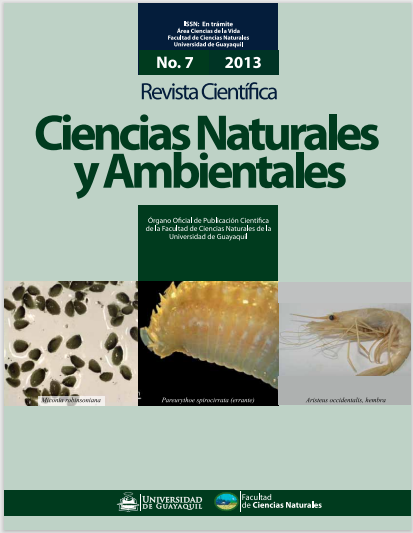
The Production robinsoniana Miconia seedlings for the possible establishment of a Seed Bank as an action to be taken against climate change, on Santa Cruz, Galapagos
DOI:
https://doi.org/10.53591/cna.v7i1.203Keywords:
Cacaotillo, Miconia robinsoniana, Accession, Germination, Growth, GenebanksAbstract
The present work was carried out in the cold-dry season of July to December of 2012; during the dry season was collected plant material of cacaotillo (Miconia robinsoniana) as: seeds and stakes. Due to their restricted geographical distribution, the reduction of their natural habitat for the increment of the human activity, invasion of introduced species; it is in the Red List of Endangered Species. In the Zone of Miconia in Santa Cruz Island, Galapagos, four points were located for the harvested: “Media Luna A”, “El Puntudo”, “Los Picachos” and “Media Luna B”, as samples are collected, an unique entrance code was applied in all documentation, for each realized accession. Stakes and fruits collected was stored in tightly closed cases until arriving to the Greenhouse of the Direction of the Galapagos National Park and the Micropropagation Laboratory "Pájaro Brujo" Reserve. With the method L-A, the germination of Miconia robinsoniana was 94%, in a lapse of two months and the sprouting with the application of 0.40 % ANA y VITAFOL 30-10-10 in stakes was 0%. According to the growth in height (cm), the use of Vitafol 30-10-10 in the seedlings, it doesn't demonstrate a significant difference according to the Test of Student (0.05). Climate change, not alone it represents a new threat and different to the life, but rather it also accelerates the existent threats on the islands. The Miconia robinsoniana seedlings production, they will be intended for the possible establishment of a genebank.
Downloads
Published
Issue
Section
License
Esta obra está bajo una licencia Creative Commons: No comercial-Sin Derivadas- 4.0. Los autores mantienen los derechos sobre los artículos y por lo tanto son libres de compartir, copiar, distribuir, ejecutar y comunicar públicamente la obra.