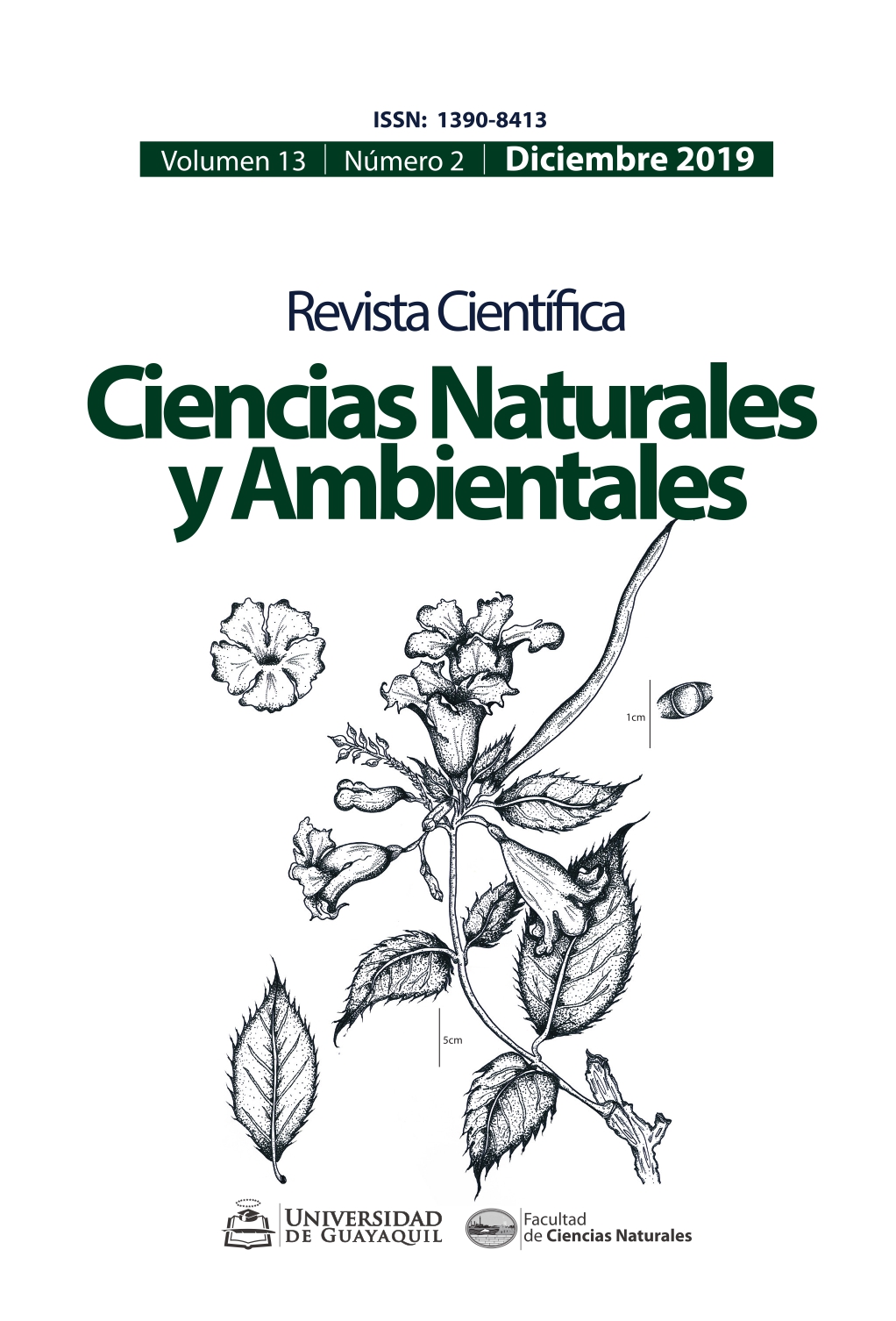
Biological activity and chemical composition in extracts of Cucurbita ecuadorensis H.C. Cutler & Whitaker
DOI:
https://doi.org/10.53591/cna.v13i2.1193Keywords:
Antioxidant activity, Antibacterial activity, Cucurbita ecuadorensisAbstract
The secondary metabolites present in the ethanol and chloroform extracts of the fruits and leaves of Cucurbita ecuadorensis H.C. Cutler & Whitaker, an endemic species of the dry forests of the coast of Ecuador, were alkaloids, flavonoids, tannins, triterpenes, sterols and coumarins, while quinones, anthraquinones and saponins were absent. The mesocarp of the fruit of this species contains contents of 9.19 ± 0.25 g of total carbohydrates / 100 g of dry weight, 14.90 ± 0.30 g of total lipids / 100 g of dry weight and 3.39 ± 0.08 g of total proteins / 100 g of weight dry, respectively. The highest phenolic content was for the ethanolic extract of the fruits with 20.82 ± 0.87 mg of GAE / g of dry extract. The highest total flavonoid content was for the ethanolic extract of the fruits with 134.36 ± 0.34 mg of CE / g of dry extract. The ethanolic extract of the fruit revealed the highest antioxidant capacity with IC50 = 1.90 mg / mL. All extracts evaluated for this species, there is no antibacterial activity against Escherichia coli, Pseudomonas aeruginosa, Vibrio parahaemolyticus, Staphylococcus aureus, Bacillus subtilis subsp. spizizenii and Listeria monocytogenes. Based on these results, the fruits of C. ecuadorensis can be considered as a nutritional supplement with a natural antioxidant potential.
Downloads
Published
Issue
Section
License
Esta obra está bajo una licencia Creative Commons: No comercial-Sin Derivadas- 4.0. Los autores mantienen los derechos sobre los artículos y por lo tanto son libres de compartir, copiar, distribuir, ejecutar y comunicar públicamente la obra.