An Invitation to Resist Through the Ordinary
DOI:
https://doi.org/10.53591/artes.v4i8.2361Keywords:
patrimonio, conservación, ordinarioAbstract
This article proposes a critical reading of the urban landscape through the lens of the ordinary as an act of resistance and active conservation.
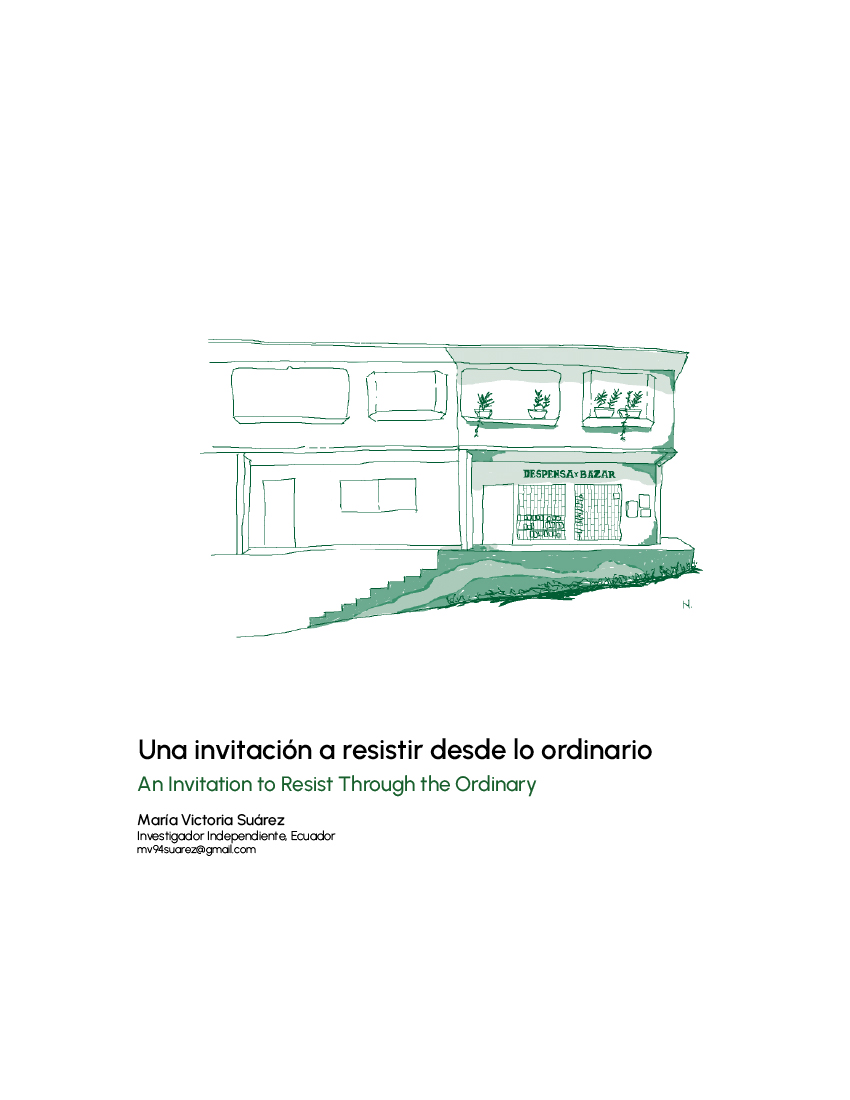
Focusing on the case of Barrio Orellana in Guayaquil—a modern residential project that has evolved into a multivalent ecosystem—the article argues that non-authorial constructions, emerging from everyday practices, reveal urban complexities that lie beyond hegemonic heritage discourses. The research draws on theoretical frameworks by Donna Haraway, Charles Jencks, Farshid Moussavi, and Venturi and Scott-Brown to reconceptualize the built environment not as the opposite of nature, but as its symbolic expression. It advocates for a dynamic mode of conservation, one that rejects simulacra and scenographic restoration, and instead recognizes the urban landscape as a living archive of affects, adaptations, and local knowledge. From this perspective, turning toward the informal becomes both an epistemological and political strategy to resist colonial narratives and reimagine the city through its mestizo complexity.
Downloads
Published
Issue
Section
License
Copyright (c) 2025 María Victoria Suárez Zavala

This work is licensed under a Creative Commons Attribution-NonCommercial-NoDerivatives 4.0 International License.