El río y la Montaña: más que geografía, hitos culturales
DOI:
https://doi.org/10.53591/artes.v4i8.2386Keywords:
Guayas River, Volcán Pichincha, cultural landscape, urban identity, symbolic geography, Quito, Guayaquil, collective imagination, change and permanence, architecture and territoryAbstract
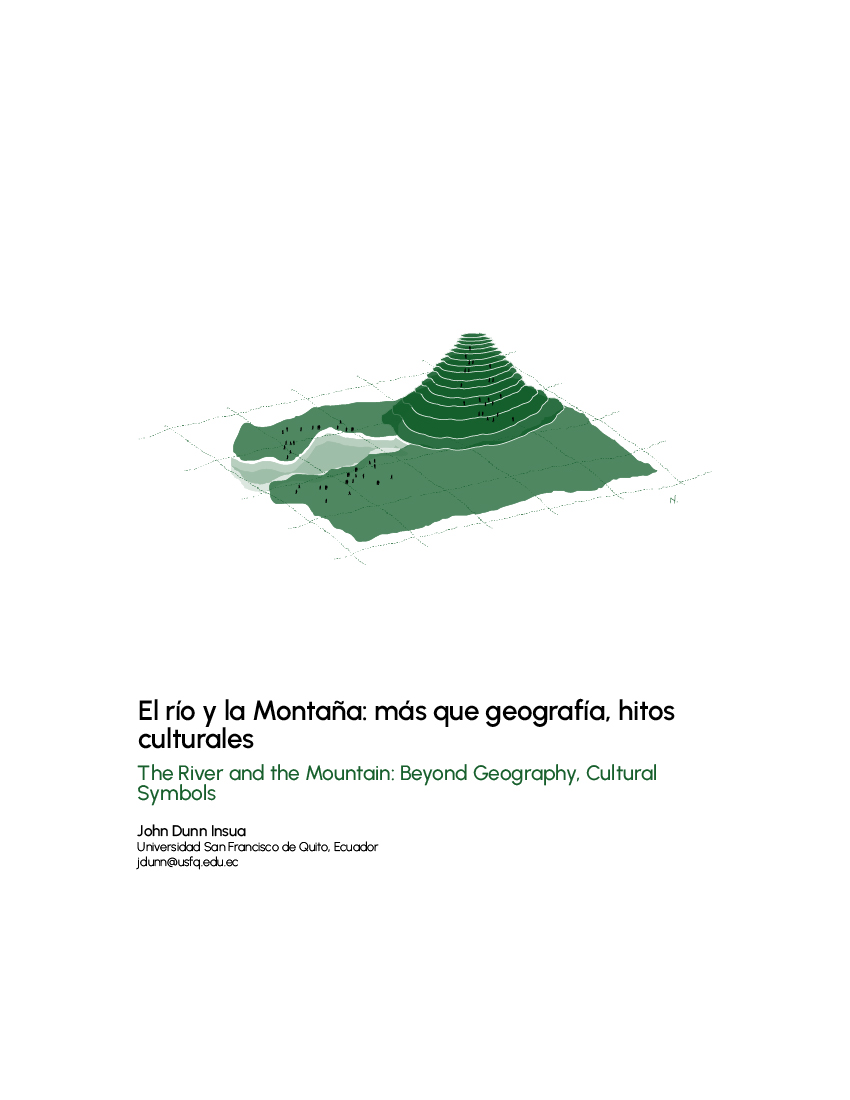
This article explores the cultural impact of two contrasting geographical phenomena—the river and the mountain—on shaping the collective imagination of the cities of Guayaquil and Quito. Using a comparative approach, the author analyzes how the Guayas River and the Pichincha Volcano transcend their physical dimensions to become deeply rooted cultural symbols. Historical, philosophical, and artistic references are examined, revealing the river's capacity to represent constant change and mobility, versus the mountain as an emblem of permanence and challenge. The study draws on examples from classical tradition, works by Borges and Camus, as well as visual representations in Ecuadorian art. It also incorporates cartographic analyses and contemporary references that underscore the symbiotic relationship between the natural environment and urban identity. The article concludes that topography not only influences urban morphology but also shapes behaviors, values, and ways of living, thus reinforcing the profound connection between landscape and culture. The research offers a valuable contribution to interdisciplinary studies on landscape, architecture, and the social construction of territory.
Downloads
Published
Issue
Section
License
Copyright (c) 2025 John Dunn Insua

This work is licensed under a Creative Commons Attribution-NonCommercial-NoDerivatives 4.0 International License.