Diseño biofílico en el bienestar laboral y el rendimiento productivo
DOI:
https://doi.org/10.53591/artes.v3i7.2261Palabras clave:
Diseño biofílico, bienestar laboral, productividad, estrés, creatividadResumen
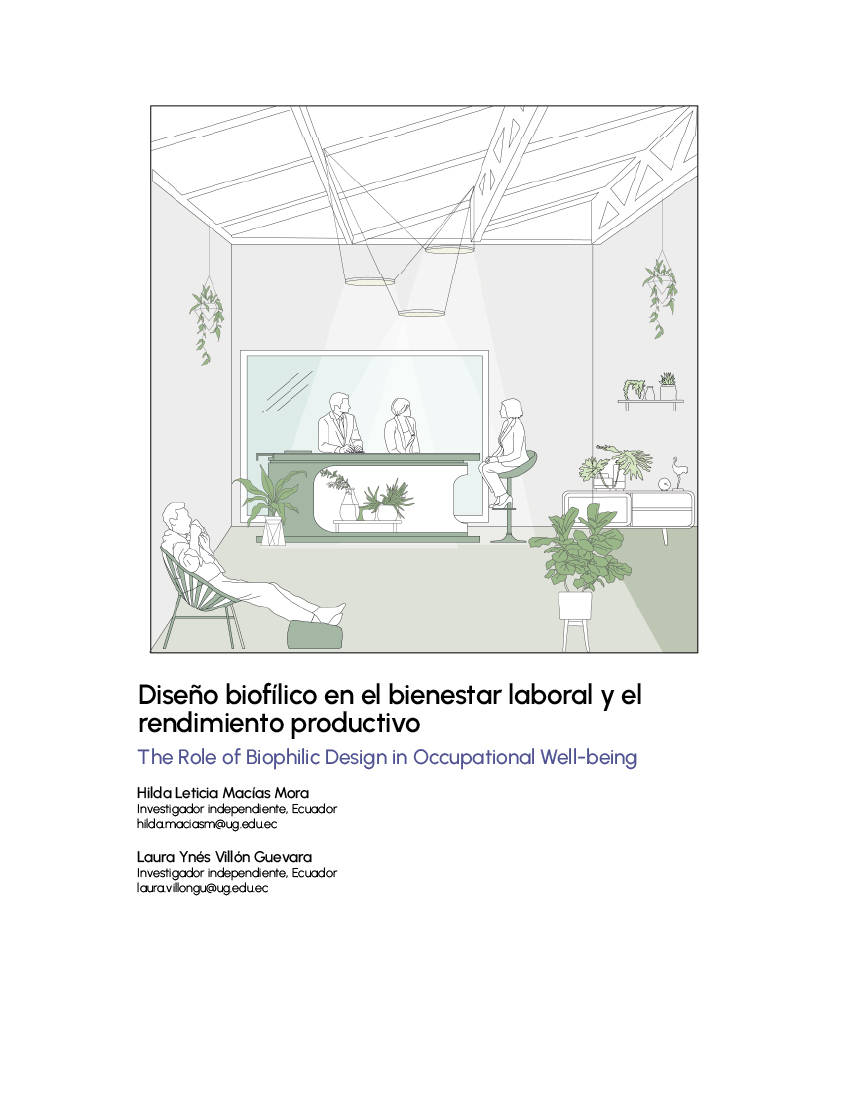
El diseño biofílico en los lugares de trabajo incorpora elementos naturales, como la luz natural, la vegetación y los materiales orgánicos, para mejorar el bienestar de los empleados. Las investigaciones revisadas indican que estos elementos contribuyen significativamente a reducir el estrés y la fatiga mental, aumentando la satisfacción laboral y la productividad. La presencia de la naturaleza en el lugar de trabajo disminuye los niveles de ansiedad hasta en un 30 % y fomenta la concentración, lo que aumenta la eficiencia laboral en un 15 %. Además, este tipo de diseño promueve la creatividad y fomenta la cohesión social, promoviendo un ambiente de trabajo colaborativo y saludable. Aunque la implementación de estrategias biofílicas presenta desafíos como los costos iniciales y la adaptación de la infraestructura, los beneficios a largo plazo, como la reducción del ausentismo y el aumento de la eficiencia, justifican su adopción. En resumen, el diseño biofílico optimiza los lugares de trabajo en general, mejorando el bienestar y el rendimiento de los empleados.
Descargas
Publicado
Número
Sección
Licencia
Derechos de autor 2024 Hilda Leticia Macías Mora, Laura Ynés Villón Guevara

Esta obra está bajo una licencia internacional Creative Commons Atribución-NoComercial-SinDerivadas 4.0.