Sport Science Training and Research - STAR
1José Geovanny Boza-Mendoza
University of Guayaquil
https://orcid.org/0000-0001-8797-0162
Ecuador, Guayaquil
1Bachelor of Physical Culture. Master of Physical Education and Sports. Faculty member at the Faculty of Physical Activity Sciences. Academic personnel manager for the sports training program, University of Guayaquil.
Date of receipt: 01-12-2025
Date of acceptance: 04-01-2026
Publication date: 14-01-2026

The works published in STAR are licensed under CC BY-NC-ND 4.0
Abstract
Introduction: Youth soccer is a significant cause of injury due to the high physical demands and the growth and development processes involved, making this population susceptible. In this regard, injury prevention programs have emerged as a measure to reduce the risk of injury and safeguard the health of the young athlete.
Objective: To analyze the effectiveness of injury prevention programs in young soccer players on the incidence and severity of injuries.
Methodology: A systematic review was conducted following the PRISMA 2020 statement. The search was conducted in the Scopus and Web of Science databases, yielding 514 initial records. After applying strict inclusion and exclusion criteria, 15 studies were eligible for qualitative analysis.
Results: The results show that neuromuscular and strength training programs are effective in reducing the incidence and severity of injuries. Specifically, reductions of up to 56% in certain injuries, such as anterior cruciate ligament and shoulder injuries, are reported.
Discussion: The effectiveness of injury prevention programs depends not only on their content but also on proper implementation and adherence, with contextual and organizational factors playing an important role in the outcomes.
Conclusions: The evidence supports injury prevention as a safety measure for youth soccer players. Its systematic and mandatory inclusion in training sessions is essential for improving long-term health and athletic performance.
Keywords: Soccer; sports injuries; prevention; programs; athletic performance.
Resumen
Introducción: El fútbol juvenil es una causa importante de lesión, debido a las grandes exigencias físicas y los procesos de crecimiento y desarrollo, siendo una población susceptible. En este sentido, los programas de prevención de lesiones se han posicionado como una medida para disminuir el riesgo de lesión y salvaguardar la salud del deportista joven.
Objetivo: Analizar la efectividad de los programas preventivos de lesiones en futbolistas jóvenes sobre la incidencia y severidad de las lesiones.
Metodología: Se realizó una revisión sistemática siguiendo la declaración PRISMA 2020. La búsqueda se llevó a cabo en las bases de datos Scopus y Web of Science, arrojando 514 registros iniciales. Después de aplicar criterios estrictos de inclusión y exclusión, 15 estudios fueron elegibles para el análisis cualitativo.
Resultados: Los resultados muestran que los programas de entrenamiento neuromuscular y de fuerza son efectivos para reducir la incidencia y la gravedad de las lesiones. En concreto, se informan reducciones de hasta el 56% en ciertas lesiones, como las del ligamento cruzado anterior y las lesiones de hombro.
Discusión: La efectividad de los prevención de lesiones no sólo se basa en el contenido, sino en una buena implementación y adherencia, siendo importantes los factores contextuales y organizativos en los resultados.
Conclusiones: La evidencia apoya a los prevención de lesiones como una medida de seguridad para los futbolistas juveniles. Su inclusión sistemática y obligatoria en las sesiones de entrenamiento es fundamental para mejorar la salud y el rendimiento deportivo a largo plazo.
Palabras clave: Fútbol; lesiones deportivas; prevención; programas; rendimiento deportivo.
Introduction
Football, the world’s most popular sport, ignites passions and draws crowds, but it also leaves its players exposed to a high risk of injury (Durán et al., 2025; Obërtinca et al., 2024). This issue is alarming among young people, an age when the intensity of the game combines with the process of physical maturation and musculoskeletal development. The high physical demands, explosive movements, changes of direction, and physical contact inherent in the sport create a high-risk environment that has raised concerns about the health and safety of athletes (Patterson et al., 2022). Anterior cruciate ligament (ACL) injuries are a prevalent problem in soccer, accounting for up to 43% of the injury burden during the sports season, especially among young players (Coves & Poveda, 2025). Likewise, head and neck injuries are a concern that has prompted preventive programs targeting youth soccer players of both sexes (Peek et al., 2023).
And although prevention is recognized as crucial, implementing effective programs in youth soccer remains a challenge (Suits et al., 2024). In the current literature, there are no unified criteria for designing precise intervention protocols, which leads to variability in outcomes (Coves & Poveda, 2025). The lack of standardization and low adherence to preventive programs are aspects that can affect their effectiveness, since greater adherence is associated with a lower risk of injury (Lindblom et al., 2024; Wilczyński et al., 2025).
In the current scientific literature, various studies examine the effectiveness of injury prevention programs (IPPs). It has been proven that neuromuscular training programs to correct muscle imbalances and improve physical performance prevent injuries in soccer players (Theodorou et al., 2023; Pajonková et al., 2024; Roso-Moliner et al., 2023). A study in amateur youth female soccer players showed a decrease in ACL injuries after a preventive program (Suits et al., 2024). Correcting musculoskeletal imbalances thru personalized exercise programs is also a preventive strategy (Theodorou et al., 2023).
Low-load strength training has also been effective not only in reducing the incidence and severity of injuries but also in improving physical performance in young soccer players (Rahlf et al., 2025). Additionally, the effectiveness of new methodologies, such as the FUNBALL program, in preventing injuries in youth soccer has been examined (Obërtinca et al., 2024). The variety of existing approaches and programs highlights the absence of a unified protocol and underscores the need for an evidence synthesis (Coves and Poveda, 2025). Evidence from similar sports, such as basketball, also supports the effectiveness of neuromuscular training in preventing injuries in adolescent athletes (Paravlic et al., 2024).
This systematic review is relevant and necessary to synthesize and critically evaluate the existing evidence on the effectiveness of injury prevention programs (IPPs) in young soccer players. Thru this systematic review, we aim to answer the research question: How effective are injury prevention programs in reducing the incidence and severity of injuries in young athletes of both sexes? The importance of this review is justified by the need to integrate current evidence in a systematic manner, providing a comprehensive and structured overview that serves as a guide for coaches and healthcare professionals.
The objective is to analyze the existing scientific evidence evaluating the impact of preventive programs on the incidence and severity of injuries in young soccer players and to determine the variables that most influence their outcomes. The results of this review are expected to inform the understanding of PPLs, enabling evidence-based decision-making to develop wellness programs and policies in various contexts.
Method
The study was conducted as a systematic literature review, rigorously following the PRISMA 2020 statement guidelines (Page et al., 2021) to ensure transparency, integrity, reproducibility, and methodological validity in the identification, selection, and synthesis of scientific evidence. The use of this methodological framework provided an organized guide for each stage of the study, from the research question to the analysis and interpretation of the results.
Date sources and search strategies
A comprehensive and systematic search was conducted in high-impact, internationally recognized electronic databases in sports science, physical activity, and health. The chosen databases were Scopus and Web of Science because of their broad coverage, strict indexing criteria, and the high methodological quality of the journals they index. Additionally, a supplementary manual search was conducted on Google Scholar to identify any potentially non-indexed studies, but no additional relevant records were found.
The search encompassed both English- and Spanish-language articles, thereby ensuring broad and representative coverage of the global scientific literature. The time frame was from January 1, 2021, to August 22, 2025, to include the most recent evidence on ACL injuries in young soccer players.
The search equation was structured in a reproducible manner, using keywords and controlled DeCS/MeSH descriptors combined with Boolean operators. The terms were grouped into four semantic fields:
· Injury prevention: "injury prevention", "injury reduction", "safety programs", "risk management".
· Population: "youth", "adolescent", "teen", "young athlete".
· Sport: "football", "soccer", "gridiron", "American football".
· Efficacy: "effectiveness", "impact", "outcome", "evaluation".
The search equation used in Scopus and Web of Science was:
("injury prevention" OR "injury reduction" OR "safety programs" OR "risk management") AND ("youth" OR "adolescent" OR "teen" OR "young athlete") AND (football OR soccer OR gridiron OR American football) AND ("effectiveness" OR "impact" OR "outcome" OR "evaluation")
Filters were used to limit the results to original, peer-reviewed articles in English or Spanish, ensuring the relevance and quality of the included studies.
Eligibility criteria
To ensure the methodological rigor and relevance of the selected evidence, precise inclusion and exclusion criteria were defined and rigorously applied.
Inclusion criteria:
· Study type: Original experimental, pre-experimental, quasi-experimental, and pure experimental studies.
· Population: Youth soccer players of both sexes.
· Age: Participants aged 15 to 18 years, from youth development categories (clubs, academies, or educational centers).
· Intervention: PPL in soccer.
· Publication type: Peer-reviewed articles.
· Publication period: Between January 1, 2021, and July 31, 2025.
· Languages: Spanish and English.
· Indexing: Articles published in journals indexed in Scopus and/or Web of Science.
· Availability: Full text available.
Exclusion criteria:
· Study type: systematic reviews, meta-analyses, qualitative studies, books, book chapters, and conference abstracts.
· Languages and dates: Articles in languages other than Spanish or English, or that were published outside the specified time frame.
· Thematic focus: Studies that analyzed injury prevention measures other than those for soccer or not focused on preventive programs.
· Editorial quality: Articles not peer-reviewed or published in non-indexed journals.
· Population: Studies not focused on youth populations or outside the established age range.
Article selection procedure
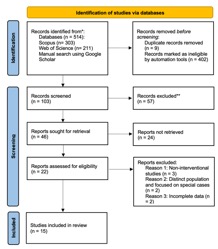
Screening was conducted in multiple sequential stages, following the PRISMA 2020 flow diagram. Initially, the search in Scopus and Web of Science yielded 514 records, which were imported into the Zotero bibliographic software, allowing the references to be organized and duplicates removed.
In the first stage, 9 duplicate records and 402 ineligible records were removed using automated tools. Next, 103 records were screened by reading titles and abstracts, and 57 studies were excluded for not meeting the inclusion criteria. In a second step, we attempted to retrieve the full text of 46 articles, of which 24 could not be recovered.
Finally, 22 studies were reviewed in full text, of which 7 were excluded for the following reasons: no intervention (n = 3), ineligible population or special cases (n = 2), and insufficient data (n = 2). Finally, 15 studies were eligible for qualitative synthesis.
Two reviewers independently performed the selection, and any discrepancies were resolved by consensus, ensuring that selection bias was minimized.
Assessment of methodological quality
The methodological quality and risk of bias of the included studies were assessed using validated instruments appropriate to each study’s design. For quantitative studies (pre-experimental and quasi-experimental), the Cochrane Risk of Bias 2 (ROB2) tool was used. For reviews that included qualitative elements, the Joanna Briggs Institute (JBI) checklist was used.
The evaluation was conducted independently by two reviewers. Discrepancies were resolved by discussion and consensus or, in the event of disagreement, a third evaluator was consulted. The studies were categorized as high, medium, or low quality. All articles were included in the qualitative synthesis, and methodological quality was taken into account as a factor in the critical appraisal of the results.
Data extraction and analysis
Data collection was carried out systematically using a pre-established matrix. The following variables were extracted: author, year, country, methodological design, sample characteristics (size, age, and sex), type of intervention, and main findings.
The information was tabulated in an extraction table to allow for comparison and synthesis of the results. The data were analyzed using inductive thematic analysis to identify recurring patterns, trends, and impacts of injury prevention programs for young soccer players, without predefined categories.
Microsoft Excel was used to manage and analyze the information; the software was employed to code, group, and synthesize the results, thereby enhancing the coherence and traceability of the analytical process.
Results
Figure 1. PRISMA 2020 flow diagram
Fuente: Page et al. (2021).
Table 1. Assessment of the risk of bias and methodological quality of the included studies
|
# |
Author and Year |
Assessment Instrument |
Methodological Quality Level |
Main Strengths and Observations |
|
1 |
Durán et al. (2025) |
ROB2 |
High |
Experimental trial with adequate definition of the intervention, control of the comparison group, and systematic measurement of injury incidence. |
|
2 |
Paravlic et al. (2024) |
ROB2 |
Medium |
Experimental trial focused on neuromuscular warm-up; has an adequate structure, although with limitations in blinding. |
|
3 |
Obërtinca et al. (2024) |
ROB2 |
Medium |
Multicomponent experimental study (FUNBALL); robust design at the applied level, with limited information on bias control. |
|
4 |
Peek et al. (2023) |
ROB2 |
Medium |
Prospective cohort study; adequate outcome assessment, although with possible confounding bias not fully controlled. |
|
5 |
Theodorou et al. (2023) |
ROB2 |
Medium |
Pre-experimental design with individualized intervention; absence of a control group limits bias control. |
|
6 |
Roso-Moliner et al. (2023) |
ROB2 |
Medium |
Quasi-experimental study with performance and asymmetry analyzes; partial control of external variables. |
|
7 |
Patterson et al. (2022) |
JBI (cualitativa) |
High |
Cluster-randomized controlled trial protocol with a stepped-wedge design; high methodological rigor. |
|
8 |
García y Pagán (2025) |
ROB2 |
High |
Randomized, double-blind clinical trial protocol focused on ACL injury prevention; solid methodological design. |
|
9 |
Suits et al. (2024) |
ROB2 |
Medium |
Quasi-experimental implementation study; adequate evaluation of strategies, although with a moderate risk of selection bias. |
|
10 |
Barden et al. (2022) |
ROB2 |
Medium |
Quasi-experimental study in an applied setting; good ecological validity, with limitations in random assignment. |
|
11 |
Asker et al. (2022) |
ROB2 |
High |
Three-arm randomized controlled trial; excellent methodological control and low risk of bias. |
|
12 |
Lindblom et al. (2023) |
ROB2 |
High |
Cluster-randomized trial; adequate allocation and longitudinal follow-up of lesions. |
|
13 |
Nuhu et al. (2021) |
ROB2 |
High |
Cluster-randomized controlled trial with a large sample; rigorous bias control and high internal validity. |
|
14 |
Hilska et al. (2021) |
ROB2 |
High |
Randomized controlled trial with a large sample size; low risk of bias and high methodological quality. |
|
15 |
Pajonková et al. (2024) |
ROB2 |
Medium |
Quasi-experimental study focused on physical performance; lack of randomization limits bias control. |
Prepared by the autor.
Table 2. Main data collected in the analyzed studies
|
# |
Authors |
Year |
Country |
Objective |
Study design |
Sample |
Main findings |
|
1 |
Durán Custodio et al. |
2025 |
Spain |
To analyze the effects of a low-load resistance training program on injury incidence, training load, and physical condition in young soccer players. |
Randomized controlled trial |
20 male soccer players |
The intervention group showed a lower incidence of injuries. |
|
2 |
Paravlic et al. |
2024 |
Slovenia |
To evaluate the effect of a neuromuscular training (NMT) warm-up program on injury incidence, neuromuscular function, and adherence in adolescent basketball players. |
Randomized controlled trial |
275 adolescent players |
The intervention group presented a lower incidence of injuries. |
|
3 |
Obërtinca et al. |
2024 |
Kosovo |
To evaluate the effectiveness of a multicomponent injury prevention program (FUNBALL) in soccer players aged 13–19 years. |
Randomized controlled trial |
55 soccer teams |
The FUNBALL program significantly reduced injury incidence. |
|
4 |
Peek et al. |
2023 |
Australia |
To investigate the effect of neuromuscular neck exercises on the incidence of head and neck injuries in adolescent soccer players. |
Prospective cohort study |
364 soccer players |
The inclusion of neck exercises reduced the risk of injuries. |
|
5 |
Theodorou et al. |
2023 |
Cyprus |
To examine the effect of an individualized corrective exercise program on musculoskeletal asymmetries in young soccer players. |
Pre-experimental study |
80 soccer players |
The program significantly improved musculoskeletal asymmetries. |
|
6 |
Roso-Moliner et al. |
2023 |
Spain |
To examine the effects of a neuromuscular training program on physical performance and asymmetries in female soccer players. |
Quasi-experimental study |
38 female players from two teams |
The program improved speed and reduced asymmetries. |
|
7 |
Patterson et al. |
2022 |
Australia |
To evaluate the impact of the “Prep-to-Play” program on program use and injury rates in women and girls. |
Randomized controlled trial |
More than 140 female teams |
The study was designed to detect improvements in program use and reductions in ACL injuries. |
|
8 |
García & Pagán |
2025 |
Spain |
To develop a precise intervention protocol for the prevention of ACL injuries in female soccer players. |
Randomized controlled trial (clinical trial protocol) |
Female soccer players with dynamic knee valgus |
No results reported; conceptual protocol study. |
|
9 |
Suits et al. |
2024 |
USA |
To compare two implementation strategies (educational booklet vs. KTA) for an injury prevention program (ACL-IPP) in youth female soccer. |
Quasi-experimental study (prospective cohort) |
671 amateur female soccer players (mean age 15.72 ± 1.78 years) |
The KTA strategy resulted in greater implementation; ACL-IPP implementation was associated with a lower injury risk. |
|
10 |
Barden et al. |
2022 |
United Kingdom |
To evaluate the implementation and effectiveness of the Activate injury prevention exercise program in applied settings. |
Quasi-experimental study |
Individuals from teams that adopted Activate versus those that did not |
Teams adopting Activate showed lower injury incidence during matches (23% reduction) and training sessions (59% reduction). |
|
11 |
Asker et al. |
2022 |
Sweden |
To investigate the preventive efficacy of an injury prevention exercise program (IPEP) on shoulder and knee injuries in elite adolescent handball players. |
Randomized controlled trial (three-arm RCT) |
627 elite handball players aged 15–19 years |
The shoulder program reduced shoulder injuries by 56%, and the knee program reduced knee injuries by 31%. |
|
12 |
Lindblom et al. |
2023 |
Sweden |
To evaluate the preventive efficacy of an extended version of the Knee Control injury prevention program in adolescent and adult amateur soccer players. |
Cluster randomized controlled trial with an additional arm |
502 players from 17 teams |
The Knee Control program showed a 29% lower injury incidence compared with the control group. |
|
13 |
Nuhu et al. |
2021 |
Rwanda/South Africa |
To examine the impact of the FIFA 11+ warm-up program on injury incidence and severity in second-division soccer players. |
Cluster randomized controlled trial |
626 players from 24 teams |
The FIFA 11+ program significantly reduced injury incidence (40%) and injury severity. |
|
14 |
Hilska et al. |
2021 |
Finland |
To investigate whether a neuromuscular training warm-up is effective in preventing acute lower extremity injuries in competitive U11–U14 soccer players. |
Cluster randomized controlled trial |
1,403 players (aged 9–14 years) from 92 teams |
A significant 32% reduction in non-contact acute lower extremity injuries was observed in the intervention group. |
|
15 |
Pajonková et al. |
2024 |
Slovakia |
To evaluate the effectiveness of a 12-week neuromuscular warm-up program on physical performance in young female soccer players. |
Quasi-experimental study |
38 young female soccer players (mean age 16.24 years in the control group) |
Prepared by the author.
Narrative synthesis
The 15 studies included in this systematic review provide high-quality, more recent evidence with broader geographic coverage on the effectiveness of PPLs in young soccer players. The evidence primarily comes from Europe (Spain, Slovenia, Kosovo, the United Kingdom, Sweden, Finland, and Slovakia), but there are also studies from the Americas (United States) and Oceania (Australia), which supports the external validity and generalizability of the results. Most publications are concentrated between 2021 and 2025, ensuring that the conclusions are based on up-to-date and methodologically sound evidence.
Methodologically, the quantitative approach prevails, with a high proportion of true experiments (n = 8) that allow for causal inferences to be drawn between preventive measures and injury reduction. Additionally, prospective cohort studies (n = 2), quasi-experimental studies (n = 3), and pre-experimental studies (n = 1) were included, allowing for an understanding of the phenomenon at different levels of methodological control. The samples ranged from entire teams to large cohorts of players, both male and female, aged 9 to 19—the heterogeneity that characterizes youth soccer.
The data agree that neuromuscular and strength training programs, when applied systematically, reduce the incidence and severity of injuries. Widely disseminated interventions, such as the FIFA 11+ program and the FUNBALL program, show consistent reductions in injuries, including high-impact functional injuries such as ACL, shoulder, and lower extremity injuries, with decreases ranging from 23% to 59% (Paravlic et al., 2024; Suits et al., 2024; Barden et al., 2022; Nuhu et al., 2021). Additionally, specific reductions of up to 32% in acute lower-extremity injuries and between 31% and 56% in ACL- and shoulder-focused programs have been reported, demonstrating the clinical benefit of these interventions.
Evidence also shows that the effectiveness of programs is not determined by the program itself, but by how it is implemented. Adherence is a key factor; the higher the levels of compliance, the greater the reduction in injury risk. Likewise, interventions aimed at correcting muscle imbalances with individualized exercises improve musculoskeletal balance and functional variables related to injury prevention (Theodorou et al., 2023; Roso-Moliner et al., 2023). Finally, incorporating these programs into regular training routines, during warm-ups, supports their acceptability, sustainability, and effectiveness in real-world sports practice, establishing them as a benchmark preventive strategy in youth soccer.
Discussion
The systematic review of the literature on the effectiveness of injury prevention programs (IPPs) in young soccer players shows a consistent pattern of favorable outcomes, which not only confirm but also expand upon the evidence found in recent studies. The findings of this review reaffirm that injury prevention is a priority in youth sports development, directly influencing the health, safety, and sustainability of sports participation (Durán et al., 2025; Obërtinca et al., 2024). This growing consensus in the scientific literature reinforces the need to intentionally incorporate injury prevention programs (IPPs) into training processes, moving beyond traditional approaches focused on immediate performance (Al Attar et al., 2025; Owoeye et al., 2014).
The reviewed studies, which include interventions such as neuromuscular training and strength programs, demonstrate that the effect of PPLs is multidimensional. Beyond reducing injuries, these interventions improve physical performance and correct muscle imbalances, factors associated with injury prevention in the medium and long term (Theodorou et al., 2023; Roso-Moliner et al., 2023). In this vein, evidence supports that PPLs should not be considered merely reactive measures to reduce risk, but rather proactive methods to promote more balanced, efficient, and sustainable athletic development (Zarei et al., 2020; Zareia et al., 2020). This way of thinking represents a paradigm shift, integrating prevention as part of training rather than an add-on.
The substantial reduction in injuries, especially in the lower extremities and in high-clinical-impact injuries such as ACL and shoulder injuries, is consistent with the physiological and biomechanical mechanisms underlying these interventions. Studies such as those by Nuhu et al. (2021) and Asker et al. (2022) show that improvements in muscle strength, joint stability, and neuromuscular control are the functional foundations on which PPLs rely to be effective. However, this review adds evidence that these benefits are not inherent to the program but rather to the way it is applied in practice (Obërtinca et al., 2025).
In this regard, program fidelity and implementation strategies stand out as crucial elements for its effectiveness. Evidence from Patterson et al. (2022) and Suits et al. (2024) shows that the regular, structured, and contextualized application of PPLs is associated with a greater reduction in injury risk. The mere existence of a protocol does not guaranty success; its effectiveness will be determined by the fidelity of its implementation and by coaches’ and athletes’ understanding of its underlying principles. This discovery has practical implications, as it reveals the need for training processes to accompany the implementation of PPLs, ensuring long-term commitment and preventing superficial or intermittent use that would limit their effectiveness (Meha et al., 2025).
One strength of this systematic review is its methodological rigor, based on the PRISMA 2020 statement guidelines. The exhaustive search in Scopus and Web of Science, along with the independent selection and peer evaluation by reviewers, help reduce bias and increase the reliability of the results. Furthermore, incorporating multiple methodological designs (true experiments, quasi-experiments, and prospective cohorts) strengthens causal inference, an essential goal in sports injury prevention. This methodology not only strengthens the validity of the conclusions but also lays the groundwork for future research in the field.
However, the findings should be interpreted in light of certain limitations. Publication bias may exist, whereby studies with positive results are more likely to be published, thus inflating the true magnitude of the effects found (Lindblom et al., 2025). Furthermore, the heterogeneity of intervention protocols and the variability of the populations analyzed (age, sex, competitive level, etc.) make it difficult to compare studies. These differences limit the generalizability of the results and highlight the need to move toward methodological standardization in future studies, particularly in describing interventions and measuring outcomes.
Finally, the results of this review have important implications for theory and practice. From a theoretical standpoint, the idea of PPLs as part of the sports training process is reinforced, serving as a link to mediate between the systematic practice of soccer and the health of the young athlete. At a practical level, the evidence supports the systematic and, if possible, mandatory incorporation of PPLs into training programs for youth categories. Coaches and healthcare professionals now have scientific evidence to choose, adjust, and implement evidence-based preventive strategies, protect the well-being of young athletes, and improve their future performance.
Conclusions
The present systematic review consistently and robustly confirms the effectiveness of PPL programs in reducing both the incidence and severity of injuries in youth soccer players, regardless of sex. The results directly address the research question, demonstrating that PPLs constitute an effective, evidence-based strategy for improving the safety and health of young athletes. In particular, neuromuscular and strength training programs show clinically relevant preventive effects, with reductions of up to 32% in acute lower extremity injuries and decreases reaching 56% in specific injuries, such as ACL and shoulder injuries.
Evidence indicates that greater adherence is associated with more pronounced reductions in injury risk, reinforcing the need to systematically integrate these programs into regular training routines. Strategies such as incorporating them into warm-ups thru structured programs like FIFA 11+ or FUNBALL have been shown to facilitate implementation and improve acceptance in real-world settings. Likewise, interventions aimed at correcting muscular asymmetries thru individualized exercises emerge as a key component in injury prevention.
From an applied perspective, the findings of this review make a significant contribution to professional practice in youth soccer. Coaches, physical trainers, and healthcare professionals have solid scientific support to justify the mandatory and sustained inclusion of PPLs in youth training programs. The synthesized evidence provides a basis for informed decisions in selecting, adapting, and implementing preventive programs in various sports contexts, fostering a comprehensive approach to athletic development that prioritizes the health, continued participation, and long-term performance of young soccer players.
The results highlight the need to move toward greater standardization of intervention protocols, since the heterogeneity observed in study designs and populations limits comparability across studies. Furthermore, it is necessary to deepen the analysis of the contextual factors that influence adherence to PPLs, considering cultural, organizational, and socioeconomic variables, as well as the role of coaches, families, and sports institutions. Finally, it is recommended to conduct longitudinal studies that evaluate the long-term effects of PPLs on physical development, athletic performance, and the prevention of chronic injuries, as well as gender-, age-, and competitive-level-specific research, in order to design more precise and contextualized preventive interventions.
Bibliographic references
Al Attar, W. S. A., Majrashi, A., & Bizzini, M. (2025). Effectiveness of FIFA 11+ Injury Prevention Programs in Reducing Head and Neck Injuries, Including Concussion, Among Soccer Players: A Systematic Review and Meta-Analysis. Pediatric Exercise Science, 37(4), 403-412. https://doi.org/10.1123/pes.2023-0187
Asker, M., Hägglund, M., Waldén, M., Källberg, H., & Skillgate, E. (2022). The Effect of Shoulder and Knee Exercise Programmes on the Risk of Shoulder and Knee Injuries in Adolescent Elite Handball Players: A Three-Armed Cluster Randomised Controlled Trial. Sports Medicine - Open, 8(1), 91. https://doi.org/10.1186/s40798-022-00478-z
Barden, C., Hancock, M. V., Stokes, K. A., Roberts, S. P., & McKay, C. D. (2022). Effectiveness of the Activate injury prevention exercise programme to prevent injury in schoolboy rugby union. British Journal of Sports Medicine, 56(14), 812-817. https://doi.org/10.1136/bjsports-2021-105170
Durán Custodio, R., Yanci Irigoyen, J., Raya González, J., & Castillo Alvira, D. (2024). Low-load resistance training reduces injury incidence and burden, and improves the physical performance in youth soccer players. Sportis. Scientific Journal of School Sport, Physical Education and Psychomotrici-ty, 11(1), 1-30. https://doi.org/10.17979/sportis.2025.11.1.11151
García, A. C., & Pagán, E. J. P. (2025). Therapeutic exercise protocol for the prevention of anterior cruciate ligament injuries in female soccer players with dynamic knee valgus (RCT). Trials, 26(1), 29. https://doi.org/10.1186/s13063-025-08736-7
Hilska, M., Leppänen, M., Vasankari, T., Aaltonen, S., Kannus, P., Parkkari, J., Steffen, K., Kujala, U. M., Konttinen, N., Räisänen, A. M., & Pasanen, K. (2021). Neuromuscular Training Warm-up Prevents Acute Noncontact Lower Extremity Injuries in Children’s Soccer: A Cluster Randomized Con-trolled Trial. Orthopaedic Journal of Sports Medicine, 9(4), 23259671211005769. https://doi.org/10.1177/23259671211005769
Lindblom H, Åkerlund I, Waldén M, Sonesson S, Hägglund M. (2024). Players are positive regarding injury prevention exercise programmes, but coaches need ongoing support: a survey-based evaluation using the Health Action Process Approach model across one season in amateur and youth football. BMJ Open Sport & Exercise Medicine, 10:e002009. https://doi.org/10.1136/bmjsem-2024-002009
Lindblom H, Sonesson S, Waldén M, et al. (2025). Enhancing Prevention of Injuries in Community youth and adult amateur football teams (EPIC) via implementation support for an exercise-based intervention: study protocol for a type 3 hybrid implementation–effectiveness cluster-randomised controlled trial. BMJ Open;15:e102008. https://doi.org/10.1136/bmjopen-2025-102008
Lindblom, H., Sonesson, S., Torvaldsson, K., Waldén, M., & Hägglund, M. (2023). Extended Knee Control programme lowers weekly hamstring, knee and ankle injury prevalence compared with an ad-ductor strength programme or self-selected injury prevention exercises in adolescent and adult amateur football players: A two-armed cluster-randomised trial with an additional comparison arm. British Journal of Sports Medicine, 57(2), 83-90. https://doi.org/10.1136/bjsports-2022-105890
Meha, R., Obërtinca, R., Aus der Fünten, K., Leisge, K. & Schaefer, S. (2025). A new injury prevention program ‘FUNBALL’ improves cognitive performance of young football (soccer) players: A cluster randomized controlled trial. Psychology of Sport and Exercise, 76. https://www.sciencedirect.com/science/article/pii/S1469029224001547?via%3Dihub
Nuhu, A., Jelsma, J., Dunleavy, K., & Burgess, T. (2021). Effect of the FIFA 11+ soccer specific warm up programme on the incidence of injuries: A cluster-randomised controlled trial. PLOS ONE, 16(5), e0251839. https://doi.org/10.1371/journal.pone.0251839
Obërtinca, R., Meha, R., Hoxha, I. et al. (2025). Impact of the ‘FUNBALL’ Programme on Severe Injuries Among Young Male Football Players: A Secondary Analysis from a Cluster-Randomised Controlled Trial. Sports Med - Open 11, 151. https://doi.org/10.1186/s40798-025-00945-3
Obërtinca, R., Meha, R., Hoxha, I., Shabani, B., Meyer, T., & Aus Der Fünten, K. (2024). Efficacy of a new in-jury prevention programme (FUNBALL) in young male football (soccer) players: A cluster-randomised controlled trial. British Journal of Sports Medicine, 58(10), 548-555. https://doi.org/10.1136/bjsports-2023-107388
Owoeye, Oluwatoyosi, B. A., Owoeye, O. B., Akinbo, Sunday, R. A., Akinbo, S. R., Tella, Bosede, A., Tella, B. A. & Olawale, Olajide, A. (2014). Efficacy of the FIFA 11+ warm-up programme in male youth football: A cluster randomised controlled trial. Journal of Sports Science and Medicine, 13 (2), 321-328. https://www.scopus.com/pages/publications/84901722691?origin=resultslist
Pajonková, F., Lenková, R., Sučka, J., & Kozel, M. (2024). The impact of neuromuscular warm-up on muscle contractility and injury prevention in female soccer players: analysis using tensiomyography. Lékař a Technika - Clinician and Technology, 54(2), 52-62. https://doi.org/10.14311/CTJ.2024.2.04
Paravlic, A. H., Bakalár, P., Puš, K., Pišot, S., Kalc, M., Teraž, K., Šlosar, L., Peskar, M., Marušič, U., & Šimunič, B. (2024). The effectiveness of neuromuscular training warm-up program for injury prevention in adolescent male basketball players. Journal of Sports Sciences, 42(22), 2083-2092. https://doi.org/10.1080/02640414.2024.2415215
Patterson, B. E., Donaldson, A., Cowan, S. M., King, M. G., Barton, C. G., McPhail, S. M., Hagglund, M., White, N. M., Lannin, N. A., Ackerman, I. N., Dowsey, M. M., Hemming, K., Makdissi, M., Culvenor, A. G., Mos-ler, A. B., Bruder, A. M., Choong, J., Livingstone, N., Elliott, R. K., Crossley, K. M. (2022). Evalua-tion of an injury prevention programme (Prep-to-Play) in women and girls playing Australian Football: Design of a pragmatic, type III, hybrid implementation-effectiveness, stepped-wedge, cluster randomised controlled trial. BMJ Open, 12(9), e062483. https://doi.org/10.1136/bmjopen-2022-062483
Peek, K., Versteegh, T., Veith, S., Whalan, M., Edwards, S., McKay, M., & Gardner, A. J. (2023). Injury-Reduction Programs Containing Neuromuscular Neck Exercises and the Incidence of Soccer-Related Head and Neck Injuries. Journal of Athletic Training, 58(6), 519-527. https://doi.org/10.4085/1062-6050-0340.22
Rahlf, A., John, C., Hamacher, D. & Zech, A. (2020). Effects of a 10 vs. 20-Min Injury Prevention Program on Neuromuscular and Functional Performance in Adolescent Football Players. Frontiers in Physiology, 11, 1-9. https://doi.org/10.3389/fphys.2020.578866
Roso-Moliner, A., Mainer-Pardos, E., Cartón-Llorente, A., Nobari, H., Pettersen, S. A., & Lozano, D. (2023). Effects of a neuromuscular training program on physical performance and asymmetries in fe-male soccer. Frontiers in Physiology, 14, 1171636. https://doi.org/10.3389/fphys.2023.1171636
Suits, W., Darmofal, M., Roe, O., & Liao, T.-C. (2024). Comparison of two implementation strategies for anterior cruciate ligament injury prevention in amateur girls’ youth soccer: A prospective co-hort study. BMJ Open Sport & Exercise Medicine, 10(3), e002031. https://doi.org/10.1136/bmjsem-2024-002031
Theodorou, E., Tryfonidis, M., Zaras, N., & Hadjicharalambous, M. (2023). Musculoskeletal Asymmetries in Young Soccer Players: 8 Weeks of an Applied Individual Corrective Exercise Intervention Pro-gram. Applied Sciences, 13(11), 6445. https://doi.org/10.3390/app13116445
Wilczyński, B., Szczurowski, P., Hinca, J., Radzimiński, Ł., & Zorena, K. (2025). Evaluation of Awareness, Use, and Perceptions of Injury Prevention Programs Among Youth Sport Coaches in Poland. Journal of Clinical Medicine, 14(14), 4951. https://doi.org/10.3390/jcm14144951
Zarei, M., Abbasi, H., Daneshjoo, A., Gheitasi, M., Johari, K., Faude, O., Rommers, N., & Rössler, R. (2020). The Effect of the “11+ Kids” Program on the Isokinetic Strength of Young Football Players. International Journal of Sports Physiology and Performance, 15(1), 25-30. https://doi.org/10.1123/ijspp.2018-0827
Zareia, M., Abbasib, H., Namazia, P., Asgaric, M., Rommersd, N. & Rössler, R. (2020). The 11+ Kids warm-up programme to prevent injuries in young Iranian male high-level football (soccer) players: A cluster-randomised controlled trial. Journal of Science and Medicine in Sport, 23 (5), 469-474. https://www.jsams.org/article/S1440-2440(19)30140-9/fulltext
Conflict of interest
The author declares no conflict of interest.
Authors’ contributions
Author 1: conceptualization, research, project administration, writing, review, validation and editing.
How to cite this article:
Boza-Mendoza, J. (2026). Effectiveness of injury prevention programs in youth soccer players: a systematic review. Sport Science Training and Research (STAR), 1(1), 24-35.