1Silvio Oraldo Abreu Aday Center for Educational Quality Studies and Scientific Research
https://orcid.org/0009-0009-2572-7584
México, Monterrey
1Doctor of Physical Culture Sciences, Professor in the Doctoral Program in Physical Education at the Center for Educational Quality and Scientific Research, Mexico.
Date of receipt: 01-12-2025
Date of acceptance: 04-01-2026
Publication date: 14-01-2026

The works published in STAR are licensed under CC BY-NC-ND 4.0
Abstract
Introduction: Sports massage is one of the most widely used interventions in training and competition settings for muscle recovery after intense physical exercise. In endurance sports, such as long-distance running, muscle fatigue reduces performance and increases the risk of injury.
Objective: To evaluate the effect of sports massage on muscle recovery in Mexican long-distance runners aged 18 to 35 after strenuous training and competition sessions.
Methodology: A pre-experimental design study was conducted, applied to long-distance runners within the specified age range. The intervention was based on the application of sports massage techniques, both pre- and post-competition, to prepare and recover muscle tissues. Fatigue and muscle recovery were measured using validated tools and inferential statistical analysis.
Results: The results showed a significant reduction in muscle fatigue and an improvement in recovery markers after sports massage. Statistical analysis revealed significant differences between pre- and post-intervention measurements (p = 0.01), confirming the positive effect of massage on muscle recovery.
Discussion: Sports massage is conceived as a method to improve circulation, eliminate metabolites, and accelerate muscle recovery in endurance athletes.
Conclusions: Sports massage is an effective recovery method for Mexican long-distance runners aged 18 to 35 to restore muscle function, reduce fatigue, and improve athletic performance.
Keywords: Sports massage; athletes; endurance athletes; muscle recovery.
Resumen
Introducción: El masaje deportivo es una de las formas de intervención más utilizadas en el contexto del entrenamiento y la competición para la recuperación muscular después del ejercicio físico intenso. En deportes de resistencia, como las carreras de fondo, la fatiga muscular disminuye el rendimiento y aumenta el riesgo de lesión.
Objetivo: Evaluar el efecto del masaje deportivo en la recuperación muscular en corredores de fondo mexicanos de entre 18 y 35 años después de sesiones extenuantes de entrenamiento y competencia.
Metodología: Se realizó un estudio de diseño pre-experimental, aplicado a corredores de fondo de las edades estipuladas. La intervención se basó en la aplicación de maniobras de masaje deportivo, tanto precompetitivas como post-competitivas, para preparar y recuperar los tejidos musculares. La fatiga y la recuperación muscular se midieron con herramientas validadas y análisis estadístico inferencial.
Resultados: Los resultados mostraron una reducción significativa de la fatiga muscular y una mejora en los marcadores de recuperación después del masaje deportivo. El análisis estadístico arrojó diferencias significativas entre las mediciones pre y post intervención (p = 0,01), lo que corrobora el efecto positivo del masaje en la recuperación muscular.
Discusión: El masaje deportivo se concibe como un método para mejorar la circulación, eliminar metabolitos y acelerar la recuperación muscular en deportistas de resistencia.
Conclusiones: El masaje deportivo es una forma de recuperación eficaz en corredores de fondo mexicanos de entre 18 y 35 años para restaurar la función muscular, disminuir la fatiga y mejorar el rendimiento deportivo.
Palabras clave: Masaje deportivo; atletas; deportistas de resistencia; recuperación muscular.
Introduction
Long-distance runners cannot achieve their performance goals by relying solely on speed and endurance training. Several factors influence the development of athletes’ special abilities, highlighting their main strengths and working on their intermediate areas (Vázquez, 2014). The training of these runners places considerable stress on the entire body, especially the musculature of the lower extremities (Yao, 2022). In this context, sports massage emerges as an effective tool not only for facilitating recovery but also as a means to refine the athlete’s physical condition, helping them achieve and maintain their optimal form for longer (González, 2019).
Tábares, Salazar, and Velandia (2024) mention that sports massage is widely used by athletes as a complement to improve their physical fitness. Many coaches recommend it, especially when training alone doesn’t produce the desired results. Athletes turn to decompressive sports massage, performed a few days before competition to relax or reduce muscle tension, or to stimulating sports massage, applied immediately before competition to activate and warm up the muscles. Despite its growing therapeutic use, few studies have focused on demonstrating its effects, and even fewer on distinguishing between the different types of sports massage.
In a study conducted in Ecuador, Mendoza and Ríos (2024) concluded that sports massage can significantly reduce pain associated with delayed-onset muscle soreness and improve both athletic performance and recovery, as well as play a crucial role in the rehabilitation of sports injuries. However, some weaknesses in the study design call into question the validity of certain positive results, underscoring the need for further research to explore the physiological and psychological effects of sports massage and to strengthen sports physiotherapists’ ability to develop evidence-based treatment programs.
Rosado and Vera (2019) argue that sports massage significantly influences performance during training and competition in youth soccer players on the Guayas men’s team. Their approach focuses on preventing fatigue and injuries thru sports massage techniques, such as massages applied before and after matches. These methods are designed to meet the demands of physical trainers and improve athletes’ performance during competitions. The massage therapist’s experience allows them to offer different types of massages according to the athlete’s needs, such as for cramps, to activate tense muscles, or to help prevent injuries.
The present study poses the following scientific question: What is the efficacy of sports massage as a recovery method for distance runners aged 18 to 35 in terms of reducing muscle fatigue, improving recovery time, preventing injuries, and enhancing athletic performance, and what are the underlying physiological mechanisms involved in these effects? The overall objective was to evaluate the effectiveness of sports massage as a recovery method for distance runners aged 18 to 35, with the aim of improving their athletic performance and reducing the risk of injury.
The following specific objectives were established: to evaluate the impact of sports massage on reducing the perception of muscle fatigue in distance runners aged 18 to 35 years, by comparing perceived fatigue before and after sports massage sessions; to determine the effect of sports massage on post-exercise muscle recovery time in distance runners aged 18 to 35 years, by comparing recovery times between groups receiving sports massage and control groups; and to analyze the effects of sports massage on reducing muscle stiffness and increasing flexibility in distance runners aged 18 to 35 years, thru objective measurements of range of motion and muscle elasticity before and after regular sports massage sessions.
The hypothesis of this study holds that regular sports massage applied to distance runners aged 18 to 35 will significantly reduce muscle recovery time after intensive training sessions, improve flexibility and range of motion, and decrease the incidence of running-related injuries compared to runners who do not receive sports massage treatment.
Literature Review
Sports massage is understood as a set of techniques aimed at alleviating muscle pain, whether tension-related, energy-blockage-related, or due to lack of tone, and is used as a complementary approach in the application of other therapies (Díaz, 2019). Etymologically, the term "quiro" comes from the Greek word for "hand," while "massage" refers to a therapeutic method that is carried out thru movements and manipulations (Ferrándiz, 2018). Although its origins are as old as humanity, sports massage has now become a key tool in physical therapy, especially in the rehabilitation of musculoskeletal injuries and in athlete preparation.
According to González (2019), sports massage is a highly effective therapeutic modality for various musculoskeletal conditions, widely used in the rehabilitation of osteomyoarticular traumas and injuries common among athletes. However, its application is not widespread due to a lack of qualified professionals and insufficient specific knowledge to properly integrate these techniques into the training process.
Regarding muscle recovery in runners, Gaviria et al. (2020) emphasize that, while physical recovery plans are fundamental, their effectiveness will largely depend on the decisions made by the physiotherapist. This includes choosing active or passive recovery exercises, continuously evaluating the progress of injuries, and adapting training plans according to the individual’s morphological and extrinsic factors. Likewise, the athlete’s commitment to the process is essential for achieving a satisfactory and safe recovery during rehabilitation.
Guíu and Leyton (2019) note that distance runners tend to exhibit intrinsic motivation toward their sport, which is more related to health improvement than to social recognition. This suggests that these athletes are more motivated by the personal and emotional benefits they gain from completing a race, which could explain their high self-determination and persistence in practicing the sport.
The study conducted by Prianto et al. (2024) provides important data on the characteristics of injuries in young soccer players in Indonesia, helping to fill the existing gap in the literature on the topic. The results indicate an injury incidence of 3.9 per 1,000 hours of exposure, with a high prevalence of lower-extremity injuries, especially in the ankle (39%), where the most common injury types were contusions (36%), followed by strains (25%) and sprains (18%). In terms of severity, 43% of the injuries were mild, requiring between 4 and 7 days of recovery. The defensive position showed greater vulnerability to injuries, with a total of 188 cases (35%). Additionally, the study revealed that Osgood-Schlatter syndrome was particularly common among 13-year-old athletes, with 29 cases reported. These data suggest that training exposure time is a factor associated with injury risk (p < 0.05), whereas body mass index (BMI) showed no significant relationship (p > 0.05).
Mantilla (2022) defines athletic rehabilitation as a systematic process aimed at restoring an athlete’s maximum functionality after an injury, involving a multidisciplinary team of physicians, physical therapists, strength and conditioning coaches, psychologists, and trainers. This process is essential for a successful return to sport, requiring rigorous control of workload, exercise periodization, and continuous monitoring to improve decision-making.
Sports physiotherapy, according to Mejía (2020), is considered the cornerstone of sports injury treatment. Its integration with other therapies is crucial for the athlete’s rapid and safe recovery, allowing training to continue and physical performance to be maintained.
Regarding the benefits of massage for runners, García et al. (2021) describe it as a set of systematic, manual or mechanical movements applied to the soft tissues for therapeutic purposes. These movements help reactivate blood and lymphatic circulation, promote muscle relaxation, and relieve pain, contributing to the restoration of metabolic balance. Additionally, sports massage has been shown to be effective in both preventing and treating injuries, improving flexibility and mobility, and reducing the incidence of delayed-onset muscle soreness (Urio et al., 2019).
Regarding recovery time for runners, it is essential to adopt habits that improve overall well-being, such as sleeping seven to nine hours per nite, taking weekly rest days to repair muscle fibers, and reducing stress, which can trigger physiological responses similar to those of intense exercise (Gaviria et al., 2020). These habits are key to maximizing recovery and athletic performance.
Method
Design
The research was conducted with a pre-experimental approach, using a single group and taking measurements at two time points: before and after the intervention. This type of design allowed us to observe how chiromassage impacts the recovery of endurance runners, analyzing changes in physical and psychological aspects arising from sports practice. The study focused on a quantitative approach, in order to objectively evaluate the physiological and emotional benefits associated with the intervention.
Participants
The sample consisted of 20 endurance runners, both men and women, aged between 18 and 35, all belonging to sports clubs in Monterrey, Mexico. Each participant trained systematically in middle and long distance events, with a minimum of five weekly sessions and more than three years of experience in the sport. The inclusion criteria considered runners who were in the full competitive phase, without recent musculoskeletal injuries, and with the necessary availability to attend all evaluation and intervention sessions. Athletes suffering from chronic pathologies that could interfere with recovery, as well as those receiving other physiotherapeutic or massage treatments at the same time, were excluded.
Instruments
To collect information, a structured survey was used that sought to explore aspects related to the perception of physical and psychological well-being, as well as quality of life associated with sports practice. The Hamilton Anxiety Scale (HAM-A; Hamilton, 1959) was also applied, an instrument validated in various clinical and sports contexts, which allowed evaluating anxiety levels before and after the intervention. This instrument, consisting of 14 items, measured the intensity of physical and psychological symptoms of anxiety, offering a reliable indicator of the impact of chiromassage on the runners' recovery.
Data analysis
Data were processed using descriptive and inferential statistical techniques. Measures of central tendency and dispersion were calculated to characterize the sample and describe the evaluated indicators. To identify significant differences between the values before and after the intervention, the Student's t-test for related samples was used, establishing a significance level of p < 0.05. All analysis was performed with the statistical software SPSS version 25.0, ensuring accuracy in the processing and interpretation of the results.
Ethical aspects
The study complied with the guidelines established in the Declaration of Helsinki for research with human beings. The athletes received detailed information about the objectives, procedures, benefits, and possible risks of the research, and signed an informed consent form before participating. The confidentiality of personal data was guaranteed, and it was ensured that the information obtained would be used only for scientific and academic purposes.
Results
Table 1. Survey results
|
Descriptive statistics |
|||||
|
|
N |
Minimum |
Maximum |
Mean |
Std. Desviation |
|
Item1_pretest |
20 |
3 |
5 |
3,70 |
,801 |
|
Item1_postest |
20 |
4 |
5 |
4,30 |
,470 |
|
Item2_pretest |
20 |
1 |
4 |
2,70 |
1,302 |
|
Item2_postest |
20 |
4 |
5 |
4,30 |
,470 |
|
Item3_pretest |
20 |
1 |
4 |
3,10 |
1,071 |
|
Item3_postest |
20 |
4 |
5 |
4,60 |
,503 |
|
Item4_pretest |
20 |
1 |
3 |
2,40 |
,754 |
|
Item4_postest |
20 |
3 |
5 |
4,20 |
,616 |
|
Item5_pretest |
20 |
1 |
4 |
2,70 |
1,302 |
|
Item5_postest |
20 |
4 |
5 |
4,30 |
,470 |
|
Item6_pretest |
20 |
1 |
4 |
3,10 |
1,071 |
|
Item6_postest |
20 |
4 |
5 |
4,30 |
,470 |
|
Item7_pretest |
20 |
1 |
3 |
2,40 |
,821 |
|
Item7_postest |
20 |
4 |
5 |
4,60 |
,503 |
|
Item8_pretest |
20 |
1 |
5 |
3,30 |
1,129 |
|
Item8_postest |
20 |
3 |
5 |
4,20 |
,616 |
|
Item9_pretest |
20 |
3 |
5 |
3,90 |
,852 |
|
Item9_postest |
20 |
4 |
5 |
4,30 |
,470 |
|
Item10_pretest |
20 |
1 |
3 |
2,40 |
,821 |
|
Item10_postest |
20 |
4 |
5 |
4,30 |
,470 |
|
Valid N (listwise) |
20 |
|
|
|
|
Self-made.
Chart 1. Survey results
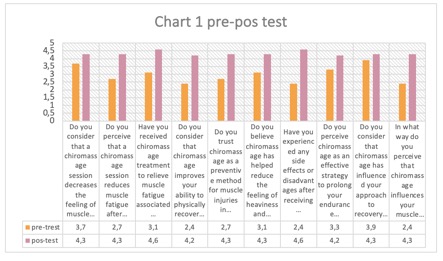
The survey results show a significant improvement in all evaluated items after the application of chiromassage as a recovery method in distance runners aged 18 to 35. The average for item one increased from 3.70 in the pretest to 4.30 in the posttest, indicating a positive trend in the perception of muscle fatigue after treatment. Similarly, item three went from 3.10 to 4.60, showing a considerable reduction in perceived muscle fatigue. In addition to these improvements, the results also reveal consistency in the posttest responses with maximum values close to 5 in several items, suggesting that chiromassage could be effective in mitigating muscle fatigue and improving recovery in runners.
Table 2. Normality test
|
Normality Tests |
||||||
|
|
Kolmogorov-Smirnov1 |
Shapiro-Wilk |
||||
|
Statistic |
df |
Sig. |
Statistic |
df |
Sig. |
|
|
Item1_pretest |
,309 |
20 |
<,001 |
,762 |
20 |
<,001 |
|
Item1_postest |
,438 |
20 |
<,001 |
,580 |
20 |
<,001 |
|
Item2_pretest |
,241 |
20 |
,004 |
,786 |
20 |
<,001 |
|
Item2_postest |
,438 |
20 |
<,001 |
,580 |
20 |
<,001 |
|
Item3_pretest |
,300 |
20 |
<,001 |
,789 |
20 |
<,001 |
|
Item3_postest |
,387 |
20 |
<,001 |
,626 |
20 |
<,001 |
|
Item4_pretest |
,337 |
20 |
<,001 |
,740 |
20 |
<,001 |
|
Item4_postest |
,327 |
20 |
<,001 |
,771 |
20 |
<,001 |
|
Item5_pretest |
,241 |
20 |
,004 |
,786 |
20 |
<,001 |
|
Item5_postest |
,438 |
20 |
<,001 |
,580 |
20 |
<,001 |
|
Item6_pretest |
,300 |
20 |
<,001 |
,789 |
20 |
<,001 |
|
Item6_postest |
,438 |
20 |
<,001 |
,580 |
20 |
<,001 |
|
Item7_pretest |
,368 |
20 |
<,001 |
,700 |
20 |
<,001 |
|
Item7_postest |
,387 |
20 |
<,001 |
,626 |
20 |
<,001 |
|
Item8_pretest |
,232 |
20 |
,006 |
,890 |
20 |
,026 |
|
Item8_postest |
,327 |
20 |
<,001 |
,771 |
20 |
<,001 |
|
Item9_pretest |
,255 |
20 |
,001 |
,787 |
20 |
<,001 |
|
Item9_postest |
,438 |
20 |
<,001 |
,580 |
20 |
<,001 |
|
Item10_pretest |
,368 |
20 |
<,001 |
,700 |
20 |
<,001 |
|
Item10_postest |
,438 |
20 |
<,001 |
,580 |
20 |
<,001 |
|
a. Lilliefors Significance Correction |
||||||
Source: Spss version 30.0.
The results of the normality tests according to the Shapiro-Wilk test indicate that most of the data obtained in the evaluated items, both in the pretest and posttest, do not follow a normal distribution (p < 0.05 in all tests). This implies that the samples do not meet the assumption of statistical normality, which is relevant for the interpretation of the results. Despite this limitation, the pre-experimental design shows significant improvements in the perception of muscle fatigue after treatment, evidenced in the observed averages and standard deviations.
Table 3. Wilcoxon signed-rank test of the survey
|
Ranges |
||||
|
|
N |
Mean Rank |
Sum of Ranks |
|
|
Item1_postest - Item1_pretest |
Negative Ranks |
2a |
8,50 |
17,00 |
|
Positive Ranks |
14b |
8,50 |
119,00 |
|
|
Ties |
4c |
|
|
|
|
Total |
20 |
|
|
|
|
Item2_postest - Item2_pretest |
Negative Ranks |
0d |
,00 |
,00 |
|
Positive Ranks |
12e |
6,50 |
78,00 |
|
|
Ties |
8f |
|
|
|
|
Total |
20 |
|
|
|
|
Item3_postest - Item3_pretest |
Negative Ranks |
0g |
,00 |
,00 |
|
Positive Ranks |
16h |
8,50 |
136,00 |
|
|
Ties |
4i |
|
|
|
|
Total |
20 |
|
|
|
|
Item4_postest - Item4_pretest |
Negative Ranks |
0j |
,00 |
,00 |
|
Positive Ranks |
18k |
9,50 |
171,00 |
|
|
Ties |
2l |
|
|
|
|
Total |
20 |
|
|
|
|
Item5_postest - Item5_pretest |
Negative Ranks |
0m |
,00 |
,00 |
|
Positive Ranks |
12n |
6,50 |
78,00 |
|
|
Ties |
8o |
|
|
|
|
Total |
20 |
|
|
|
|
Item6_postest - Item6_pretest |
Negative Ranks |
0p |
,00 |
,00 |
|
Positive Ranks |
12q |
6,50 |
78,00 |
|
|
Ties |
8r |
|
|
|
|
Total |
20 |
|
|
|
|
Item7_postest - Item7_pretest |
Negative Ranks |
0s |
,00 |
,00 |
|
Positive Ranks |
20t |
10,50 |
210,00 |
|
|
Ties |
0u |
|
|
|
|
Total |
20 |
|
|
|
|
Item8_postest - Item8_pretest |
Negative Ranks |
4v |
5,50 |
22,00 |
|
Positive Ranks |
12w |
9,50 |
114,00 |
|
|
Ties |
4x |
|
|
|
|
Total |
20 |
|
|
|
|
Item9_postest - Item9_pretest |
Negative Ranks |
4y |
4,50 |
18,00 |
|
Positive Ranks |
8z |
7,50 |
60,00 |
|
|
Ties |
8aa |
|
|
|
|
Total |
20 |
|
|
|
|
Item10_postest - Item10_pretest |
Negative Ranks |
0ab |
,00 |
,00 |
|
Positive Ranks |
20ac |
10,50 |
210,00 |
|
|
Ties |
0ad |
|
|
|
|
Total |
20 |
|
|
|
Source: Spss version 30.0.
Table 4. Test statistic
|
Test Statistica |
||||||||||
|
|
Item1_postest - Item1_pretest |
Item2_postest - Item2_pretest |
Item3_postest - Item3_pretest |
Item4_postest - Item4_pretest |
Item5_postest - Item5_pretest |
Item6_postest - Item6_pretest |
Item7_postest - Item7_pretest |
Item8_postest - Item8_pretest |
Item9_postest - Item9_pretest |
Item10_postest - Item10_pretest |
|
Z |
-3,000b |
-3,086b |
-3,589b |
-3,767b |
-3,086b |
-3,095b |
-3,985b |
-2,452b |
-1,710b |
-3,994b |
|
Asymp. Sig. (2-tailed) |
,003 |
,002 |
<,001 |
<,001 |
,002 |
,002 |
<,001 |
,014 |
,087 |
<,001 |
a. Wilcoxon Signed Ranks Test.
b. Based on negative ranks.
The results of the rank analysis and the Wilcoxon test reveal significant differences between the pretest and posttest scores in most of the evaluated items. Item three shows a significant positive mean rank of 8.50 and a total sum of ranks of 136.00, with a Z test of -3.589 and a significance level less than 0.001, indicating a notable improvement in the perception of muscle fatigue after chiromassage. Similarly, [likely referring to Item7 or Item10] exhibits a significant difference with a positive mean rank of 10.50 and a total sum of ranks of 210.00, supported by a Z value of -3.985 and a significance level also less than 0.001.
Table 5. Results of the Hamilton Anxiety Scale test
|
Descriptive Statistics |
|||||
|
|
N |
Minimum |
Maximum |
Mean |
Std. Desviation |
|
indicator1_pretest |
20 |
1 |
4 |
2,80 |
1,005 |
|
indicator2_pretest |
20 |
1 |
4 |
2,20 |
,894 |
|
indicator3_pretest |
20 |
3 |
4 |
3,50 |
,513 |
|
indicator4_pretest |
20 |
1 |
3 |
1,90 |
,852 |
|
indicator5_pretest |
20 |
1 |
5 |
3,05 |
1,468 |
|
indicator1_postest |
20 |
0 |
1 |
,50 |
,513 |
|
indicator2_postest |
20 |
0 |
1 |
,30 |
,470 |
|
indicator3_postest |
20 |
2 |
3 |
2,55 |
,510 |
|
indicator4_postest |
20 |
5 |
6 |
5,55 |
,510 |
|
indicator5_postest |
20 |
5 |
10 |
8,05 |
1,468 |
|
Valid N (listwise) |
20 |
|
|
|
|
Source: Spss version 30.0.
Chart 2. Results of the Hamilton Anxiety Scale Test
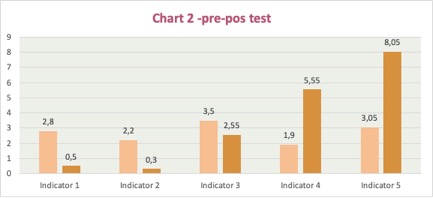
The analyses of the test results suggest an overall improvement in the participants' performance, especially in indicators four and five. However, a stagnation or slight setback is observed in indicator three. The greater variability in the post-test, especially in four and five, could be related to different factors, such as the complexity of the indicators or the diversity of strategies used by the participants.
Table 6. Normality test
|
Normality test |
||||||
|
|
Kolmogorov-Smirnova |
Shapiro-Wilk |
||||
|
Statistic |
df |
Sig. |
Statistic |
df |
Sig. |
|
|
item1_pretest |
,187 |
20 |
,065 |
,871 |
20 |
,012 |
|
item1_postest |
,335 |
20 |
<,001 |
,641 |
20 |
<,001 |
|
item2_pretest |
,214 |
20 |
,017 |
,869 |
20 |
,011 |
|
item2_postest |
,438 |
20 |
<,001 |
,580 |
20 |
<,001 |
|
item3_pretest |
,335 |
20 |
<,001 |
,641 |
20 |
<,001 |
|
item3_postest |
,361 |
20 |
<,001 |
,637 |
20 |
<,001 |
|
item4_pretest |
,255 |
20 |
,001 |
,787 |
20 |
<,001 |
|
item4_postest |
,361 |
20 |
<,001 |
,637 |
20 |
<,001 |
|
item5_pretest |
,191 |
20 |
,054 |
,888 |
20 |
,024 |
|
item5_postest |
,241 |
20 |
,003 |
,908 |
20 |
,060 |
|
a. Lilliefors Significance Correction |
||||||
Source: Spss version 30.0.
The results of the Shapiro-Wilk normality tests show that most of the items do not follow a normal distribution (p < 0.05 in all tests), this means that the scores both in the pretest and posttest for the evaluated items do not conform to an expected normal distribution in a random sample. Indicator one presents a significant p value in both tests, indicating that the data are not normal both in the pretest and posttest. Similarly, indicator five shows a significant difference between the distributions of the pretest and posttest data, with p values suggesting non-normality in both cases.
Tabla 7. Wilcoxon signed-rank test
|
Ranges |
||||
|
|
N |
Mean Rank |
Sum of Ranks |
|
|
item1_postest - item1_pretest |
Negative Ranks |
20a |
10,50 |
210,00 |
|
Positive Ranks |
0b |
,00 |
,00 |
|
|
Ties |
0c |
|
|
|
|
Total |
20 |
|
|
|
|
item2_postest - item2_pretest |
Negative Ranks |
18d |
9,50 |
171,00 |
|
Positive Ranks |
0e |
,00 |
,00 |
|
|
Ties |
2f |
|
|
|
|
Total |
20 |
|
|
|
|
item3_postest - item3_pretest |
Negative Ranks |
15g |
8,00 |
120,00 |
|
Positive Ranks |
0h |
,00 |
,00 |
|
|
Ties |
5i |
|
|
|
|
Total |
20 |
|
|
|
|
item4_postest - item4_pretest |
Negative Ranks |
0j |
,00 |
,00 |
|
Positive Ranks |
20k |
10,50 |
210,00 |
|
|
Ties |
0l |
|
|
|
|
Total |
20 |
|
|
|
|
item5_postest - item5_pretest |
Negative Ranks |
0m |
,00 |
,00 |
|
Positive Ranks |
20n |
10,50 |
210,00 |
|
|
Ties |
0o |
|
|
|
|
Total |
20 |
|
|
|
Source: Spss version 30.0.
Tabla 8. Test statistic
|
Test statistica |
|||||
|
|
item1_postest - item1_pretest |
item2_postest - item2_pretest |
item3_postest - item3_pretest |
item4_postest - item4_pretest |
item5_postest - item5_pretest |
|
Z |
-3,955b |
-3,774b |
-3,578b |
-4,025c |
-3,931c |
|
Sig. asin. (bilateral) |
<,001 |
<,001 |
<,001 |
<,001 |
<,001 |
|
a. Wilcoxon Signed Ranks Test. |
|||||
|
b. Based on positive ranks. |
|||||
|
c. Bases on negative ranks. |
|||||
Source: Spss version 30.0.
The results obtained from the analysis using the Wilcoxon test indicate statistically significant differences between the scores obtained in the pretest and posttest of all evaluated indicators, underlining the efficacy of sports massage in mitigating muscle fatigue in distance runners aged 18 to 35. In indicator 4, a positive mean rank of 10.50 and a total sum of ranks of 210.00 were observed, with a Z test of -4.025 and a significance level lower than 0.001. These results reflect a substantial improvement in the posttest scores, which evidences the positive impact of sports massage on the evaluated variable.
Discussion
The results of this study show significant improvements in how endurance runners, between 18 and 35 years old, perceive their recovery and the reduction of muscle fatigue after receiving sports massage. The positive trend observed in the survey items, along with the statistically significant differences detected through the Wilcoxon signed-rank test, reinforce the effectiveness of massage as a post-exercise recovery strategy. These findings coincide with previous research that recognizes sports massage as a valuable intervention to decrease the perception of fatigue and promote the overall well-being of athletes (Dakić et al., 2023; Davis et al., 2020).
In this study, the most notable improvements were recorded in the perception of reduced muscle fatigue and increased overall well-being, which are key aspects in endurance disciplines where physical and psychological load is frequent. Previous research has also reported immediate benefits after the application of sports massage. Buoite et al. (2025) found that massage helps improve strength, balance, and neuromuscular performance after intense activities, even in adverse conditions such as cold. These results reinforce the applicability of massage in real training and competition situations.
However, the literature also points out some limitations regarding the effect of massage on direct physical performance. In a randomized clinical trial, Bender et al. (2019) found that massage slightly reduced pain intensity after running, but did not generate significant changes in performance, fatigue, or mood. Similarly, Srivongtong et al. (2020) suggested that massage might help improve the subjective feeling of recovery, although its physiological effects on performance are not always consistent. In this context, the results of the current research confirm that the main impact of massage is reflected in the perception of recovery and the decrease in fatigue, rather than in direct performance variables.
Furthermore, recent studies indicate that the effectiveness of sports massage may increase when combined with other recovery strategies. Trybulski et al. (2025), in a trial with mixed martial arts athletes, demonstrated that massage, when combined with blood flow restriction and cryotherapy, notably accelerated muscle recovery. These findings are consistent with the results of Li et al. (2024), who, in a review on recovery strategies in endurance athletes, concluded that multimodal approaches are usually more effective than isolated interventions. This suggests that the effectiveness observed in endurance runners could be improved by integrating massage with other recovery practices, whether active or passive.
An important aspect to consider is the psychological component of sports massage. In our study, the improvements that athletes noticed were not only related to the decrease in muscle fatigue but also to their emotional well-being (Junior and Díaz, 2019). This aligns with what Satria et al. (2023) found, who pointed out that massage, along with active recovery, helped to improve mental recovery and reduce the feeling of exhaustion in combat athletes. This discovery is especially relevant in endurance sports, where psychological factors such as anxiety and motivation play a crucial role in long-term performance. The results of this research, which showed posttest values very close to the maximum of the used scale, confirm that athletes see massage as an effective, consistent, and reliable strategy for their recovery. These findings are also supported by the systematic review and meta-analysis by Davis et al. (2020), who concluded that, although the effects of massage on performance are limited, its benefits in perceived recovery, pain reduction, and overall well-being make it a valuable complementary tool in training programs.
The evidence presented, compared with the international literature, suggests that sports massage is especially effective for: (a) improving the perception of recovery and reducing muscle fatigue; (b) contributing to the psychological well-being of athletes; and (c) functioning as a complement in multimodal recovery programs (Tábares et al., 2024). However, it is fundamental to recognize that the direct effects on objective performance parameters, such as speed or power, still generate controversial results in the literature, which highlights the need to conduct studies with more robust experimental designs and better control of external variables.
Conclusions
Sports massage has established itself as an essential practice among high-performance athletes, due to its multiple proven benefits, such as improving blood circulation, reducing muscle tension, and increasing flexibility. Furthermore, it has been evidenced that sports massage significantly accelerates recovery after intense training or demanding competitions, allowing athletes to return to their optimal performance level more quickly. Nevertheless, despite the clearly observed benefits, questions persist about the precise physiological and psychological effects of sports massage. Therefore, additional research is required to deepen the understanding of how this technique influences recovery and athletic performance both in distance runners and in other sports areas.
In the present study, the results of the applied survey evidenced a significant improvement in all evaluated items after the implementation of sports massage as a recovery method in distance runners between 18 and 35 years old. The normality analyses performed using the Shapiro-Wilk test indicated that most of the data, both in the pretest and posttest, do not follow a normal distribution (p < 0.05 in all tests), which is a crucial aspect to consider in the statistical interpretation of the obtained results.
The rank analysis and the application of the non-parametric Wilcoxon test revealed significant differences between the pretest and posttest scores in most of the evaluated items. These findings suggest an overall improvement in the performance and perception of recovery of the participants, standing out especially in indicators four and five. The Wilcoxon test confirmed statistically significant differences in all analyzed indicators, consolidating the efficacy of sports massage in the muscle recovery of distance runners.
In summary, the results of this research reinforce the importance of sports massage as an effective intervention to improve muscle recovery and athletic performance. The statistical evidence obtained supports its inclusion as a fundamental strategy in the training and recovery programs of endurance athletes. However, the need to continue exploring through additional studies the specific mechanisms by which sports massage contributes to these benefits is highlighted, in order to optimize its application and maximize its positive effects in various sports contexts.
Bibliographic References
Bender, P., Medeiros, C., Feldkircher, J. & Nunes, G. (2019). Massage therapy slightly decreased pain intensity after habitual running, but had no effect on fatigue, mood or physical performance: a randomised trial. Journal of Physiotherapy, 65 (2), 75-80. https://doi.org/10.1016/j.jphys.2019.02.006
Buoite Stella, A., Ruzza, F.R., Callovini, A. et al. (2025). Immediate effects of sports massage on muscle strength, power and balance after simulated trail running in the cold. Sport Sci. Health, 21, 1107–1117. https://doi.org/10.1007/s11332-025-01348-3
Dakić, M., Toskić, L., Ilić, V., Đurić, S., Dopsaj, M., & Šimenko, J. (2023). The Effects of Massage Therapy on Sport and Exercise Performance: A Systematic Review. Sports, 11(6), 110. https://doi.org/10.3390/sports11060110
Davis, H. L., Alabed, S., & Chico, T. J. A. (2020). Effect of sports massage on performance and recovery: a systematic review and meta-analysis. BMJ open sport & exercise medicine, 6(1). https://doi.org/10.1136/bmjsem-2019-000614
Ferrándiz, S. (2018). Quiromasaje; técnica y sensibilidad. España: Bigsa. https://www.divina.edu.pe/sisbibliopubli/controllers/archivopublicacion/1585717038.pdf
García Quirós, D. A., Cyrus Barker, E. y Roselló-Araya, M. (2021). Beneficios del abordaje fisioterapéutico en la recuperación del dolor muscular de aparición tardía y su influencia en el rendimiento deportivo. Revista Terapéutica, 15(1), 36–53. https://doi.org/10.33967/rt.v15i1.122
Gaviria Marulanda, A., Zapata Segura, L. M., Echeverry Mosquera, E., Vásquez Vallejo, M. A., Alegría Riascos, I. T. y Ríos Ararat, D. C. (2020). Revisión de las técnicas de recuperación post entrenamiento más usadas para disminuir la incidencia de fatiga crónica en futbolistas. Revista Veritas ET Scientia - UPT, 9(2), 253–262. https://doi.org/10.47796/ves.v9i2.400
González, L. R. (2019). Masaje deportivo, una opción en la preparación del futbolista élite. PODIUM - Revista de Ciencia y Tecnología en la Cultura Física, 14(2), 222-232. https://podium.upr.edu.cu/index.php/podium/article/view/814
Guíu Carrera, M. y Leyton Román, M. (2019). Perfil psicológico en corredores de ultramaratón (Psychological profile in ultramarathon runners). Retos, 36, 310–317. https://doi.org/10.47197/retos.v36i36.69119
Junior y Dias, J. C. (2019). Acupuntura en la prevención, tratamiento de lesiones y mejora del rendimiento en los atletas. Revista Cientifica Multidisciplinar Nucleo del Conocimiento, 58-98. https://www.nucleodoconhecimento.com.br/salud/acupuntura-en-la-prevencion
Li, S., Kempe, M., Brink, M. et al. (2024). Effectiveness of Recovery Strategies After Training and Competition in Endurance Athletes: An Umbrella Review. Sports Med – Open, 10 (55). https://doi.org/10.1186/s40798-024-00724-6
Mantilla, A. y Ivan, J. (2022). Readaptación deportiva, de la lesión al rendimiento: factores clave en la escalera al éxito. KRONOS La revista cientifica de actividad fisica y el deporte, 8(6)1-8. https://g-se.com/readaptacion-deportiva-de-la-lesion-al-rendimiento-factores-clave-en-la-escalera-al-exito-2953-sa-G62d74fc3dd6ba
Mejía, E. A. (2020). Fisioterapia y Rehabilitación. Editorial Universidad Santiago de Cali, 8(5).
Mendoza, W. I. y Ríos, J. L. (2024). Efectos fisiológicos y neurofisiológicos del masaje deportivo en el rendimiento de los atletas. Ciencia y Educacion Revista Cientifica, 5(1) 42-52. https://doi.org/10.5281/zenodo.10578623
Prianto, B. A., Apriantono, T. ., Ray, H. R. D. y Solikah, N. L. (2024). Análisis de las características de las lesiones en deportistas juveniles de fútbol de élite en Indonesia (Analysis of injury characteristics in youth elite football athletes in Indonesia). Retos, 55, 476–482. https://doi.org/10.47197/retos.v55.103485
Rosado, E. y Vera, M. (2019). El masaje deportivo y su incidencia en el entrenamiento y competencia en el futbolista juvenil de la seleccion masculina del guayas (tesis de grado). Universidad de Guayaquil. http://repositorio.ug.edu.ec/handle/redug/44827
Satria, R., Intan, N. & Satia, A. (2023). The effect of sports massage and active recovery on fatigue parameters among karate athletes. International Journal of multidisciplinary research and analysis, 6 (7), 3057-3063. https://doi.org/10.47191/ijmra/v6-i7-28
Sriwongtong, M., Goldman, J., Kobayashi, Y., Gottschalk, A. (2020). Does Massage Help Athletes After Exercise? Ochsner Journal Jun, 20 (2) 121-122. https://doi.org/10.31486/toj.20.0008
Tábares Ramírez, C. A., Salazar Patiño, J. P., & Velandia Restrepo, P. A. (2024). Saberes y percepciones frente al masaje deportivo de equipos representativos de deportes de conjunto profesional del departamento del Quindío (Colombia) (Knowledge and Perceptions of professional team athletes in Quindío (Colombia) regarding sports massage). Retos, 57, 330–339. https://doi.org/10.47197/retos.v57.101462
Trybulski, R., Roczniok, R., Olaniszyn, G., Svyshch, Y., Vovkanych, A., & Wilk, M. (2025). Sports Massage and Blood Flow Restriction Combined with Cold Therapy Accelerate Muscle Recovery After Fatigue in Mixed Martial Arts Athletes: A Randomized Controlled Trial. Journal of Functional Morphology and Kinesiology, 10(2), 194. https://doi.org/10.3390/jfmk10020194
Urio, P. U., Medeiros, C. M., Feldkircher, J. M., & Nunes, G. S. (2019). La terapia de masaje disminuyó levemente la intensidad del dolor después de correr habitualmente, pero no tuvo ningún efecto sobre la fatiga, el estado de ánimo o el rendimiento físico: un ensayo aleatorio. Journal of Physiotherapy, 65(2), 75-80. https://doi.org/10.1016/j.jphys.2019.02.006
Vázquez, G. (2014). Masaje de descarga; la asignatura pendiente del corredor popular. Madrid: Planeta Running.
Yao, W. (2022). Impacts of core training on athletes’ performance in long-distance running. Revista Brasileña de Medicina Deportiva, 4(1). http://dx.doi.org/10.1590/1517-8692202329012022_0374
Conflict of interests
The author declares no conflict of interest.
Author contributions
Author 1: conceptualization, research, project administration, writing, review, validation and editing.
How to cite this article:
Abreu, S. (2026). Sports massage as a recovery method for Mexican distance runners aged 18 to 35. Sport Science, Training and Research (STAR), 1(1), 49-61.