1Victor Braulio Benitez Quinche
University of Guayaquil
https://orcid.org/0000-0001-8448-7124
Ecuador, Guayaquil
2Wendy Isabel Montoya Arellano
University of Guayaquil
https://orcid.org/0009-0003-6535-0896
Ecuador, Guayaquil
3Ricardo Giuseppe Vera Unda
University of Guayaquil
https://orcid.org/0009-0007-2907-8388
Ecuador, Guayaquil
4Kerly Nichole Manosalvas Lemus
University of Guayaquil
https://orcid.org/0009-0004-7952-9050
Ecuador, Guayaquil
1Bachelor of Pedagogy in Physical Activity and Sport. Master of Pedagogy in Physical Culture, with a specialization in Inclusive Physical Education. Professor at the Faculty of Physical Activity Sciences, University of Guayaquil.
2Bachelor of Pedagogy in Physical Activity and Sport. Master of Pedagogy of Physical Culture, with a specialization in Inclusive Physical Education. Faculty member at the Faculty of Physical Activity Sciences. Academic staff manager for the sports training program, University of Guayaquil.
3Bachelor of Pedagogy in Physical Activity and Sport. University Master’s Degree in Sports Training and Nutrition. Faculty member at the Faculty of Physical Activity Sciences. Pre-professional internship manager for the Physical Activity and Sports Pedagogy program at the University of Guayaquil.
4Master’s student in Physical Culture Pedagogy, with a specialization in Soccer Coaching. Master in Hospital Management. Professor at the Faculty of Physical Activity Sciences. Research Manager for the Physical Activity and Sports Pedagogy program, University of Guayaquil.
Date of receipt: 01-12-2025
Date of acceptance: 04-01-2026
Publication date: 14-01-2026

The works published in STAR are licensed under CC BY-NC-ND 4.0
Abstract
Introduction: Sports participation in childhood and adolescence is a factor in health and holistic development. However, the scientific evidence is scattered across physical, cognitive, emotional, and social dimensions, preventing a holistic view of its impact and hindering evidence-based decision-making in the educational, health, and social fields.
Objective: To systematically analyze recent scientific evidence on the impact of sports activities on the holistic development of children and adolescents.
Methodology: A systematic review was conducted following the PRISMA 2020 guidelines, using the Scopus and Web of Science databases, from which 15 studies of high methodological quality were selected, including longitudinal and experimental designs, systematic reviews, and meta-analyses. The risk of bias was rated as low overall, with high methodological consistency.
Results: The data show that sports participation is associated with improvements in physical fitness, motor development, psychological well-being, social skills, and cognitive performance. Furthermore, different impacts were found depending on the type of sport, intensity, and socioeconomic context, which is of particular interest in vulnerable populations.
Discussion: Sport is a context for holistic development; although known risks exist, they are outweighed by the benefits when practice is planned and supervised.
Conclusions: Sport is a safe and effective tool for the holistic development of children and adolescents, with implications for public policies, educational programs, and health promotion strategies.
Keywords: Physical activity; sports; child development; adolescent health; mental health.
Resumen
Introducción: La práctica deportiva en la infancia y adolescencia es un factor de salud y desarrollo integral. Pero la evidencia científica está dispersa entre dimensiones físicas, cognitivas, emocionales y sociales, impidiendo una visión holística de su impacto y dificultando la toma de decisiones basada en evidencia en los campos educativo, sanitario y social.
Objetivo: Analizar de manera sistemática la evidencia científica reciente sobre el impacto de las actividades deportivas en el desarrollo integral de niños y adolescentes.
Metodología: Se realizó una revisión sistemática siguiendo la guía PRISMA 2020, en las bases de datos Scopus y Web of Science, de donde se eligieron 15 estudios de alta calidad metodológica, entre diseños longitudinales, experimentales, revisiones sistemáticas y metaanálisis. El riesgo de sesgo se calificó como bajo en general y con alta consistencia metodológica.
Resultados: Los datos muestran que la participación deportiva se relaciona con mejoras en la condición física, el desarrollo motor, el bienestar psicológico, las habilidades sociales y el rendimiento cognitivo. Además, se encontraron impactos distintos según el tipo de deporte, la intensidad y el contexto socioeconómico, siendo de interés en poblaciones vulnerables.
Discusión: El deporte es un contexto de desarrollo integral, si bien existen riesgos conocidos, estos se ven superados por los beneficios cuando la práctica es planificada y supervisada.
Conclusiones: El deporte es una herramienta segura y efectiva para el desarrollo integral de niños, niñas y adolescentes, con implicaciones para las políticas públicas, los programas educativos y las estrategias de promoción de la salud.
Palabras clave: Actividad Física; deportes; desarrollo infantil; salud del adolescente; salud mental.
Introduction
In recent decades, the promotion of active lifestyles in childhood and adolescence has become a priority on global public health, education, and social development agendas. This interest is justified by the fact that habits learned in the early stages of life tend to persist into adulthood, shaping future physical, mental, and social health. In this framework, sport is positioned as one of the main strategies for promoting the holistic development of children and adolescents, combining physical, cognitive, emotional, and social aspects within a single learning and socialization context (Côté et al., 2022).
From a conceptual standpoint, children’s and youth sports should not be viewed solely as a tool for physical improvement, but rather as a context with educational and psychosocial potential. The theoretical model proposed by Côté et al. (2022) posits that sports participation supports personal and social development, fostering skills such as cooperation, emotional self-regulation, decision-making, and a sense of belonging. These skills are fundamental to the well-being and social adaptation of children and adolescents in increasingly complex educational and community settings.
The most recent scientific evidence supports this comprehensive view of sport. A global meta-analysis by Bengtsson et al. (2025) shows that participation in youth sports is consistently associated with better physical health, mental health, and well-being outcomes. These results support the notion that sport is a multifactorial intervention that can impact multiple determinants of health. In the same vein, Vakrilova et al. (2023) note that regular sports participation among adolescents is associated with improvements in both physical indicators and psychological variables, including reduced stress and improved mood.
In social and behavioral development, the literature indicates that sports promote the acquisition of prosocial behaviors and social skills. Li and Shao’s (2022) systematic review finds that sports support behaviors such as cooperation, empathy, respect for rules, and positive conflict resolution. These findings have particularly significant implications for school-age children, for whom peer interaction is a fundamental factor in socioemotional development. Furthermore, sports and recreational programs targeting vulnerable populations have been shown to have positive impacts on psychological well-being and social inclusion, demonstrating the potential of sport as a tool for inclusion (Spaić et al., 2025).
From a cognitive perspective, recent studies have begun to examine the association between sports participation and the development of higher cognitive functions. Studies using population-based data and longitudinal designs suggest that physical activity is associated with improvements in executive functions, attention, and academic performance (Tan et al., 2025). Specifically, open sports, which require perceptual skills and decision-making in changing situations, could provide additional cognitive benefits by involving continuous processes of anticipation and adjustment. Furthermore, Ma and Liu (2024) note that time spent playing sports during adolescence is associated with developed cognitive skills, from a time-economy perspective.
With regard to physical and motor development, the evidence is equally robust. The reviews and meta-analyses by Sun et al. (2024) and Sun and Chen (2024) show that sports interventions support compliance with national standards for physical health and basic motor skills in children and adolescents. These results are alarming in a world where sedentary behavior is on the rise and physical activity levels among children are steadily declining. At the population level, the big data study by Wen et al. (2023) confirms this evidence, demonstrating that sports participation is associated with better physical fitness indicators and overall health in large samples of children and adolescents.
However, sports participation does not occur in a social vacuum; rather, it depends on contextual and structural factors. Several authors have highlighted the impact of the family environment, socioeconomic status, and access to resources on youth sports participation. Yang et al. (2025) demonstrate that family socioeconomic status influences adolescents’ mental and physical health thru parental involvement in sports. Additionally, Weimar and Breuer (2022) identify sociocultural and motivational factors as determinants of sports participation, since children’s and adolescents’ choices are influenced by the social environment and by cultural and media stimuli.
Despite the large body of literature, studies examining the effect of sport on children and adolescents are highly heterogeneous in terms of designs, populations, type of sport, and variables studied. Although there are systematic reviews and meta-analyses addressing specific dimensionsphysical health, prosocial behavior, and cognitive performance knowledge remains fragmented, preventing a holistic understanding of the phenomenon. In this regard, it is necessary to synthesize the existing evidence into an integrative framework that jointly examines the impact of sport on development in childhood and adolescence.
From this perspective, conducting a systematic review that critically and systematically integrates the most recent scientific evidence on the effect of sports activities on the holistic development of children and adolescents is justified. This review will not only make it possible to recognize repetitive patterns in the results, but also to identify gaps, methodological limitations, and future lines of research. Furthermore, the results can provide evidence for decision-making in the educational, health, and sports fields, helping to develop science-informed policies and programs.
In line with the above, this systematic review asks: What effects do sports activities have on the holistic development physical, cognitive, social, emotional, and behavioralof children and adolescents, according to the most recent scientific evidence? Therefore, the purpose of this study is to systematically review and synthesize the existing scientific evidence on the effect of sports activities on the holistic development of children and adolescents across their physical, cognitive, social, emotional, and behavioral dimensions, in order to provide a comprehensive and up-to-date perspective that informs research, professional practice, and policy in educational and health settings.
Method
The study was conducted using a systematic literature review design to systematically analyze the effect of sports activities on the holistic development of children and adolescents, following the PRISMA 2020 statement by Page et al. (2021) to ensure transparency, methodological consistency, reproducibility, and scientific validity. The use of this methodological framework structured all phases of the review, from the research question and the exhaustive evidence search to the selection, critical appraisal, synthesis, and interpretation of the included studies, ensuring that the findings accurately and reliably reflect the existing evidence on the effects of sport on physical, cognitive, social, emotional, and behavioral development in childhood and adolescence.
Data sources and search strategies
An exhaustive and systematic search of the scientific literature was conducted in high-impact, internationally recognized electronic databases in the field of physical activity, sport, and health. The chosen databases were Scopus and Web of Science because of their broad multidisciplinary scope, strict indexing criteria, and the high methodological quality of the journals they index. This strategy enabled the sensitive and reliable identification of relevant studies on the effect of sports participation on the holistic development of children and adolescents, ensuring the inclusion of up-to-date scientific evidence relevant to the purposes of the review.
Eligibility criteria
To ensure the methodological quality, thematic coherence, and scientific relevance of the reviewed evidence, precise eligibility criteria were defined and rigorously applied in the selection of studies. Empirical studies and systematic reviews published in peer-reviewed journals were included, measuring the effect of sports participation on the holistic development of children and adolescents in any physical, cognitive, social, emotional, or behavioral dimension. Studies had to be available in full text, published in recent years, and employ quantitative, qualitative, or mixed-methods designs with an appropriate description of the sample, interventions, and results.
Studies that did not directly manipulate sports practice as the primary variable, studies conducted exclusively on adult populations, non-peer-reviewed studies, theoretical documents without empirical evidence, conference proceedings, editorials, and abstracts, as well as studies with insufficient methodological information, were excluded. The application of these criteria ensured that the selected evidence was relevant, reliable, and consistent with the objectives of the review.
Procedure for selecting articles
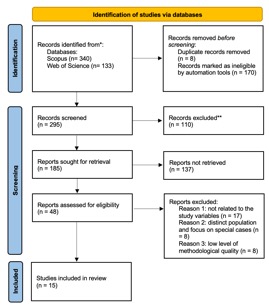
The study selection was carried out systematically, following the stages described in the PRISMA 2020 statement. In the identification phase, the search of the Scopus and Web of Science databases yielded 473 results (Scopus = 340; Web of Science = 133). Then, before the analysis, 8 duplicate records were removed and 170 records were excluded by automated tools as ineligible, leaving 295 records for the screening stage. At this stage, after reading the titles, 110 records were removed; the remaining 185 studies were screened based on abstracts and keywords, resulting in the exclusion of 137 records that did not meet the thematic criteria.
Then, 48 full-text articles were assessed for eligibility, and 33 were excluded for the following reasons: not directly related to the variables of interest (n = 17), different population or rare cases (n = 8), and low methodological quality (n = 8). Finally, 15 studies met all inclusion criteria and were included in the qualitative synthesis of the review. The entire selection process was carried out by two independent reviewers, who independently screened each record; in the event of disagreement, a third reviewer intervened to reach consensus, minimize bias, and ensure the objectivity and rigor of the process.
Assessment of methodological quality
The methodological quality assessment of the included studies was conducted systematically and rigorously to ensure the robustness, consistency, and reliability of the synthesized evidence. For this purpose, a standardized methodological assessment database was used, developed with criteria recognized in systematic reviews in health sciences, physical activity, and education. These criteria were based on the MMAT (Mixed Methods Appraisal Tool) proposed by Hong et al. (2018), which allows for the integrated evaluation of studies with different methodological approaches (quantitative, qualitative, and mixed methods). The evaluation matrix covered criteria such as clarity of objectives, design appropriateness, methodological rigor, validity and reliability of instruments, quality of data analysis, coherence between results and conclusions, and the scientific relevance of each study.
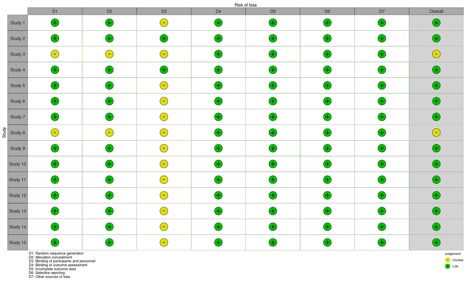
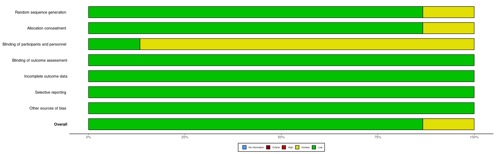
Additionally, to improve transparency and the interpretation of results, the risk of bias was assessed following current methodological recommendations for systematic reviews, using the criteria described by McGuinness and Higgins (2020). This methodology made it possible to identify potential selection, measurement, and reporting biases, and to visualize them graphically using standardized representation tools. The results of this process showed that most studies are of high methodological quality and at low risk of bias, which supports the internal and external validity of the conclusions of this systematic review.
Data extraction and analysis
Data extraction was carried out systematically and in a standardized manner using a pre-designed data extraction form to uniformly organize and compare the relevant information from each included study. For each article, the following variables were coded: author and year of publication, country where the study was conducted, methodological design, sample characteristics (size, age, and sex of participants), type of physical activity or sports intervention studied, and main results on physical, cognitive, social, emotional, or behavioral development.
The data were synthesized narratively due to the heterogeneity of the designs, populations, and variables measured in the included studies. This methodology made it possible to identify patterns, similarities, and differences in the results, and to group them according to the dimensions of holistic development they encompass. The collected information was critically analyzed to enrich the interpretation of the results and provide a comprehensive and organized overview of the existing evidence on the effect of physical activity on children and adolescents.
Resultados
Figure 1. PRISMA 2020 flow diagram
Source: Page et al. (2021).
Table 1. Methodological quality assessment of the included studies (MMAT)
|
Study |
C1 |
C2 |
C3 |
C4 |
C5 |
C6 |
C7 |
C8 |
C9 |
C10 |
Total score |
% methodological quality |
Category |
|
Bedard et al. (2020) |
1 |
1 |
1 |
1 |
1 |
1 |
1 |
0.5 |
1 |
1 |
9.5 |
95% |
High |
|
Pocius & Malinauskas (2025) |
1 |
1 |
1 |
1 |
1 |
1 |
1 |
1 |
1 |
1 |
10 |
100% |
High |
|
Kazakova (2025) |
1 |
0.5 |
0.5 |
0.5 |
1 |
0.5 |
1 |
0.5 |
0.5 |
1 |
7.5 |
75% |
Moderate |
|
Kirimoglu et al. (2016) |
1 |
1 |
1 |
1 |
1 |
1 |
1 |
0.5 |
1 |
1 |
9.5 |
95% |
High |
|
Spaić et al. (2025) |
1 |
1 |
1 |
0.5 |
1 |
1 |
1 |
0.5 |
1 |
1 |
9 |
90% |
High |
|
Shih et al. (2025) |
1 |
1 |
1 |
1 |
1 |
1 |
1 |
0.5 |
1 |
1 |
9.5 |
95% |
High |
|
Tan et al. (2025) |
1 |
1 |
1 |
1 |
1 |
1 |
1 |
0.5 |
1 |
1 |
9.5 |
95% |
High |
|
Ma & Liu (2024) |
1 |
1 |
0.5 |
0.5 |
1 |
0.5 |
1 |
0.5 |
0.5 |
1 |
7.5 |
75% |
Moderate |
|
Mao et al. (2024) |
1 |
1 |
1 |
1 |
1 |
1 |
1 |
1 |
1 |
1 |
10 |
100% |
High |
|
Sun et al. (2024) |
1 |
1 |
1 |
1 |
1 |
1 |
1 |
1 |
1 |
1 |
10 |
100% |
High |
|
Sun & Chen (2024) |
1 |
1 |
1 |
1 |
1 |
1 |
1 |
1 |
1 |
1 |
10 |
100% |
High |
|
Koch et al. (2020) |
1 |
1 |
1 |
1 |
1 |
1 |
1 |
0.5 |
1 |
1 |
9.5 |
95% |
High |
|
Lee et al. (2025) |
1 |
1 |
1 |
1 |
1 |
1 |
1 |
1 |
1 |
1 |
10 |
100% |
High |
|
Meng et al. (2025a) |
1 |
1 |
1 |
1 |
1 |
1 |
1 |
0.5 |
1 |
1 |
9.5 |
95% |
High |
|
Meng et al. (2025b) |
1 |
1 |
1 |
1 |
1 |
1 |
1 |
0.5 |
1 |
1 |
9.5 |
95% |
High |
|
Global average |
9.1 |
91% |
High |
Note 1:
· C1 = The research objectives or questions are clearly formulated and justify the study.
· C2= The study design (qualitative, quantitative, review, etc.) is appropriate for addressing the objective.
· C3= The methods, procedures, inclusion/exclusion criteria, and sampling are clearly described.
· C4= The data collection instruments or techniques are valid, reliable, and appropriate.
· C4 = The analysis (statistical, thematic, comparative, etc.) is consistent with the objectives and type of study.
· C6= Ethical aspects are mentioned (informed consent, institutional approval, confidentiality).
· C7 = The conclusions are derived from the results and address the stated objective.
· C8 = The study acknowledges its methodological limitations or potential biases.
· C9 = The methodological information allows for replication of the study or its full understanding.
· C10 = The study provides useful, up-to-date, and relevant evidence for the field of knowledge.
Note 2: Overall score: Yes = 1 point; Partial = 0.5 points; No / Not determined = 0 points
Note 3: Final calculation: Total score ÷ 10 × 100 = % methodological quality
Note 4: Categories: 80–100% = High quality; 60–79% = Moderate quality; <60% = Low quality
Source: Adapted from Hong et al. (2018). Mixed Methods Appraisal Tool (MMAT).
Figure 2. Visualization of the risk of bias in the included
Source: McGuinness & Higgins (2020).
Table 2. Main date collected in the analyzed studies
|
# |
Authors |
Year |
Country |
Study objective |
Design |
Sample |
Main findings |
|
1 |
Bedard, Hanna & Cairney |
2020 |
Canada |
To longitudinally analyze the relationship between sport participation and perceived social competence in adolescents. |
Prospective longitudinal study |
2,277 adolescents (12–18 years) |
Sustained participation in sports was associated with significant improvements in social competence, peer interaction, and positive social self-perception over time. |
|
2 |
Pocius & Malinauskas |
2025 |
Lithuania |
To evaluate the development of positive behavioral skills in adolescents participating in basketball sports schools. |
Quasi-experimental study |
302 adolescents (13–17 years) |
Participants showed significant improvements in self-control, cooperation, discipline, and prosocial behavior compared with non-sport groups. |
|
3 |
Kazakova |
2025 |
Russia |
To examine the impact of physical education and sport on the physical and social development of adolescents with musculoskeletal disorders. |
Descriptive-analytical study |
120 adolescents with musculoskeletal disabilities |
Relevant improvements were observed in social skills, self-esteem, functional mobility, and social participation following adapted sport programs. |
|
4 |
Kirimoglu et al. |
2016 |
Turkey |
To analyze the effects of a physical education and sport program on positive growth and coping strategies in adolescents with intellectual disabilities. |
Pre-experimental study |
48 adolescents with intellectual disabilities |
The program promoted emotional development, resilience, and adaptive coping strategies in stressful situations. |
|
5 |
Spaić et al. |
2025 |
Serbia |
To assess the impact of sport and recreational programs on the well-being of children and adolescents without parental care. |
Systematic review |
23 included studies |
Evidence showed consistent positive effects on psychological well-being, social integration, emotional regulation, and reduction of risk behaviors. |
|
6 |
Shih et al. |
2025 |
United States |
To analyze the cognitive benefits of open-skill sports in childhood. |
Longitudinal study (ABCD Study) |
9,304 children (9–11 years) |
Participation in open-skill sports was associated with better executive functions, attention, and cognitive flexibility. |
|
7 |
Tan, Yu & Goodwill |
2025 |
Australia |
To examine the relationship between sport participation and neurocognitive development in children. |
Longitudinal study |
4,191 children and adolescents |
Regular sport participation was related to greater development of working memory, processing speed, and cognitive control. |
|
8 |
Ma & Liu |
2024 |
China |
To analyze time investment in sport and its relationship with cognitive development from a time-economics perspective. |
Analytical cross-sectional study |
6,512 secondary school students |
Greater time invested in sport was associated with better cognitive skills, particularly reasoning and sustained attention. |
|
9 |
Mao et al. |
2024 |
China |
To evaluate the effects of football training on cognitive performance in children and adolescents. |
Systematic review and meta-analysis |
21 studies (n > 3,000) |
Football training showed moderate positive effects on executive functions, attention, and memory, especially in longer interventions. |
|
10 |
Sun et al. |
2024 |
China |
To analyze the impact of sport interventions on physical health indicators in adolescents. |
Meta-analysis |
28 studies |
Sport interventions significantly improved cardiorespiratory fitness, muscular strength, and body composition. |
|
11 |
Sun & Chen |
2024 |
China |
To examine the effects of sport games on the development of fundamental motor skills in children. |
Systematic review and meta-analysis |
19 studies |
Significant improvements were observed in locomotor skills, object control, and overall motor coordination. |
|
12 |
Koch et al. |
2020 |
Germany |
To analyze the relationship between incidental physical activity, exercise, sport, and mood in adolescents. |
Longitudinal study |
1,102 adolescents |
Organized sport showed a stronger association with improved mood and reduced negative affect. |
|
13 |
Lee et al. |
2025 |
Multinational |
To evaluate the impact of Olympic combat sports on the mental health of children and adolescents with disabilities. |
Systematic review |
12 controlled trials |
Adapted combat sports showed significant benefits in self-esteem, emotional regulation, and psychological well-being. |
|
14 |
Meng et al. |
2025 |
United States |
To analyze sex differences in concussion risk and neurobehavioral outcomes associated with sport participation. |
Longitudinal study (ABCD) |
11,875 adolescents |
Sex-related differences in mild traumatic brain injury risk were observed, without negating the cognitive and behavioral benefits of sport. |
|
15 |
Meng et al. |
2025 |
United States |
To examine differential effects of sport type on injury risk and cognitive benefits. |
Longitudinal study |
10,414 adolescents |
Non-contact sports showed lower brain injury risk and greater cognitive benefits, while contact sports also demonstrated positive developmental effects. |
Prepared by the authors..
Narrative synthesis
The reviewed studies agree that regular participation in sports is an agent of social, emotional, and behavioral development in childhood and adolescence. Evidence indicates that significant improvements in social competence, cooperation, emotional self-regulation, and prosocial behavior occur when sports activities are conducted in structured settings with pedagogical guidance. Longitudinal studies show that continued participation in sports promotes social integration, strengthens interpersonal relationships, and supports better psychosocial adjustment over time (Bedard et al., 2020; Pocius & Malinauskas, 2025). These impacts are significant in vulnerable populations, where sport represents a resource for inclusion and socio-emotional support (Kazakova, 2025; Kirimoglu et al., 2016).
From a cognitive and neuropsychological perspective, the findings show that physical exercise is associated with improvements in the most important executive functions, such as attention, inhibitory control, and working memory. Large-sample, longitudinal studies demonstrate that time spent participating in sports is associated with cognitive development in school-age children, even when controlling for contextual and educational factors (Shih et al., 2025; Ma & Liu, 2024). Furthermore, reviews and meta-analyses indicate that structured sports, such as soccer and other team sports, have a positive impact on cognitive performance, suggesting that the motor complexity and decision-making involved in these sports activate relevant neurocognitive processes (Mao et al., 2024; Tan et al., 2025).
In the physical and health field, it has been demonstrated that sports practice develops basic motor skills and improves overall physical fitness. The included studies report benefits in strength, endurance, coordination, and motor control, as well as a higher likelihood of meeting national physical health criteria among schoolchildren (Sun et al., 2024; Sun & Chen, 2024). Additionally, there is a consistent association between regular exercise and improved mood, which supports the interdependence of physical and mental health in childhood and adolescence (Koch et al., 2020).
Finally, studies that analyze risks, sports modalities, and specific populations give us a complete picture. While there are risks associated with sports participation (musculoskeletal injuries, minor trauma), evidence shows that they can be minimized thru appropriate prevention and supervision programs. Recent studies show that the benefits of sports far outweigh the risks, taking into account factors such as the type, intensity, and context in which they are practiced, with differences between sexes and sports (Meng et al., 2025; Lee et al., 2025). In summary, the results support sport as an effective and safe tool for the holistic development of children and adolescents.
Discussion
The results of this systematic review consistently support the notion that sports participation positively influences the holistic development of children and adolescents in physical, cognitive, emotional, social, and behavioral domains. These empirical data align with the main theoretical models of development thru sport, which consider sports practice as a rich context for learning life skills beyond physical performance (Côté et al., 2022). In line with this, evidence from longitudinal studies and empirical interventions included reinforces the idea that sport is a rich context for socioemotional learning, behavioral self-regulation, and identity construction during sensitive developmental periods (Bedard et al., 2020; Pocius & Malinauskas, 2025).
From a holistic health perspective, the findings align with the evidence synthesized in recent meta-analyses showing positive effects of youth sports on physical and mental health, well-being, and quality of life (Bengtsson et al., 2025; Vakrilova Becheva et al., 2023). Studies report consistent improvements in physical fitness, basic motor skills, and mood, supporting the interdependence of physical and mental health. In this vein, the results of Koch et al. (2020) reaffirm that physical activity and sport influence not only somatic variables but also daily emotional well-being, which is essential for the early prevention of mental health problems in children and adolescents.
Regarding cognitive development, the evidence presented indicates that sports are a stimulating factor for neuropsychological functioning, especially for executive functions, attention, and cognitive control. These findings are consistent with systematic reviews and developmental neuroscience studies that highlight the relationship between sports participation and brain maturation in childhood and adolescence (Li & Shao, 2022; Tan et al., 2025). Specifically, studies in large population cohorts reaffirm that open-skill motor sports promote complex cognitive processes, suggesting that the perceptual-decisional demands of these sports enhance cognitive development beyond the effect of physical activity in general (Shih et al., 2025; Ma & Liu, 2024). These results broaden the view of sport beyond physical activity, positioning it as an active agent of cognitive development.
The contextual analysis of the data also shows that the benefits of sport are not equitable and are mediated by social, economic, and cultural factors. Current studies indicate that access to, retention in, and participation in quality sports depend on the family and socioeconomic environment, leading to developmental inequities (Yang et al., 2025; Wen et al., 2023). In this regard, the evidence from Weimar and Breuer (2022) shows that children’s motivation and demand for sports depend on sociocultural factors, and therefore public policies are needed to ensure equitable access to quality sports programs, especially in vulnerable settings. Studies in populations with disabilities or at risk of social exclusion demonstrate that sport is an instrument of inclusion, provided it is adapted to people’s needs (Kazakova, 2025; Spaić et al., 2025; Lee et al., 2025).
Although some studies indicate increased vulnerability to injuries, especially in contact or high-intensity sports, the data show that these risks should be considered in the context of the overall benefits of sport (Meng et al., 2025a; Meng et al., 2025b). Evidence indicates that the type of sport, age, sex, and supervision largely determine the risk–benefit profile, with cognitive, social, and health benefits outweighing the risks when practice is conducted in structured environments and with appropriate preventive measures (Meng et al., 2025c). This differentiated approach reinforces the need to develop evidence-based sports programs that maximize benefits and minimize risks, especially in children and adolescents.
Conclusiones
This systematic review provides strong, convergent evidence that participation in organized and non-organized sports benefits the holistic development of children and adolescents. Specifically, the findings show systematic benefits in physical fitness, the development of basic motor skills, psychological well-being, social competence, and cognitive processes during sensitive periods of development. These results reinforce the idea of sport as a holistic educational context that can simultaneously address physical, cognitive, and psychosocial aspects, going beyond reductionist approaches that associate it solely with bodily health.
From a cognitive and neuropsychological perspective, scientific evidence suggests that regular physical exercise is associated with improved performance in executive functions, attention, working memory, and cognitive control, especially in open and dynamic sports. These findings support the idea that the motor complexity, real-time decision-making, and social interaction that characterize many sports serve as stimuli for brain maturation and neurocognitive development. In this sense, sport is proposed as a potential supplement to formal educational settings, with implications for learning, self-regulation, and future academic performance.
At the social, emotional, and behavioral levels, the included studies show that sport supports the development of social skills, emotional regulation, prosocial behavior, and a sense of belonging, especially in structured settings with pedagogical guidance. These benefits are most relevant for socially vulnerable populations, people with disabilities, or those with limited family support, with sport serving as a mechanism for inclusion, psychosocial strengthening, and the reduction of inequalities. However, the review also shows that access to and continued participation in sports are determined by socioeconomic and contextual factors, reaffirming the need for public policies that guaranty equal opportunities for participation.
Regarding the risks of sports, the evidence indicates that, although there are risks such as musculoskeletal injuries or minor trauma, these do not outweigh the overall benefits of sports when practiced under safe, supervised conditions and with preventive measures. Furthermore, scientific evidence supports the notion that the risk–benefit profile varies depending on the type of sport, intensity, sex, and age, reinforcing the need for a differentiated, evidence-based approach in designing sports programs for children and adolescents.
The greatest contribution of this systematic review is the critical and multidimensional integration of recent empirical evidence on the effect of sport on the holistic development of children and adolescents. Unlike previous reviews that focused on a particular dimension, this one coherently integrates the physical, cognitive, emotional, and social effects, including the contextual component of socioeconomic inequalities, the type of sport, and specific populations. In this way, the review supports an up-to-date understanding of sport as an educational, health, and social tool, providing a basis for decision-making in public policies, educational programs, and health promotion strategies. Future research should more deeply integrate differential perspectives by gender, age, and socioeconomic status, and analyze sport in the emerging digital and hybrid contexts, as well as combine neurobiological, educational, and psychosocial indicators, which would allow for a more holistic and applied understanding of sport in human development.
Bibliographic references
Bedard, C., Hanna, S., & Cairney, J. (2020). A longitudinal study of sport participation and perceived social competence in youth. Journal of Adolescent Health, 66(3), 352–359. https://doi.org/10.1016/j.jadohealth.2019.09.017
Bengtsson, D., Svensson, J., Wiman, V. et al. (2025). Health-related outcomes of youth sport participation: a systematic review and meta-analysis. Int. J. Behav. Nutr. Phys. Act., 22, 89. https://doi.org/10.1186/s12966-025-01792-x
Côté, J., Murata, A., & Martin, L. J. (2022). The personal and social development of children in sport. In P. K. Smith & C. H. Hart (Eds.), The Wiley-Blackwell handbook of childhood social development (3rd ed., pp. xx–xx). Wiley-Blackwell. https://doi.org/10.1002/9781119679028.ch21
Hong, Q. N., Gonzalez-Reyes, A., & Pluye, P. (2018). Improving the usefulness of a tool for appraising the quality of qualitative, quantitative and mixed methods studies, the Mixed Methods Appraisal Tool (MMAT). Journal of evaluation in clinical practice, 24(3), 459–467. https://doi.org/10.1111/jep.12884
Kazakova, L. A. (2025). Development of physical and social skills of adolescents with musculoskeletal disorders in physical education and sports activities. Teoriya i Praktika Fizicheskoy Kultury, 2025(7), 63–65. https://www.scopus.com/pages/publications/105014244852?origin=document-preview-flyout
Kirimoglu, H., Filazoglu Cokluk, G., İlhan, L., & Öz, A. (2016). The effect of physical education and sports program on the positive growth and coping strategies of adolescents with mental retardation. SHS Web of Conferences, 26, 01086. https://doi.org/10.1051/shsconf/20162601086
Koch, E. D., Tost, H., Braun, U., Gan, G., Giurgiu, M., Reinhard, I., Zipf, A., Meyer-Lindenberg, A., Ebner-Priemer, U. W., & Reichert, M. (2020). Relationships between incidental physical activity, exercise, and sports with subsequent mood in adolescents. Scandinavian Journal of Medicine & Science in sports, 30 (11), 2234-2250. https://doi.org/10.1111/sms.13774
Lee, Y., Guidotti, F., Capranica, L., Pesce, C., Benzing, V., Hauck, J. & Ciaccioni, S. (2025) Olympic combat sports and mental health in children and adolescents with disability: a systematic review of controlled trials. Front. Psychol. 16:1567978. https://doi.org/10.3389/fpsyg.2025.1567978
Li, J., & Shao, W. (2022). Influence of Sports Activities on Prosocial Behavior of Children and Adolescents: A Systematic Literature Review. International Journal of Environmental Research and Public Health, 19(11), 6484. https://doi.org/10.3390/ijerph19116484
Ma, H. & Liu, Y. (2024). Time junior middle school students invested to sports and their cognitive skill development: a time economics perspective. Sci. Rep., 14, 25322. https://doi.org/10.1038/s41598-024-77226-8
Mao, F., Yin, A., Zhao, S., & Fang, Q. (2024). Effects of football training on cognitive performance in children and adolescents: a meta-analytic review. Frontiers in psychology, 15, 1449612. https://doi.org/10.3389/fpsyg.2024.1449612
McGuinness, L. & Higgins, J. (2020). Risk-of-bias Visualization (robvis): An R package and Shiny web app for visualizing risk-of-bias assessments. Res. Syn. Meth., 1- 7. https://doi.org/10.1002/jrsm.1411
Meng, W., Vaida, F., Dennis, E. L., Wilde, E. A., Jacobus, J., Yang, X., Cheng, M., Troyer, E. A., Delfel, E. L., Abildskov, T., Hesselink, J. R., Bigler, E. D., & Max, J. E. (2025). Boys versus girls youth sports participation risk for mild traumatic brain injury and behavioral, physical health, and neurocognitive outcomes. Journal of Head Trauma Rehabilitation, 40(6), 398–407. https://doi.org/10.1097/HTR.0000000000001065
Meng, W., Vaida, F., Dennis, E. L., Wilde, E. A., Jacobus, J., Yang, X., … Max, J. E. (2025). Association of sports and physical activity with mild traumatic brain injury and behavioral and neurocognitive function. Brain Injury, 1–10. https://doi.org/10.1080/02699052.2025.2600374
Meng, W., Vaida, F., Dennis, E. L., Wilde, E. A., Jacobus, J., Yang, X., Max, J. E. (2025). Differential effects of sport type on brain versus orthopedic injury and sports benefits in the adolescent brain cognitive development study. Brain Injury, 39(14), 1274–1282. https://doi.org/10.1080/02699052.2025.2553324
Page, M. J., McKenzie, J. E., Bossuyt, P. M., Boutron, I., Hoffmann, T. C., Mulrow, C. D., Shamseer, L., Tetzlaff, J. M., Akl, E. A., Brennan, S. E., Chou, R., Glanville, J., Grimshaw, J. M., Hróbjartsson, A., Lalu, M. M., Li, T., Loder, E. W., Mayo-Wilson, E., McDonald, S., McGuinness, L. A., … Moher, D. (2021). The PRISMA 2020 statement: an updated guideline for reporting systematic reviews. BMJ (Clinical research ed.), 372, 71. https://doi.org/10.1136/bmj.n71
Pocius, E., & Malinauskas, R. (2025). Developing positive behavioral skills among adolescents participating in basketball sports schools. Frontiers in Psychology, 16, 1444333. https://doi.org/10.3389/fpsyg.2025.1444333
Shih, C.-H., Broadnax, M., Eckner, J., Veliz, P., & Varangis, E. (2025). Cognitive benefits of open-skill sports in childhood: Evidence from the ABCD Study. Medicine & Science in Sports & Exercise, 57(6), 1182–1188. https://doi.org/10.1249/MSS.0000000000003655
Spaić, P. M., Milovanović, I. M., Matić, R. M., Lakićević, N., Maksimović, N., & Drid, P. (2025). The effect of sports and recreational programs on the well-being of children and adolescents without parental care: A systematic review. Psychology in Russia: State of the Art., 18(4), 3–22. https://www.scopus.com/pages/publications/105026628257?origin=document-preview-flyout
Sun, J., Sun, Z., Kong, J., Tian, X., Wang, L., Wang, Q., & Xu, J. (2024). Regular meta-analysis of the impact of sports activities intervention on some items of the national student physical health standards for adolescents. Frontiers in Physiology, 15, 1419441. https://doi.org/10.3389/fphys.2024.1419441
Sun, S. & Chen, C. (2024). The Effect of Sports Game Intervention on Children’s Fundamental Motor Skills: A Systematic Review and Meta-Analysis. Children, 2024, 11, 254. https://doi.org/10.3390/children11020254
Tan, F. M., Yu, J., & Goodwill, A. M. (2025). Sports participation & childhood neurocognitive development. Developmental cognitive neuroscience, 71, 101492. https://doi.org/10.1016/j.dcn.2024.101492
Vakrilova Becheva, M., Kirkova-Bogdanova, A., Kazalakova, K. & Ivanova, S. (2023) The benefits of sports for the physical and mental health of adolescents. Pharmacia, 70(3): 751-756. https://doi.org/10.3897/pharmacia.70.e111888
Weimar, D., & Breuer, C. (2022). Against the mainstream: Field evidence on a positive link between media consumption and the demand for sports among children. Kyklos, 75(2), 317–336. https://doi.org/10.1111/kykl.12292
Wen, P., Wang, M., & Wu, J. (2023). Role of sports based on big data analysis in promoting the physique and health of children and adolescents. Data Intelligence, 5(4), 947–961. https://doi.org/10.1162/dint_a_00207
Yang, W., Xiang, Z., Hu, H., Zheng, H., & Zhao, X. (2025). The impact of family socioeconomic status on adolescent mental and physical health: The mediating role of parental involvement in youth sports. Frontiers in Public Health, 13, 1540968. https://doi.org/10.3389/fpubh.2025.1540968
Conflict of interest
The authors declare that they have no conflict of interest.
Authors’ contributions
Author 1: conceptualization, research, project administration, writing, review, validation, and editing.
Author 2: writing and review.
Author 3: research, writing and review.
Author 4: validation and editing.
How to cite this article:
Benitez-Quinche, V., Montoya-Arellano, W., Vera-Unda, R. & Manosalvas-Lemus, K. (2026). Impact of sports activities on the holistic development of children and adolescents: a systematic review. Sport Science Training and Research (STAR), 1(1), 36-48.