1Richard Baldomero Corozo-Palma
University of Guayaquil
https://orcid.org/0000-0002-5080-9022
Ecuador, Guayaquil
1Bachelor of Physical Education. Master of Educational Administration. Faculty member at the Faculty of Physical Activity Sciences. Pre-professional internship manager for the sports training program, University of Guayaquil.
Date of receipt: 01-12-2025
Date of acceptance: 04-01-2026
Publication date: 14-01-2026

The works published in STAR are licensed under CC BY-NC-ND 4.0
DOI: https://doi.org/10.53591/star.v1i1.2956
Abstract
Introduction: Plyometric training is a widely used method to improve explosive strength and jumping ability in adolescents, a crucial stage for the development of motor skills. Its growing use in school and sports settings makes it necessary to analyze its efficacy and safety in young populations.
Objective: To evaluate the effect of plyometric training on explosive strength and horizontal jump performance in adolescents aged 14 to 16 years, based on the most recent scientific evidence.
Methodology: A systematic review of literature published between 2020 and 2025 was conducted, searching the Scopus y Web of Science databases. Studies with an experimental or quasi-experimental design, an adolescent population, a specific plyometric intervention, and measurement of explosive strength or jump performance were included.
Results: The reviewed studies reported significant improvements in explosive strength, vertical jump height, and horizontal jump distance, with mean increases of 8% to 15% after 6- to 12-week intervention programs. The greatest effects were found in structured programs conducted two to three times per week.
Discussion: Despite the positive results, common methodological flaws were identified, such as the lack of post-intervention follow-up and insufficient control of external variables.
Conclusions: Plyometric training is an effective way to improve physical performance in adolescents when tailored to their biological maturation level and conducted under professional supervision, with implications for physical education and sports training.
Keywords: Plyometric training; athletic performance; long jump; adolescents; physical education.
Resumen
Introducción: El entrenamiento pliométrico es un método ampliamente utilizado para mejorar la fuerza explosiva y el salto en adolescentes, una etapa crucial para el desarrollo de habilidades motoras. Su uso creciente en ambientes escolares y deportivos hace necesario analizar su eficacia y seguridad en poblaciones jóvenes.
Objetivo: Evaluar el efecto del entrenamiento pliométrico sobre la fuerza explosiva y el salto horizontal en adolescentes de 14 a 16 años, según la evidencia científica más reciente.
Metodología: Se realizó una revisión sistemática de literatura publicada entre 2020 y 2025, consultando las bases de datos Scopus y Web of Science. Se incluyeron estudios de diseño experimental o cuasi-experimental, población adolescente, intervención pliométrica específica y medición de fuerza explosiva o salto.
Resultados: Los estudios revisados informaron de mejoras significativas en la fuerza explosiva, la altura de salto vertical y la distancia de salto horizontal, con aumentos medios del 8 % al 15 % después de programas de intervención de 6 a 12 semanas. Los mayores efectos se encontraron en programas estructurados 2-3 veces por semana.
Discusión: A pesar de los resultados positivos, se encontraron fallos metodológicos comunes, como la falta de seguimiento post-intervención y el control insuficiente de variables externas.
Conclusiones: El entrenamiento pliométrico es una forma efectiva de mejorar el rendimiento físico en adolescentes cuando se ajusta a su nivel de maduración biológica y se realiza bajo supervisión profesional, con implicaciones para la Educación Física y el entrenamiento deportivo.
Palabras clave: Entrenamiento pliométrico; rendimiento deportivo; salto de longitud; adolescentes; Educación Física.
Introduction
The long jump is one of the most biomechanically complex athletic events, involving the interplay of running speed, explosive power, neuromuscular coordination, and technical efficiency during the takeoff, flight, and landing phases. Unlike other forms of jumping, the horizontal jump requires not only a high force output in a very short time but also an efficient transfer of the generated energy in the horizontal direction, making this ability a good indicator of neuromuscular performance in young athletes. In this regard, plyometric training has emerged as one of the most widely used strategies for improving jumping ability, as it is based on exploiting the stretch–shortening cycle, a physiological mechanism that allows for maximizing muscular power thru elastic energy and neuromuscular reflexes.
Plyometric training involves performing explosive movements that include a rapid eccentric phase immediately followed by a powerful concentric phase, which induces muscular, tendinous, and neural adaptations. These adaptations include increases in muscle–tendon complex stiffness, improvements in intermuscular coordination, optimization of motor unit recruitment, and greater efficiency in force transmission—factors that influence performance in jump tests. Studies have shown that this type of training is effective in improving variables such as explosive strength, muscular power, and performance in various types of jumps, especially when planned in a structured and progressive manner (García-Hermoso et al., 2020).
During adolescence, between the ages of 14 and 16, athletes undergo significant biological, hormonal, and neuromuscular changes. It is a stage characterized by great plasticity of the neuromotor system, making adolescents susceptible to training stimuli to develop strength and power. In this context, the appropriate application of plyometric programs can induce adaptations capable of improving athletic performance and consolidating efficient and safe movement patterns. However, applying these methodologies to young populations requires planning that takes into account load progression, training individualization, and technical supervision to prevent injuries and overloads.
Current scientific literature has reported the benefits of plyometric training in adolescents. Pradas-Valverde et al. (2020) found significant improvements in explosive strength measures among adolescent swimsuits following structured plyometric programs. Tipantiza (2023) studied the effect of plyometric training on jump performance in volleyball spikers, showing significant improvements after specific programs.
Furthermore, systematic reviews and meta-analyses have verified that plyometric training is effective in improving various physical capacities in young people. Lin et al. (2020) conducted a meta-analysis of several studies involving children and adolescents, in which they determined that plyometric training produces moderate-to-large effects on explosive strength, speed, and vertical jump. These results are consistent with those of Hammami et al. (2021), who found improvements in the physical fitness of prepubertal soccer players following controlled plyometric programs.
But despite the evidence of plyometrics’ effectiveness in improving muscular power, most studies have focused on analyzing vertical jump performance in tests such as the countermovement jump, squat jump, or drop jumps. Studies such as those by Lin et al. (2021) have examined the ideal duration of plyometric programs and compared different methods, respectively, and have repeatedly found improvements in vertical jump among adolescent athletes. However, these studies do not report on the effect of plyometrics on the long jump, a test with very different biomechanics.
The long jump requires superior horizontal force at takeoff and optimal coordination of approach speed with the explosive power of the lower limbs. In this vein, Ramírez and Paula (2025) indicated that specific plyometric exercises (drop jumps and bounding drills) can induce favorable adaptations for the horizontal jump; however, the evidence remains limited and contradictory when studied in adolescent populations. Solano et al. (2024) found a strong association between explosive strength and the horizontal jump in adolescents and highlighted the need for training interventions aimed at improving this relationship.
Additionally, some studies have compared the effectiveness of plyometric training with traditional or functional methods. Robayo (2026) found that plyometric programs produce greater improvements in jump power in adolescents than conventional training, while Ospina et al. (2023) determined the effects of plyometric training based on functional exercises in Colombian soccer players (17–18 years old) according to their position on the field. These results indicate that, although different methods can improve strength, plyometrics offer specific benefits for enhancing explosive actions such as the long jump.
Despite the growing evidence, there is still a gap in the scientific literature due to the lack of studies that differentiate by age range and biological maturation, and the absence of the horizontal jump as the primary variable under investigation. Furthermore, the methodological heterogeneity of current studies makes it difficult to compare results and develop practical recommendations. Chen et al. (2023) found that there is a wide variety of instruments and tests used to measure jumping ability in schoolchildren, highlighting the need to standardize evaluation criteria. This methodological heterogeneity is compounded by the scarcity of systematic reviews focused exclusively on the long jump in adolescents, which limits the transfer of scientific findings to applied settings.
In this context, it is evident that there is a need to conduct a systematic review that integrates, critically analyzes, and synthesizes the available scientific evidence on the effects of plyometric training on long jump performance in adolescent athletes aged 14 to 16 years. Such a review would not only identify effective intervention patterns but also recognize potential risks, methodological limitations, and knowledge gaps to guide future research.
The present systematic review is justified by the limited availability of synthesis studies that specifically examine the effects of plyometric training on long jump performance in adolescents. Likewise, it gains relevance in the context of the motor development characteristic of this developmental stage, which is considered critical for consolidating skills that influence both long-term athletic performance and injury prevention. From an applied perspective, the results obtained can serve as a basis for guiding coaches, physical education teachers, and sports professionals in designing training programs that are more effective, safer, and tailored to the biological maturation level of young athletes. Finally, this review aims to contribute to the advancement of scientific knowledge by integrating and critically evaluating the available evidence in a field of growing interest and expansion.
Consequently, the objective of this systematic review is to critically analyze the available scientific evidence on the effects of plyometric training on long jump performance in adolescent athletes aged 14 to 16 years, with the aim of identifying the characteristics of the most effective programs, evaluating their benefits and limitations, and formulating practical recommendations for their implementation in youth sports settings, based on up-to-date scientific evidence.
Method
This systematic review aims to identify, analyze, and synthesize the existing scientific evidence on the effect of plyometric training on long jump performance in adolescent athletes aged 14 to 16 years. The review was conducted following the PRISMA 2020 protocol (Preferred Reporting Items for Systematic Reviews and Meta-Analyses), which defines strict criteria to ensure transparency, reproducibility, and methodological quality in systematic reviews (Page et al., 2021). An exhaustive search was conducted in reputable academic databases, using controlled terms and Boolean operators, and predefined inclusion and exclusion criteria were applied to select relevant studies. The risk of bias assessment and the methodological quality of the included studies were evaluated using validated instruments, ensuring the reliability of the results.
Data sources and search strategies
For the systematic review, only the Scopus and Web of Science databases were selected due to their global prestige, high scientific impact, and strict indexing criteria, which ensure the inclusion of peer-reviewed literature and methodologically rigorous studies in sports science and exercise physiology. Both databases offer broad multidisciplinary coverage and provide access to relevant studies from high-impact journals, making them perfect sources for finding high-quality, up-to-date scientific evidence.
The search was conducted from January 2020 to August 2025 to retrieve recent and relevant studies on plyometric training and the long jump in adolescent populations. Articles indexed in English and Spanish were included, given the hegemony of the English language in global science and the importance of studies published in Spanish-speaking contexts.
The search equation was formulated using keywords and descriptors related to plyometric training, horizontal jumping, and the adolescent population, combined with the Boolean operators AND and OR. The search equation was:
("plyometric" OR "jump training" OR "explosive training" OR "power training") AND ("long jump" OR "broad jump" OR "horizontal jump" OR "jumping") AND ("adolescent" OR "youth" OR "teenager" OR "young athlete") AND ("effectiveness" OR "impact" OR "benefit" OR "outcome") AND ("athlete" OR "sports" OR "performance" OR "training").
This equation was adjusted to each database’s syntax to improve result retrieval. Filters were used to select only peer-reviewed articles with full text available. The search strategy was systematically documented and verified by two independent reviewers, ensuring transparency, methodological reproducibility, and reduced bias in study selection.
Eligibility criteria
Inclusion criteria:
For this systematic review, rigorous inclusion criteria were defined to ensure the relevance, quality, and methodological validity of the included studies. Original articles, experimental and quasi-experimental studies, and quantitative systematic reviews were included, provided they were published in peer-reviewed scientific journals. The sample consisted of adolescents aged 14 to 16 who participated in a school-based or federated sports activity conducted within a regular physical training or motor development context.
Studies from any country were included, provided the institutional context was in formal education or sports settings (schools, colleges, clubs, or sports academies). The publication period was from January 2020 to August 2025 to include the most recent scientific evidence. Studies in Spanish, English, and Portuguese were also included to ensure linguistic coverage and allow for the inclusion of relevant literature from around the world and Latin America.
Exclusion criteria:
Theses, conference presentations, proceedings or abstracts, and non-peer-reviewed documents were excluded because they do not provide sufficient guaranties of methodological rigor. Likewise, articles for which the full text was not accessible were excluded, as incomplete information does not allow for an adequate assessment of the study’s quality.
Studies in populations other than the defined one (adults, children under 14 years of age, non-athletes) were also excluded. Studies conducted in clinical, therapeutic, or rehabilitation settings that were not directly related to the use of plyometric training in adolescent athletes were excluded, as were those in which combined interventions were analyzed and the specific effect of the plyometric method could not be isolated.
Article selection procedure
The selection of studies was conducted following the PRISMA 2020 guidelines to ensure transparency, traceability, and methodological rigor at every stage. In the initial search, 241 records were retrieved from the Scopus (n = 115) and Web of Science (n = 126) databases. Then, duplicate records (n = 20) and those flagged as ineligible by automated tools (n = 80) were removed, thus refining the initial pool of results. Next, 141 records were reviewed by reading titles, and 30 were excluded for not meeting the thematic relevance criteria.
In the screening process, the titles and keywords of the remaining studies were reviewed, and an additional 40 records were excluded because they did not align with the review’s objective or addressed topics not directly related to plyometric training and jumping in adolescent populations. As a result of this stage, 61 articles were preselected for full-text retrieval. Of these, only 21 studies met the initial criteria for full-text review in the eligibility stage.
In the eligibility assessment, eight studies were excluded for various reasons: irrelevant population/context (n = 2), study objective not aligned with the review’s objectives (n = 3), and insufficient/inadequate methodological design (n = 3). Finally, 13 studies met all inclusion criteria and were included in the systematic review.
The entire selection process was carried out independently by two reviewers, who screened each record at the different stages. In the event of any disagreement regarding the inclusion or exclusion of a study, it was resolved by a third reviewer, ensuring objectivity and reducing the risk of bias in the selection of articles.
Assessment of methodological quality
The methodological quality of the studies included in this systematic review was assessed using the Mixed Methods Appraisal Tool (MMAT) 2018, developed by Hong et al. (2018), which allows for the standardized evaluation of studies with diverse methodological designs, such as experimental, quasi-experimental, and systematic reviews. This tool was chosen because it is valid, applicable to mixed-methods reviews, and widely used in high-impact studies.
The results of the methodological quality assessment, presented in Table 1, reveal that all thirteen included studies achieved methodological quality scores of 80% or higher, which is considered high methodological quality. The overall mean score was 8.8 out of 10 (88%), demonstrating adequate scientific rigor in the body of evidence analyzed. The highest-rated criteria were clarity of objectives, suitability of the study design, quality of data analysis, and scientific significance, while the lowest scores were mainly for the explicit statement of ethical considerations and methodological limitations, which were not always reported accurately.
Data extraction and analysis
Data extraction and coding were carried out systematically and in a standardized manner, according to a pre-established protocol to ensure consistency and reliability in the process. For each study, data were extracted on the authors, year of publication, sample characteristics, intervention setting, methodological design, duration and description of the plyometric training program, measurement instruments, variables measured, and main results. Data extraction was performed independently by two reviewers, who entered the information into structured matrices created for this purpose. Next, the extracted data were compared and cross-checked to ensure accuracy, and discrepancies were resolved by consensus and, when necessary, with a third reviewer. The data were analyzed using a narrative synthesis, as the heterogeneity of study designs, populations, and intervention protocols precluded a quantitative meta-analysis. This methodology made it possible to identify patterns, trends, and similarities across the studies, and to compare the results according to training duration, application context, and the characteristics of the adolescent population studied.
Results
Figure 1. PRISMA 2020 Flow Diagram
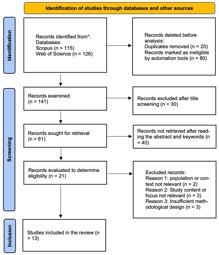
Source: Page et al. (2021).
Table 1. Results of the methodological quality assessment of the included studies
|
Study |
C1 |
C2 |
C3 |
C4 |
C5 |
C6 |
C7 |
C8 |
C9 |
C10 |
Total score |
% methodological quality |
Category |
|
Chen et al. (2023) |
1 |
1 |
1 |
1 |
1 |
0.5 |
1 |
1 |
1 |
1 |
9.5 |
95% |
Hight quality |
|
Thaqi et al. (2020) |
1 |
1 |
1 |
1 |
1 |
0.5 |
1 |
0.5 |
1 |
1 |
9.0 |
90% |
Hight quality |
|
Kryeziu et al. (2023) |
1 |
1 |
0.5 |
1 |
1 |
0 |
1 |
0.5 |
1 |
1 |
8.0 |
80% |
Hight quality |
|
Ramírez-Campillo et al. (2020) |
1 |
1 |
1 |
1 |
1 |
0 |
1 |
1 |
1 |
1 |
9.0 |
90% |
Hight quality |
|
Ramírez-Campillo et al. (2023) |
1 |
1 |
1 |
1 |
1 |
0 |
1 |
1 |
1 |
1 |
9.0 |
90% |
Hight quality |
|
Koźlenia et al. (2025) |
1 |
1 |
1 |
1 |
1 |
0.5 |
1 |
0.5 |
1 |
1 |
9.0 |
90% |
Hight quality |
|
Alonso-Aubin et al. (2025) |
1 |
1 |
1 |
1 |
1 |
0.5 |
1 |
0.5 |
1 |
1 |
9.0 |
90% |
Hight quality |
|
Putera et al. (2023) |
1 |
1 |
1 |
1 |
1 |
0 |
1 |
0.5 |
1 |
1 |
8.5 |
85% |
Hight quality |
|
Tian et al. (2025) |
1 |
1 |
1 |
1 |
1 |
0.5 |
1 |
0.5 |
1 |
1 |
9.0 |
90% |
Hight quality |
|
Ramírez-Campillo et al. (2020b) |
1 |
1 |
1 |
1 |
1 |
0.5 |
1 |
1 |
1 |
1 |
9.5 |
95% |
Hight quality |
|
Neves et al. (2025) |
1 |
1 |
1 |
1 |
1 |
0.5 |
1 |
0.5 |
1 |
1 |
9.0 |
90% |
Hight quality |
|
Liu et al. (2024) |
1 |
1 |
1 |
1 |
1 |
0.5 |
1 |
0.5 |
1 |
1 |
9.0 |
90% |
Hight quality |
|
Kurt et al. (2023) |
1 |
1 |
0.5 |
1 |
1 |
0 |
1 |
1 |
1 |
0.5 |
8.0 |
80% |
Hight quality |
|
Total |
8.8 |
88% |
Hight quality |
Note 1:
· C1 = The research objectives or questions are clearly formulated and justify the study.
· C2= The study design (qualitative, quantitative, review, etc.) is appropriate for addressing the objective.
· C3= The methods, procedures, inclusion/exclusion criteria, and sampling are clearly described.
· C4= The data collection instruments or techniques are valid, reliable, and appropriate.
· C4 = The analysis (statistical, thematic, comparative, etc.) is consistent with the objectives and type of study.
· C6 = Ethical aspects are mentioned (informed consent, institutional approval, confidentiality).
· C7 = The conclusions are derived from the results and address the stated objective.
· C8 = The study acknowledges its methodological limitations or potential biases.
· C9 = The methodological information allows for replication of the study or its full understanding.
· C10 = The study provides useful, up-to-date, and relevant evidence for the field of knowledge.
Note 2: Overall scoring: Yes = 1 point; Partial = 0.5 points; No / Not determined = 0 points
Note 3: Final calculation: Total sum ÷ 10 × 100 = % methodological quality
Note 4: Categories: 80–100% = High quality; 60–79% = Moderate quality; <60% = Low quality
Source: Adapted from Hong et al. (2018). Mixed Methods Appraisal Tool (MMAT).
Table 2. Main data collected in the analyzed studies
|
# |
Author (year) |
Sample / age |
Objective |
Design / instruments |
Variables analyzed |
Main results |
Conclusion |
|
1 |
Chen et al. (2023) |
Adolescent athletes / 12–18 years |
To evaluate the effect of plyometric training on lower-limb explosive strength in adolescent athletes. |
Systematic review and meta-analysis; countermovement jump, squat jump, standing long jump, and short-distance speed tests. |
Explosive strength, vertical and horizontal jump performance, running speed. |
Statistically significant improvements were found in vertical jump, horizontal jump, and running speed with consistent positive effects. |
Plyometric training significantly improves lower-limb explosive strength in adolescents. |
|
2 |
Thaqi et al. (2020) |
220 students / 16 years |
To analyze the impact of a 12-week plyometric program on overall physical performance. |
Experimental study with control group; vertical and horizontal jump tests, speed, coordination, and muscular endurance tests. |
Muscular power, acceleration speed, muscular endurance. |
Significant improvements were observed in muscular power, acceleration speed, and endurance after the intervention. |
Plyometric training enhances multiple physical capacities in adolescents when applied systematically. |
|
3 |
Kryeziu et al. (2023) |
195 adolescents / 15 years |
To determine the effect of a plyometric program on speed and explosive strength. |
Quasi-experimental study; linear speed tests, standing long jump, triple jump, and vertical jump tests. |
Explosive strength, linear speed. |
The experimental group showed significant improvements in all variables compared with the control group. |
Plyometric training improves explosive strength and speed in adolescents. |
|
4 |
Ramírez-Campillo et al. (2020) |
1,499 young soccer players |
To analyze the effect of plyometric training on jump and speed performance. |
Systematic review and meta-analysis; vertical jump tests and speed tests. |
Jump performance, running speed. |
Moderate to large effect sizes were reported for jump and speed performance. |
Plyometric training is an effective strategy to improve physical performance in young soccer players. |
|
5 |
Ramírez-Campillo et al. (2023) |
744 adolescents |
To examine the effects of plyometric training according to biological maturation. |
Systematic review and meta-analysis; vertical and horizontal jump tests and reactive strength assessments. |
Muscular strength, jump performance, speed. |
Similar improvements were achieved across adolescents with different maturation levels. |
The effectiveness of plyometric training is not conditioned by biological maturation. |
|
6 |
Koźlenia et al. (2025) |
182 school students / 14–15 years |
To determine the effects of plyometric training integrated into physical education classes. |
Experimental study; vertical jump and aerobic endurance tests. |
Muscular power, cardiorespiratory endurance. |
Significant but small improvements in physical fitness were observed. |
Plyometric training can improve physical fitness in the school setting when applied regularly. |
|
7 |
Alonso-Aubin et al. (2025) |
32 students / 16 years |
To determine neuromuscular changes following a short-duration plyometric program. |
Experimental study; vertical jump test using force platforms. |
Jump height, take-off velocity, mechanical impulse. |
Significant improvements were observed in the experimental group for all analyzed variables. |
Plyometric training during physical education classes enhances neuromuscular capacity in adolescents. |
|
8 |
Putera et al. (2023) |
33 males / 18–22 years |
To analyze the impact of different plyometric exercises on physical performance. |
Experimental study; speed, strength, and jump tests. |
Muscular strength, power, speed. |
All groups significantly improved muscular strength, power, and speed after the intervention. |
Different types of plyometric training effectively improve physical performance. |
|
9 |
Tian et al. (2025) |
30 female basketball players |
To compare the effects of plyometric training and resistance training. |
Experimental study; vertical and horizontal jump tests and speed tests. |
Jump performance, speed. |
Plyometric training produced greater improvements than traditional resistance training. |
Plyometric training is superior for improving jump and speed performance. |
|
10 |
Ramírez-Campillo et al. (2020b) |
38 soccer players / 17 years |
To compare the timing of plyometric training within the training session. |
Randomized controlled trial; jump and speed tests. |
Muscular strength, speed, endurance. |
Better outcomes were achieved when plyometric training was performed before sport-specific training. |
The sequencing of plyometric training influences physical adaptations. |
|
11 |
Neves et al. (2025) |
34 futsal players |
To compare unilateral and bilateral plyometric training combined with speed exercises. |
Experimental study; jump and speed tests. |
Muscular strength, speed, agility. |
Both methods similarly improved physical performance. |
Unilateral and bilateral plyometric training are equally effective. |
|
12 |
Liu et al. (2024) |
52 soccer players / 16 years |
To compare the effectiveness of micro-dosed plyometric training. |
Randomized controlled trial; jump and acceleration tests. |
Jump performance, acceleration. |
Both micro-dosed and traditional plyometric training produced similar improvements. |
Lower-volume, distributed plyometric training can induce comparable adaptations. |
|
13 |
Kurt et al. (2023) |
32 soccer players / 12 years |
To compare vertical and horizontal plyometric training. |
Experimental study; jump and speed tests. |
Stretch–shortening cycle performance, power. |
No significant improvements were observed after six weeks of intervention. |
Short-duration programs may be insufficient to induce adaptations in young athletes. |
Prepared by the authors.
Narrative syhthesis
The reviewed scientific evidence shows that plyometric training is an effective intervention for improving physical performance in adolescents, especially in variables related to lower-limb explosive strength and jump test performance. Meta-analyses with the highest methodological rigor (Chen et al., 2023; Ramírez-Campillo et al., 2020) find statistically significant improvements in horizontal jump, vertical jump, and sprint speed, strengthening the existing evidence. These studies, with large samples and robust statistical analyzes, conclude that plyometrics induce significant neuromuscular adaptations in adolescents, a period of high motor plasticity.
From a practical perspective, experimental studies conducted in school and sports settings demonstrate that structured plyometric programs lead to significant improvements in long jump performance and the ability to generate force in short periods of time. Studies such as those by Thaqi et al. (2020) and Kryeziu et al. (2023) show that approximately twelve-week interventions with two or three sessions per week significantly improve muscular power, acceleration speed, and horizontal jump. These results indicate that manipulating the stimulus dose is a crucial variable for inducing maximal adaptations in adolescents.
Another important aspect is how biological maturation and the type of training influence the response to plyometric stimulation. The meta-analysis by Ramírez-Campillo et al. (2023) provides evidence that plyometric training is effective in both less and more mature adolescents, supporting its use across a wide range of youth ages. Furthermore, recent research has shown that different training methodologies (unilateral or bilateral execution, volume microdosing) produce similar improvements in the horizontal jump, provided that an appropriate load progression is followed (Liu et al., 2024; Neves et al., 2025).
The incorporation of plyometric training in school settings also emerges as a topic of interest in the reviewed literature. Studies in physical education classes, such as those by Koźlenia et al. (2025) and Alonso-Aubin et al. (2025), show that even short-duration programs can induce improvements in neuromuscular and jumping performance, although with effect sizes smaller than those found in specialized sports training. These findings support the use of plyometric training as a formative training method, but also indicate that manipulating the duration and intensity of interventions can induce greater adaptations.
Finally, the synthesis of the analyzed studies reveals certain common limitations that should be taken into account when interpreting the results. While most studies find benefits from plyometric training, there is considerable heterogeneity in protocols and more evidence for vertical jump than for long jump. Studies such as that by Kurt et al. (2023) show that short-duration interventions are not sufficient to elicit significant adaptations in younger adolescents, which supports the need for future studies that specifically examine the horizontal jump, using longitudinal designs and taking into account variables such as biological age, sex, and sports experience.
Discussion
The findings of this systematic review confirm that plyometric training is an effective way to improve neuromuscular performance and explosive strength in adolescents, especially in jumping and acceleration movements. These results are consistent with the meta-analysis by Chen et al. (2023), which found statistically significant effects of plyometric training on horizontal and vertical jump performance and on running speed in adolescent athletes. The consistency of these results supports the hypothesis that, during adolescence, high neuromuscular plasticity allows for favorable adaptations to well-structured explosive stimuli.
In line with the above, the meta-analyses by García-Hermoso et al. (2020) and Ramírez-Campillo et al. (2020) provide solid evidence that plyometric training improves overall physical fitness in young athletes, with significant gains in explosive strength and jump test performance. These studies agree that the magnitude of the improvements depends on the duration of the program and on an appropriate dosage of training volume. In line with this, the findings of Kryeziu et al. (2023) and Thaqi et al. (2020) confirm that interventions lasting approximately twelve weeks with a minimum frequency of two sessions per week induce more stable adaptations over time in adolescents.
An important point debated in the literature is the context-specificity of plyometric training. Studies conducted in the school setting, such as those by Alonso-Aubin et al. (2025) and Koźlenia et al. (2025), demonstrate that incorporating plyometric programs into physical education classes improves neuromuscular performance and power, albeit with smaller effect sizes than in the context of sports training. This difference may be due to the fact that the stimuli used in schools are neither high-intensity nor high-volume, but it indicates that plyometrics is a safe form of training in the school setting, although its effect could be improved with more specific and progressive planning.
From a methodological standpoint, the findings also indicate that different ways of manipulating plyometric training can elicit similar adaptations when the total volume is equivalent. In this vein, the study by GuiYang et al. (2024) finds that microdosing plyometric training—spreading it across more weekly sessions with lower volume per session—produces similar improvements in jumping and acceleration compared to traditional programs. These findings are consistent with those of Neves et al. (2025), who found no significant differences between unilateral and bilateral plyometric training combined with speed exercises, demonstrating considerable methodological flexibility for working with youth populations.
Biological maturation is another variable to discuss. The meta-analysis by Ramírez-Campillo et al. (2023) provides evidence that plyometric training is effective in both less and more mature adolescents, supporting its use across a wide age range. However, these authors also indicate that the heterogeneity of maturation estimation methods prevents making definitive recommendations. This consideration becomes especially important when compared with studies such as that by Hammami et al. (2021), which highlight the importance of manipulating load in young populations to ensure the safety and effectiveness of the stimulus.
However, not all studies report consistent positive results. The evidence from Kurt et al. (2023) suggests that short programs lasting six weeks or less are not sufficient to improve the stretch–shortening cycle in adolescents. This result adds a new element to the evidence, indicating that the absence of results in some studies does not rule out the effectiveness of plyometric training, but may instead be due to an insufficient stimulus dose, especially in less-trained populations.
From a practical standpoint, the findings of this review align with those of Putera et al. (2023) and Tian et al. (2025), who found that plyometric training produces greater improvements in jumping and speed than conventional strength training in sports requiring repeated explosive movements. These results support the relevance of plyometrics as a fundamental part of youth sports training programs, provided that technical execution and individualized load progression are prioritized.
While the overall evidence is solid, this review identifies certain gaps in the reviewed literature. Among the limitations, the wide variability in training protocols stands out, as do studies focused more on vertical than horizontal jumping and the limited attention given to variables such as sex, sociocultural context, or level of sports practice. Furthermore, many studies do not clearly report their methodological limitations or conduct long-term follow-up, which prevents determining the sustainability of the adaptations observed.
As a scientific contribution, the current review synthesizes and compares recent, high-quality methodological evidence, thereby enabling a more precise understanding of the effects of plyometric training in adolescents. Emphasizing the assessment of explosive performance and horizontal jumping, this book broadens the scope of the literature and provides evidence-based practical guidelines for coaches, physical education teachers, and sports professionals. Furthermore, the results reaffirm the need for future studies with longitudinal designs, standardized protocols, and analyzes by sex and biological maturation to optimize the use of plyometric training in young people.
Conclusions
The findings of this systematic review show that plyometric training is an effective intervention for improving long jump performance in adolescents aged 14 to 16 when applied progressively, systematically planned, and tailored to their level of biological maturation. The reviewed evidence suggests that this type of training produces significant improvements in lower-limb explosive power, enhances neuromuscular coordination, and improves the mechanical efficiency of the takeoff phase, all of which are critical for the horizontal jump.
Although most of the studies analyzed use the vertical jump as a test, the changes found in muscle activation, use of the stretch–shortening cycle, and force transfer support a direct application to the long jump, especially when programs include plyometric exercises specifically for horizontal power. In line with this, session duration and weekly frequency are key variables in achieving the greatest training benefits in adolescent populations.
From a practical standpoint, these results support the inclusion of plyometric training in school-based and federated youth sports training programs. However, its implementation should prioritize technical control, load progression, and stimulus individualization, with periodic assessments to adjust the program and minimize the risk of injury from improper use of the method.
In the scientific field, this review highlights the need for future studies that directly examine the effect of plyometrics on the long jump in adolescents, taking into account moderating variables such as sex, biological age, athletic experience, and sociocultural context. Studies are also needed to verify specific protocols and compare the use of isolated and combined interventions to strengthen the evidence and improve decision-making in youth sports training.
Bibliographic references
Alonso-Aubin, D. A., Saez-Berlanga, Á., Chulvi-Medrano, I., & Martínez-Guardado, I. (2025). Effects of Integrating a Plyometric Training Program During Physical Education Classes on Ballistic Neuromuscular Performance. Journal of Functional Morphology and Kinesiology, 10(3), 240. https://doi.org/10.3390/jfmk10030240
Chen, L., Zhang, Z., Huang, Z., Yang, Q., Gao, C., Ji, H., Sun, J., & Li, D. (2023). Meta-Analysis of the Effects of Plyometric Training on Lower Limb Explosive Strength in Adolescent Athletes. International Journal of Environmental Research and Public Health, 20(3), 1849. https://doi.org/10.3390/ijerph20031849
García-Hermoso, A., Ramírez-Vélez, R., & Izquierdo, M. (2020). Effects of plyometric jump training on physical fitness in youth: A meta-analysis. Scandinavian Journal of Medicine & Science in Sports, 30(1), 4–16. https://doi.org/10.1111/sms.13566
GuiYang Liu, XiaoShuang Wang, Qi Xu. (2024) Microdosing Plyometric Training Enhances Jumping Performance, Reactive Strength Index, and Acceleration among Youth Soccer Players: A Randomized Controlled Study Design. Journal of Sports Science and Medicine (23), 342 - 350. https://doi.org/10.52082/jssm.2024.342
Hammami, R., Gaamouri, N., Shephard, R. J., & Chelly, M. S. (2021). Effects of plyometric training on physical fitness in prepubertal soccer players. Frontiers in Physiology, 12, 660603. https://doi.org/10.3389/fphys.2021.660603
Hong, Q. N., Fàbregues, S., Bartlett, G., Boardman, F., Cargo, M., Dagenais, P., Gagnon, M.-P., Griffiths, F., Nicolau, B., O’Cathain, A., Rousseau, M.-C., Vedel, I., & Pluye, P. (2018). The Mixed Methods Appraisal Tool (MMAT) version 2018 for information professionals and researchers. Education for Information, 34(4), 285–291. https://doi.org/10.3233/EFI-180221
Koźlenia, D., Kochan-Jacheć, K., & Domaradzki, J. (2025). Concurrent Effects of Plyometric Interval Training Implemented in Physical Education Lessons on Adolescent Power and Endurance: An Analysis of Responder Prevalence. Sports, 13(1), 15. https://doi.org/10.3390/sports13010015
Kryeziu, A. R., Iseni, A., Teodor, D. F., Croitoru, H., & Badau, D. (2023). Effect of 12 Weeks of the Plyometric Training Program Model on Speed and Explosive Strength Abilities in Adolescents. Applied Sciences, 13(5), 2776. https://doi.org/10.3390/app13052776
Kurt, C., Canli, U., Erdaş, S. E., Poli, L., Carvutto, R., Cataldi, S., Fischetti, F., & Greco, G. (2023). Effectiveness of Vertical versus Horizontal Plyometric Training on Stretch-Shortening Cycle Performance Enhancement in Adolescent Soccer Players. Healthcare, 11(11), 1615. https://doi.org/10.3390/healthcare11111615
Lin, G., Zhang, R., Wu, K., Deng, B., Shi, Y., Huang, W., He, J., & Sun, J. (2025). Effects of plyometric training on physical fitness in adolescent and adult female team sport athletes: a systematic review and meta-analysis. Frontiers in physiology, 16, 1639477. https://doi.org/10.3389/fphys.2025.1639477
Neves, T. A., Soalheiro, I., Winckler, C., Michalsik, L. B., Ramirez-Campillo, R., & Guerra, R. L. (2025). The Impact of Unilateral and Bilateral Plyometric Training Combined with Linear Sprints on Physical Performance in Youth Male Elite Futsal Players. International Journal of Sports Physiology and Performance, 20(8), 1145-1151. https://doi.org/10.1123/ijspp.2024-0538
Ospina León, M. Ángel, Cárdenas Castiblanco, J. A., López Mosquera, Y. D., Macías Quecán, J. D., & Becerra Patiño, B. A. (2023). Efectos del entrenamiento pliométrico en jugadores de fútbol colombianos (17-18 años) según su posición dentro del campo de juego. Retos, 47, 512-522. https://doi.org/10.47197/retos.v47.94871
Page, M. J., McKenzie, J. E., Bossuyt, P. M., Boutron, I., Hoffmann, T. C., Mulrow, C. D., Shamseer, L., Tetzlaff, J. M., Akl, E. A., Brennan, S. E., Chou, R., Glanville, J., Grimshaw, J. M., Hróbjartsson, A., Lalu, M. M., Li, T., Mayo-Wilson, E., McDonald, S., Stewart, L. A. & Moher, D. (2021). The PRISMA 2020 statement: An updated guideline for reporting systematic reviews. BMJ, 372, n71. https://doi.org/10.1136/bmj.n71
Pradas-Valverde, S., Falcón, D., Moreno-Azze, A. y Pradas, S. (2022). Efectos de un entrenamiento pliométrico sobre el rendimiento en la salida de natación en deportistas adolescents. Journal of Sport and Health Research, 14 (1), 51-60. https://doi.org/10.58727/jshr.92831
Putera, S. H. P., Setijono, H., Wiriawan, O., Nurhasan, Muhammad, H. N., Hariyanto, A., Sholikhah, A. M., & Pranoto, A. (2023). Positive Effects of Plyometric Training on Increasing Speed, Strength and Limb Muscles Power in Adolescent Males. Physical Education Theory and Methodology, 23(1), 42–48. https://doi.org/10.17309/tmfv.2023.1.06
Ramírez-Campillo, R., Castillo, D., Raya-González, J. et al. (2020). Effects of Plyometric Jump Training on Jump and Sprint Performance in Young Male Soccer Players: A Systematic Review and Meta-analysis. Sports Med., 50, 2125–2143. https://doi.org/10.1007/s40279-020-01337-1
Ramirez-Campillo, R., Sortwell, A., Moran, J. et al. (2023). Plyometric-Jump Training Effects on Physical Fitness and Sport-Specific Performance According to Maturity: A Systematic Review with Meta-analysis. Sports Med. - Open 9, 23. https://doi.org/10.1186/s40798-023-00568-6
Ramirez-Campillo, Rodrigo, Alvarez, Cristian; Gentil, Paulo, Loturco, Irineu; Sanchez-Sanchez, Javier, Izquierdo, Mikel, Moran, Jason, Nakamura, Fabio Y., Chaabene, Helmi & Granacher, Urs. (2020). Sequencing Effects of Plyometric Training Applied Before or After Regular Soccer Training on Measures of Physical Fitness in Young Players. Journal of Strength and Conditioning Research, 34(7), 1959-1966. https://doi.org/10.1519/JSC.0000000000002525
Ramírez-Pogo, R. D., & Paula-Chica, M. G. (2025). Comparación de la pliometría bipodal y unipodal en potencia y velocidad de futbolistas. Ciencia y Educación, 6(1.1), 6-16. https://doi.org/10.5281/zenodo.15866660
Robayo Rodriguez, E. L. (2026). Pliometría, método de entrenamiento para el desarrollo de la velocidad en futbolistas: Una revisión sistemática. METANOIA: Revista de Ciencia, Tecnología e Innovación, 12(1), 575–596. https://doi.org/10.61154/metanoia.v12i1.4165
Solano, J., Sandoval, D., Vargas, J. (2024). Valoración de la fuerza explosiva en el rendimiento de estudiantes de bachillerato. (2024). RIAF. Revista Internacional de Actividad física, 2(2), 42-53. https://doi.org/10.53591/riaf.v2i2.1203
Thaqi, A., Berisha, M., & Hoxha, S. (2020). The effect of plyometric training on the power-related factors of children aged 16 years-old: Plyometric training. Progress in Nutrition, 22(2-S), e2020004. https://doi.org/10.23751/pn.v22i2-S.10441
Tian, Y., Xu, K., Fang, W., & Ramirez-Campillo, R. (2025). Female Basketball Players’ Jump and Sprint Performance After Plyometric Jump Training Compared to Resistance Training. Sports, 13(11), 374. https://doi.org/10.3390/sports13110374
Tipantiza Venegas, M. P. (2023). La pliometría en el entrenamiento de la saltabilidad de los voleibolistas rematadores. Revista Conecta Libertad, 7(2), 67–85. https://revistaitsl.itslibertad.edu.ec/index.php/ITSL/article/view/333
Conflict of interest
The author declares no conflict of interest.
Authors’ contributions
Author 1: conceptualization, research, project administration, writing, review, validation, and editing.
How to cite this article:
Corozo-Palma, R. (2026). Analysis of the effectiveness of the long jump using the plyometric method in adolescent athletes aged 14 to 16 years: a systematic review. Sport Science Training and Research (STAR), 1(1), 11-23. https://doi.org/10.53591/star.v1i1.2956