 Sport Science Training and Research - STA
1Luis Armando Small-Howell
International Olympic Vision Club
https://orcid.org/0009-0009-8377-2519
davidsmallcuza2022@hotmail.com
Colombia, Bolivar – Cartagena de Indias
2Elena Norelba Alcivar-Cedeño
"24 de Mayo" N2 General Basic School
https://orcid.org/0009-0008-3747-9867
elenaalcivar@docentes.educacion.edu.ec
Colombia, Bolivar – Cartagena de Indias
1Doctoral candidate in Physical Education, CECEIC, Mexico. Coach of the International Olympic Vision Club.
2Physical Education Teacher at the "24 de Mayo" N2 Elementary School.
Date of receipt: 01-12-2025
Date of acceptance: 04-01-2026
Publication date: 14-01-2026

The works published in STAR are licensed under CC BY-NC-ND 4.0
DOI: https://doi.org/10.53591/star.v1i1.2955
Abstract
Introduction: Lower-limb explosive power was a key physical attribute for track and field jumping events, and its objective assessment became essential in regional competitions.
Objective: To measure lower-body explosive power in male jumping athletes from the field events of the Bolívar Athletics League in Colombia, in order to characterize their explosive strength.
Methodology: The research was conducted using a quantitative approach, with a non-experimental, descriptive, cross-sectional design. The sample consisted of twenty-five male athletes. The evaluation was conducted using a standardized Squat Jump protocol, and the data were analyzed with descriptive statistics.
Results: The average jump height was 19.97 cm in the first measurement, 23.19 cm in the second, and 26.27 cm in the third. The data dispersion was moderate, with standard deviations of 4.42 cm, 5.86 cm, and 5.82 cm, respectively. The minimum values ranged from 10.60 to 12.76 cm, and the maximum values reached 37.28 cm, demonstrating the high interindividual variability in explosive power.
Discussion: Comparison with the scientific literature supported the use of the Squat Jump to assess explosive power and demonstrated that the observed variability aligned with the neuromuscular differences found in jumping athletes.
Conclusions: It is concluded that assessing explosive strength via the Squat Jump is an objective method for characterizing performance in athletes from regional leagues.
Keywords: Muscle power; explosive strength; vertical jump; sports performance; athletics.
Resumen
Introducción: La fuerza explosiva de las extremidades inferiores fue una capacidad física determinante para las pruebas de salto del atletismo y su valoración objetiva se hizo imprescindible en las competencias regionales.
Objetivo: Medir la fuerza explosiva del tren inferior en atletas masculinos de salto de las pruebas de campo de la Liga de Atletismo de Bolívar, Colombia, para caracterizar su fuerza explosiva.
Metodología: La investigación se abordó desde un enfoque cuantitativo, con un diseño no experimental, descriptivo y de corte transversal. La muestra estuvo compuesta por veinticinco atletas masculinos. La evaluación se llevó a cabo con un protocolo estandarizado de Squat Jump y los datos se analizaron con estadística descriptiva.
Resultados: La altura promedio del salto fue de 19,97 cm en la primera medición, 23,19 cm en la segunda y 26,27 cm en la tercera. La dispersión de los datos fue media, con desviaciones estándar de 4,42, 5,86 y 5,82 cm, respectivamente. Los valores mínimos oscilaron entre 10,60 y 12,76 cm, y los máximos llegaron hasta 37,28 cm, lo que demuestra la gran variabilidad interindividual de la potencia de fuerza explosiva.
Discusión: La comparación con la literatura científica apoyó la utilización del Squat Jump para valorar la potencia explosiva y demostró que la variabilidad encontrada se ajustó a las diferencias neuromusculares encontradas en atletas de salto.
Conclusiones: Se determina que la valoración de la fuerza explosiva a través del Squat Jump es una forma de caracterizar objetivamente el rendimiento en deportistas de ligas regionales.
Palabras clave: Potencia muscular; fuerza explosiva; salto vertical; rendimiento deportivo; atletismo.
Introduction
Explosive strength is one of the capabilities that most influence performance in track and field jumping events, since these require producing large amounts of force in a very short time. From a biomechanical and physiological standpoint, explosive strength is the combination of maximal strength, muscle contraction velocity, and neuromuscular coordination, which are critical for takeoff, the aerial phase, and landing in events such as the long jump, triple jump, and high jump. In this regard, the objective assessment of lower-limb strength has become an indispensable tool for diagnosing an athlete’s functional status and for planning and monitoring the training process. Among the most widely used tests internationally is the Squat Jump (SJ), due to its methodological simplicity, reliability, and ability to isolate the manifestation of explosive strength without the contribution of the stretch–shortening cycle.
Scientific literature supports the notion that the vertical jump is a valid and sensitive test for estimating lower-limb mechanical power in diverse populations, from schoolchildren to elite athletes. Jiménez-Reyes, Cuadrado-Peñafiel, and González-Badillo (2012) found that vertical jump variables, such as height, flight time, and mean power, correlate with athletic performance in modalities requiring explosive actions, justifying their regular use in training. In the same vein, Valero and Suárez (2018) systematically reviewed that vertical jump tests, specifically the SJ, are reliable indicators of lower-limb muscle power, provided that technical execution conditions and measurement instruments are controlled.
The SJ begins in a static, knee-flexed position, eliminating the elastic component of the stretch-shortening cycle, thereby allowing for a more isolated assessment of the neuromuscular system’s concentric contractile capacity. This feature makes it an especially interesting test for evaluating explosive power in jumping athletes, in whom the effectiveness of the initial impulse is decisive. Studies such as García (2021) demonstrated that the SJ result correlates with technical and performance measures in speed and jumping tests, supporting its use as a diagnostic and monitoring tool in competitive athletics.
From a practical standpoint, several studies have examined the association between jump height and squat mechanical variables, finding significant relationships that help better understand power output. Benavides et al. (2024) found a correlation between jump height and squat mechanical variables in young athletes, indicating that the combined analysis of these variables can provide information to improve training programs for developing explosive strength. Additionally, Carranza et al. (2017) mentioned the use of technological instruments, such as video analysis with specialized software, to measure muscle strength and power in the squat jump, emphasizing the instrumental accuracy in performance measurement.
Explosive strength has been addressed thru plyometrics, which aims to improve neuromuscular capacity to generate force rapidly. López et al. (2019) found improvements in lower-limb power following plyometric training in high-performance athletes, enhancing competitive performance. Additionally, Davis and Aguilar (2024) demonstrated that the regular application of plyometric exercises improves explosive strength in triple jump athletes, but they emphasize the need for continuous evaluation to make necessary adjustments and ensure the effectiveness of the training. In this context, periodic assessment with tests such as the SJ is a monitoring tool for estimating the athlete’s adaptation to training stimuli.
The assessment of explosive strength is not only of interest in high-performance sport, but has also been studied in formative and educational contexts. López et al. (2015) studied lower-limb explosive extension strength in schoolchildren, finding significant differences related to age and motor development, which demonstrates the sensitivity of the vertical jump in reflecting neuromuscular functional status. Likewise, Solano et al. (2024) highlighted the importance of assessing explosive strength for physical performance in high school students, as it is useful for pedagogical and athletic guidance. These data reaffirm the validity of the SJ as a cross-sectional test across different populations, provided they are interpreted in the appropriate context.
In Latin America, there has been a growing interest in studying explosive strength and its association with performance in jump tests. Herrera et al. (2025), in a case study on strength and horizontal jumping, demonstrated the strong association between the ability to generate explosive force and performance in jump tests, highlighting the need for specific assessments to understand the biomechanical characteristics of each sport. Additionally, Avilés (2025) studied vertical jump power in adolescents, determining that this physical capacity improves as the neuromuscular system matures and with regular training, making it crucial to have reliable and contextualized assessment instruments.
Despite the extensive information available on assessing explosive strength thru vertical jump tests, certain limitations still exist in interpreting their results in specific populations and competitive situations. Some authors have verified that the SJ is a reliable test for evaluating lower-limb strength–speed–power under controlled conditions (Samozino et al., 2008), but most studies have been conducted on elite athletes or in experimental settings outside the regional context. In particular, there are few studies that systematically measure explosive strength using the SJ in jumping athletes from regional athletics leagues in Colombia, thus creating a gap in knowledge about the characteristics of this physical capacity in departmental leagues such as the Bolívar Athletics League. This absence prevents the development of contextualized reference profiles to guide the technical and methodological work of coaches and physical trainers.
From a practical perspective, measuring explosive power via the SJ in jumping athletes from the Bolívar Athletics League can serve to characterize the current level of this physical capacity and provide objective information to help improve training processes and prevent injuries. Previous studies have shown that identifying the power produced during jumping actions can reveal strength–velocity imbalances and allow for more precise manipulation of training loads (Cormie et al., 2007). In this context, the availability of reliable data enables the identification of strengths and weaknesses in lower-limb force-generating capacity and evidence-based decision-making. Likewise, this type of assessment helps standardize performance monitoring protocols at the national level and strengthen the development of competitive athletics in Colombia.
From a scientific perspective, the current research is justified because it contributes to the body of knowledge on the assessment of explosive strength in jumping athletes, in a little-studied population and using a highly valid test such as the SJ. Previous studies have shown that vertical jump power is influenced by the neuromuscular profile and competitive level of the athlete, and therefore should be analyzed in specific situations (Pazin et al., 2012). Therefore, generating scientific evidence in athletes from regional leagues will allow comparisons with studies from other populations, deepening our understanding of explosive strength in relation to sport discipline, competitive level, and training context. Additionally, the results can inform future research aimed at designing personalized training programs and monitoring athletic performance over time.
In this context, the objective of this study was to determine the lower-limb explosive power output using the squat jump (SJ) in jumping athletes from the Bolívar Athletics League in Colombia, to describe their performance levels and analyze its relationship with mechanical variables of the vertical jump. Based on this objective, it was hypothesized that the jumping athletes of the Bolívar Athletics League have explosive strength power levels that can be measured and differentiated using the SJ, and that there is a correlation between jump height and the lower limbs’ power generation capacity.
Method
The research was conducted using a quantitative approach, with a non-experimental, descriptive, cross-sectional design, to assess lower-limb explosive strength via the SJ test in jump event athletes. The research was conducted in the athletes’ natural training environment, without any manipulation of variables, to describe the behavior of physical performance thru objective measurements. This design allowed us to characterize the magnitude of explosive strength in the studied group and how it evolves over time thru repeated measurements, which can be used to monitor and track athletic performance.
Variables
The primary study variable was lower-limb explosive power, defined as the neuromuscular capacity to produce maximum force in the shortest possible time during a vertical jump movement. This variable was analyzed functionally and mechanically, in observable and measurable terms in the SJ test, which evaluates the concentric strength of the lower limbs without a stretch-shortening cycle.
In this case, concentric explosive strength capacity was measured, as manifested by the height of the vertical jump from an initial knee-flexed position. This indicator assessed the neuromuscular system’s capacity under controlled conditions, isolating the elastic contribution and emphasizing the concentric muscle action of the hip, knee, and ankle extensors. Jump height was taken as a direct measure of mechanical efficiency and the ability to apply force rapidly during vertical extension.
Additionally, the stability of explosive performance was evaluated by repeating the test at different measurement times. This made it possible to determine the regularity with which power was manifested in each athlete, revealing differences in the ability to maintain similar levels of explosive force production across successive assessments. Comparing the values across measurements provided us with information about the consistency of neuromuscular performance and the individual response to repeated explosive efforts.
Additionally, the progression of individual explosive strength was analyzed, defined as the quantitative variation in jump height across the different measurements. This assessment made it possible to detect increases, plateaus, or minimal changes in lower-limb explosive power, providing a characterization of each athlete’s neuromuscular response. The assessment of this progression was instrumental in identifying interindividual differences in the ability to improve explosive performance among a group of regional league athletes.
All the indicators analyzed were quantitative, measured on a ratio scale, which enabled the application of descriptive statistical procedures and objective comparisons both among athletes and across measurements. This way of structuring the variable ensured accurate measurement, in line with the research objectives and appropriate for measuring physical performance in competitive sports situations.
Participants
The sample consisted of 25 male athletes from the jumping events of the Bolívar Athletics League in Colombia, who were selected using purposive non-probability sampling according to the research objectives.
The inclusion criteria were: a) being an active male athlete in the Bolívar Athletics League; b) being involved in jumping events; c) having systematic training and competition experience; and d) being in physical condition to perform the SJ. Athletes with musculoskeletal injuries, functional limitations, or who missed any of the scheduled measurements were excluded.
Procedure
The process was carried out in stages. Initially, coordination was established with the coaches and responsible technicians to schedule the evaluations. Then, the athletes were instructed on the correct way to perform the SJ, standardizing the protocol.
Measurements were taken during controlled training sessions. Each athlete performed the SJ from a static, knees-bent starting position, without any countermovement and with hands on the waist to eliminate the arm-swing factor. Three successive measurements (SV/SJ1, SV/SJ2, and SV/SJ3) were taken, with appropriate recovery intervals between attempts.
The research was conducted in accordance with the ethical principles of scientific research, ensuring the confidentiality of information, voluntary participation, and informed consent of the participants.
Instrument
Data collection was carried out using the SJ test to assess lower-limb explosive power based on the height reached in the vertical jump (Samozino et al., 2008). The protocol used followed standardized criteria to ensure the validity and reliability of the measurements, in terms of initial position, execution technique, and data recording conditions. The test yielded precise and comparable values across each athlete’s measurements.
Análisis de datos
The data analysis was performed using descriptive statistics, obtaining measures of central tendency (mean and median), measures of dispersion (standard deviation and interquartile range), and minimum and maximum values to describe the explosive strength power of the studied group. Additionally, fluctuations in the measures were compared to describe the trajectory of individual and collective performance.
The data analysis was conducted using IBM SPSS Statistics software, which enabled the systematic and objective organization, analysis, and presentation of the data in accordance with the research’s methodological design.
Results
This section presents the results of the evaluation of lower-limb explosive power thru the SJ test in jump event athletes from the Bolívar Athletics League, Colombia. The data were analyzed using descriptive statistics and integrative graphs to describe group behavior, interindividual variability, and the trajectory of this physical capacity over time. The results are presented in a concise and explicit manner, avoiding theoretical interpretations, which will be discussed later in the discussion section.
Table 1. Descriptive statistics of explosive power (cm)
|
Statistic |
SV/SJ1 |
SV/SJ2 |
SV/SJ3 |
|
N |
25 |
25 |
25 |
|
Mean |
19.97 |
23.19 |
26.27 |
|
Standard deviation |
4.42 |
5.86 |
5.82 |
|
Minimum |
11.26 |
10.60 |
12.76 |
|
25th percentile |
16.36 |
18.83 |
20.96 |
|
Median |
19.16 |
21.39 |
26.77 |
|
75th percentile |
22.23 |
27.89 |
30.21 |
|
Maximum |
28.75 |
35.65 |
37.28 |
Prepared by the authors.
Source: SPSS 30.0.0
Table 2. Individual variation in explosive power between SV/SJ1 and SV/SJ3
|
Athlete |
SV/SJ1 |
SV/SJ3 |
(SJ3–SJ1) |
|
DSB |
25.65 |
34.98 |
+9.33 |
|
PHL |
27.06 |
37.28 |
+10.22 |
|
JAR |
19.16 |
31.94 |
+12.78 |
|
RMM |
21.65 |
29.00 |
+7.35 |
Prepared by the authors.
Source: SPSS 30.0.0
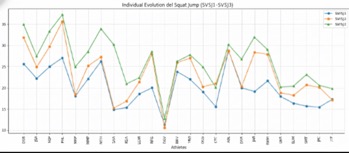
Figure 1. Individual evolution of explosive strength powe via SJ
Prepared by the authors.
Source: SPSS 30.0.0
The descriptive data show that explosive power improved in each of the three SJ measurements. The mean was 19.97 cm in the first measurement (SV/SJ1), 23.19 cm in the second (SV/SJ2), and 26.27 cm in the third (SV/SJ3), indicating an overall improvement in the measured group. This behavior is accompanied by a slight increase in the standard deviation, suggesting that although most athletes improved, the magnitude of improvement was not the same for everyone, with individual differences in neuromuscular response.
The study of data dispersion reveals that the interquartile range expands between the first and third measurements, indicating that the data become more dispersed as the measurements progress. In the first measurement, the central 50% of athletes fell between 16.36 and 22.23 cm; in the third measurement, this range shifted to higher values, between 20.96 and 30.21 cm. This shift indicates a generalized improvement in the lower limbs’ explosive force production capacity, although with substantial interindividual differences, which is to be expected in a group belonging to the regional league.
At the individual level, the data reveal that most athletes improved between the first and third measurements, with changes in jump height ranging from small to very large. Some athletes showed increases of more than 10 cm, others progressed less, and there were even isolated cases of minimal variation. This individual variability makes it necessary to use individualized training methods and reinforces the need for periodic evaluation with objective tests such as the SJ to monitor performance progress and make the necessary adjustments to physical conditioning.
Discussion
The results of this study show a stepwise improvement in lower-limb explosive power, as measured by the SJ, with substantial interindividual variability in the magnitude of the improvement. This demonstrates that explosive power does not manifest uniformly among athletes in the same regional league, and therefore supports the implementation of individualized assessments. In line with this, the results agree with those reported by Rangala et al. (2024), who indicate that estimates of body power and strength in athletes can vary significantly among them, even if they have similar competitive characteristics. The variability found in the current study indicates that neuromuscular, technical, and motor control factors have different impacts on the ability to produce explosive force, which should be taken into account when planning training.
The gradual increase in average SJ values supports its use as a reliable test for measuring lower-limb anaerobic power. But the results also suggest that the SJ measures a specific form of power: concentric power. This characteristic aligns with what Gross and Lüthy (2020) point out: vertical jump tests and other anaerobic tests, such as cycling, are not interchangeable, as they measure different expressions of muscular power. In this regard, the results of this study support the notion that the SJ is more appropriate for jumping athletes because it more specifically replicates the mechanical and neuromuscular demands of these disciplines.
The data dispersion and individual differences in the jump may be related to technical differences in movement execution, especially in the flexion angle of the lower-limb joints. Recent studies have shown that small changes in knee angle significantly alter SJ performance. Di Domenico et al. (2024) found an association between knee flexion angle and jump height, indicating that the variability observed in the present study may be due to individual technical executions during the propulsion phase, even when a standardized protocol was used.
From a mechanical standpoint, the findings align with studies highlighting the importance of the concentric phase in generating explosive power. Zemková et al. (2017) found that there are interindividual differences in the ability to produce power during the concentric phase of the jump, which are related to the type of sport and the neuromuscular profile. In line with these authors, the athletes analyzed in this study exhibited distinct execution patterns, which supports the idea that explosive power should be assessed based on the individual athlete and the sport.
Furthermore, the findings can be explained in the context of studies examining the impact of load and technique on power output. Makaruk and Starzak (2020) found that changes in loaded jumping technique influence kinetic variables, indicating that the way the movement is performed is a factor that determines the magnitude of power generated. Although the study was conducted on the SJ without external load, the variability observed supports the need to strictly control jump execution during assessment and training.
Regarding the improvement observed in most athletes, the results are consistent with studies demonstrating that specific training enhances lower-limb power. Rapotan et al. (2023) demonstrated improvements in lower-limb power following training programs using jump assessment technologies, while Shuai et al. (2025) found significant increases in explosive power after plyometric training programs, even examining the retention of improvements after detraining. Although the study did not directly examine an intervention program, the improvement observed suggests that athletes’ regular training stimuli may be inducing favorable adaptations in explosive power.
Finally, the results also have implications for research on load optimization to develop power. Loturco et al. (2015) already pointed out the need to determine loads capable of maximizing power in jump exercises, a factor to be taken into account to explain the variability found in the present study. These observed differences could reflect that the athletes are at different stages of adaptation in their force–velocity profile, which underscores the need for periodic assessments and for planning training based on objective data.
The interpretation of the results shows that assessing explosive strength via the SJ not only allows for characterizing the average level of a group of athletes, but also reveals significant individual differences that must be taken into account in training monitoring and the improvement of competitive performance. The results of this study provide contextualized evidence on athletes from a Colombian regional league, expanding the existing evidence and emphasizing the need for specific, standardized assessments in these populations.
Conclusions
The reviewed scientific literature confirmed that lower-limb explosive strength is a key determinant of performance in athletic jumping events and that the SJ is a valid and reliable test for its measurement, as it isolates concentric strength and allows for an objective and comparable assessment. This theoretical review justified the methodological appropriateness of the current research and served as a framework for discussing the results obtained from the regional league athletes, thereby confirming its applicability in the context studied.
The study results successfully characterized the lower-limb explosive power of male jumping athletes from the Bolívar Athletics League, revealing distinct values and substantial interindividual variability. This variability confirmed that, even within the same competitive environment, athletes exhibited different explosive profiles, highlighting the need for specific, context-based assessments to accurately characterize the behavior of this physical capacity in local populations.
From a practical standpoint, the results provided useful information for monitoring and tracking athletic performance, as periodic assessment with the SJ revealed strengths and weaknesses in lower-limb explosive strength capacity. This information served as an objective guide for coaches and physical trainers to make decisions about training planning and monitoring, without establishing cause-and-effect relationships or changes due to any specific intervention.
Finally, the research contributed to the field of sports performance assessment by generating scientific evidence in a little-studied context: athletes in departmental leagues in Colombia. Based on the results, directions for future research were proposed: conducting longitudinal studies to assess the stability and progression of explosive strength power over time; incorporating biomechanical and kinetic variables to delve deeper into the mechanisms of power generation; and comparing categories, sexes, and sports disciplines to broaden knowledge of this physical capacity in different competitive contexts.
Bibliographic references
Aviles, Ch. (2025). La potencia en el salto vertical en adolescentes (tesis de grado). Universidad Nacional de Chimborazo. http://dspace.unach.edu.ec/bitstream/51000/15111/1/Aviles%20L%2C%20Charlye%20L.%20%282025%29%20La%20potencia%20en%20el%20salto%20vertical%20en%20adolescentes.pdf
Benavides, L., Díaz, G. & Salazar, C. (2024). Relationship of jump height to squat mechanical variables in juvenile athletes. Sport and Science, 9(2), e209. https://doi.org/10.34982/2223.1773.2024.V9.No2.003
Carranza, A., Gavidia, J., Rojas, R. y Tantaquispe, M. (2017). Medición de la fuerza y potencia muscular del salto vertical con sentadilla haciendo uso del software analizador de videos tracker. Revista de investigación matemática, 1 (1). https://revistas.unitru.edu.pe/index.php/BOCIENMAT/article/view/2489
Cormie, P., Mccaulley, O. & Mcbride, M. (2007). Power Versus Strength-Power Jump Squat Training: Influence on the Load-Power Relationship. Medicine & Science in Sports & Exercise, 39(6), 996-1003. https://doi.org/10.1097/mss.0b013e3180408e0c
Davis Palomino, I. M. y Aguilar Morocho, E. K. (2024). Ejercicios pliométricos para mejorar la fuerza explosiva en atletas en el salto triple. Ciencia y Educación, 5(8.1), 148-161. https://doi.org/10.5281/zenodo.13770989
Di Domenico, F., Esposito, G., Aliberti, S., D’Elia, F., & D’Isanto, T. (2024). Determining the Relationship between Squat Jump Performance and Knee Angle in Female University Students. Journal of Functional Morphology and Kinesiology, 9(1), 26. https://doi.org/10.3390/jfmk9010026
Garcia Hilares, D. (2021). La técnica de partida en los 100 metros planos y los saltos verticales Squat Jump, Counter Movement Jump y Abalakov en los atletas de la Federación Peruana de Atletismo (tesis de maestría). Universidad Nacional de Educación Enrique Guzmán y Valle. https://repositorio.une.edu.pe/handle/20.500.14039/5507
Gross, M., & Lüthy, F. (2020). Anaerobic Power Assessment in Athletes: Are Cycling and Vertical Jump Tests Interchangeable? Sports, 8(5), 60. https://doi.org/10.3390/sports8050060
Herrera Piedra, F. A., Sanmartin Cruz, H. D., Piedra Espejo, J. I. y Angamarca Sinche, J. P. (2025). Fuerza y salto horizontal. Un estudio de caso. Ciencia y Educación, 6(9.1), 152 - 162. https://doi.org/10.5281/zenodo.17480123
Jiménez-Reyes, P., Cuadrado-Peñafiel, V. y González-Badillo, J. J. (2012). Análisis de variables medidas en salto vertical relacionadas con el rendimiento deportivo y su aplicación al entrenamiento. (Analysis of Variables Measured in Vertical Jump Related to Athletic Performance and its Application to Training). Cultura, Ciencia y Deporte, 6(17), 113–119. https://doi.org/10.12800/ccd.v6i17.38
López Gallego, Francisco José et al. (2015). Evaluación de la fuerza explosiva de extensión de las extremidades inferiores en escolares. Apunts. Educació Física i Esports, 4, (122), 44-51, https://doi.org/10.5672/apunts.2014-0983.es.(2015/4).122.05
López López, F. A., Martínez Cubides, W. J., & Acosta Tova, P. J. (2019). Entrenamiento pliométrico: efecto en atletas de élite. Revista Digital: Actividad Física y Deporte, 6(1), 32–42. https://doi.org/10.31910/rdafd.v6.n1.2020.1422
Loturco I, Nakamura FY, Tricoli V, Kobal R, Cal Abad CC, et al. (2015). Determining the Optimum Power Load in Jump Squat Using the Mean Propulsive Velocity. PLOS ONE, 10(10): e0140102. https://doi.org/10.1371/journal.pone.0140102
Makaruk, H. & Starzak, M. (2020). Acute influence of loaded jump squat technique on kinetic variables in track and field athletes. Teoriya i praktika fizicheskoy kul'tury i sporta, 2020 (6), 12-14. https://www.scopus.com/pages/publications/85089228502?origin=document-preview-flyout
Pazin, N., Berjan, B., Nedeljković, A., Marković, G., & Jarić, S. (2012). Power output in vertical jumps: Does optimum loading depend on activity profiles? European Journal of Applied Physiology, 113(3), 577–589. https://doi.org/10.1007/s00421-012-2464-z
Rangala, H., Samaraweera, S., Sandaruwan, K., Weerasinghe, T. & Ranasinghe, D. (2024). Athlete body power and strength estimation using skeleton point cloud. J. Natn. Sci. Foundation Sri Lanka, 52 (4), 481-492. http://dx.doi.org/10.4038/jnsfsr.v52i4.12273
Rapotan, A., Mihăilescu, I. & Mihai, I. (2023). The impact of Optojump training on the power of lower limbs in female triple jumpers. Journal of Physical Education and Sport, 23 (2), 555-563. https://doi.org/10.7752/jpes.2023.02069
Samozino, P., Morin, J.-B., Hintzy, F., & Belli, A. (2008). A simple method for measuring force, velocity and power output during squat jump. Journal of Biomechanics, 41(14), 2940–2945. https://doi.org/10.1016/j.jbiomech.2008.07.028
Shuai C, Xiangyu W, Zihao L, Xinqi J, Li G. (2025). Effects of Plyometric Training on Lower-Limb Explosive Power and Its Retention After Detraining in Sprinters. American Journal of Men’s Health, 19(4). https://doi.org/10.1177/15579883251363089
Solano, J., Sandoval, D. y Vargas, J. (2024). Valoración de la fuerza explosiva en el rendimiento de estudiantes de bachillerato. RIAF. Revista Internacional de Actividad física, 2(2), 42-53. https://doi.org/10.53591/riaf.v2i2.1203
Valero, H., y Suárez Muñoz, J. M. (2018). Análisis de la evaluación de potencia en tren inferior: una revisión sistemática. Revista Digital: Actividad Física y Deporte, 3(2). https://doi.org/10.31910/rdafd.v3.n2.2017.371
Zemková, E., Vilman, T., Cepková, A., Uvaček, M., Olej, P. & Šimonek, J. (2017). Enhancement of power in the concentric phase of the squat and jump: Between-athlete differences and sport-specific patterns. Journal of Human Sport and Exercise,12(1): 29-40. http://dx.doi.org/10.14198/jhse.2017.121.03
Conflict of interest
The authors declare that they have no conflict of interest.
Author’s contributions
Author 1: conceptualization, research, project administration, writing.
Author 2: project management, review, validation, and editing.
How to cite this article:
Small-Howell, L. y Alcivar-Cedeño, E. (2026). Evaluation of explosive strength power using the Squat Jump in jumping athletes from the Bolívar Athletics League, Colombia. Sport Science Training and Research (STAR), 1(1), 1-10. https://doi.org/10.53591/star.v1i1.2955